

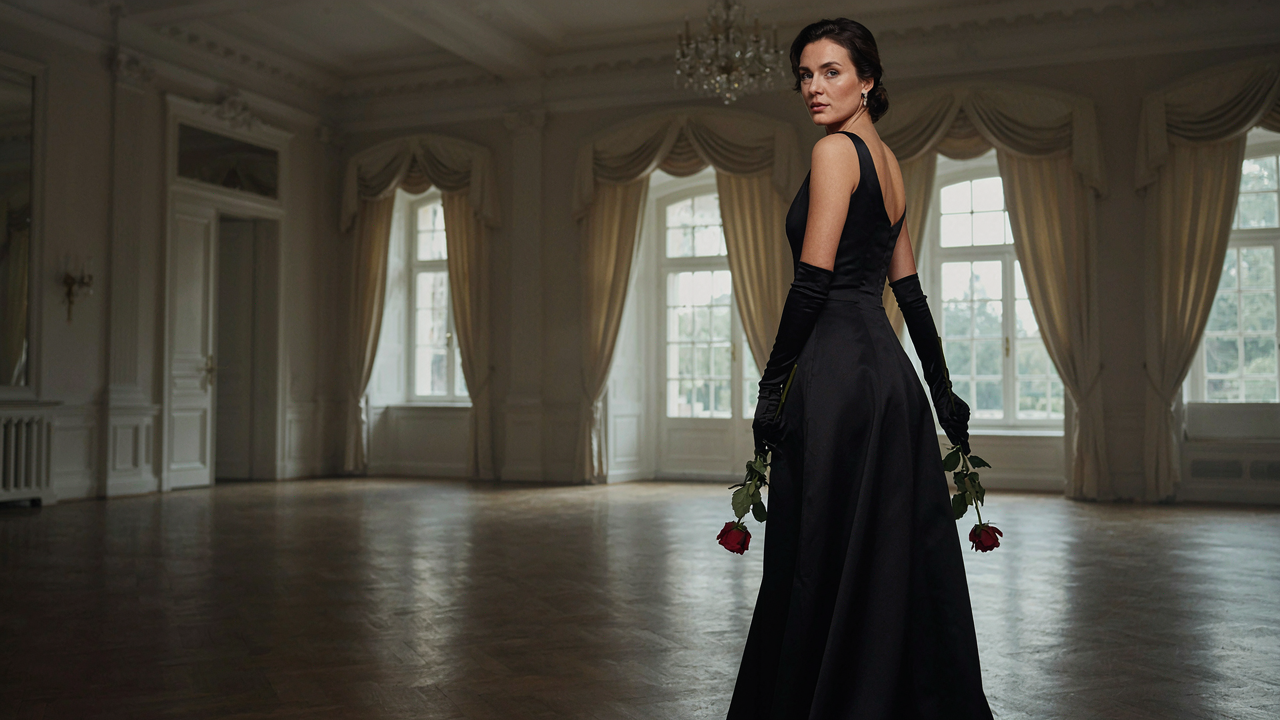
The Unspoken Language Of The Arm: Gown With Gloves

When Covered Arms Signaled Control
You want long gloves because they solve a status problem you can’t name directly. Covered arms historically communicated restraint, wealth, and access to leisure—the opposite of exposed skin tied to labor. In military and court hierarchies, the covered arm represented non-combat readiness and refinement. Women who wore long gloves weren’t working. They had hands protected from consequence.
The mechanism is simple: gloves elongate the arm’s visual line while removing it from everyday vulnerability. A bare arm commands attention through exposure. A gloved arm commands attention through absence. Medieval nobility understood this. So did the Victorians. The glove became a boundary marker between those who touched the world and those who didn’t need to.
Vertical Proportion And Perceived Rank
Using design principles from visual hierarchy, long gloves function as a vertical accent that extends perceived height and authority. In architecture, vertical elements create psychological dominance. Long gloves apply the same principle to the body—they stretch the arm line, making the wearer appear taller and narrower, which registers neurologically as higher status.
The common advice says gloves “complete the look.” Wrong. Gloves restructure how the eye processes your proportions. They create unbroken line from shoulder to fingertip, eliminating the visual break that bare skin introduces between the gown and the hand. This compression of visual segments into one cohesive vertical element reads as intentionality, control, and formality. That reading happens in milliseconds, below conscious thought.
Why Your “Dress With Gloves” Falls Flat: The Proportionality Protocol
Arm Length Vs. Glove Length Dynamics
You want the gloves to look intentional, not like a mistake you’re compensating for. The real problem: most people treat glove length as independent from arm exposure, when it’s actually a ratio problem borrowed from architecture—the relationship between void and mass determines whether the composition reads as balanced or broken.

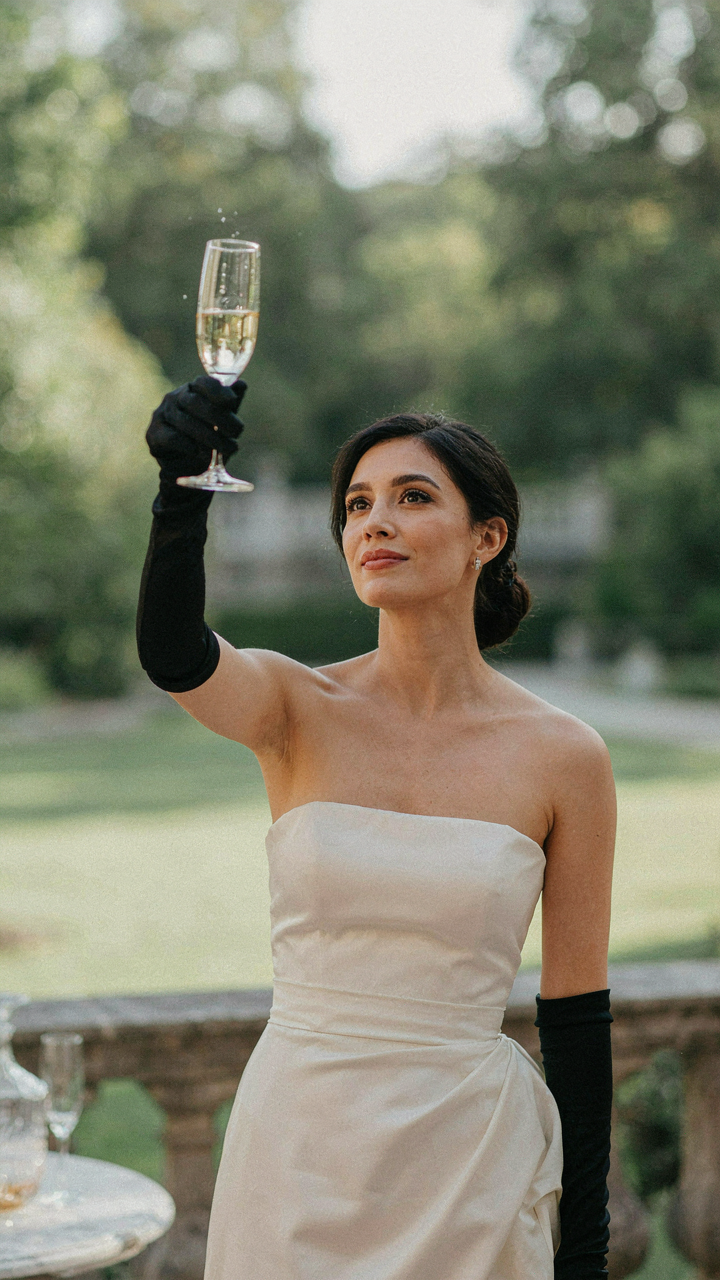
Opera-length gloves (hitting mid-forearm or above the elbow) demand bare shoulders or sleeveless cuts to work. Short gloves (wrist-length or slightly past) pair with sleeved dresses because they don’t create visual competition for the same real estate. Cap sleeves plus elbow-length gloves creates visual clutter; it’s the same zone twice. Match glove length to what the dress exposes, not what feels “safe.”
The proportion reverses the convention most people follow: longer gloves actually require less arm coverage from the dress itself, not more. A strapless gown with opera gloves reads cohesive because the gloves extend the line of the bare arm. Add sleeves to that same dress and the gloves become ornamental noise. The mechanism is simple: gloves either complete an exposed arm or they don’t.
Fabric Weight And Drape Synergy
Everyone says “choose gloves that match your dress fabric”—ignore that. Gloves don’t need to match; they need to move independently without fighting the dress’s drape. Heavy silk charmeuse or structured crepe demands gloves with enough weight to hold their own shape without clinging or bunching against the dress fabric. Lightweight chiffon or silk georgette requires gloves that won’t overwhelm the garment’s delicate movement.
The drape synergy works in one direction only: the glove should never pull the dress fabric inward or create tension at the wrist or arm. Long satin gloves over a billowing organza gown will gather the organza toward the wrist. Thin cotton or linen gloves over heavy taffeta look skeletal and disconnected. Test the combination by moving your arm through the motion range you’ll use all night—drinking, gesturing, sitting. If fabric bunches, twists, or creates wrinkles at the connection point, the weight ratio is wrong. Adjust glove fabric weight before committing to the pairing.
Formal Black Dress With Gloves: The High Contrast Authority Play
Why Black Creates Dominance
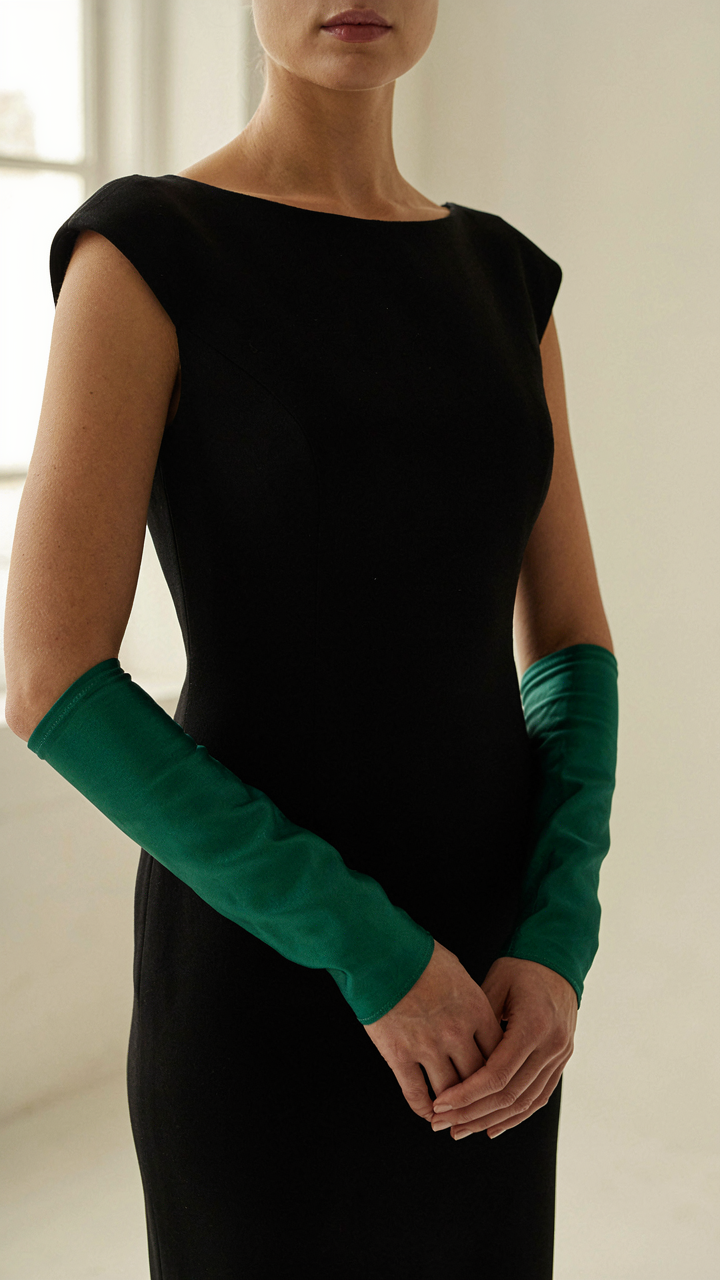
You want people to know you have taste without saying it out loud. Black formal dress with long gloves works because contrast is a tool borrowed from visual design and psychology: high-contrast compositions pull the eye and signal intentionality. The gloves become the focal point precisely because they break the black field. Your hands stop being background noise and become the statement.

Black absorbs light while long gloves in white, ivory, or jewel tones reflect it. This isn’t subtle. The mechanism is basic optics: the eye moves toward brightness and discontinuity. A black dress alone reads as standard formal wear. Add gloves and you’ve created a visual hierarchy that says control. The gloves aren’t decoration. They’re proof you understand how attention works.
Breaking The Expected Pairing
Most people pair black dresses with black or nude gloves because they think unity equals elegance. That’s backwards. The common advice here is incomplete, and it costs you presence in the room. Real subversion isn’t about clashing loudly. It’s about choosing glove colors that feel inevitable in hindsight but surprising on first sight.
Deep jewel tones like emerald, sapphire, or burgundy long gloves against black create authority without costume. Charcoal grey gloves offer restraint that reads as sophistication. Taupe or warm beige gloves create intrigue by introducing a secondary neutral that complicates the expected black and white reading. The mechanism is this: your brain expects completion, and when it doesn’t arrive instantly, it processes the object as deliberate. You must choose a glove color with one reason, not trend or safety.
Beyond “Classy”: The Intentionality Grid For Dress With Gloves
Matching The Occasion To Glove Length And Formality
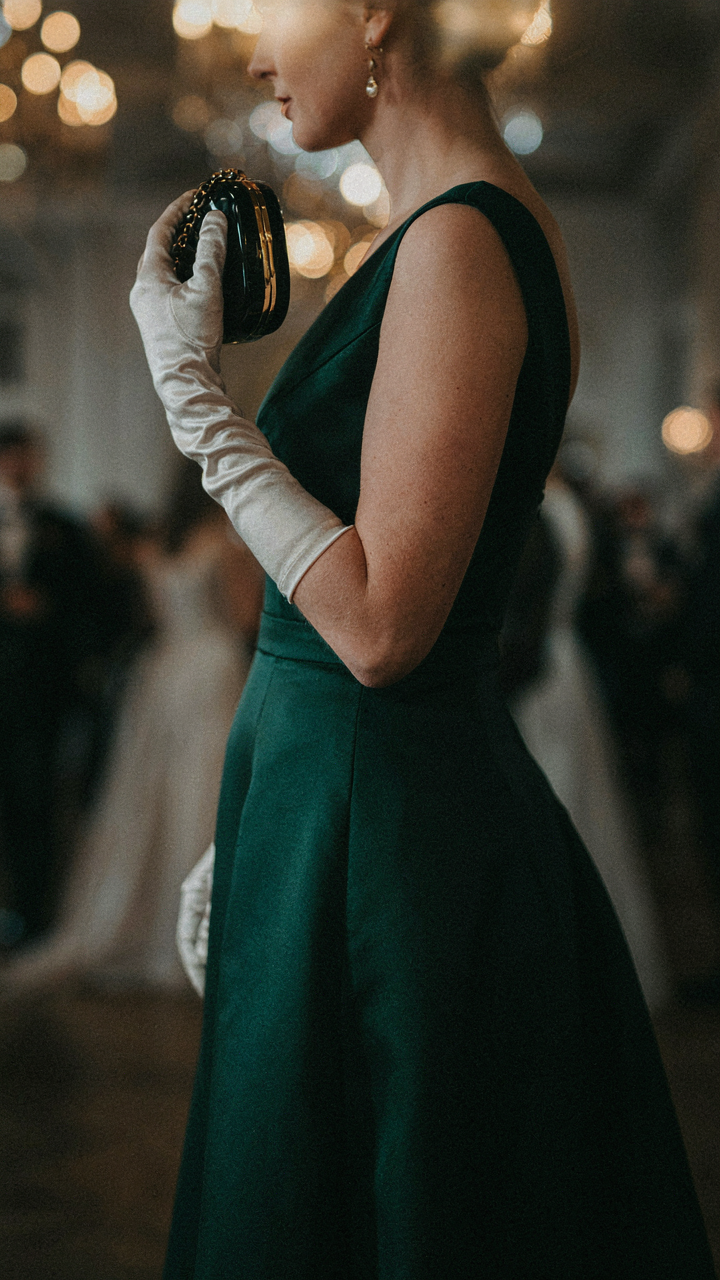
You want permission to wear gloves without looking like you’re trying too hard. Here’s the mechanism: formality isn’t one dial. It’s a match between event type, dress code explicitness, and what the glove length signals to the room. Most advice says “long gloves equal formal.” That’s incomplete. A 16-inch glove at a cocktail party reads differently than at a black-tie dinner, and differently still at a gallery opening. The gap between your intention and the room’s expectation is where you either land or miss.

Daytime events under 6 PM require restraint. Opera gloves or wrist-length gloves in this context feel displaced unless the dress itself is explicitly evening wear. Evening galas, charity balls, and black-tie weddings after 7 PM absorb 16 to 22-inch lengths without friction. Midi-length gloves sit comfortably at cocktail parties and semi-formal dinners where the dress code exists but breathing room exists too. The rule isn’t about the glove. It’s about whether the glove confirms the dress’s statement or contradicts it.
The Actual Protocol Behind Glove Etiquette
Nobody teaches this because it sounds boring, but glove protocol was designed to solve a functional problem: how to stay formal while maintaining hand mobility. Before modern climate control, long gloves protected skin and signaled wealth (you didn’t work outdoors). The etiquette that remains isn’t arbitrary. It’s a communication system still active whether you know it or not. Remove gloves for eating, handshakes, and intimate moments. Keep them on during cocktail hour, mingling, and dancing. This isn’t about manners theater. It’s about the practical moment when formality ends and function begins.
Wearing gloves means you’ve committed to a gesture. Breaking that commitment mid-event by removing them reads as either casual or relief, depending on context. In intimate dining, naked hands signal you’re settling in. At a standing reception, gloved hands say you’re available and passing through. The unspoken rule: decide before you arrive whether you’ll remove them or keep them. Changing your mind halfway through the evening makes the gloves the story instead of part of the backdrop. Your hands should move through the event with the same intentionality as your dress.
The “Hollywood Gown” Fallacy: It’s About The Architecture, Not The Adornment
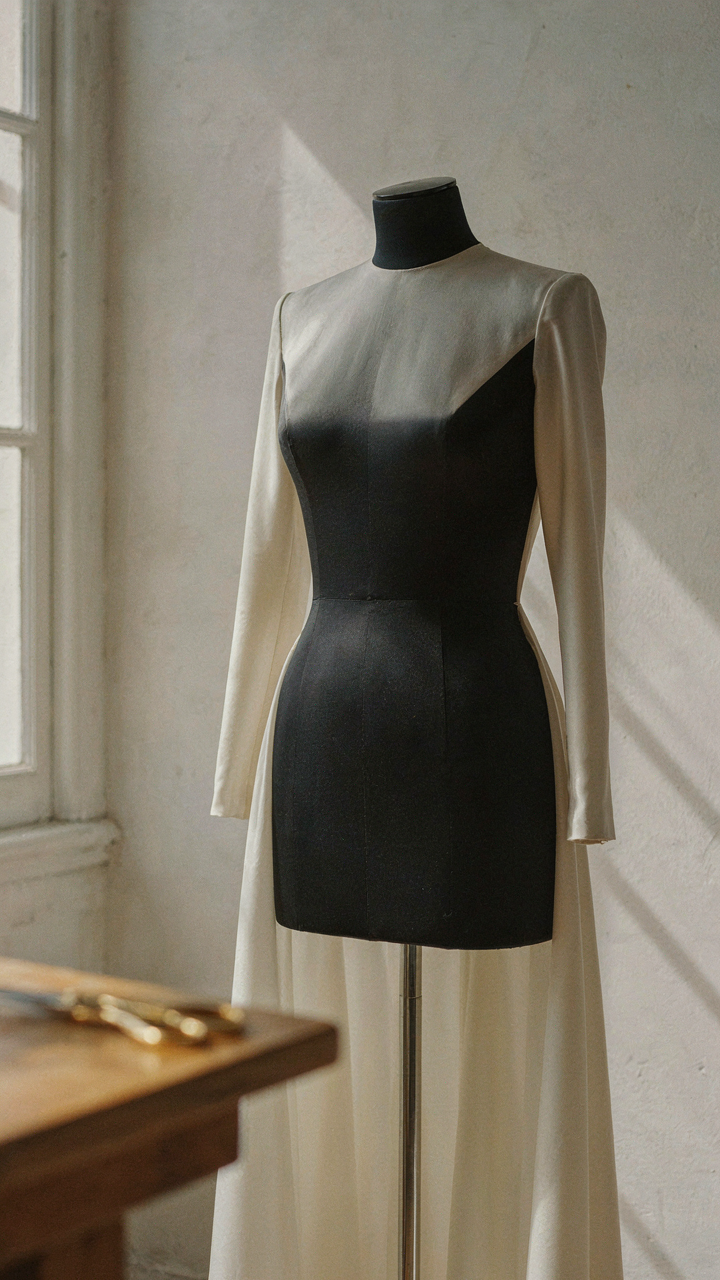
The Load Bearing Frame
You want long gloves to make you look expensive. That’s the real reason you’re reading this. But here’s what actually happens: most people treat gloves as decoration when they’re structural components. Think of architecture. A building’s elegance isn’t the paint job—it’s the load-bearing walls. Long gloves work the same way. They anchor the silhouette vertically, extending the arm line and creating visual continuity from shoulder to fingertip. Without this structural understanding, you’re just adding fabric to an unstable form.

The gown itself must be engineered first. The neckline, shoulder seam, and armhole depth determine whether long gloves integrate or collide with the garment. A glove that sits properly requires precise shoulder placement in the dress. If the dress has a dropped shoulder or narrow armhole, the glove creates visual discord—the arm line fractures instead of flowing. The glove isn’t doing the work; the dress architecture either allows or prevents the glove from functioning as a structural element.
Tension And Proportion As Design Logic
Silhouette design uses tension—the relationship between fitted and loose, covered and exposed. Long gloves create vertical tension that either resolves or compounds poor proportions. A strapless gown needs gloves to complete the arm. An off-shoulder design needs gloves to extend the horizontal line without visual interruption. The leverage point is the elbow and forearm. If that section reads as weak or thin, long gloves amplify the problem instead of solving it.
This is why vintage evening wear paired gloves with specific cuts: bias-cut satins, gathered waists, and structured bodices created a unified visual system where gloves extended rather than contradicted the form. The glove becomes a leverage point only when the dress has sufficient structural integrity to support it. Start by auditing your dress construction—seam placement, fabric weight, and bodice engineering—before selecting glove length or material. The glove will either anchor the design or expose its failures.
Black Dress With Gloves: Master The Art Of Subtlety
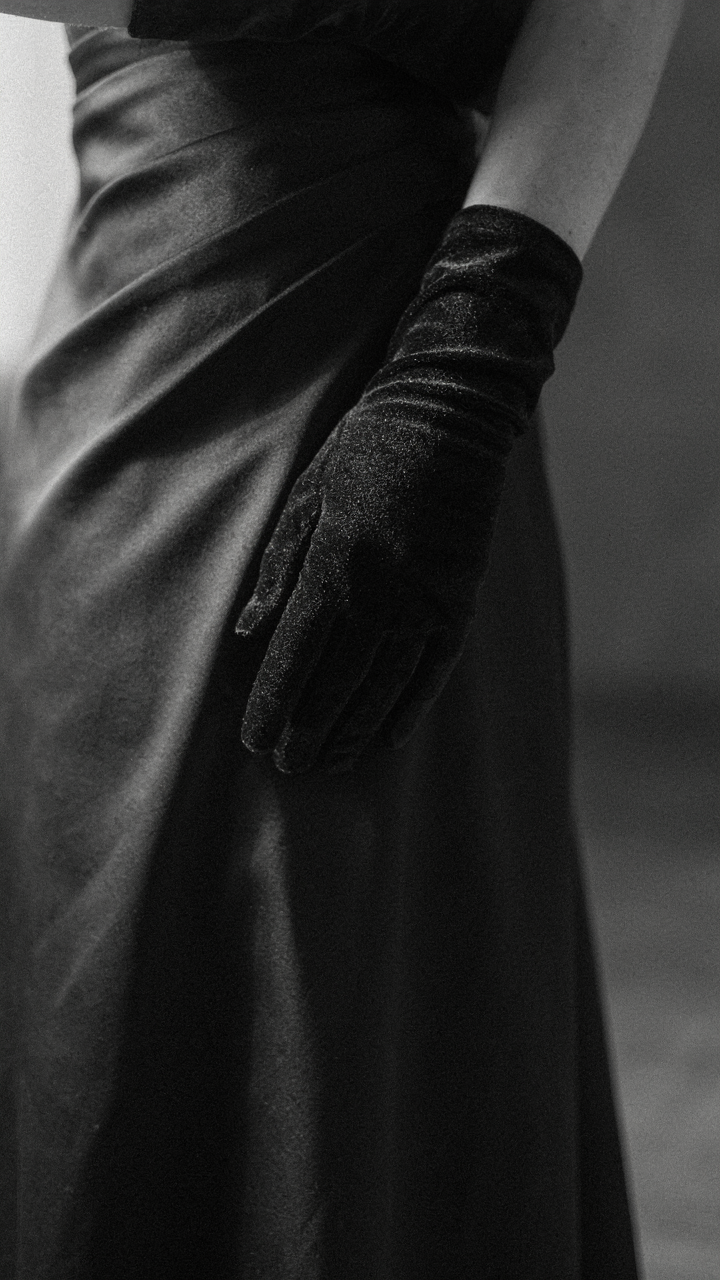
Monochromatic Restraint Creates Visual Authority
You want to disappear into competence rather than announce yourself. The mechanism is this: tonal dressing removes the cognitive load of color coordination, forcing observers to register only silhouette, proportion, and material. A black dress with black gloves doesn’t read as boring because it eliminates distraction. It reads as deliberate.

The historical precedent matters here. Evening wear from the 1950s through 1960s relied on tonal black looks precisely because they communicated control. The glove became a punctuation mark on an already-unified statement rather than a contrasting accent. This approach works because your eye travels to texture and fit instead of fighting between competing colors. The dress and gloves function as a single surface that demands nothing of the viewer except acknowledgment of its execution.
Velvet Against Silk Demands Calculated Contrast
Material opposition is borrowed from fabric engineering: you’re layering surfaces with different light reflection properties to create depth without color variance. Matte velvet gloves paired with a silk charmeuse dress create tactile friction that reads as intentional rather than accidental.
The execution here is straightforward. Velvet absorbs light while silk reflects it. When you position them adjacent on the body—gloves ending at the wrist, dress sleeve beginning just below—the eye registers a shift in visual weight without a color change disrupting the look. Leather gloves work the same way with satin, though leather reads more formal and architectural. Choose one textural contrast per outfit. Multiple competing surfaces collapse into visual noise instead of sophistication.
The “Dress And Gloves Outfit” As A Psychological Barrier
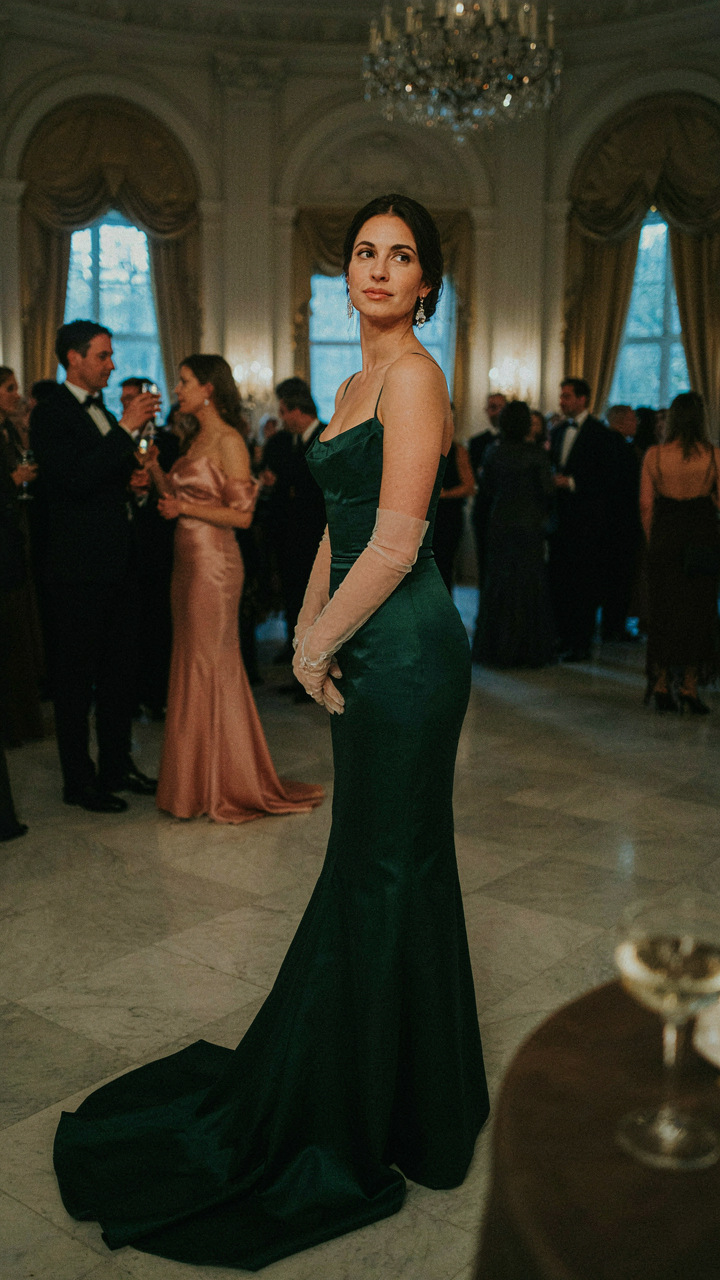
Distance Through Formal Constraint
You want this outfit because you’re afraid of being ordinary. Long gloves work as a psychological barrier through constraint: they literally prevent casual contact. In economics, scarcity creates value. Gloves function the same way. They communicate that your hands—and by extension, you—aren’t available for the usual social transactions. Mid-forearm or opera length gloves create physical distance before a word is spoken. The person wearing them becomes someone you approach differently.

This mechanism operated across 20th century formal events for a reason. Gloved hands signaled membership in a specific social tier. You didn’t shake hands with gloved hands casually. The glove itself became a boundary object. Modern formality has collapsed, which is exactly why wearing them now reads as intentional rather than obligatory. The outfit declares you operate under different rules.
The Untouchable Aesthetic Through Deliberate Formality
Cultivating elegance that keeps people at arm’s length requires one tactical choice: make the gloves visible and pristine. Fashion and psychology overlap here. The glove must look like armor, not decoration. Satin or leather gloves in black, ivory, or jewel tones worn with a structured evening dress create visual hierarchy. The wearer sits at the top. Everyone else adjusts their behavior accordingly.
The real mechanism is social calibration. When you wear long gloves with an evening dress, you’re establishing a dress code for how people interact with you in real time. Glossy leather gloves command different treatment than bare hands. Pristine white or champagne satin gloves worn with a tailored gown create social friction that forces politeness. People notice the effort. They mirror formality back to you. Maintain the costume detail throughout the event for the effect to hold.
Prom Dresses With Gloves: Escaping The Generic Glamour Trap

The Real Vintage Versus Theater Costume Problem
You want the status signal of “vintage” without looking like you raided a costume shop. Here’s the mechanism: authentic vintage gloves have restraint in their construction. The fabric—silk, kid leather, or fine cotton—does one job without announcing itself. Costume gloves overdo the detail: excessive beading, artificial sheen, or seams that catch light wrong. Real vintage pieces from the 1950s through 1980s prioritize fit and drape over novelty.

The difference lives in material density and how it moves against skin. Authentic evening gloves from quality eras use natural fibers that age gracefully. The hand itself looks elongated because the glove follows the arm’s natural line, not because it’s stuffed with batting. When you try on gloves, bend your fingers fully. If the material fights back or creases unnaturally, it’s theater.
Strategic Unconventionality For Real Presence
The common advice tells you to match your gloves to your dress. That’s how you disappear. The actual lever is contrast in texture, not color—economics borrowed from figure-ground theory. A satin dress needs gloves in matte silk or suede. A matte crepe dress gains dimension from patent leather or subtle sheen. Your eye has to work to parse where one ends and the other begins. That small friction is what makes people look twice.
The unconventional move isn’t a loud break. It’s precision inside the frame. Elbow-length gloves in a unexpected fabric—matte jersey, brushed cotton, fine linen—against a conventional silhouette. This works because one element disrupts pattern recognition without jarring the whole system. Wear gloves that interrupt expectation through material choice, then own that choice with posture.
The “Formal Dress With Gloves” Misconception: Your Body Is The Canvas
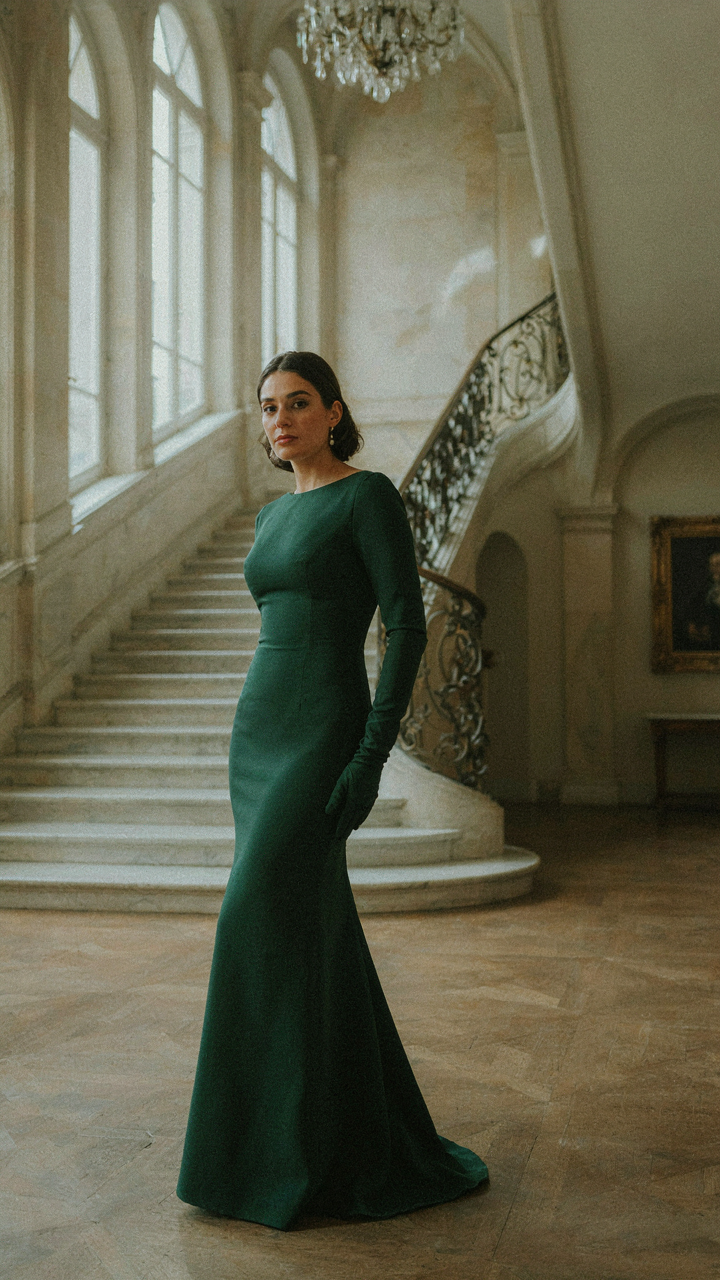
Posture Becomes Non Negotiable
You want gloves to make you look refined without thinking about what that actually demands from your spine. Here’s the mechanism: gloves extend your arm’s visual line and amplify any slouch, rounded shoulder, or collapsed chest into something obvious. They don’t hide bad posture. They broadcast it.

Long gloves force vertical alignment because they create sight lines. Your shoulders must sit back. Your neck must stack over your spine. The fabric hits at precise points on your arm and torso, and any deviation from true posture creates wrinkles, bunching, or asymmetry that reads as careless. This isn’t vanity. It’s physics. Gloves act as a posture feedback system you wear.
How Movement Reveals Everything
Gloves dictate arm economy the way a military doctrine dictates troop placement. Every gesture becomes visible. Jerky reaches, tense shoulders, or fidgeting hands show immediately because the glove material moves as a unit with your forearm.
The way you raise your glass, gesture while talking, or rest your hands on your lap now carries weight. Gloves force deliberation. You can’t move through space carelessly because the eye lands on your hands first. This isn’t restriction. It’s clarity. Practice moving with intention before wearing long gloves to an event. Reach slowly. Keep elbows close to your ribs. Let your hands lead from the wrist, not the shoulder. This protocol separates someone wearing gloves from someone who commands them.
The Material Imperative: Why Fabric Is Not Just “Fabric”
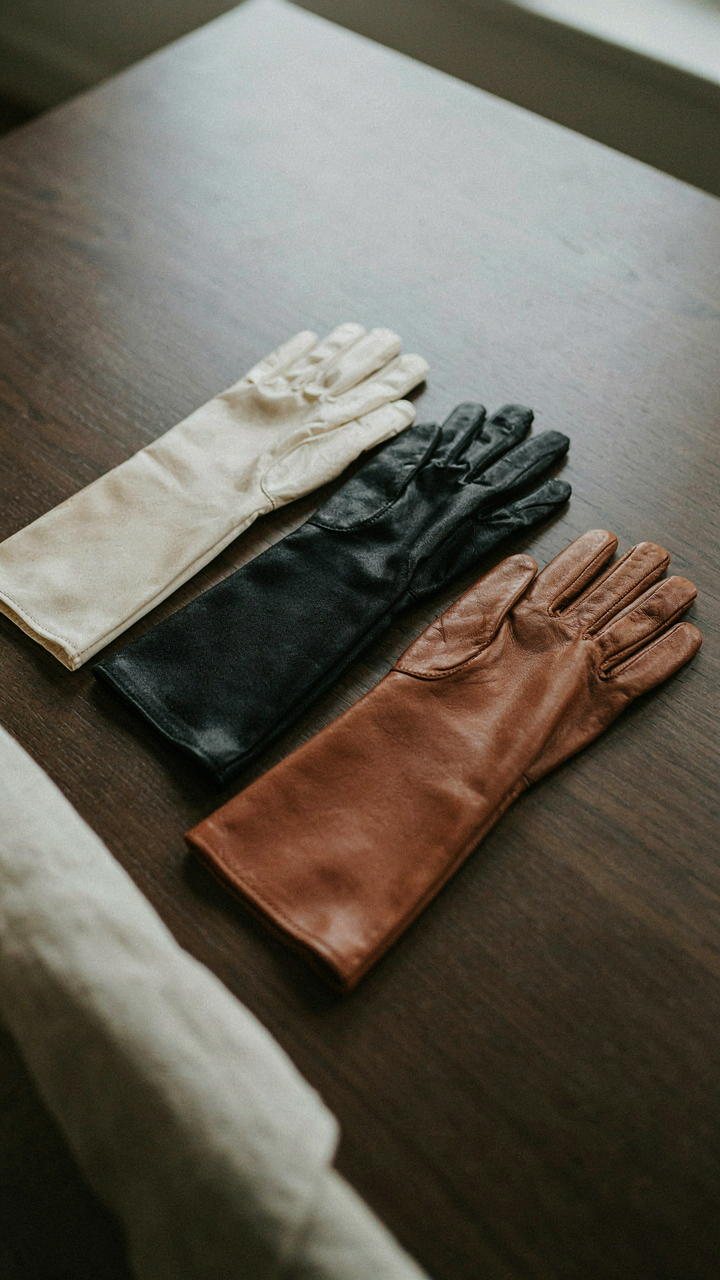
Silk Versus Satin Versus Leather
You care about this section because you’re afraid cheap material will broadcast that you’re not actually the person you’re trying to be. Here’s the mechanism: in economics, this is called signaling. Long gloves evening dress work the same way a peacock’s tail works—the material proves you paid attention to the details. Fabric choice doesn’t just look different; it performs differently on skin and under light, and people register that shift before they register why.
Silk has a matte sheen that absorbs light. It moves with your arm, drapes without stiffness, and cools against skin. Satin has a high gloss finish and reflects light, creating visual drama but sacrificing breathability. Leather—genuine leather, not polyurethane—holds structure and develops a patina that signals ownership over time. Here’s what separates each:
- Silk charmeuse: Fluid drape, subtle sheen, traditional for 1930s to 1950s evening gloves. Requires hand washing and storage care.
- Silk faille: Crisp finish with ribbed texture, common in 1960s designs. Holds shape better than charmeuse but less forgiving on arm movement.
- Satin weave (polyester core): Mirrors silk visually but costs less and tolerates machine cleaning. Performance drops noticeably after repeated wear.
- Nappa leather: Soft, supple, molds to hand shape after wearing. Darkens with age and requires leather conditioner, not washing.
- Lambskin: Thinner than nappa, more delicate, historically used in luxury gloves before synthetic alternatives. Cost reflects scarcity more than performance.
The difference between silk and polyester satin becomes obvious after three wears. Silk develops a subtle patina and moves like it’s part of your body. Polyester satin stiffens, loses its sheen, and looks tired. Leather gloves actually improve with handling because the material adapts to your hand’s geometry. Pick material based on how many times you’ll wear the gloves, not on how the description sounds in a catalog.
The Longevity Calculus
Most people think material choice is aesthetic. Wrong. It’s economic. A pair of silk gloves worn five times a year lasts fifteen years. The same gloves worn weekly deteriorate in three. Leather behaves differently—it doesn’t degrade; it transforms. Your choice determines whether you’re buying an asset or a consumable.
The real calculation is cost-per-wear divided by perceived value retention. Genuine silk or leather costs more upfront but maintains visual credibility across a decade. Polyester satin costs less but reads as disposable after year two, which defeats the purpose of owning vintage-inspired evening dress. If you’re building a wardrobe that signals intention and longevity, material isn’t a preference—it’s the difference between an investment and waste. Choose material that improves or holds value, not material that requires replacing before the dress itself wears out.
Your Real Problem Isn’t A Lack Of Style, But A Lack Of Intentionality In Wielding Your Visual Authority

Most people treat long gloves as an accessory. They’re not. They’re a statement that you’ve chosen authority over comfort. Pick one outfit this week. Commit to the gloves. Notice how differently people respond to you. This shift happens because you’ve stopped asking permission to take up space. Your clothes either whisper apologies or command respect. Choose the latter.



