

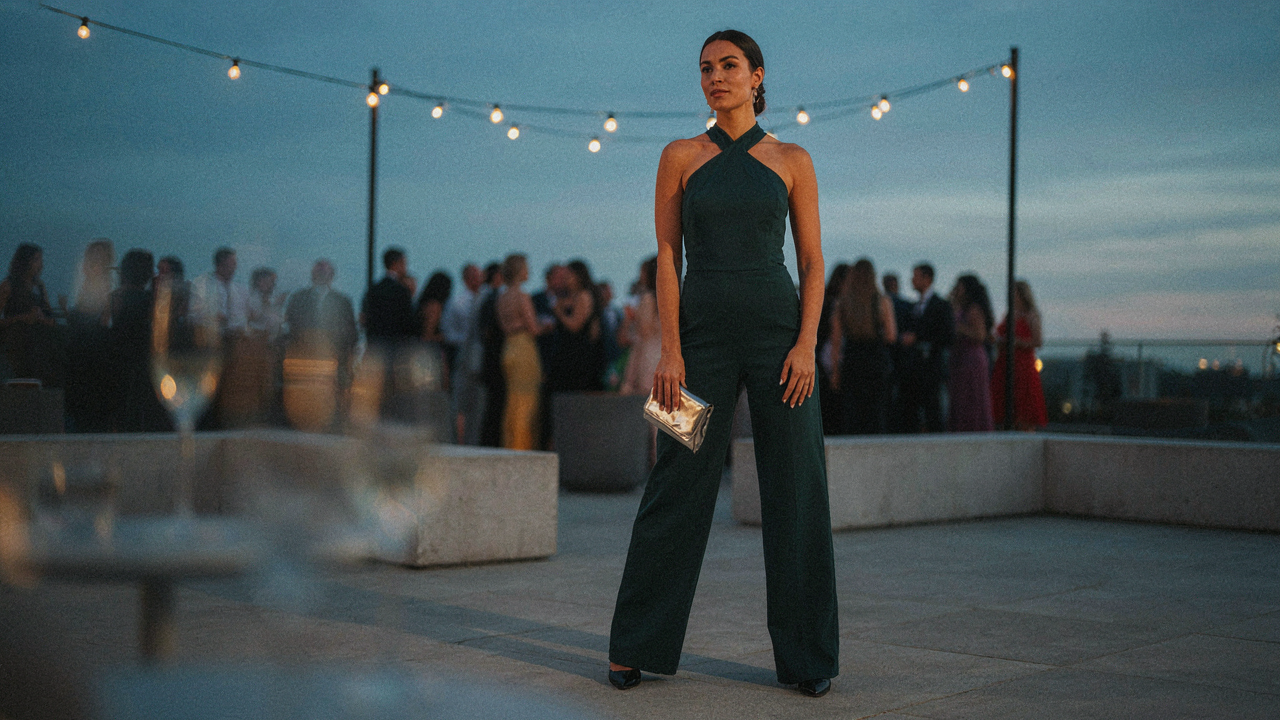
The Illusion Of Effortless: Why Your Halter Jumpsuit Fails
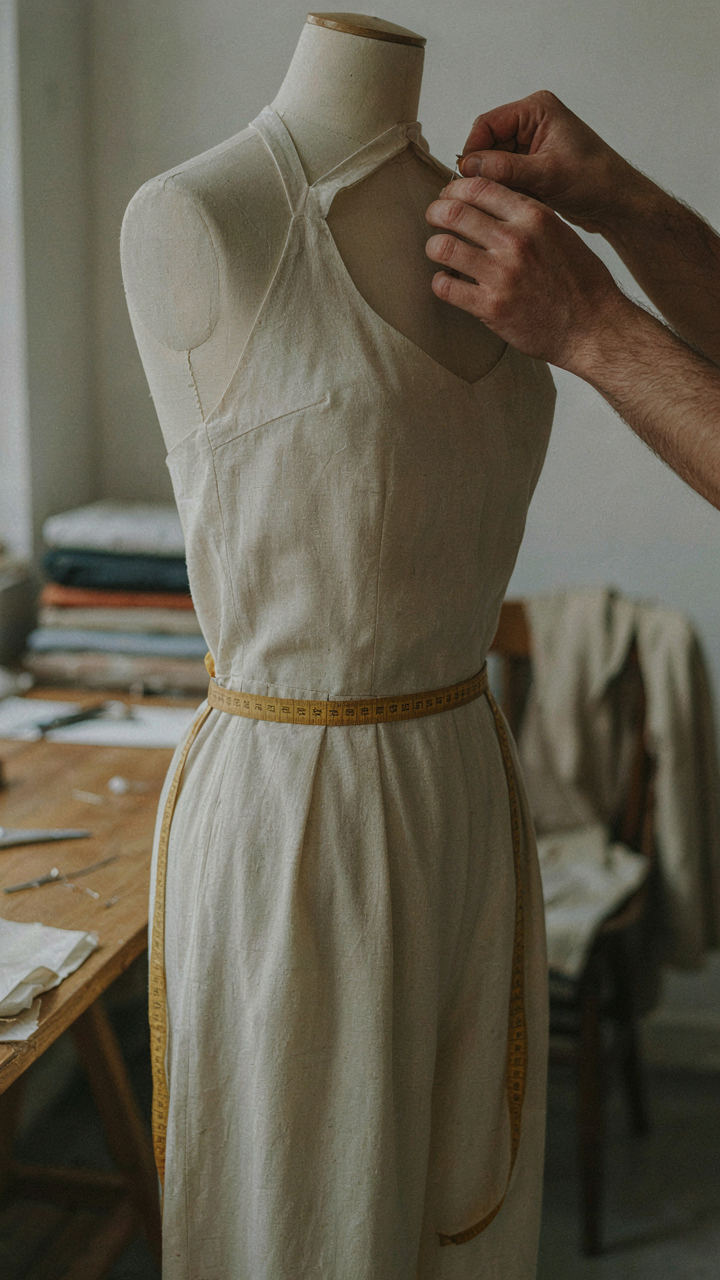
The Fit Problem Nobody Names
You want people to think you threw this together without trying, and that’s exactly why it falls apart. The real mechanism at work is fabric drape under tension. A halter jumpsuit channels all upper body weight through two neck points and the waistband. If the garment sits even a half inch wrong, the physics inverts: instead of skimming your frame, it pulls, bunches, or gapes at the chest seam.
Most advice stops at “get it tailored,” which is incomplete. The actual problem is most people buy a size up for comfort, hoping alterations fix the geometry later. They don’t. You need the base garment cut to your specific shoulder width and torso length before tailoring begins. Fit is structural, not cosmetic. Swap the jumpsuit to a size that matches your shoulder span, then adjust the inseam and waist.
Deliberate Over Comfortable
Elegance in formal wear isn’t about feeling relaxed. It’s about making calculated choices that signal precision. A halter jumpsuit at a summer event requires you to commit to specific details: the neckline shape, the leg cut, the fabric weight, the shoe height, the jewelry proportion. Each element either amplifies or undermines the others.
The common trap is treating the jumpsuit as the outfit and adding everything else as afterthought. That’s backward. Start with the event’s light and temperature, then work backward to fabric choice. Linen blends read casual. Technical blends with structure read intentional. Your accessories scale with formality, not with personal preference. If you’re wearing metallic sandals, your jewelry shrinks. If you’re wearing pointed heels, your bag gains definition. One protocol: map each piece to the event’s dress code, not your comfort zone.
Halter Jumpsuit Archetypes: Decoding Formal Event Signals
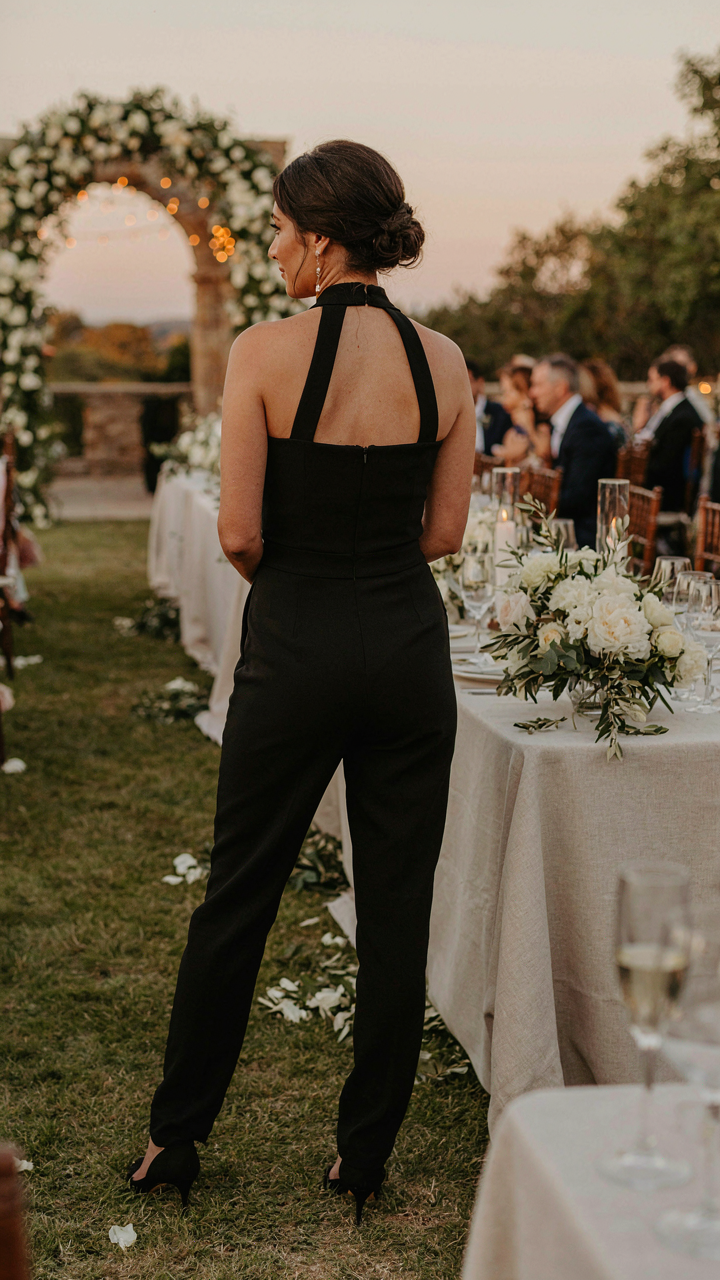
Wedding Guest Jumpsuit: Balancing Formality With Personal Flair
You’re worried the jumpsuit reads as too casual for the occasion, so you’re hunting for permission to wear it. Here’s the actual mechanism: formal events operate on a dress code hierarchy where the garment’s construction matters more than its category. A halter jumpsuit signals formality through tailoring precision, fabric weight, and silhouette control, not through whether it’s a dress or pants. The halter neckline itself originated in 1940s swimwear but migrated into evening wear specifically because it frames the upper body with architectural intention. Wedding guest contexts demand you exploit this.

The play is simple. Choose jumpsuits in structured materials like crepe or ponte that hold shape without movement. Pair a jewel tone or neutral with intentional accessories—metallic heels, a structured clutch, minimal jewelry. Skip anything slouchy or oversized. The wedding dress code doesn’t penalize the jumpsuit if it performs the role of formal wear through precision tailoring and refined material choice. Fabric drape and seam alignment communicate respect for the event faster than silhouette category ever will.
Black Halter Jumpsuit: The Power Of Understated Sophistication
The common advice here is that black is a safe fallback. That’s incomplete. Black functions as a mechanism for visual authority in formal settings because it eliminates color as a variable and forces the observer’s eye toward structure alone. A black halter jumpsuit strips away distraction and places all weight on fit, neckline architecture, and fabric quality. This works because formal events measure credibility through restraint, not volume. Sophistication isn’t about what you add—it’s about what you remove.
A black halter jumpsuit performs best when you commit to tailoring over trends. The garment should skim your body without clinging or draping too freely. Seams must align at your shoulders and hips. Pair it with minimal accessories: a single statement ring or simple earrings, never both. The neckline does the talking. This formula works across summer galas, cocktail receptions, and upscale dinner events because black eliminates competing signals and forces the fit and construction to communicate your judgment about what formality means.
The “Gravitas” Protocol: Accessorizing For Impact

Jewelry As Visual Weight
You want people to notice you’ve thought this through, not that you’re trying too hard. This is about distribution. In visual design, weight refers to how the eye moves through a composition. A halter jumpsuit concentrates fabric and visual mass at the neckline and shoulders, creating a natural anchor point. Jewelry either reinforces that anchor or fights it. Most people add pieces randomly and dilute the effect entirely.

Strategic jewelry means working against the jumpsuit’s built-in geometry, not with it. A statement necklace at the neck compounds the visual load there, suffocating the line. Instead, move weight to the wrists or a single ear with a drop earring. This creates tension across the body, forces the eye to travel, and makes the silhouette read as intentional rather than lucky. The rule is simple: where the fabric already dominates, you subtract metal.
Clutch And Shoe Completion
The bottom two thirds of a halter jumpsuit sit neutral and open, waiting for definition. This is where most formal jumpsuit outfits fail. People choose shoes and a clutch based on color matching alone, as if visual coherence stops at the fabric. The real mechanism is ratio and closure. Your footwear and bag must speak the same language about formality and proportion.
A strappy sandal with a structured metal clutch creates visual urgency and precision. A flat sandal with a soft pouch reads diffuse and undermines the formal context. Match the material tones, yes, but more importantly match the tightness of detail. If your jumpsuit drapes loosely, your accessories should tighten the overall impression through metallic hardware, clean lines, and defined edges. Pair a metallic heel with a clutch featuring a defined frame or clasp to complete the formal narrative with actual mechanics, not wishful thinking.
Fabric Intelligence: Beyond Basic Polyester For Your Jumpsuit Halter

Weight And Drape Control The Signal You Send
You care about this because you’ve worn something that felt cheap the moment you moved. Fabric weight determines formality the same way mass determines force in physics. Heavier fabric creates momentum in drape, which reads as intentional and formal. Lightweight fabric clings or billows without structure, signaling casual regardless of cut. A halter jumpsuit needs fabric dense enough to hold its shape without looking stiff.

The mistake everyone makes is confusing weight with thickness. A thin silk charmeuse outweighs and outdrapes a thick cotton blend because of fiber density and weave construction. For a halter jumpsuit formal enough for evening events, aim for fabric that holds a crisp fold without creasing permanently. Natural fibers like linen and silk blends perform better than synthetics at this task because their molecular structure resists distortion under tension. Test drape by holding fabric vertically; if it falls in deliberate folds rather than bunching, you’ve found the right weight.
Summer Breathability Meets Formal Structure
Summer formal wear requires a paradox: structure that breathes. Your instinct is to grab lightweight linen, which fails because it wrinkles aggressively and reads as resort wear, not formal. The solution is high-thread-count cotton blends or cotton-silk mixes that maintain crispness while allowing air circulation. Breathability matters physiologically because sweat damages fabric appearance faster than heat alone. A halter neckline exposes skin, making breathability non-negotiable for comfort during multi-hour events.
Linen-cotton blends split the difference effectively. They hold wrinkles less than pure linen while breathing better than pure cotton sateen. Fabric breathability depends on weave tightness and fiber porosity, not just fiber type. For summer formal events, choose blends with at least forty percent natural fiber content to maintain structure through a full evening while managing moisture. Check the garment’s care tag for fiber composition before purchasing; vague descriptions hide synthetic-heavy blends that trap heat and damage easily under perspiration.
The Architectural Eye: Sculpting Your Silhouette
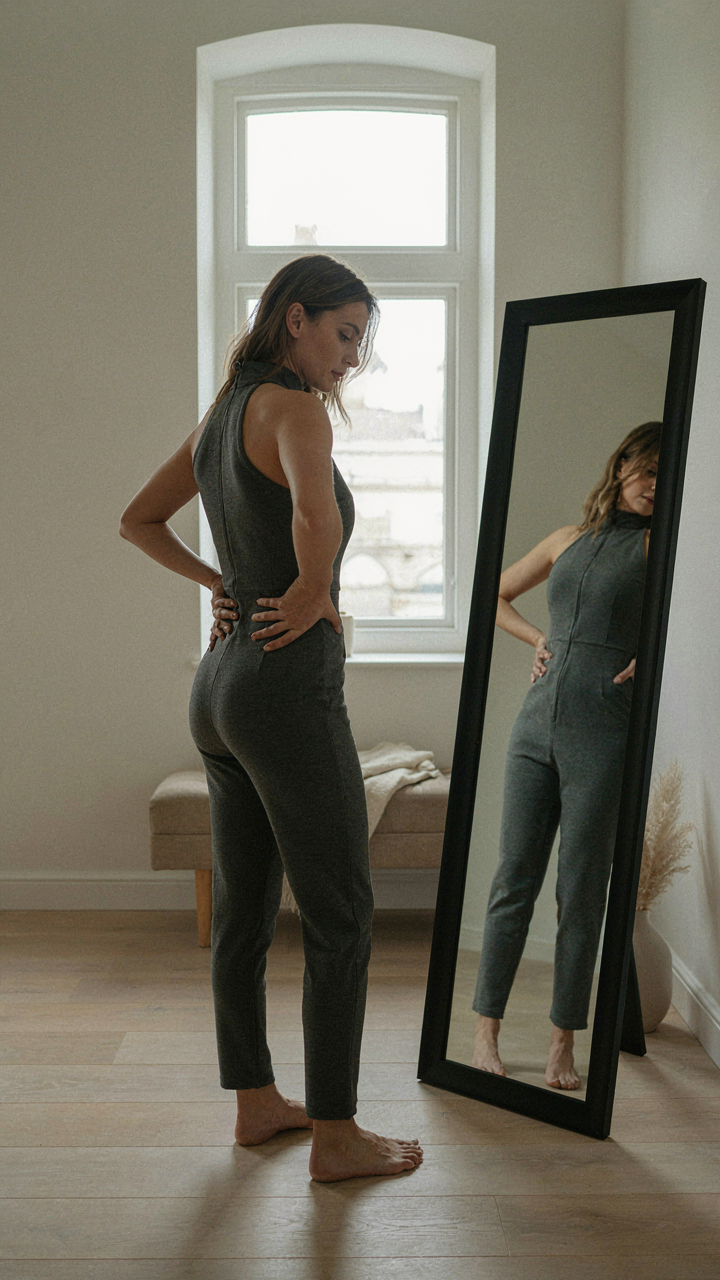
When Fit Becomes Load Bearing
You care about this section because you’re afraid the wrong cut will betray your actual shape instead of enhance it. Here’s the mechanism: architecture uses load-bearing walls to distribute weight efficiently. A halter jumpsuit functions the same way. The halter neckline transfers visual weight upward, away from the torso and hips. Proper tailoring at the side seams, waistband, and leg opening determines whether the garment distributes your body’s lines or fights against them. This isn’t about hiding anything. It’s about structural integrity.

The fabric and seaming placement matter more than size. A halter jumpsuit with reinforced side seams and a fitted waistband holds its shape under movement and temperature change. Loose tailoring anywhere in the garment collapses the entire structure. Ask a tailor to check the shoulder seam placement first. If it sits where your shoulder ends, the halter distributes load correctly. If it sits too far back or forward, the neckline pulls and creates visual chaos. This single detail determines whether the jumpsuit controls your silhouette or becomes a liability.
Where Nothing Is Negative Space
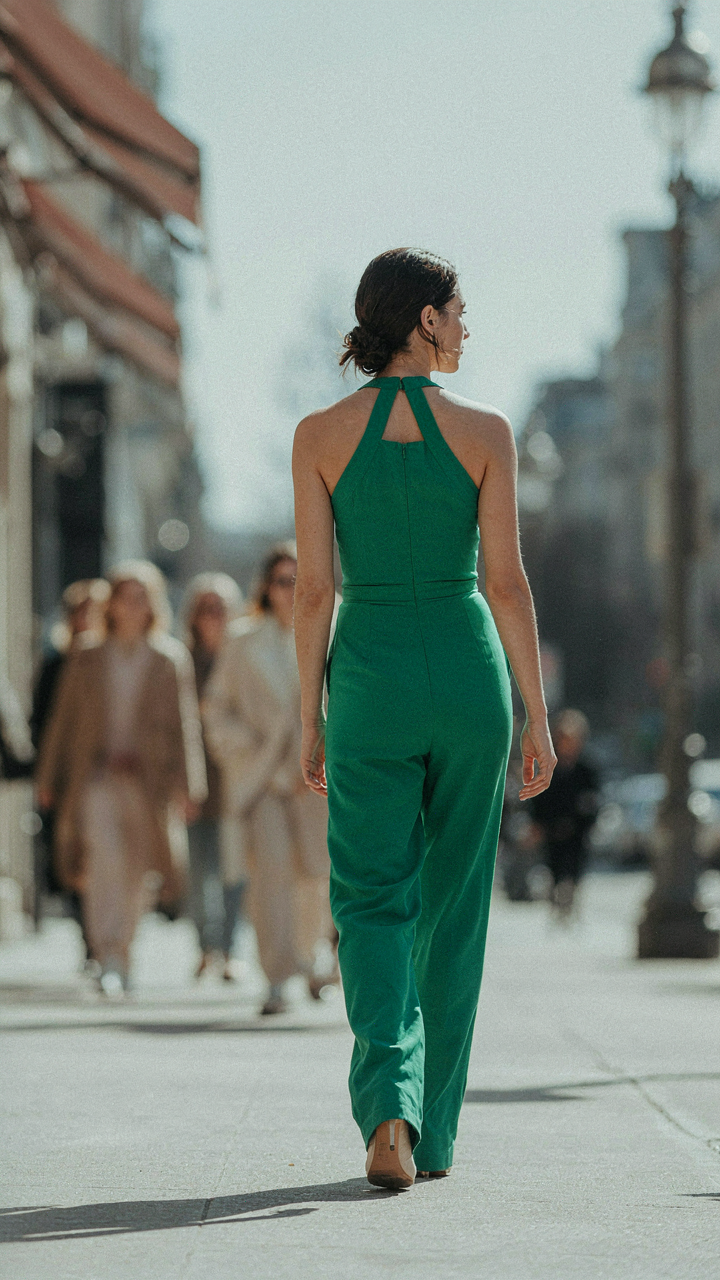
The common advice says cutouts are decorative. Wrong. Cutouts and strategic draping function as intentional voids that redirect the eye and break up body zones. A cutout at the hip creates visual separation between torso and leg. A draped panel across the back absorbs light instead of reflecting it, which slims the overall frame. These aren’t flourishes. They’re geometric decisions.
Placement and depth determine impact. A shallow cutout reads as decoration and adds visual noise. A deep, architectural cutout at the correct spot removes mass from the eye’s path. Test placement by standing sideways in front of a mirror and marking where a cutout would fall relative to your widest point. If it sits directly at that point, it works. If it sits above or below, it misses. Draping that follows the natural line of your spine creates depth without bulk. Execute this in the fitting room before tailoring becomes permanent.
Color Theory For The Unconventional: Green Jumpsuit Outfit Wedding And Beyond

Beyond Safe Selecting Colors That Command Attention
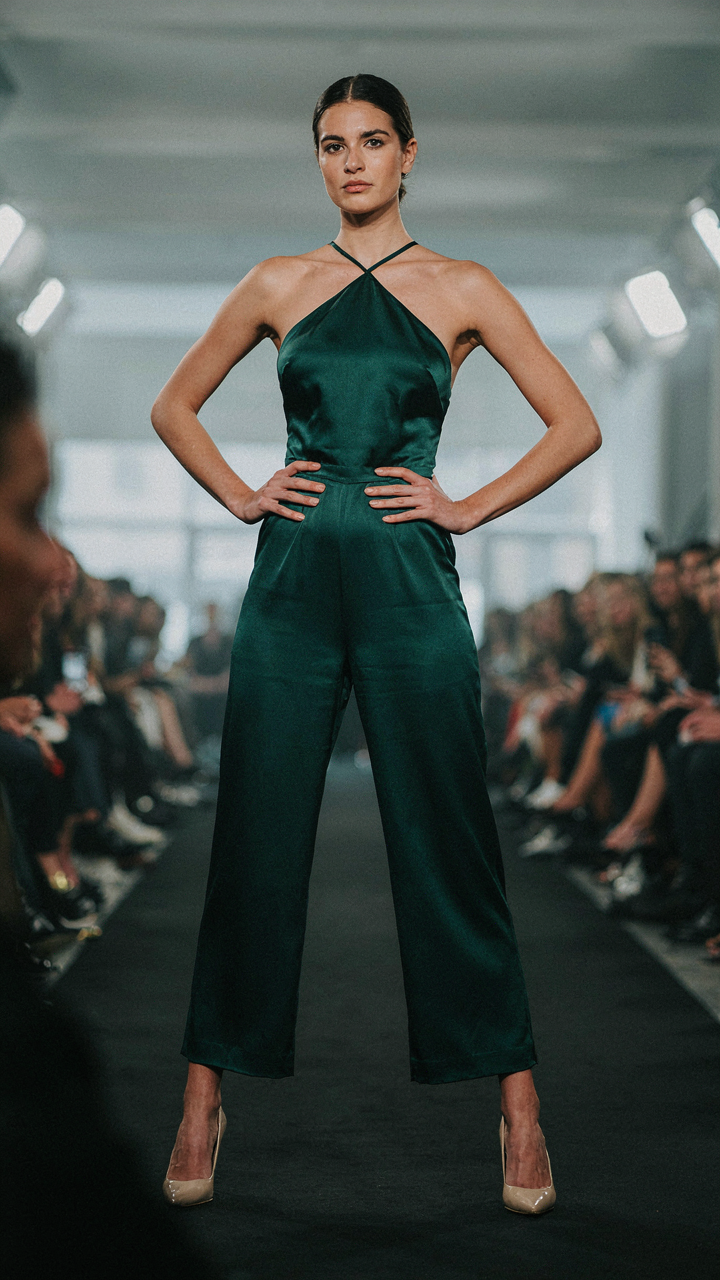
You want the green jumpsuit because you’re terrified of blending into the beige consensus at formal events. The mechanism is contrast. Your eye registers difference before it registers beauty, which means the halter jumpsuit formal in deep jewel green or sage already wins before you step into the room. The color does the work. Most people choose black or navy because they’ve been told these are safe. That’s consensus thinking dressed up as strategy. A halter jumpsuit demands visual weight to justify its structure, and muted colors actually undermine the silhouette by making it disappear into the background.

Green operates differently than black at a formal event. It reads as intentional rather than default. The halter neckline exposes your shoulders and collarbone, which means the color you choose lives against your skin tone for hours. Deep forest green works on cooler undertones. Sage or moss green suits warmer complexions. The jumpsuit’s clean lines need a color with enough saturation to hold its own without pattern or excess detail. Pick your green based on what appears when you hold fabric against your neck in natural light, not indoor lighting or online previews.
Tone And Texture Enhancing Impact With Subtle Variations
Tone and texture are the difference between a halter jumpsuit formal that photographs well and one that actually performs in person. Borrowed from material science, you’re managing light reflection and absorption. A matte crepe green jumpsuit absorbs light and reads as sophisticated. A silk charmeuse or satin green version reflects light and commands attention in a different register, often reading as evening-wear rather than daytime formal. The texture determines how the garment interacts with your body and the space around it. Most formal jumpsuit advice ignores this entirely, treating all fabrics as if they produce the same visual impact.
The halter neckline exposes significant shoulder and back surface area, so texture choice matters tactically. A structured crepe holds its shape and makes your silhouette appear controlled. A fluid satin or charmeuse drapes differently and requires more confident body language to carry. Pair a deeper green with matte finishes for garden weddings or daytime events. Use satin-finish greens for evening receptions where lighting is controlled and artificial. When you purchase, request fabric swatches and observe them under the exact lighting conditions where you’ll wear the jumpsuit.
The Halter Neck Jumpsuit Advantage: Leveraging Neckline Dynamics

Drawing Attention Where It Counts
You care about this because exposure reads as confidence, and confidence reads as status. The halter neckline works through a principle borrowed from visual hierarchy: it concentrates viewer attention at a specific point. Your décolletage becomes the anchor. Everything else—jewelry, hair, the rest of the outfit—either reinforces or dilutes that focal point.

The mechanic is simple. A halter ties behind the neck, leaving shoulders and upper chest exposed. This creates contrast against covered areas. Your eye follows contrast. Pair this with a delicate pendant that hangs into the exposed zone, and you’ve weaponized geometry. Hair swept up or pulled back extends the sight line downward, holding attention longer. Hair down breaks the line and competes for focus. Choose based on what you want to dominate the frame.
Height And Proportion As Optical Adjustment
The halter doesn’t actually change your height—it changes how tall you appear. This is basic optical proportion. A high neckline draws the eye upward and shortens perceived torso length. A halter does the inverse. It exposes the neck, elongates the visual line from chin to waist, and makes legs appear proportionally longer. Formal jumpsuits already sit high at the waist. The halter amplifies this effect.
Jumpsuit fit matters here. If the waistband sits too low, the halter’s elongating effect gets canceled out. You need the waist defined at your actual narrowest point, not below it. The halter then creates a clean vertical line from neck through the torso, which is what stretches apparent height. On shorter frames, this is valuable real estate.
From Jumpsuit Outfit To Statement: The Final Edit
The Pre Event Checkpoint
You’re worried you’ll show up overdressed or underdressed, and that fear paralyzes your choices until you default to safe. Stop. The mechanism is simple: a halter jumpsuit formal already signals intention through its cut and structure. Your job is verification, not reinvention. Walk through the venue details, dress code, and lighting conditions. Does your shoe choice work on the actual flooring? Will the halter neckline read clearly in natural light versus artificial? These aren’t minor details—they’re the difference between looking intentional and looking confused.

Most people skip this step because it feels tedious. That’s the mistake. Spend fifteen minutes before the event doing a final equipment check. Confirm your undergarments sit flush against the jumpsuit without visible lines. Test your movement in the full outfit while sitting, standing, and reaching. Check your accessories one more time against the halter’s neckline and the jumpsuit’s silhouette. If something catches or shifts awkwardly during this rehearsal, fix it now. You won’t have time at the event.
Wearing The Design You Built
Psychology borrows from engineering the concept of load capacity—the maximum stress a structure handles before failing. Your halter jumpsuit formal has a design load: a specific number of visual elements it can carry before the eye loses the thread. You already made your aesthetic choices across eight sections. Now execute them without second-guessing. This confidence isn’t arrogance. It’s the direct result of intentional decisions made ahead of time.
The falsest advice circulating is that confidence comes from feeling good. It doesn’t. Confidence comes from preparation and knowing exactly why each element is there. You chose this halter neckline. You selected these proportions. You paired these accessories deliberately. Walk into that event with that clarity locked in. Don’t adjust. Don’t apologize. Don’t explain your outfit to anyone. Wear what you designed, and let the design do the talking.
The Real Obstacle Isn’t The Jumpsuit; It’s Your Fear Of Standing Out From The Beige Masses
You don’t need a different halter jumpsuit. You need permission to wear it. That permission comes from accepting one truth: the people staring aren’t judging you, they’re jealous they lack your nerve. Stop optimizing for invisibility and start dressing like you actually want to be seen at summer events. Buy the jumpsuit today. Confidence looks better on everyone than beige ever will.




