


The Unspoken Language Of Black Tie Attire
Where Formality Started And Why It Matters Now
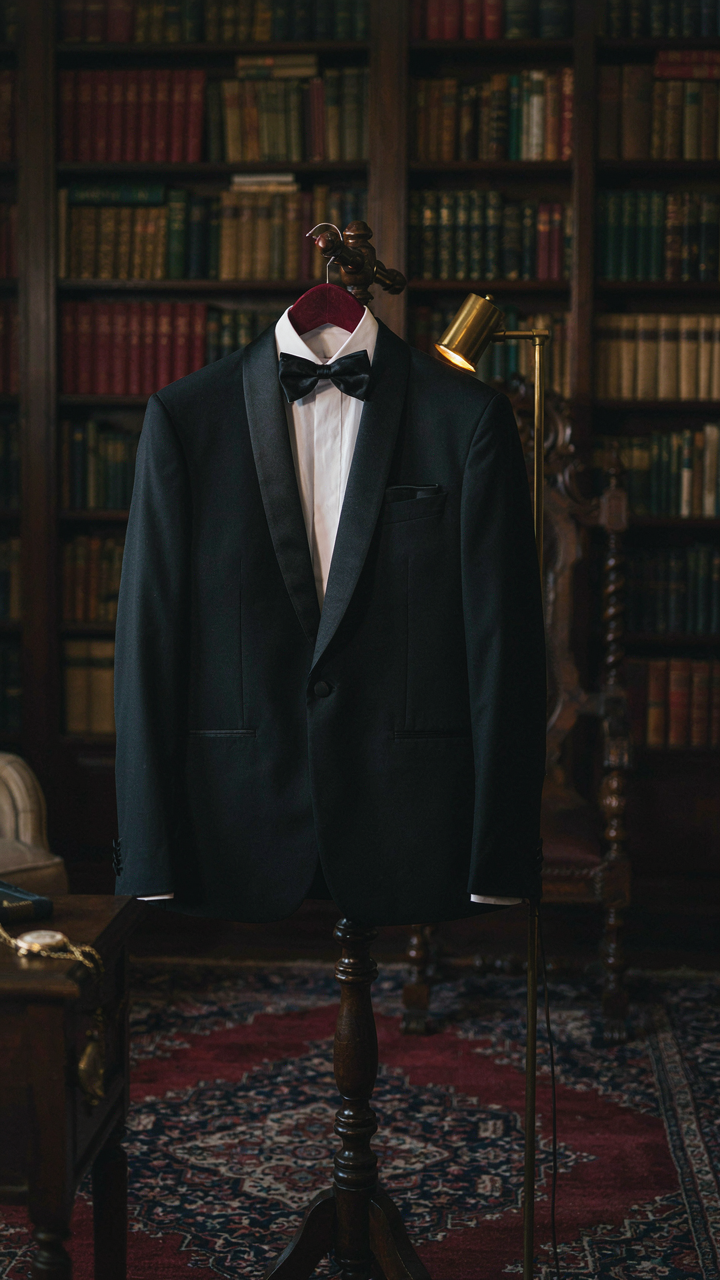
You want to know black tie because you’re afraid of getting it wrong. The real mechanism: black tie emerged in the 1800s as a direct challenge to daywear formality. Before that, tailcoats dominated all formal occasions. Black tie represented a deliberate downgrade—a signal that nighttime events didn’t demand the same rigid hierarchy as court appearances. The tuxedo jacket replaced the tailcoat. The bow tie replaced the cravat. Shorter jackets, simpler lines. What looked like less effort actually required more discipline to execute correctly.
The evolution tracks a single principle: as societies grew less rigid, formal wear became more standardized rather than less. Cocktail attire emerged decades later as a deliberate halfway point between business and black tie. Black tie stayed locked. That stasis is the point. Black tie didn’t evolve because it solved a problem so completely that nothing needed to change. When a dress code stops moving, it means the wearer has surrendered control of interpretation to a fixed standard. That’s the entire appeal.
The Moment You Signal Authority Without Negotiation
Black tie is the formal equivalent of a military rank insignia. You don’t negotiate what it means. The signal works because everyone agrees on the code before you wear it. Cocktail attire, by contrast, invites interpretation. You can make choices. Black tie removes those choices entirely and replaces them with compliance. That compliance is what commands respect in specific contexts.
This distinction matters at state dinners, galas, and formal ceremonies where the host needs to control the room’s visual cohesion. At a charity ball, black tie means every attendee made the same choice to follow the same rules. Cocktail attire means some attendees are testing boundaries. Black tie attendees look identical by design. That uniformity is the entire point. When you wear black tie correctly, you’re not expressing yourself. You’re confirming you understand the protocol and will follow it.
Cocktail Attire: The Art Of Strategic Understatement
The Line Between Relaxed And Refined
You want to look expensive without announcing it. That’s the real fear underneath the question. Cocktail attire works like signal compression in communication theory: you’re cramming maximum polish into minimum formality. The mechanism is constraint. Black tie demands specific pieces. Cocktail gives you options, which means you have to choose better. Most people choose worse because they don’t understand what “cocktail” actually restricts.

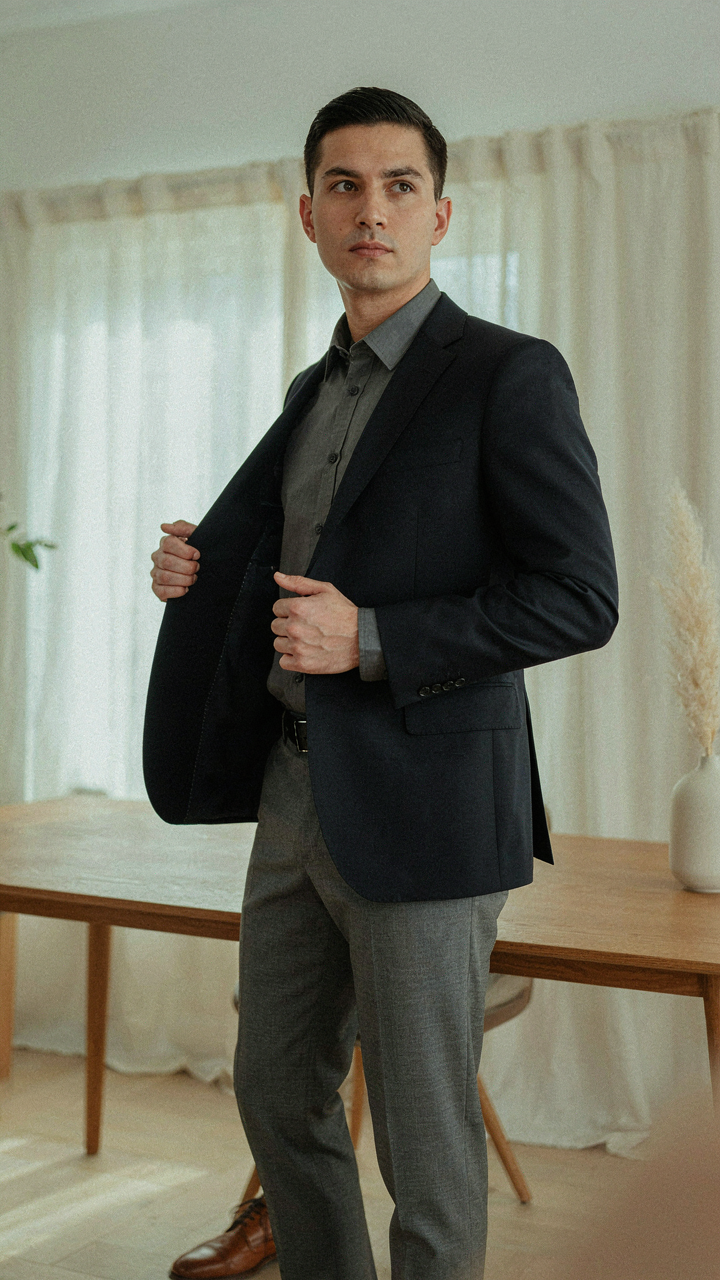
Cocktail sits between business and black tie. It kills the suit jacket but keeps the dress code. Men wear dress pants, a dress shirt, and a blazer or sport coat that doesn’t match the pants. No tuxedo. No bowtie. Women wear a dress or separates that sits above knee or midi length, never gown territory. The category exists because some events want formality without the theater of black tie. That boundary is not negotiable, and crossing it signals you didn’t know the dress code.
Dressing Up Without Looking Desperate
Everyone tells you to “add personality” to cocktail outfits. Bad advice. Adding personality is how people end up overdressed or confused. The real move is subtraction through material. Cocktail rewards fabric quality more than quantity of detail. A silk blend dress shirt beats a cotton one at the same formality level because material communicates investment without effort. A wool blazer in a neutral tone outlasts trends and reads as intentional.
The trap is thinking cocktail means you can experiment. It doesn’t. It means you have fewer constraints but higher stakes because every choice shows. Wear a blazer that fits your shoulders correctly. Choose dress pants in black, charcoal, or navy. Pick a shirt without patterns unless you know how to wear them. If you’re unsure whether something works, it doesn’t. The protocol: neutral base, quality fabric, fit that works now, not after tailoring.
The Black Tie Optional Dress Code: A Test Of Nuance

Reading The Room Before You Dress
You’re worried you’ll look wrong. That’s the real thing driving this question. Black tie optional exists specifically to create uncertainty, and uncertainty triggers status anxiety. Here’s the mechanism: the host is signaling formality without demanding it, which means the dress code becomes a signal about who you are, not what the event requires. The person who shows up in a tuxedo to a cocktail lounge reads as try-hard. The person who wears a business suit to black tie optional at a formal venue reads as indifferent. The actual rule is buried in context: who’s hosting, what time it starts, what venue it is, and who else attends.

Black tie optional operates like a signal filter in economics. You’re reading encoded information about the event’s actual formality level from sources other than the dress code itself. A black tie optional gala at a museum at 8 PM has different stakes than black tie optional at a hotel bar at 6 PM. The dress code is a permission structure, not a mandate. Most people guess wrong because they treat it as a binary choice instead of reading the environmental context that determines which option the room actually expects. Start by finding out what other guests are wearing, what the venue typically hosts, and whether this is primarily a networking event or a ceremonial one.
When The Wrong Choice Costs You
Misjudging black tie optional creates two specific problems. First, you stand out in the wrong way, which damages credibility in professional or high-stakes social settings. Second, you reveal something about your attention to detail or your ability to read a room, both of which people unconsciously factor into how they treat you. Showing up overdressed signals you either don’t understand context or you’re compensating for insecurity. Showing up underdressed signals you didn’t care enough to interpret the signal correctly. Neither position helps you.
The cost compounds in smaller, tighter circles. At a large anonymous event, nobody remembers. At an industry gathering or a formal social circle where people see each other repeatedly, the misjudgment becomes part of how people categorize you. Recovery requires consistency over time. The concrete protection is this: when in doubt about black tie optional, call the host or the event organizer directly and ask what the majority of guests will wear. This isn’t weakness. It’s reading the actual protocol instead of guessing at it.
The “Context Is King” Protocol For Black Tie Outfits

What The Invitation Actually Demands
You want certainty about what to wear because showing up wrong feels like a public failure. The mechanism is simple: black tie isn’t one uniform code. The event type determines which specific signals matter. A formal wedding demands different choices than a gala or corporate dinner, even though both say “black tie” on the card. The invitation’s context—not the dress code alone—tells you what to optimize for.

Weddings require you to recede visually behind the couple. Galas expect you to command attention. Corporate events demand you fit the industry’s power aesthetic. Same dress code, opposite strategies. This is why generic black tie advice fails. It treats a two-word phrase as though it means the same thing everywhere, when it actually means you read the room first, then adjust your choices within the acceptable range.
Geography And Culture Override The Written Rule
The written dress code is a floor, not a ceiling. What counts as “correct” black tie in New York differs from London differs from Dubai differs from Tokyo. American black tie historically leans toward simpler, less embellished tailoring. British black tie favors precision in fabric weight and button placement. European events often tolerate slight color variance in dress shirts. Middle Eastern formal wear sometimes incorporates regional elements like thobes alongside Western black tie pieces. You don’t fight these expectations; you research them before you buy or rent.
Age, industry, and city tier matter equally. A tech founder in San Francisco wears looser black tie than a banker in Manhattan. Younger crowds tolerate fashion-forward departures. Conservative industries don’t. Cultural background of the hosts shapes what signals respect versus what signals you don’t belong. The practical move: ask someone who has attended similar events in that specific location what they wore. One phone call beats weeks of second-guessing.
The Black Tie Wedding Guest Code: Respecting The Union
Personal Style Within The Framework
You’re anxious about looking wrong because you’ve confused fashion with individualism. The real mechanism here is constraint as clarity. Black tie isn’t oppressive—it’s a signal system. The couple has communicated the exact formality level they want, and your job is to execute that code while staying recognizable as yourself. Generic advice says “add personality,” which is useless. The actual move is working within the boundaries, not against them.

Black tie at a wedding functions like military dress uniform—identical structure, infinite room for variation within it. Your tuxedo silhouette stays the same. Your fabric choice, shirt details, tie knot, cufflinks, pocket square, and shoe finish become your personal fingerprint. A velvet bow tie reads different than silk. Peak lapels versus notch lapels shift the whole vibe without breaking the code. This is how you balance: strict on the skeleton, intentional on the details.
The Mathematics Of Not Upstaging
Common advice warns against “shiny fabrics” or “standing out too much,” which misses the actual principle. The couple occupies the visual hierarchy. You don’t compete with their focal position through brightness or volume—you compete through polish. A guest in a poorly fitted tuxedo draws more attention than a guest in a perfectly tailored one, because fitness demands scrutiny. The mechanism is this: impeccable execution within the code reads as respect. Deviation reads as either ignorance or ego.
The bride and groom control their visual dominance through placement, timing, and intentional design choices—the white dress, the positioning during ceremony, the lighting. Your role is presence without presence. Wear black tie correctly, and nobody remembers you were there. Wear it wrong, and everyone does. The protocol is specific: dark suit, white shirt, dark tie or bow tie, dark shoes. No exceptions, no improvisation. This clarity prevents the guest from becoming the story.
Deconstructing The Black Tie Event Outfit: Beyond The Tuxedo
When The Tuxedo Isn’t Your Only Move
You’re worried people will clock you as someone who doesn’t know the rules, so you’re searching for a loophole. The real mechanism: black tie has a narrower acceptable range than cocktail, but that range does exist. The difference operates like a military hierarchy where cocktail is noncommissioned officer and black tie is officer, but both still serve the same function. Break protocol in cocktail and you reset expectations. Break it in black tie and you announce incompetence.

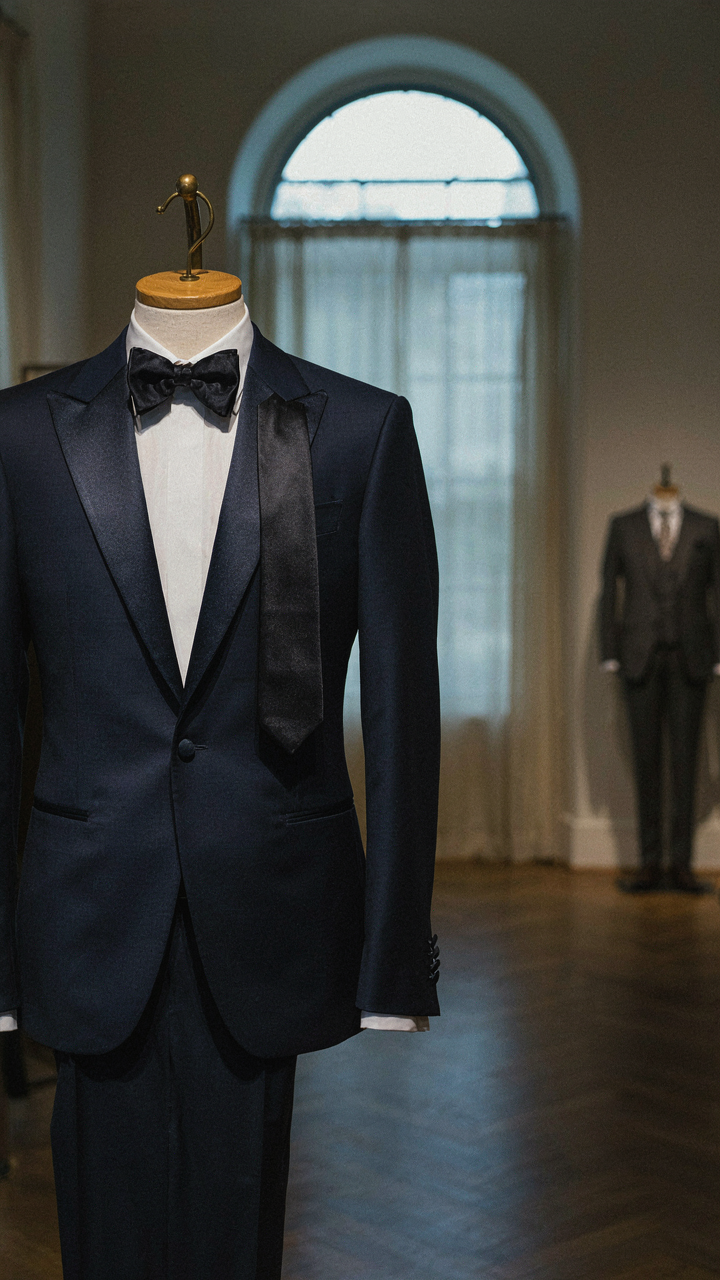
The white dinner jacket exists. The midnight blue tuxedo exists. The peak lapel versus shawl collar distinction matters less than you think. What matters is that you’re choosing a variant, not abandoning the format. The alternatives work because they maintain the core signal: formality, restraint, deliberate choice.
- Midnight blue tuxedo: Reads as black tie in low light, feels less severe than pure black, still maintains the formal silhouette and traditional structure expected at the event.
- White dinner jacket: Seasonal option for warm climates or black tie summer events, paired with black trousers and traditional black tie accessories to keep the formality intact.
- Double breasted black jacket: Acceptable if tailored slim and paired with a white dress shirt and black bow tie, maintains formality without the single breasted tuxedo predictability.
- Shawl collar tuxedo: More dramatic than peak lapel but equally formal, common in European black tie contexts, works if the overall silhouette remains sharp and controlled.
- Black waistcoat instead of cummerbund: Traditional alternative that serves the same function, creates definition at the waist, eliminates the cummerbund if your torso rejects it structurally.
The moment you deviate, you’re responsible for maintaining every other element at maximum precision. Loose fit kills authority. Bad tailoring kills formality. The variant only works if execution becomes bulletproof.
The Real Purpose Of Black Tie Accessories
Most advice treats accessories as decoration. Wrong. Accessories in black tie are a constraint system that prevents you from broadcasting uncertainty. This isn’t fashion guidance, it’s signal control. Think of economics: black tie accessories function like a price floor. They establish a minimum threshold of formality you cannot drop below without breaking the entire communication.
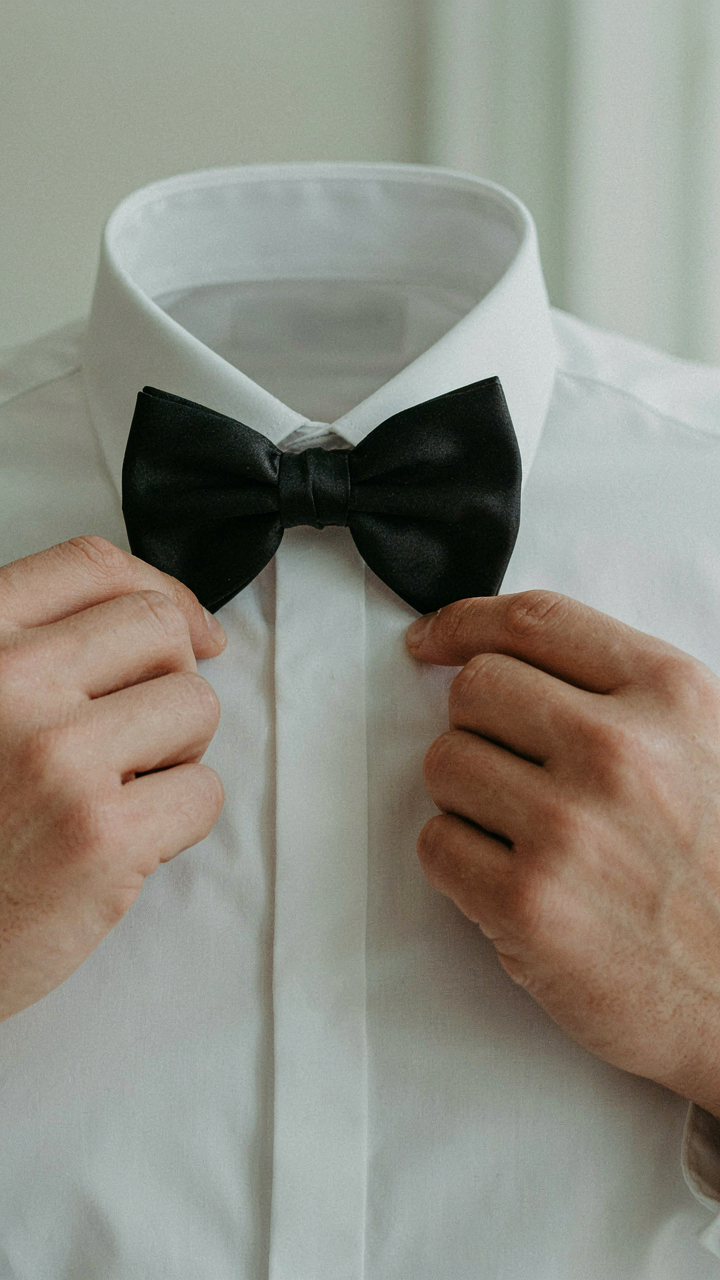
Your bow tie is not a style statement. It’s a binary: you tied it or you didn’t, it’s silk or it’s not, it fits or it doesn’t. Patent leather shoes, not matte. White piqué shirt front, not subtle texture. Pocket square in white or black only, matching the aesthetic, never drawing attention. Black socks that cover the calf. Cufflinks that don’t catch light. The rule is invisible presence. Every accessory reinforces the same message: this person understood the assignment and executed without ego. Choose accessories, check them once, stop thinking about them.
The Cognitive Load Of Cocktail Attire

Why Cocktail Demands More Decisions
You’re worried you’ll get it wrong and look like you’re trying too hard. That fear is rational. Cocktail attire sits in the gap between casual and formal, which means you’re making ten decisions black tie erases with one rule. In behavioral economics, this gap is decision fatigue: the more choices you face, the worse your decisions become. Black tie removes variables. Cocktail multiplies them. You choose the jacket weight, the shirt formality, the shoe material, the accessories, the color palette. Each choice signals something different about your judgment.

The mechanism is simple: black tie works because it delegates authority to a dress code. Cocktail works because it delegates authority to you. This means you either nail the calibration or you broadcast indecision through your clothes. The average person tries to hedge by going slightly formal, which reads as insecurity. The solution isn’t more rules. It’s fewer decisions made deliberately. Pick a template, execute it, stop second-guessing.
Effort That Reads As Ease
Never overdress for cocktail in an attempt to look refined. You’ll signal anxiety instead. Cocktail attire requires visible effort without visible strain. You’re trying to appear effortless while actually being precise, which creates a paradox most people solve by looking stiff or trying too hard. The real move is choosing restraint. A well-fitted blazer in a neutral color, a shirt in a complementary fabric, shoes that aren’t costume pieces. These choices take mental energy to assemble but zero energy to wear. That’s the transmission mechanism: effort that disappears once you put it on.
The dress code acknowledges that not every formal event needs a tuxedo. This flexibility is the trap. You interpret it as permission to experiment, when it actually demands higher precision in basic elements. Black tie forgives mediocre fit because the garment itself is formal enough. Cocktail exposes it. Your blazer must fit the shoulders exactly. Your shirt can’t be wrinkled. Your shoes must be clean. These aren’t style notes. They’re the difference between looking composed and looking uncertain.
Black Tie Vs. Black Tie Optional: A Strategic Framework
When To Hold The Line
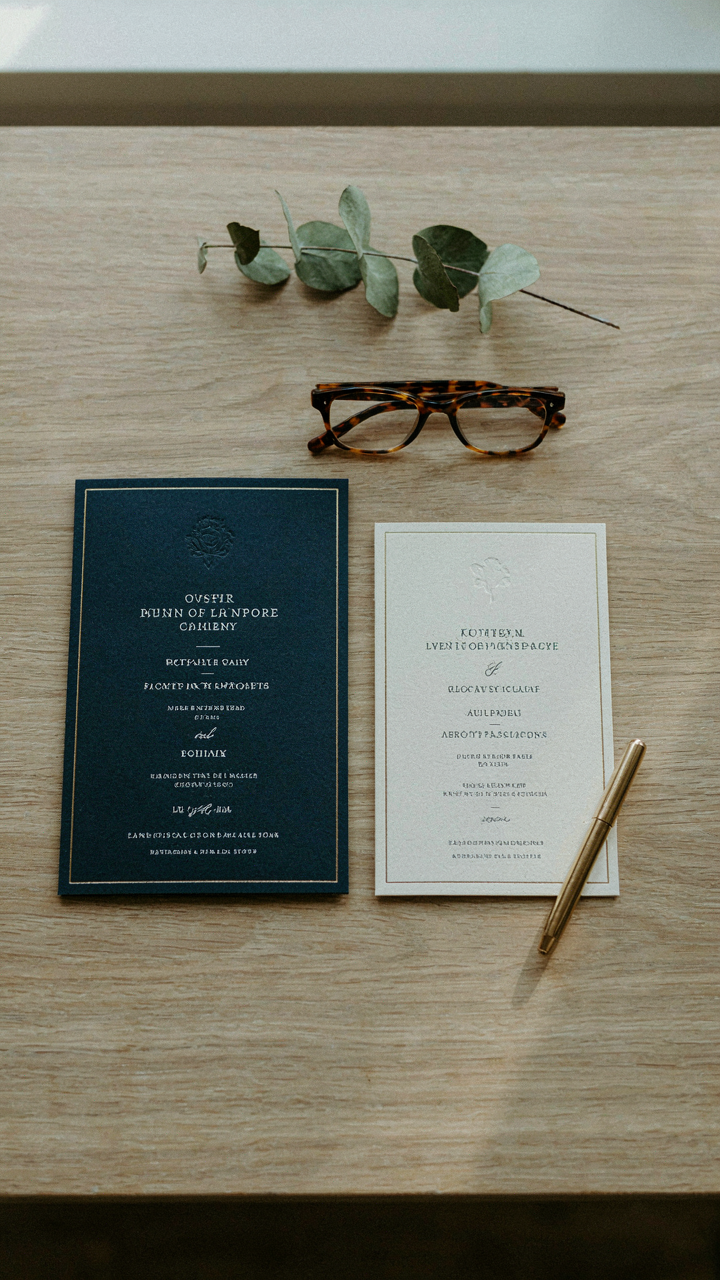
You want permission to break the rules without looking stupid. Here’s the mechanism: Black Tie functions as a written contract between host and guest. The host specifies dress code to control the visual environment. You’re not actually being restrictive—you’re being predictable. When the invitation reads “Black Tie,” the host has already decided what the room will look like. Deviation signals you either didn’t read the invitation or you rejected the host’s stated intent.

Black Tie Optional exists for a different reason. The host acknowledges that not everyone owns formal wear and wants to avoid excluding people. This creates actual flexibility. The risk isn’t in showing up underdressed to “Optional”—it’s in showing up overdressed and appearing socially tone-deaf. Strict Black Tie demands compliance. Optional demands judgment about your specific context and relationship to the host.
The Real Cost Of Breaking Protocol
Sartorial deviation operates like a signal in economics: you’re transmitting information whether you intend to or not. Show up in a sports coat to Black Tie and you’ve communicated either ignorance or deliberate disregard. Neither reads well. The person hosting spent time clarifying expectations. Ignoring that costs social capital in direct proportion to how formal the event is.
Breaking protocol to Black Tie Optional carries different math. A well-fitted navy suit works where Black Tie is optional. A cocktail dress works where Black Tie is optional. The mechanism here is context matching, not rule-breaking. If you’re uncertain, match the formality level to the venue type and guest list composition—not to what you wish the code said. This isn’t hedging. It’s reading the room before you enter it.
Mastering Black Tie For Women: Power Through Precision
The Silhouettes That Signal Command
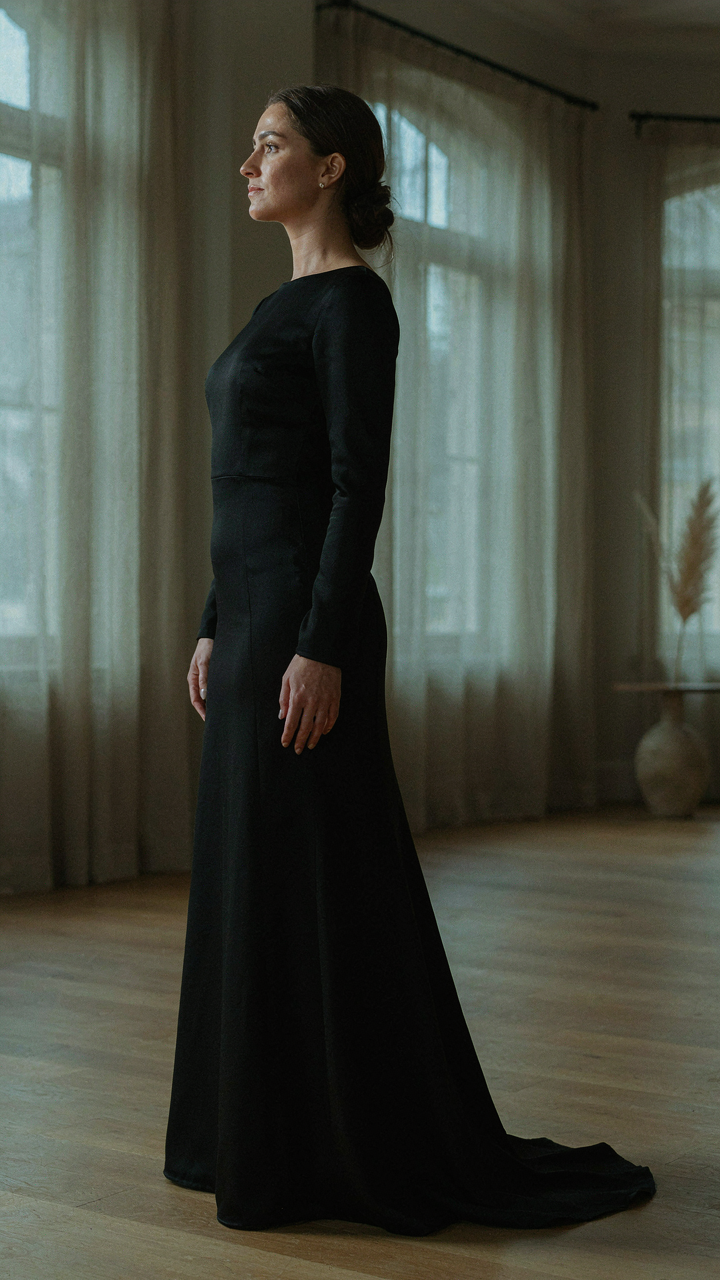
You’re reading this because you want to know if you’ll look right, and right now you’re terrified of getting it wrong. The mechanism is simple: black tie for women operates like military dress code. Precision isn’t optional. A gown at black tie isn’t about beauty or self-expression. It’s a uniform that signals you understand the rules and respect the event enough to follow them.

Black tie requires floor-length gowns. The hem hits your ankle or pools slightly on the ground. Sleeveless, one-shoulder, or long-sleeved cuts all work. The fabric must be structured enough to hold its shape. Silk, crepe, and wool blends do this. Avoid jersey or anything that clings loosely to your body. The dress should command space without drawing attention to itself. Matte finishes dominate black tie. Shimmer and shine belong at cocktail events.
Jewelry And Hair: Restraint As Authority
Everyone gets this wrong. They load up on jewelry thinking more equals fancier. That’s cocktail thinking. Black tie demands the opposite. You wear diamonds or pearls, not both competing for attention. One statement piece per category works. A bracelet or ring, not both. A necklace or earrings, rarely both glittering at once.
Hair stays off your face. Pulled back, styled up, or sleek. The point is visibility and formality. Your jewelry and skin must be visible and unobstructed. Skip color in your hair accessories. Black, silver, or gold only. One metallic tone throughout the entire look, including shoes and bag. This creates coherence, not confusion. The protocol is specific because it removes choice. You execute the formula exactly.
The Investment Fallacy Of Black Tie Attire

The Real Cost Of Wearing It Once
You’re worried you’ll spend too much money on something you’ll never wear again. That fear is legitimate, but it’s based on faulty math. Black tie operates like a depreciating asset in economics—you hemorrhage value the moment you buy it retail and wear it identically to everyone else at the same event. The mechanism is scarcity reversal: black tie gains its power from uniformity, which means buying an expensive tuxedo to stand out at one gala is backwards thinking.
The actual play is treating black tie as a tool you deploy across multiple contexts, not a costume for a single night. A well-made tuxedo jacket works at galas, weddings, high-end dinners, and formal photo shoots over years. Cocktail attire, by contrast, pulls from your existing wardrobe—a suit jacket, dress pants, a nicer shirt. You’re not buying new. This is why cocktail exists as a category: it preserves your capital. If you genuinely have one black tie event every five years, rent. If you’re attending three or more black tie events within a decade, buy quality once and extract value repeatedly.
Wearing Beyond The Ballroom
Everyone treats black tie like a museum piece you return to storage after the event ends. That’s the wrong mental model. Real deployment means understanding what parts transfer into regular rotation. The trousers with the silk stripe sit unused. The shirt with studs never appears elsewhere. But the jacket—a midnight navy or charcoal tuxedo jacket—functions as a premium sport coat for upscale dinners, business events, and elevated casual settings if styled correctly.
Cocktail attire reveals the actual efficiency play here. You buy one versatile blazer, wear it at a cocktail event, then wear it to your office, to dinner, to weekend social functions. The garment lives in active rotation. Black tie demands specialization. The cost-to-wear ratio only improves if you commit to wearing the pieces in settings beyond formal events, which most people never do. Calculate your cost per wear before purchasing. If an event is truly one-off, rent. If you can extract five or more wears from the jacket over five years, buy.
Your Fear Of Misinterpretation Is The Actual Fashion Faux Pas. Master Context, Command Presence
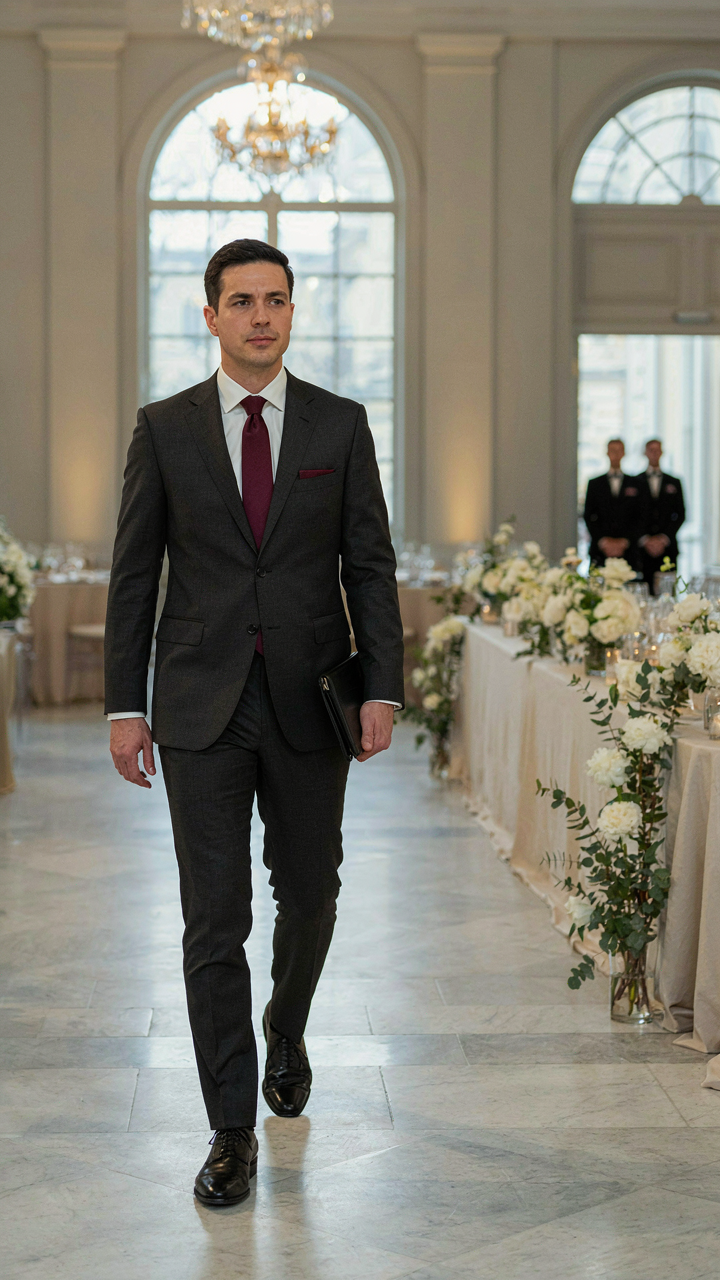
Most men obsess over whether their tie is too casual or their jacket too formal. That’s the wrong problem. The real move is reading the room and dressing one tier up from what you observe. Cocktail demands polish. Black tie demands precision. You choose based on what the invitation demands, not what feels safe. Pull up the dress code right now on your event confirmation and commit to one. The difference between looking lost and looking intentional isn’t threads. It’s decisiveness.