
The “Un Pose” Protocol For Dynamic Shots
Stop Treating Poses As Fixed Points
You want the photo to look candid because candid looks effortless, and effortless reads as confident. Here’s the mechanism: satin moves. The fabric doesn’t freeze. Most pose advice treats your body like a mannequin, but satin demands you think in physics. Tension creates drag. Movement creates shape. A static pose in satin looks dead because the fabric has nowhere to go. You’re fighting the material’s actual property: it reflects and flows simultaneously.
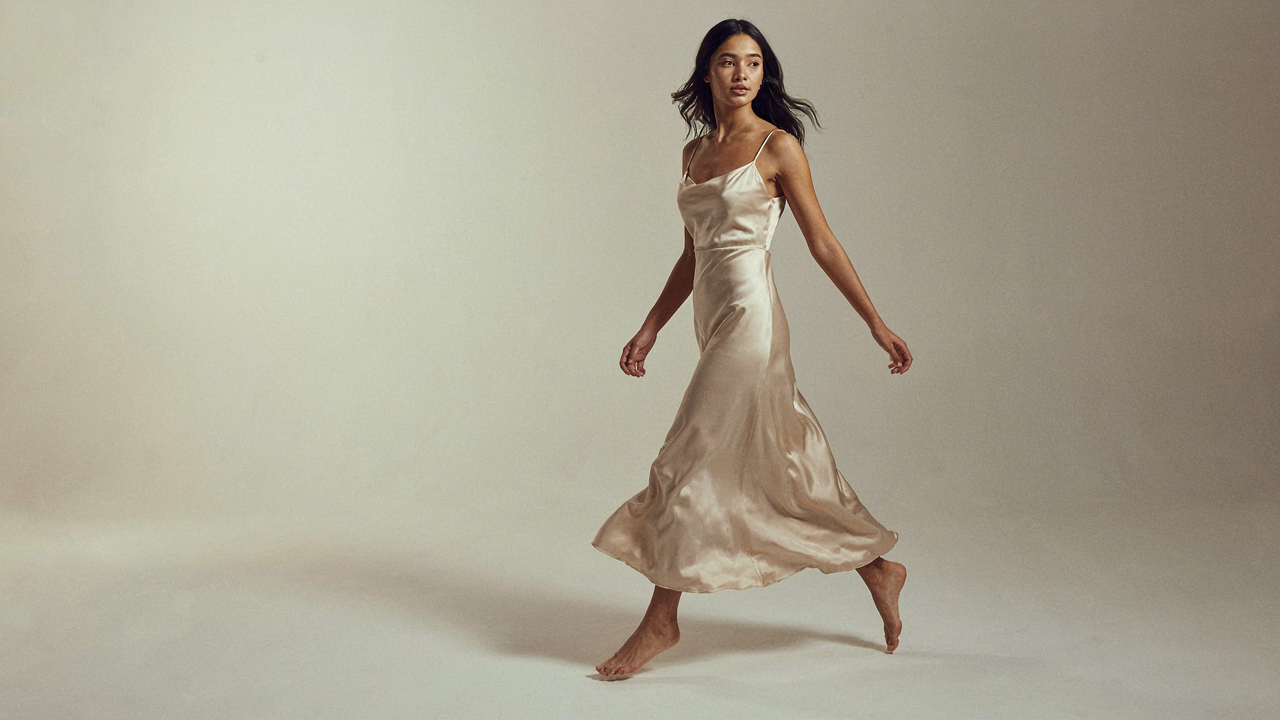
The real shift is moving from position-based thinking to trajectory-based thinking. Instead of landing on a pose, you move through it. Catch the frame mid-motion, not at rest. This works because satin captures momentum visually. The fabric’s sheen exaggerates any shift in angle or direction. A leg mid-step reads as powerful. The same leg planted reads as posed. The photographer needs to shoot continuous frames, not single moments. One frame out of thirty will have the fabric suspended in perfect motion.
The Body Leads, The Fabric Follows
Fluidity isn’t about looking loose. It’s about understanding that satin responds to weight distribution, not to aesthetic choices. When you shift your weight forward, the fabric cascades differently than when you hold it centered. This is biomechanics, not artistry.
Start by moving your center of gravity first, then let your limbs catch up a beat later. A forward weight shift followed by a backward arm swing creates tension in the fabric that reads as intentional movement. The satin wraps around the new shape your body creates. Photograph this transition, not the landing. The dress becomes a secondary subject that proves your body moved, rather than a costume you’re wearing. This distinction changes everything about how dynamic the final image appears.
Satin’s Secret Language: Understanding Fabric Dynamics

How Gravity Shapes Every Pose
You care about this because you’ve seen photos where satin looks dead and flat, and you’re afraid your pose will too. Here’s the mechanism: satin obeys physics like a fluid dynamics problem. The fabric doesn’t fall straight down—it redirects based on tension points. Where you anchor the dress with your body, gravity pulls the rest into predictable paths. Your shoulders, hips, and limbs become load-bearing anchors. The fabric streams from those points like water around rocks.

Satin’s weight matters more than cotton or silk blends. A true satin charmeuse or duchess satin has density that forces it to move decisively. When you raise one arm, the dress doesn’t just follow—it cascades from that shoulder with momentum. Lower one hip, and the fabric pools at that angle. Common advice says “just move naturally,” which is lazy. You need to create intentional tension points. Plant your weight in one leg. Let the opposite hip drop. Watch where the satin pools and angle toward it.
Where The Fabric Actually Goes
Movement paths aren’t random. They’re determined by which body parts create resistance and how far the fabric travels from those points. Satin follows the line of greatest ease—the fastest route downward under gravity’s pull. If you twist your torso, the fabric doesn’t twist with you evenly. It bunches on the inside of the twist and stretches on the outside. The path is asymmetrical, and that’s where your photos look expensive.
Predict the path by testing: stand still, then move one body part at a time. Rotate your shoulders left. The satin on your right side compresses; your left side extends. Step forward on your right leg. The fabric pulls taut across your front thigh and drapes deeper behind. This isn’t guesswork—it’s mechanics. Once you understand the paths, pose into them deliberately rather than hoping they happen.
The Wind Whisperer: Mastering Environmental Movement
Positioning Yourself For Air Movement
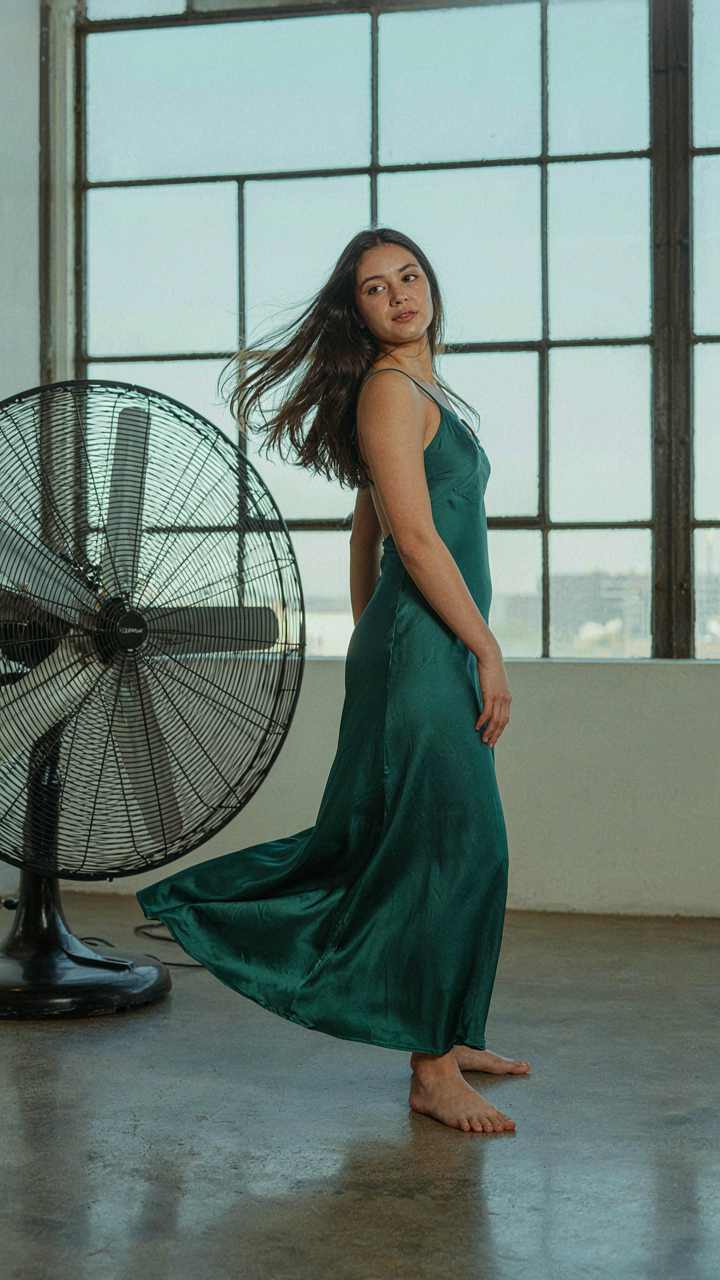
You want this shot because you’re tired of looking static. Everyone else posting satin looks frozen. Here’s the mechanism: satin reveals air the way water reveals current. Physics calls it laminar flow, but for your pose, it means positioning your body as the object the fabric moves around, not the force moving it. Stand perpendicular to wind or fan direction, never facing into it. Your silhouette matters more than your stance.

Angle your shoulders back slightly and let your torso lead the turn away from the source. This creates separation between your body and the fabric. The dress catches air against your leg line and torso edge, not your front. Lift one foot slightly or shift your weight to one side. This instability is what sells movement to the camera. The fabric responds to genuine weight shifts faster than it responds to deliberate posing.
Working With Fans For Deliberate Drama
Most advice here is lazy: point a fan at the subject and shoot. That’s wrong. You need directional consistency and distance control. Place the fan three to five feet away, angled slightly upward. This lifts the hem and creates volume without flattening the dress against your body. A box fan works better than a handheld because the output is steady and predictable.
Stand with the fan slightly to one side of frame, not behind you. This gives the fabric an escape route and prevents it from just puffing straight at the camera. Satin drapes heavy, so the fan has to work against real weight. Move your arms away from your body in loose, open positions. Hold your hand out or let an arm extend naturally. The wind catches your sleeve and hair simultaneously, which reads as authentic movement instead of posed drama.
Bodycon Pose Ideas: Sculpting The Silhouette In Motion
The Angle Shift That Rewires Your Frame
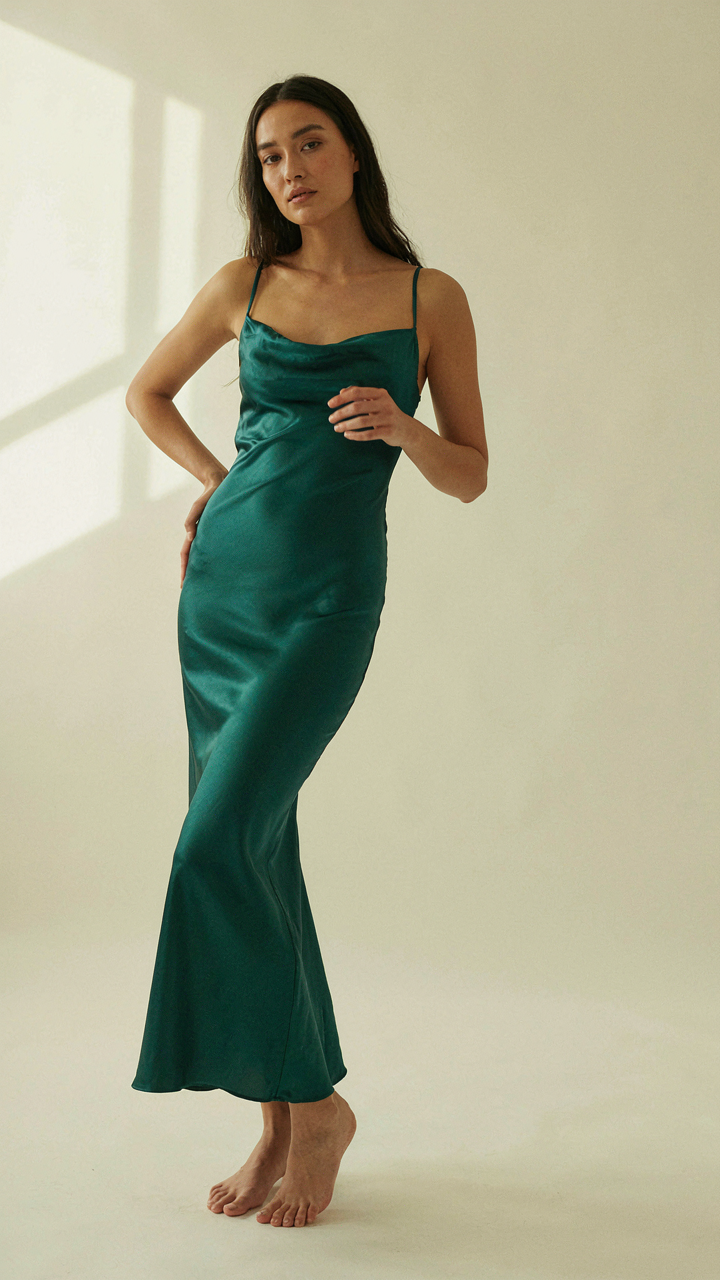
You want this section because you think looking good in satin means standing still and hoping the fabric does the work. It doesn’t. The real mechanism is borrowed from physics: tension. In satin, tension is what creates definition. A bodycon dress needs active angles, not passive stillness. Rotate your shoulders back and down while keeping your hips level. This creates opposing vectors that satin reads instantly. The fabric catches light differently across each plane you create. Most people stand square to the camera. That’s the mistake. Your job is to break the plane.

Satin amplifies every structural choice you make because the material reflects rather than absorbs. When you shift weight to one leg and angle your torso slightly away from center, the dress reveals musculature and shape the flat-on approach erases. The key is precision over drama. Small rotations work harder than exaggerated poses because satin needs clean lines to land. Move your working shoulder back about two inches, let your opposite hip drop naturally, and watch the fabric create shadow and highlight where there was flatness before. This is how bodycon in satin reads as intentional rather than tight.
Moving Through Space Without Losing Form
The common advice says to move fluidly and trust the dress. That misses the point entirely. Movement in bodycon satin requires active engagement because loose movement creates bunching and unflattering pooling. Your posture adjustments must precede motion, not follow it. Think of how a dancer shifts weight before executing a step. That weight transfer is where the pose begins. Engage your core slightly before you move, hold your chest open, and let your movement flow from deliberate postural choices rather than momentum.
When you walk or transition between poses in satin, timing matters more than smoothness. Adjust your posture to the new position first, pause for one beat, then move into it. This prevents the dress from trailing behind your movement and creating lag. The fabric will follow you, but only if you commit to the frame before motion starts. Your next move: identify your strongest angle, practice the weight shift to create it, then film yourself moving into that position rather than standing in it. The pause reveals the pose. Motion reveals the woman in it.
Dresses Photoshoot: Telling A Story With Movement
Build Momentum Between Frames
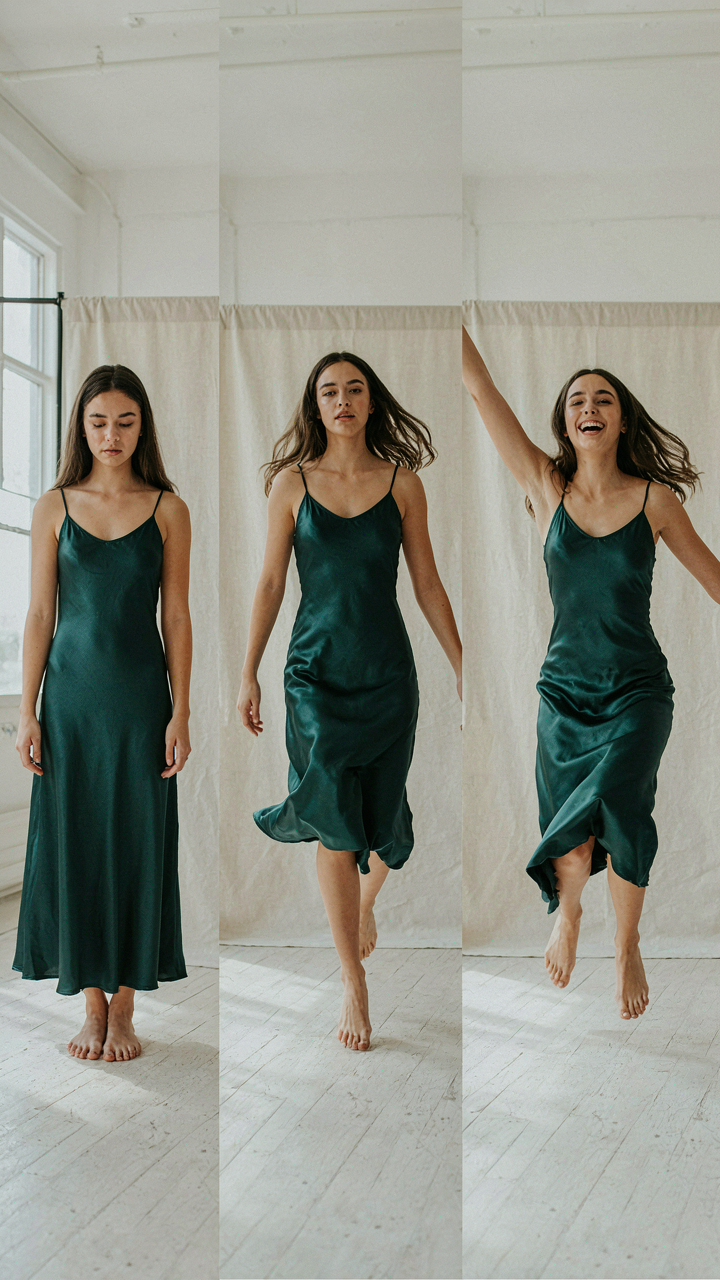
You want the photos to feel inevitable, like they’re pulling the viewer through a narrative arc instead of sitting as isolated moments. That’s the real hidden motive here: avoiding the dead, static gallery feel. Narrative flow borrows from film editing. In editing, “momentum” means each cut propels you forward through cause and effect. With satin dress poses, momentum means each position sets up the next one physically. The fabric’s movement in frame one explains why the body shifts in frame two.

Start with a grounded pose where the satin drapes predictably. Feet planted, weight centered. Shoot it. Then move to a pose where one leg steps forward or weight shifts to one side, letting the fabric catch and redirect. The satin doesn’t just follow the body—it lags, catches air, settles differently than it did before. The viewer’s eye tracks this change. By the third pose, introduce a turn or pivot where the fabric swings or twists. Each position reads as a consequence of the one before it, not a random reset.
Choreograph Tension And Release
Emotional arcs in photography don’t come from pretending to feel something. They come from structural contrast in the body’s relationship to fabric. Tension means the satin is pulled taut, held, resisting. Release means it’s loose, flowing, at rest. Alternate between them deliberately. A tense pose: standing with arms extended, satin stretched across the torso, fabric lines sharp and deliberate. Hold it. Shoot it. Then immediately move to release: arms down, fabric pooling, body relaxed, weight shifted.
The contrast between these states creates the emotional payload. Viewers don’t analyze the mechanics—they feel the shift from constraint to freedom, from effort to ease. Shoot the tension first, then release. This sequence trains the eye to anticipate change. On the third or fourth cycle, break the pattern: hold release longer than expected, or snap into tension faster. The pattern break reads as surprise or climax. This is the mechanism of emotional arcs in still photography: structured contrast presented in sequence.
Formal Dress Poses Women: Beyond The Red Carpet Stance
Stop Copying What Everyone Else Does
You want to look expensive in photos because you’re afraid one bad angle will tank your credibility. That’s the real mechanism at work. The problem: formal poses are recycled endlessly—the hand-on-hip, the over-the-shoulder glance, the awkward leg pop. Satin amplifies every choice because the fabric moves with you, not against you. Generic poses flatten satin’s reflective surface into something static and cheap-looking.

The shift happens when you stop thinking about “looking formal” and start thinking about satin’s actual properties. Satin shows movement through light, not just through body position. A stiff pose kills the fabric’s entire value proposition. The dress becomes decoration instead of an extension of your presence. You need poses that let satin do its job: catch light, show dimension, signal control.
Presence Over Posture
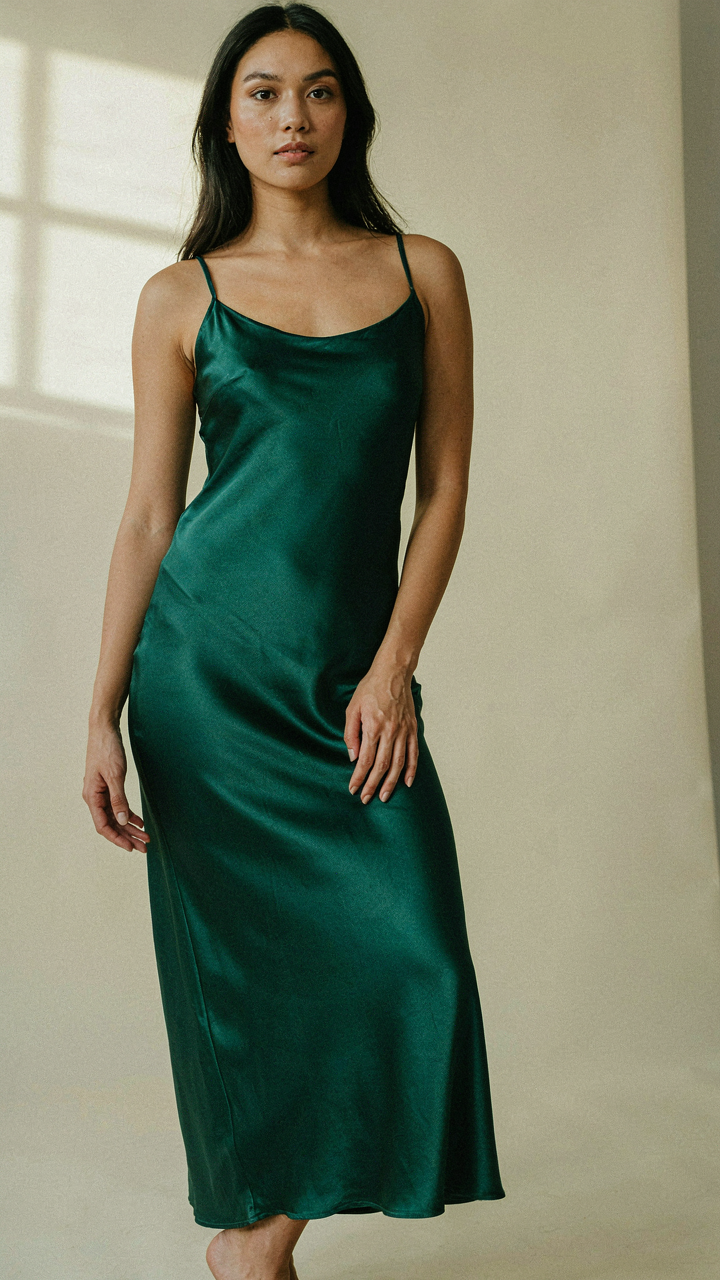
Formal doesn’t mean rigid. This contradicts what most photography advice sells you. The real play is tension without strain—your body should read as capable and relaxed simultaneously. In theatrical blocking, actors use “counter-tension,” where opposing muscle groups engage to create visual interest without looking strained. Apply this to satin dressing: engage your core slightly while dropping your shoulders, stand with weight shifted to one leg while keeping your frame open.
This creates the satin effect you’re actually after. When you hold tension this way, the fabric drapes with intentional folds. The light hits differently. Your silhouette reads as deliberate rather than posed. Satin photographs best when it catches movement that’s controlled but not performed. The specific action: shift your weight before the photo, keep one shoulder slightly back, let your arm hang naturally instead of placing it. This single protocol change transforms how the fabric behaves on camera.
Insta Pictures: From Fleeting Moments To Viral Gold

The Micro Movement That Stops The Scroll
You want people to pause. That’s the real reason you care about this. The mechanism is simple: satin moves. Most advice tells you to stand still and look good. That’s wrong. Satin fabric responds to physics like fabric in motion capture does to sensors. Every shift in weight, every shoulder roll, every arm adjustment creates a ripple across the surface. The camera catches this as depth and dimension. Dead stillness reads flat. Controlled micro-movements read alive.

The lever here is tension release. Shift your weight to one leg, then barely roll your shoulders backward. That single action creates a wave in the fabric. Tilt your chin down slightly while rotating your torso just five degrees. These aren’t big gestures. They’re small enough to hold, but large enough to register on camera. Capture three to five frames during that brief moment of transition. One of them will show the fabric mid-movement, catching light in a way a static pose cannot.
Spontaneity Without The Chaos
Real spontaneity on Instagram is a lie people believe when the mechanics are hidden well enough. You’re not candid. You’re calibrated. The distinction matters because satin demands precision. Loose, random movement creates wrinkles and pooling that read as messy. Controlled transitions create the illusion of candid moments while maintaining silhouette integrity. The pose still exists. You’re just moving through it.
Walk slowly while turning your head at a different pace than your body. Shoot during the slight dissonance between these two movements. This creates perceived spontaneity because your face and dress aren’t aligned perfectly. Pause mid-stride with one foot forward, one back. Drop your gaze. Lift it slowly. Film this as a sequence and pull the frame where the fabric catches between positions. This method transforms deliberate posing into something that feels discovered rather than performed.
The “Prom Poses” Fallacy: Breaking Free From Convention

Stop Mimicking The Same Three Angles
You want permission to look different because you’re afraid the “safe” poses will make you invisible. Here’s the mechanism: convention in posing exists because it’s been photographed to death, not because it works. Satin moves. Most pose guides ignore this. They show static body positions as if fabric doesn’t exist. Satin amplifies movement, catches light differently at every angle, and exposes rigidity instantly. A pose that looks natural in cotton reads as stiff in satin because the fabric demands fluidity or it betrays you.

The prom pose playbook—hand on hip, shoulder back, chin down—works for still images in matte fabrics. Satin punishes this approach. The fabric clings and shifts, exposing tension in your shoulders and arms. Photographers who understand satin don’t fight the pose guides; they break them. They recognize that a satin dress requires poses built around momentum, not stasis. The distinction matters because your goal isn’t to match a template. Your goal is to move in a way that lets satin do what it’s designed to do: flow and reflect.
Move Before You Pose
Authenticity in satin posing comes from one principle borrowed from biomechanics: load before you display. Think of it like a coiled spring—tension creates the position. Instead of landing in a pose and freezing, you move into it. A step forward, a shoulder roll, a weight shift. The satin catches this transition. Your arms don’t hold positions; they finish an arc. Your spine doesn’t hold a curve; it completes a turn. This creates visual momentum the static pose can never match. Satin registers micro-movements that other fabrics hide.
Start with intent, not appearance. Ask yourself what movement precedes the moment you want captured. Are you walking? Turning? Reaching? Build the pose around the action, not the other way around. Your satin dress responds to genuine movement with authenticity. The fabric settles into position naturally when you’ve moved into it rather than positioned yourself manually. This is how you break the prom pose trap and make the dress work for you instead of against you.
Maxi Dress Photo Poses: Exaggerating The Flow
Volume As A Positioning Tool
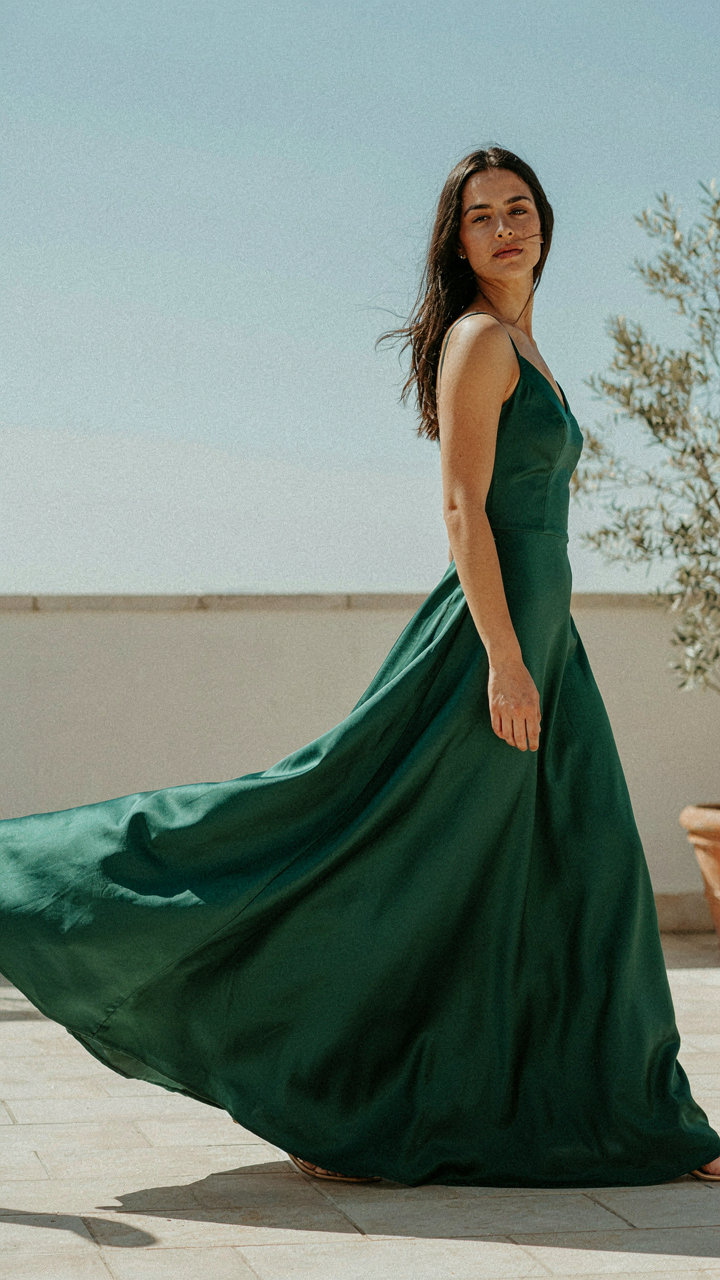
You want this pose to work because it signals wealth and control. The real mechanism is simple: satin maxi dresses have mass, and mass needs direction. In physics terms, you’re creating momentum—the dress becomes a projectile that reads as intentional rather than static. Position yourself with one leg forward and the opposite arm extended or swept back. This creates the centerline tension that pulls fabric away from your body. The dress fabric follows the body’s geometry, so the body’s angle determines whether satin pools or flies.

Most advice tells you to “just move.” Wrong. You need to understand load distribution. Place your weight on your back leg while your front leg steps out. This stance compresses fabric behind you and stretches it forward, giving the camera a readable silhouette. The satin catches light differently depending on how stretched versus bunched the material sits. Shoot from a 45-degree angle to your body position, never straight-on. This angle captures both the volume and the dress’s directional pull.
Motion Captured Through Body Angles
Cinematic appeal isn’t about spinning randomly. It’s about trajectory. Step forward with intention while rotating your torso slightly away from the camera. Your shoulders should lead the turn, not your hips. This creates a delayed reaction in the dress fabric that reads as motion even in a still frame. The satin catches the light mid-shift, which is what creates the appearance of movement.
The second mechanism is timing. Shoot the moment your body stops but the fabric hasn’t caught up yet. This requires multiple shots in quick succession. Position one foot ahead, torso rotated, head turned toward camera, and capture that exact frame where the dress is still settling. The fabric lag is what sells the illusion of movement. Without that pause between body and material, you just look frozen.
The Real Obstacle Isn’t Your Pose; It’s Your Refusal To Treat The Camera As A Co-conspirator In Motion
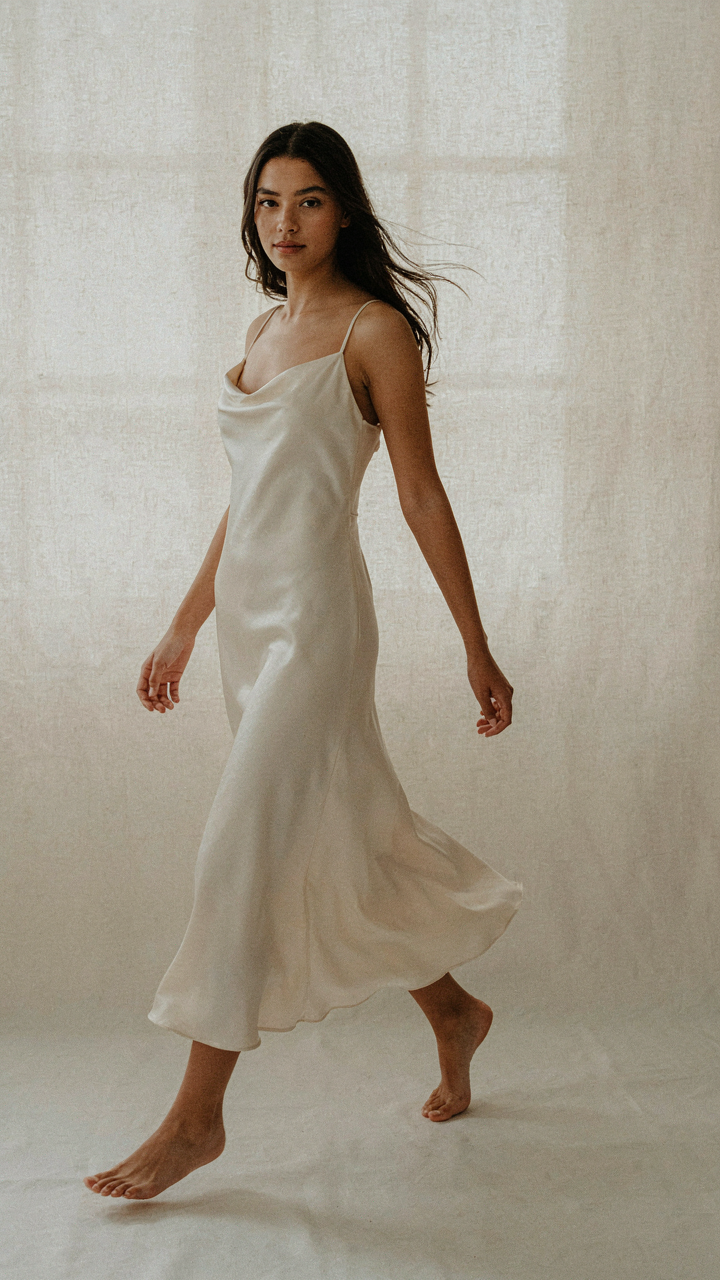
Most people freeze in front of a camera because they think it captures stillness. It doesn’t. It captures intention. Satin moves because you move. The fabric amplifies what you already communicate through your body. Stop posing for the camera. Start moving through it. Film yourself walking, turning, reaching for something across the room. Watch how the satin responds to actual momentum instead of manufactured angles. Your next move: record three ten-second clips of yourself in motion today. Don’t plan them. Just move. The camera doesn’t want your perfect pose. It wants your commitment to the movement that makes satin sing.