

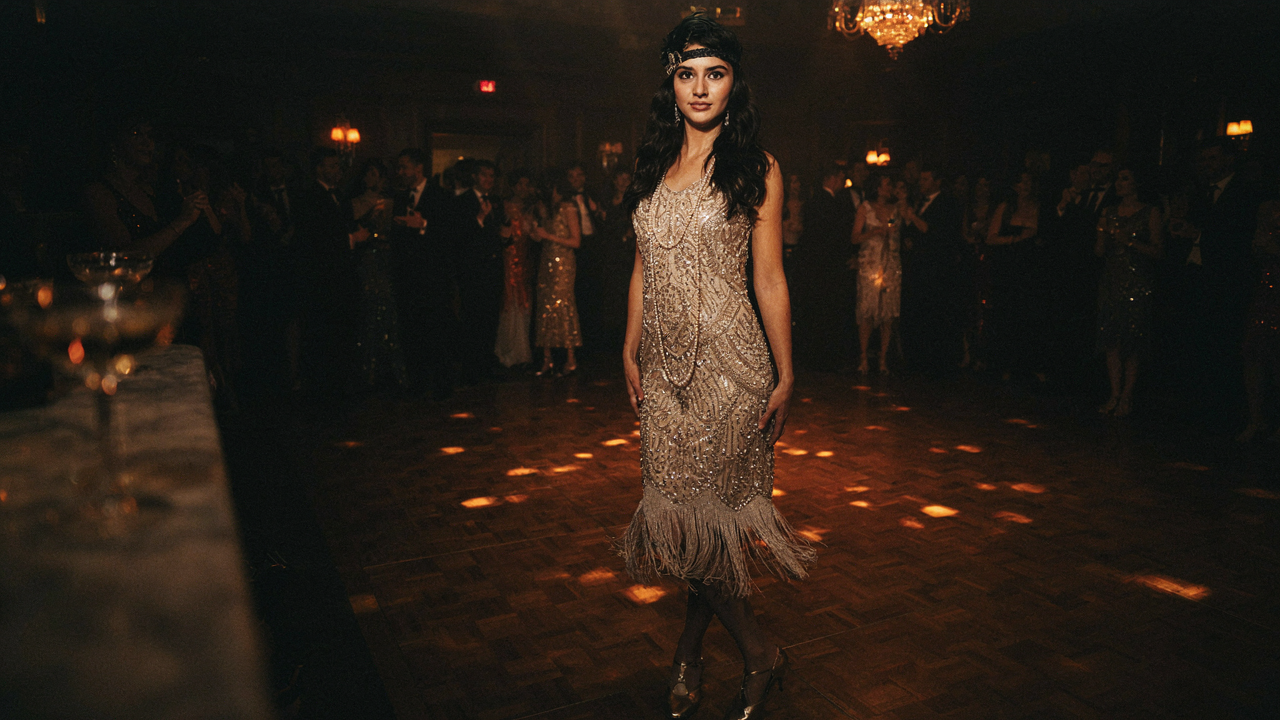
The 1920s Glamour Fallacy: Why “Authenticity” Is Overrated

Costume Myths Don’t Survive Contact With Reality
You want permission to skip the research and just look good. Here’s the mechanism: authenticity is a trap that costs time and kills the actual signal you’re sending. The 1920s didn’t have one unified “look.” Women wore vastly different styles based on class, geography, and personal taste. A flapper dress from New York looked nothing like what women wore in rural areas or conservative circles. Museums and pop culture collapsed this diversity into a single image, and now that compressed version feels like the standard to chase.
The real problem is that obsessing over period accuracy locks you into choices that don’t read as glamorous to a modern audience. Genuine 1920s fabrics were often less lustrous than what we have now. Silhouettes were looser and less defined by today’s standards. You can’t wear authentic 1920s makeup under modern lighting without looking flat or washed out. Stop treating historical accuracy like a checklist. The goal is the feeling and the signal, not the footnotes.
The Signal Matters More Than The Source
Glamour functions like evolutionary biology: the point isn’t to be historically accurate, it’s to trigger recognition of status and confidence in the observer’s mind. A woman in a 1920s-inspired outfit doesn’t need to be wearing what Zelda Fitzgerald actually wore. She needs to trigger the associations your audience connects to that era: luxury, rebellion, refinement, and intentionality. That’s the real work.
Start by identifying which specific elements read as “Gatsby era” to your actual audience, not to a historian. High hemlines, drop waistlines, metallic fabrics, and clean lines all signal the period instantly. Use these as anchors. Everything else you can optimize for your body, your lighting, and your movement. The outfit that makes you move with confidence will read as more glamorous than a museum piece that restricts your breathing. Build your outfit backward from the feeling of controlled power, then layer the 1920s signals on top.
Flapper Dress Outfit: The Unspoken Language Of Liberation

Beyond The Fringe: Silhouette Secrets
You want this outfit to signal that you’re not bound by the corset rules of your mother’s generation. Here’s what actually matters: the silhouette itself functions like a semiotic code. The dropped waistline, the straight body, the knee-length hem—these aren’t decorative choices. They’re structural proof of freedom. The 1920s flapper dress eliminated the S-bend corset entirely, replacing it with a loose, columnar shape that let women move without restriction. This shift from constriction to mobility was the point. The fringe, the beads, the embellishment—those catch your eye, but the silhouette does the real work.

When you choose a flapper dress, prioritize the line over decoration. A well-cut straight-cut dress in solid fabric reads as intentional even without heavy beading. The hem should hit at or just below the knee—historical accuracy matters here because shorter hems were radical and deliberate, not accidental. Drop the waistline to the hip or slightly lower, which is where the 1920s placed it. The armholes should sit at or near your natural shoulder. This construction allows the dress to move with you, not against you. That movement is the entire mechanism of the look.
Fabric Choices For Impactful Movement
Most advice tells you to “pick light, flowing fabric.” That’s incomplete. Fabric choice functions like a pendulum in physics—weight and drape determine velocity and presence. Silk charmeuse, silk crepe, and rayon were the dominant fabrics of the era because they held structure while moving. Lightweight cotton or polyester blends feel cheap because they lack density; they flutter without intention. Heavy satin reads stiff and costume-like. The sweet spot is a fabric with enough weight to swing when you move, enough sheen to catch light, and enough structure to hold a pleat or fold without collapsing. Silk crepe moves like fabric, not like a ghost.
The fabric you select determines whether the fringe, beads, and embellishment actually read as intentional or as desperate decoration. A quality charmeuse or crepe supports beadwork because the base fabric has presence. When you move, the fabric and the beads create a unified visual rhythm instead of fighting each other. Test this directly: find a fabric swatch, hold it at shoulder height, and let it fall. If it moves in one clean plane without clumping, it’s the right choice. If it clings or bunches, move on. Your fabric selection drives the entire visual impact of movement and presence at the event.
Gatsby Dresses 1920s: Deciphering The Opulence Code
Sequins And Beads Signal Status
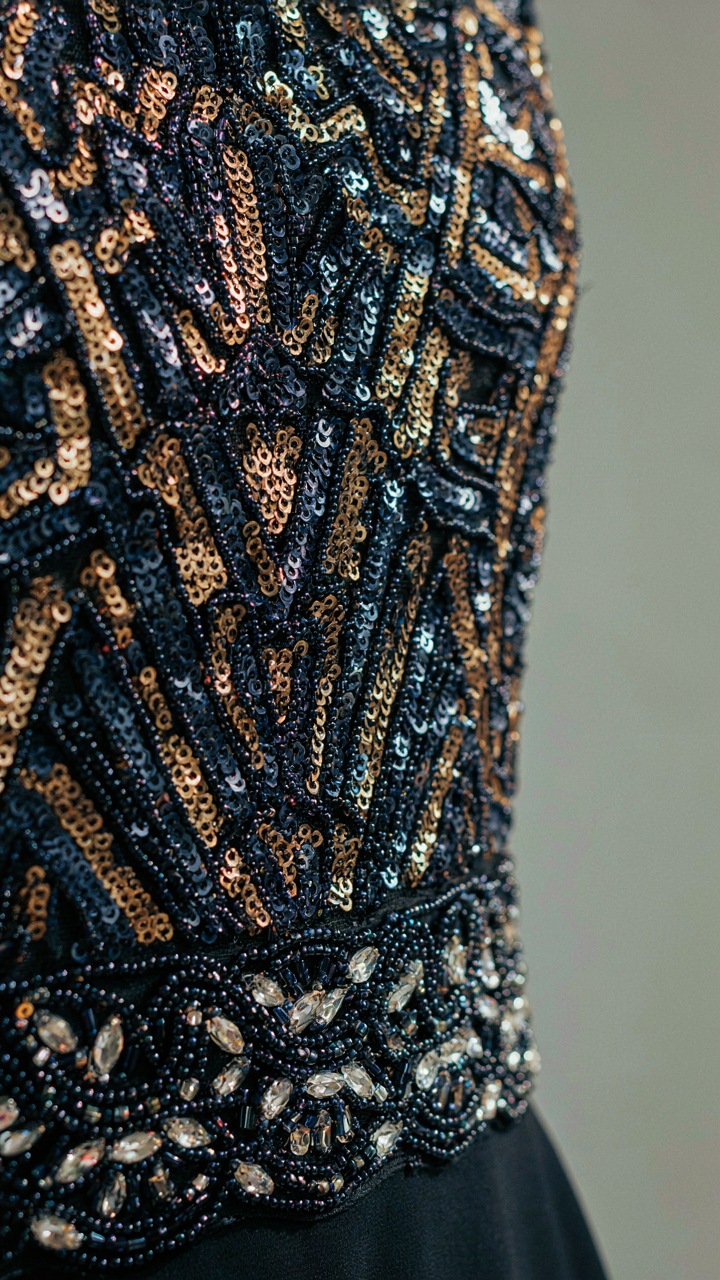
You want sequins on your dress because you think they’re pretty. That’s not why they matter. Sequins were a status marker because they required hand application and consumed material cost that only certain women could justify. This is basic economics: scarcity creates value.

The 1920s dress industry mass-produced beading techniques, but hand-sewn sequences still commanded premium pricing. A woman wearing a fully sequined gown telegraphed disposable income. Beads caught light in ways plain fabric couldn’t, making movement visible across crowded rooms. This visibility was the real product being sold, not the beads themselves.
Where Embellishment Actually Works
The common advice says “more beads equals more glamour.” That’s incomplete. Strategic placement beats saturation. A dress fully covered in beads becomes costume. A dress with beaded panel placement, geometric patterns, or concentrated embellishment at the hemline and bodice creates focal points that draw the eye and suggest intentional design rather than decoration for its own sake.
The mechanism is contrast. Your eye moves toward change. A plain silk dress with beaded straps and a sequined waistband creates visual hierarchy that makes the wearer appear intentional and deliberate. Dense beading on the lower third of a skirt creates movement without overwhelming the silhouette. This is why Art Deco motifs worked so effectively in 1920s gowns: they used geometric restraint, not maximalism.
The “Speakeasy Seduction” Protocol: Accessorizing For Impact
Headpieces That Command Attention
You want the room to notice you without looking desperate. That’s the real mechanic here, and headpieces solve it through what architects call “focal point design”—they redirect visual attention upward, away from body shape and onto face and presence. A 1920s headpiece does this work involuntarily. The eye goes where the geometry demands it.

The most effective pieces sit low on the forehead, anchored with a single stone or tassel. Beaded bands, metal filigree combs, and jeweled clips all function the same way: they create a visual boundary between hair and face that didn’t exist before. This isn’t decoration. It’s contrast. Wear it centered or slightly off-center depending on your face shape, but wear it secured so it stays put during movement. A headpiece that slips sideways reads as careless, not casual.
Jewelry: More Than Mere Adornment
Common advice says “layer it” or “go bold.” That’s incomplete. Jewelry in 1920s dress works through visual weight distribution, not volume. You’re balancing the eye across the body’s plane, not cramming pieces onto your wrists.
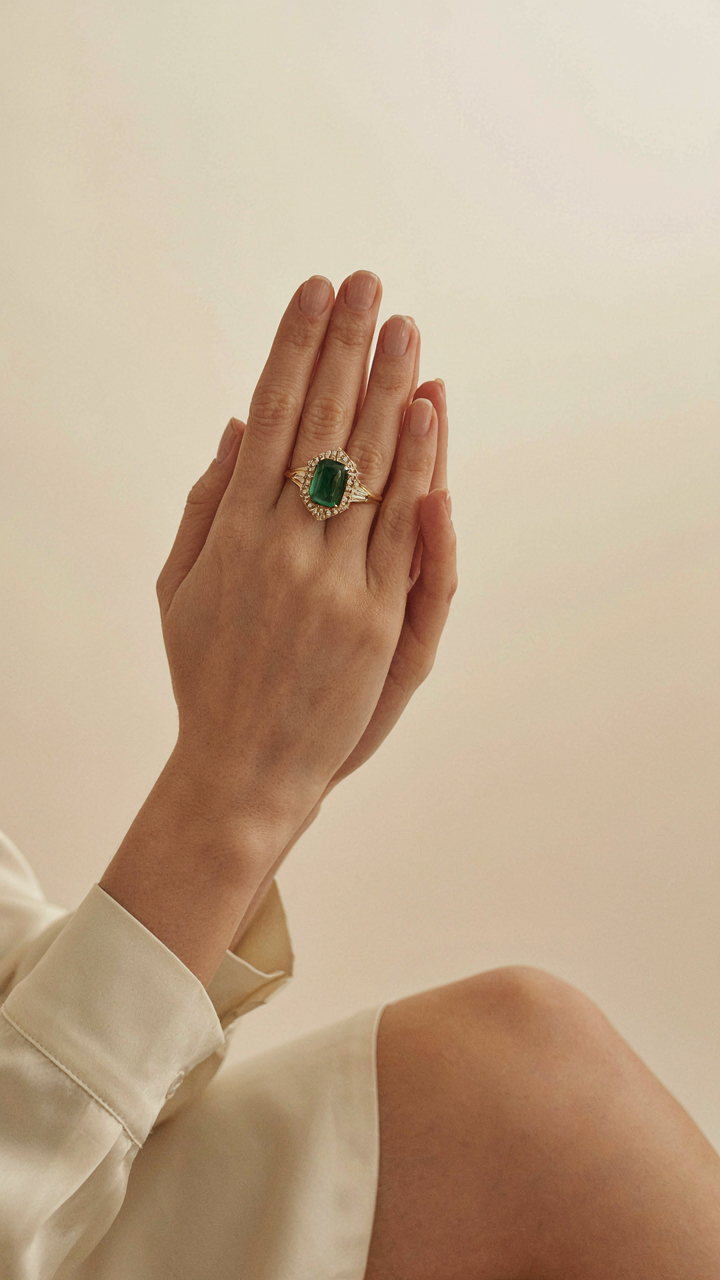
Bracelets function best in stacked pairs on one arm, leaving the other bare. This creates asymmetry, which reads as intentional rather than underdressed. Long strands of pearls or beads serve a specific purpose: they elongate the torso and interrupt horizontal lines. A single statement ring on one hand, worn on the index or middle finger where it catches light during gesture, outperforms five rings spread across both hands. The mechanism is simple: constraint creates authority. Place your jewelry where movement will make it visible, not where it sits static against fabric.
Great Gatsby Outfit: Borrowing From Biology – Mimicry Vs. Authenticity
The Trap Of Copying Everything
You want to look like you belong at a Gatsby party without studying why certain pieces work. That’s the real fear underneath—status anxiety dressed up as fashion confusion. Biology calls this mimicry, and the mechanism matters: perfect replication signals you’re trying too hard. Strategic adaptation signals you understand the code.

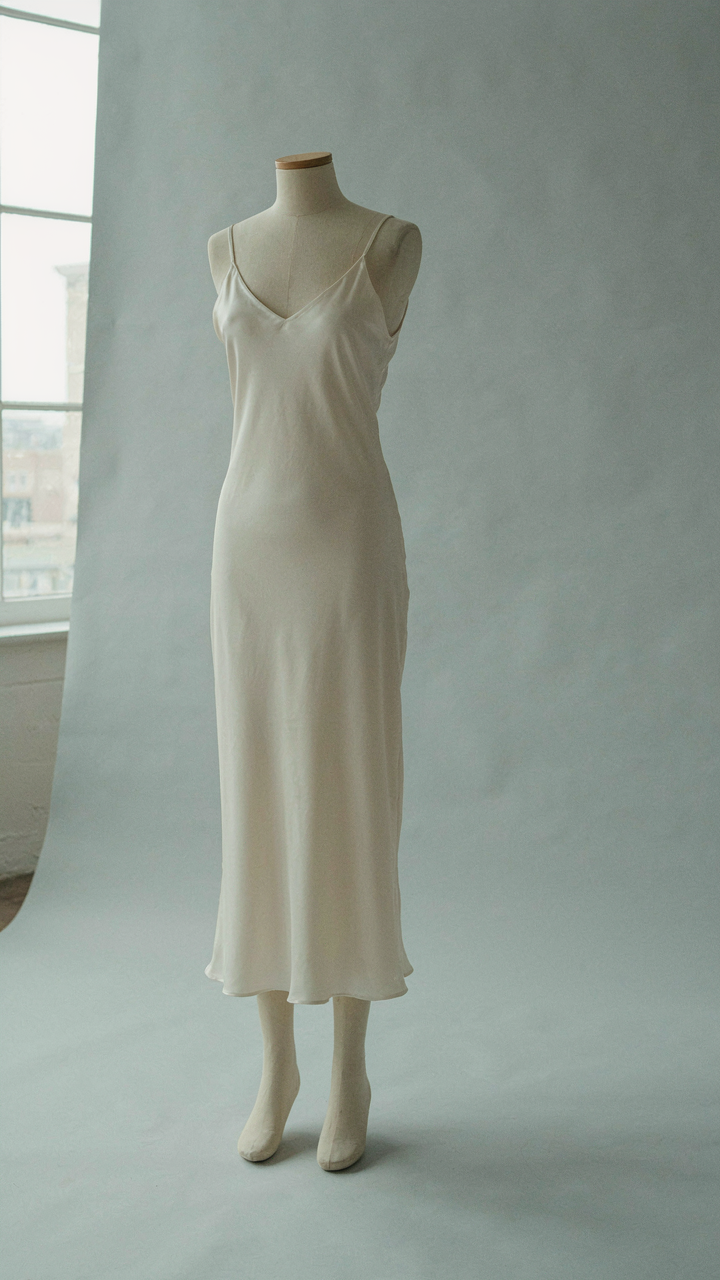
The 1920s silhouette worked because it communicated a specific shift in power. Women wore dropped waistlines, looser construction, and shorter hemlines not for comfort but to signal freedom from corset culture. You don’t need to replicate the era’s exact garments. You need to borrow the principle: wear pieces that communicate liberation, not restriction. A bias-cut slip dress, high-necked top, or straight column shape captures the DNA without costume theater.
Display That Reads As Competence
Strategic display in fashion works like it does in nature: the goal is to communicate fitness without appearing to try. Wear a single statement piece—beaded headband, art deco brooch, or metallic heel—and keep everything else intentional and restrained. Overdone jewelry reads as insecurity. A well-placed art deco element reads as knowledge.
The real move is asymmetry in attention. Draw the eye to one feature: bare shoulders, a low back, intricate beading on a single panel. This concentrates perceived effort into mastery rather than desperation. Pair that focal point with clean lines everywhere else. The outfit signals you understand proportion, not that you raided every vintage shop in the city.
Gatsby Outfit Inspo: The “Less Is More” Lie
The Maximalist Mindset Of The Era
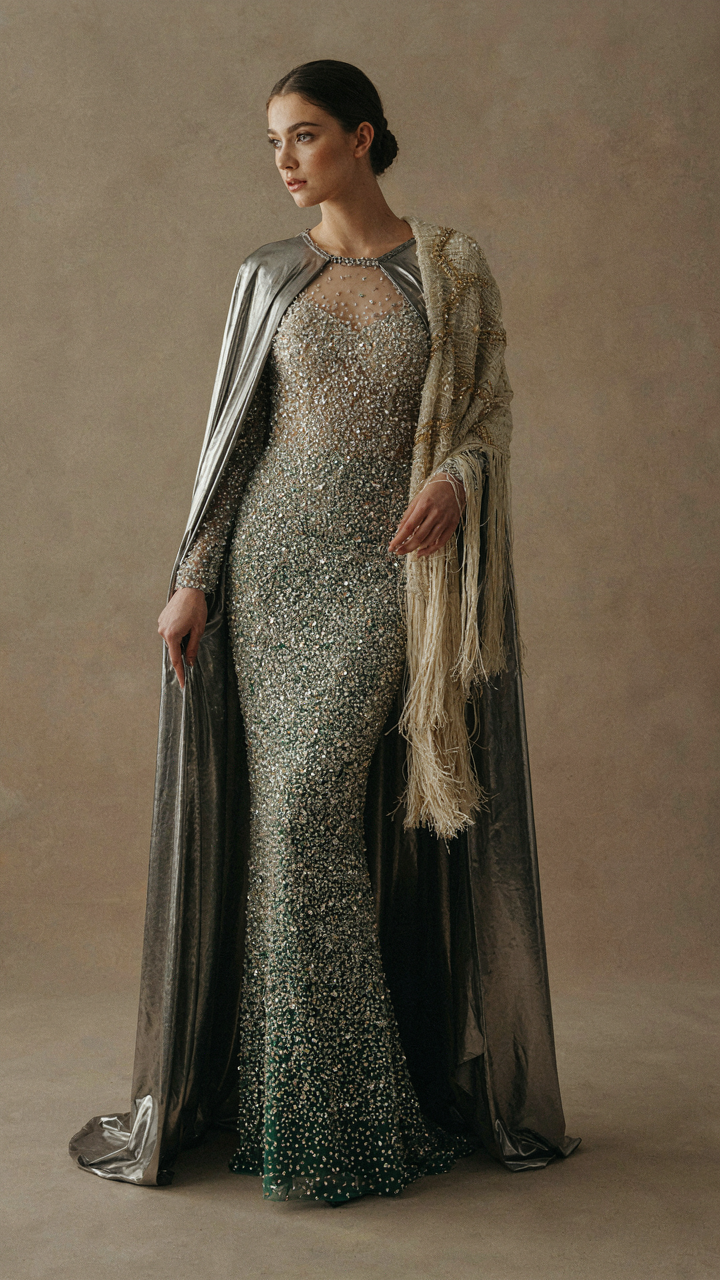
You’re drawn to this section because you’re afraid of looking overdone—that you’ll somehow miscalculate and look costume-y instead of intentional. Here’s the mechanism: the 1920s weren’t minimalist. They were maximalist. Art Deco didn’t whisper; it shouted through geometry, repetition, and deliberate excess. The entire era rejected Victorian restraint. Abundance signaled modernity, not poor taste. Your instinct to strip things down is actually fighting against authentic period dressing.

The women who owned rooms in the Jazz Age wore multiple strands of beads, layered jewelry, and embellished fabrics on the same body. They didn’t apologize for it. Beading covered entire dress surfaces. Fringe moved in overlapping waves. Metallic threads caught light from multiple angles simultaneously. This wasn’t accident—it was engineered abundance. When you pull back to “one statement piece,” you’re applying modern Instagram minimalism to an era that built its identity on visual noise and material richness.
Layering For Depth And Drama
Layering is a physics problem: light behaves differently when materials sit at different depths. Apply this principle to fabric layering, and you create shadow, dimension, and movement that a flat single layer cannot generate. A drop-waist dress over a longer slip, a beaded overskirt atop a base dress, a sheer cape draped across structured fabric—these aren’t redundant. They’re optical tools that build what the era called “allure.”
The common advice stops at “add a shawl.” That’s incomplete. Real Gatsby-era layering builds a structure: foundation (slip dress or underdress in satin or silk), statement layer (the beaded or sequined primary dress), and accent layer (cape, stole, or overdress in contrast fabric). Each layer moves at a different rhythm. Each catches light at a different angle. Each adds weight and intention. Your specific move: choose your accent layer in a material that contrasts with your primary dress—matte over sheen, opaque over translucent, or heavier fringe over smooth beading—then ensure every piece sits at least half an inch away from the layer beneath it so light and shadow can work.
1920s Party Outfit: Beyond The Dress – Hair And Makeup As Weapons
The Hairstyle That Signals Arrival
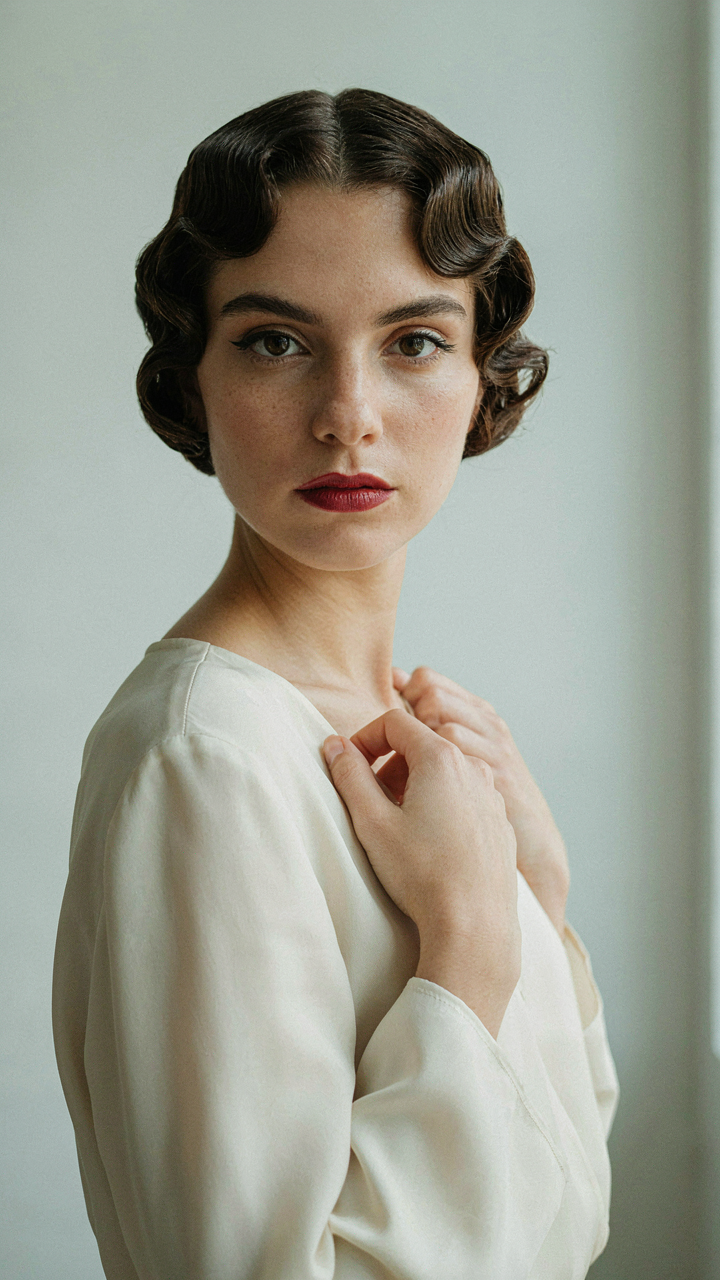
You care about this because hair is the first thing people process before they decide if you belong in the room. It’s status signaling that happens in under two seconds. In communication theory, we call this the “primacy effect” – your hairstyle is the opening argument that everything else in your outfit either supports or undermines. The 1920s bob cut worked because it broke social convention deliberately. Women who wore it weren’t following fashion; they were announcing they’d made a choice that mattered.

The finger waves and Marcel waves popular during the Gatsby era required precision, time, and access to tools most women didn’t own. That scarcity made the style a visible marker of resources and intention. You achieve this by setting waves when hair is damp, using actual pin curls or a curling iron, and letting them set for hours before releasing. The result reads as deliberate grooming – not accident or luck. That deliberation is what registers as power.
Eyes And Lips: Contrast As Control
Most Gatsby outfit advice treats makeup as decoration. Wrong. Makeup in the 1920s was a tool for exaggerating specific facial features into a mask that communicated status and sexuality on command. The kohl-lined eyes and bold lips weren’t subtle; they were confrontational. The mechanism is contrast: dark, defined eyes pull attention to your gaze and hold it. Lined lips in deep red or plum shift the focal point lower. You’re directing where people look.
Apply kohl or dark liner to both upper and lower lids to create definition that reads from across a room. Use a matte lip in burgundy or deep red – the pigment needs to stay visible under indoor lighting and won’t fade into nude tones. The specificity matters. Apply liner first, then fill in shadow if using it, then set lips with powder before color to prevent feathering. This sequence ensures the look holds for an entire event without touch-ups becoming noticeable.
Gatsby Party Outfit: Footwear – The Foundation Of Authority
Shoe Styles That Elevate The Ensemble
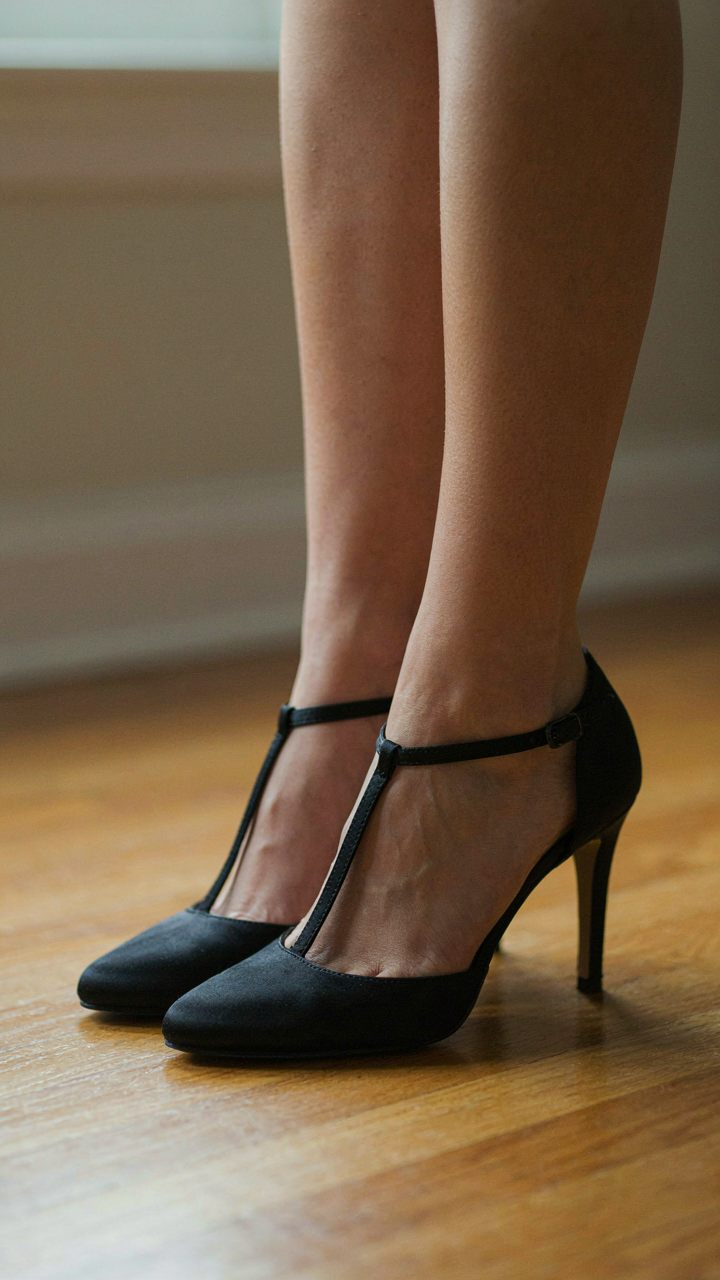
You care about footwear because you know, consciously or not, that shoes signal whether you belong in the room. The mechanism is simple: feet are the last thing people notice, which means they’re the first thing that breaks the illusion when wrong. In 1920s style, shoes weren’t decorative afterthoughts. They carried the weight of the entire aesthetic. T-strap heels, Mary Janes, and beaded pumps weren’t just fashionable, they were structural. A T-strap in black satin or champagne leather grounds a dropped-waist dress. The single strap across the instep creates visual continuity from hemline to floor, which is how you move without seeming to try.

Flat options exist but serve a different purpose. Ballet flats and low heels read as casual, which contradicts the formal expectation of a Gatsby party. If you choose a flat, it must have intentional detail: beading, metallic threading, or art deco patterning. Otherwise, you’ve signaled indifference. The shoe does not exist to be comfortable first and impressive second. It exists to complete the line your outfit creates from shoulder to toe.
Comfort Versus Statement: A False Dichotomy
The conventional wisdom here is garbage: choose comfort or impact, never both. The actual mechanism comes from biomechanics and design. A well-fitted heel in the right proportions doesn’t sacrifice comfort. It’s a problem of engineering, not trade-off. A 2-inch to 2.5-inch heel with adequate arch support and a cushioned insole performs better than flat shoes for extended wear. The 1920s understood this. They didn’t build T-straps as punishment devices. They built them as functional footwear for women who danced, walked, and stood all night.
The real choice isn’t comfort or statement. It’s whether you’ve done the work to find shoes that fit your feet specifically. That means trying them on, wearing them for an hour before the party, and breaking them in if needed. Gel inserts, moleskin padding, and proper shoe bags matter. You’re not proving toughness by hobbling. You’re proving you understand that authority requires you to move without distraction. Your feet disappear when they work correctly.
20s Fashion Women: The Art Of The “Unfinished” Look
Controlled Chaos Reads As Confidence
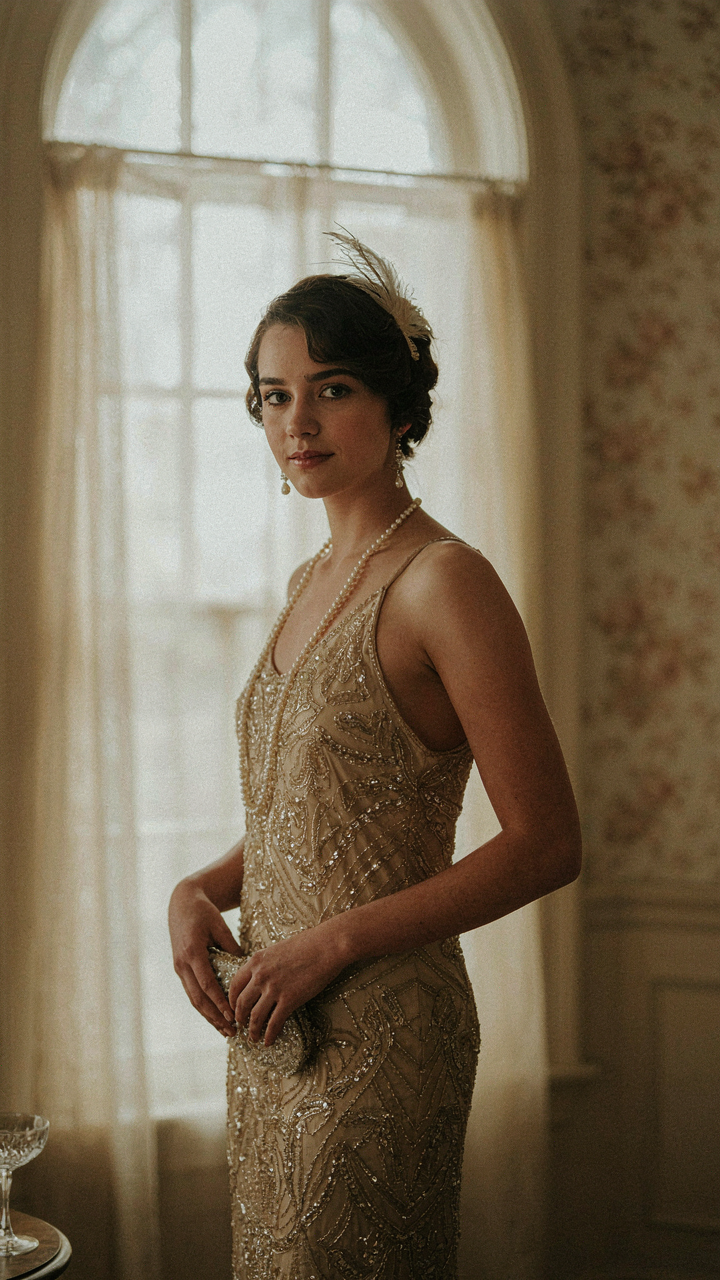
You want people to think you didn’t try too hard, because effort reads as desperation. The real mechanism here borrowed from chaos theory: a system appears random but operates within deliberate constraints. A 1920s Gatsby outfit works the same way. A loose strand of hair, a hemline that sits just off-center, a necklace worn layered but slightly askew—these aren’t accidents. They signal control so complete you can afford to break the rules.

The common advice says “messy chic” or “effortless elegance.” Both are lazy descriptions. What actually happens is you construct precision first, then introduce calculated disorder into specific zones. A beaded dress sits perfect on the body. The headpiece tilts. One shoulder strap slides. The stockings have intentional wrinkles at the ankle. This isn’t sloppy. It’s constraint plus rebellion in the exact right ratio.
Breaking Pattern For Recognition
Most women follow the 1920s template exactly as marketed: drop waist, long pearls, headband centered, everything symmetrical. This erases you into a category. The mechanism of differentiation is simple: you break one dominant pattern that everyone else obeys. If every Gatsby outfit at the party has a low back, yours has a high back with an open front instead. If hemlines sit at the knee, yours hits mid-calf. If headbands are beaded and centered, yours is a single clip, off to one side.
You don’t break multiple patterns or you look confused. Pick one rule from the 1920s silhouette and invert it completely while keeping everything else period-accurate. This creates cognitive friction—people register that something is different but can’t name it immediately. That pause is where recognition lives. The outfit becomes memorable because it violates expectation without breaking the era entirely.
Gatsby Dress Ideas: Cultivating Your Personal Roaring Twenties Persona
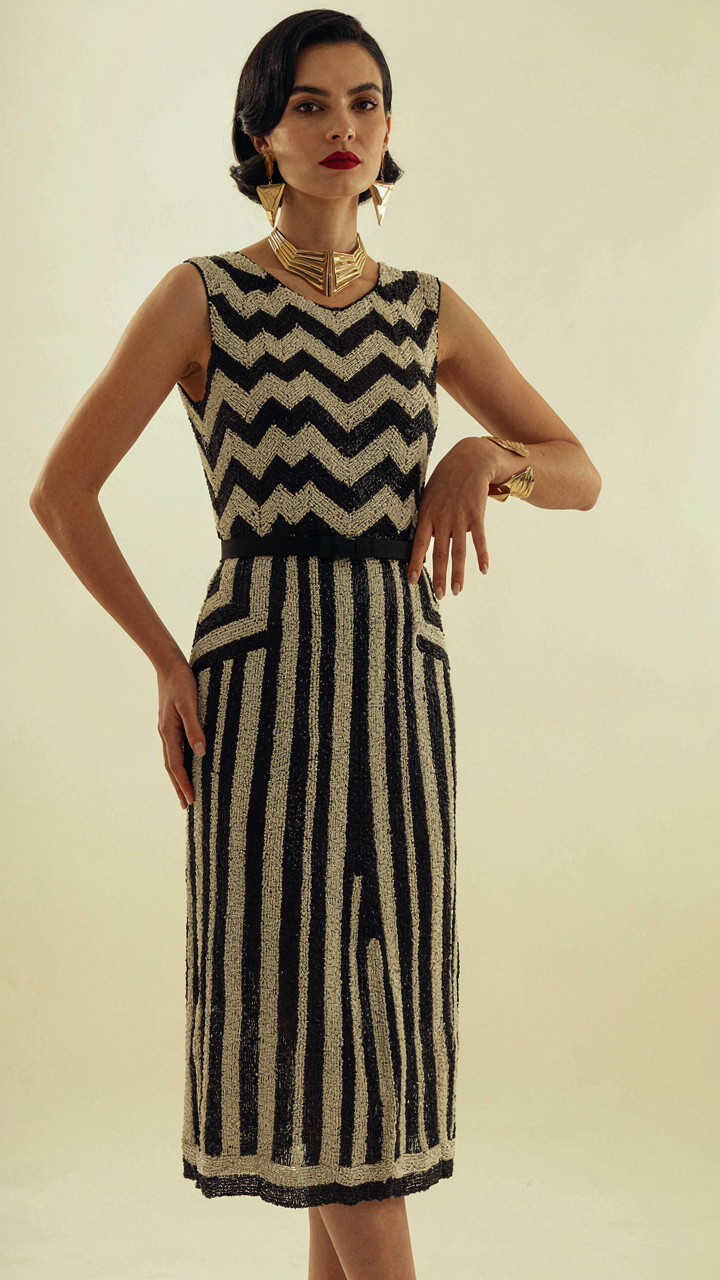
Which Glamour Archetype Fits Your Signal
You’re not actually worried about “looking period-correct.” You want permission to wear something that broadcasts status without trying too hard. The mechanism here mirrors costume theory from theater: your archetype is the permission structure that makes every other choice coherent. Without it, you’re just assembling expensive pieces. With it, you’re building a character people recognize and remember.
The 1920s offered three distinct glamour lanes, and you fit one. The art deco modernist wore geometric beading, sharp lines, and metallics because she was forward-facing and controlled. The bohemian worn slip dresses in bias-cut silk with dropped waistlines and minimal structure because she signaled rebellion through ease. The old-money conservative chose quality fabrics in muted tones with subtle ornamentation because restraint was her power. Identify which persona matches how you move through rooms, not which dress is prettiest. Your archetype determines every layer below it.
Building A Coherent Image System
Most Gatsby outfit advice treats each piece as standalone. That’s why people end up looking like they raided a costume shop instead of inhabiting a character. Image coherence demands that every element reinforce the same signal: silhouette, material choice, color palette, accessories, posture, and even your grooming align to broadcast one version of yourself.
If you’ve chosen the art deco modernist, your hair goes sleek or in tight geometric waves. Your makeup reads structured and intentional. Your shoes are sharp-edged, your jewelry geometric. If you’ve chosen bohemian, your hair moves, your makeup is softer, your shoes are softer. You don’t mix signals. Every decision confirms the last one. Pick your archetype, then ruthlessly delete anything that doesn’t belong to that system. This is how you move from “wearing a Gatsby outfit” to being recognizable as a type.
The Real Obstacle Isn’t Finding The Right Dress; It’s Your Fear Of Unapologetic Opulence
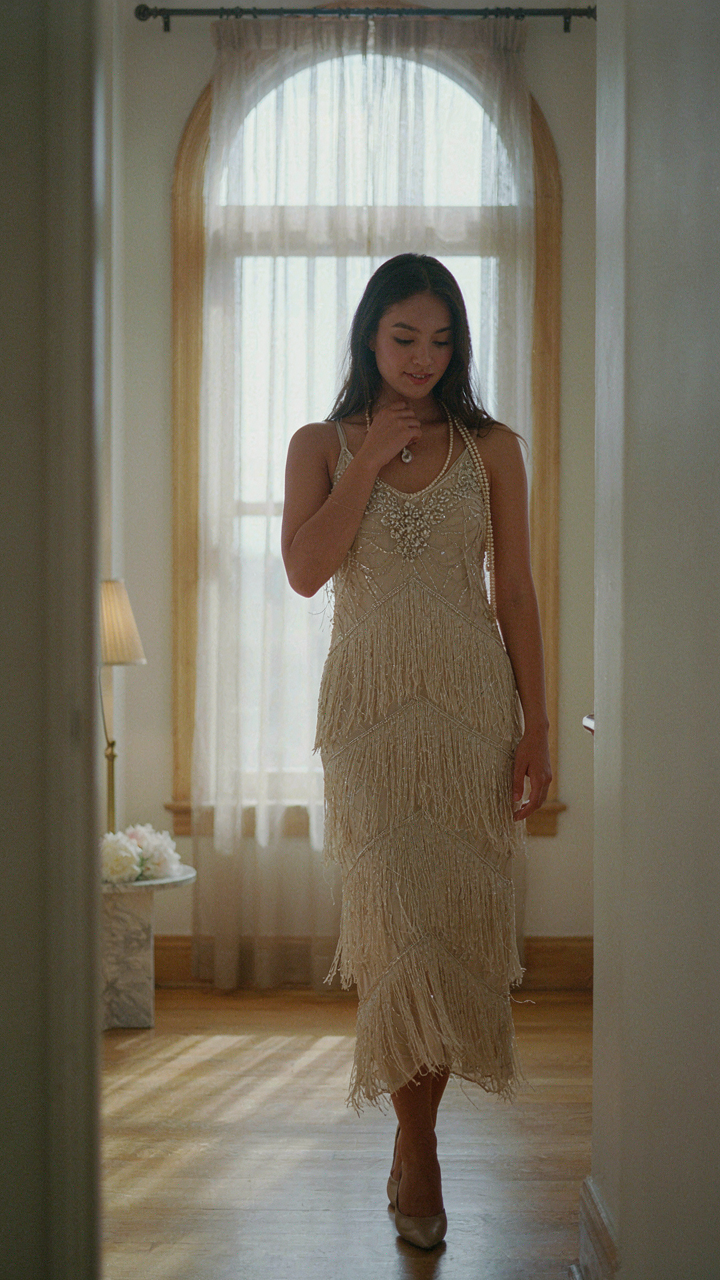
Most women own the pieces for a killer Gatsby outfit right now. They just won’t wear them because excess feels dangerous. You’ve been programmed to apologize for taking up space, for shining, for demanding attention. The 1920s woman didn’t do that. She leaned into it. Stop asking permission to be bold. Pull out those gold heels today. Wear them to dinner. Notice how nobody actually cares. That’s when the real transformation happens.