


The Unwritten Code Of Wedding Guest Attire
Reading Between The Lines
You’re anxious about being judged—and that anxiety is the actual problem to solve, not the outfit. The mechanism is simple: formal invitations encode information through specificity. The more detail the host provides, the more constrained your choices become. A card saying “black tie” demands tuxedos and gowns. A card saying “cocktail attire” opens a window. A card with no dress code at all is a trap that catches people who mistake freedom for permission to ignore context. Read what’s written. Then read what’s conspicuously absent. That gap tells you how much room you actually have to move.
Most guests confuse “dress code” with “occasion tone.” The dress code is a technical requirement. The occasion tone—the actual energy of the event—lives in the details you have to extract. A 6 PM wedding asks for different fabric weight than a 4 PM wedding. A country club ceremony demands different formality than a warehouse. A destination wedding on a beach rewrites the rules entirely. The invitation’s typography, word choice, and what it doesn’t mention all matter more than you think.
What Formal Actually Means
The common advice frames “formal” as a simple checkbox. Wrong. Formal is a spectrum, and most people lock into either overdressed costume or underdressed panic. In signal theory—borrowed from communication engineering—a signal requires noise to be distinguishable. Your formal outfit is the signal; everything else at the wedding is the noise. Formal means you’ve eliminated decoration, pattern, and color variation. You’ve chosen restraint. That’s the actual information you’re transmitting when you dress formally. Black tie is the highest signal. Cocktail attire is medium signal. Lounge suit is lower signal still. Each one removes options differently.
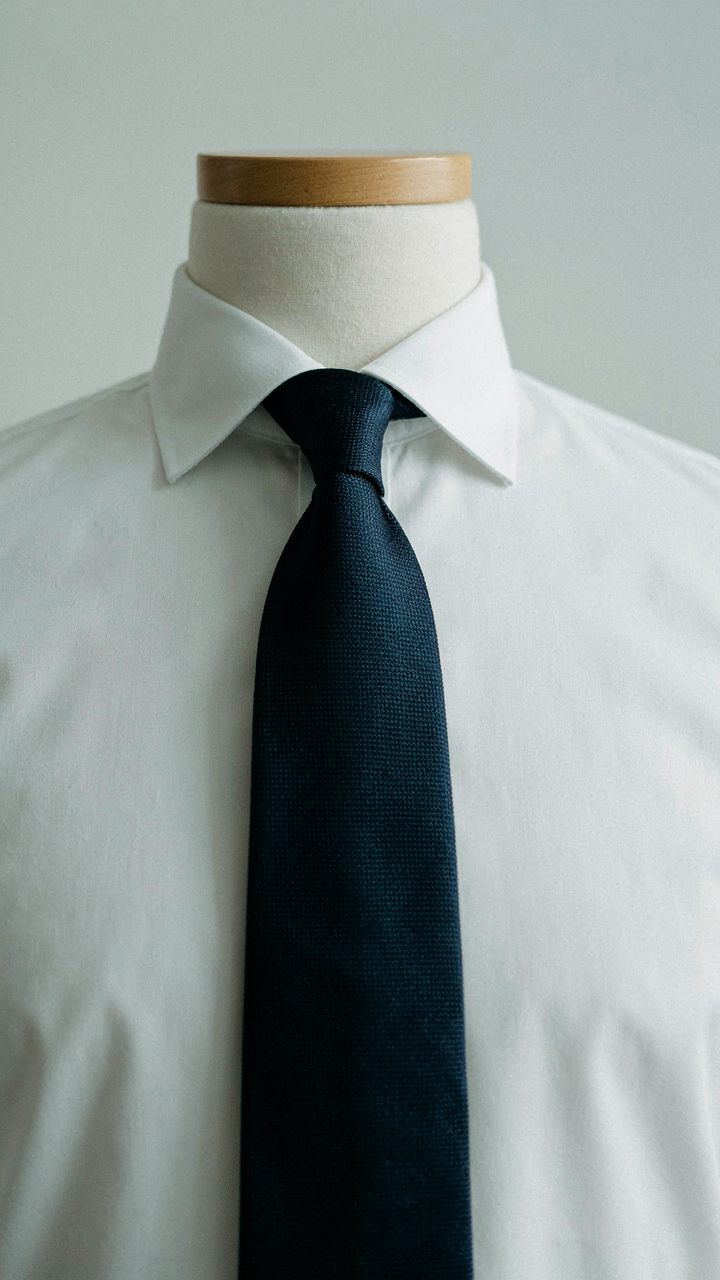
Here’s the trap: many guests believe formal means “fancy.” It doesn’t. Formal means controlled. A silk tie with a subtle weave reads formal. A printed silk tie reads decorated. A crystal brooch reads costume. A single pearl reads formal. The mechanism is subtraction, not addition. You achieve formal by removing variables, not by adding them. If your outfit requires explanation or commands attention before the couple enters the room, you’ve missed the assignment.
Fabric First: The Foundation Of Old Money Aesthetics

Why Natural Fibers Signal True Luxury
You want people to know you have money without saying it. The mechanism is simple: natural fibers hold their shape and improve with age, while synthetics degrade visibly. This is economics applied to textiles. A silk charmeuse dress or wool blazer doesn’t wrinkle the same way polyester does. Wrinkles in natural fibers fall predictably. Wrinkles in synthetics look cheap because they stick where they land, broadcasting poor care or low investment.

Natural fibers breathe, drape differently, and develop a patina. Linen softens. Wool holds structure. Silk catches light in a specific way that cameras and human eyes read as quality. This isn’t snobbery. It’s material science. Your wedding guest outfit should be made from fibers that perform better under real conditions, not marketing conditions. Cotton, linen, silk, wool, cashmere, and their blends are the only materials that matter for understated elegance.
The Touch Test Beats Every Label
The fashion industry trains you to trust labels over your hands. This is backward. A $200 synthetic dress with a designer name feels worse than a $80 linen blend from a no-name brand because your fingers don’t lie about density, weight, and fiber quality. Hold the fabric against your wrist. Real luxury feels substantial without heaviness. It has slight resistance to the weave, not the artificial slickness of resin coatings on cheap polyester.
Test the recovery. Pinch the fabric and release it. Natural fibers bounce back within seconds. Synthetics stay creased or take longer. Press your palm flat against the material. Natural fibers warm slightly and feel alive. Synthetics stay cool and inert. These tactile tests eliminate confusion and take thirty seconds. Before buying any piece for a wedding, touch it directly. If you cannot touch it in person, the garment is not worth your time or money.
The Negative Space Protocol: How Less Becomes More
Strategic Restraint In Silhouette And Adornment
You want to look expensive without looking like you’re trying. That’s the real fear underneath this whole section. The mechanism is simple: constraint signals control. In design, negative space is the unused area that makes the used area legible. Apply this to your outfit and you stop fighting for attention with every seam, button, and accessory.

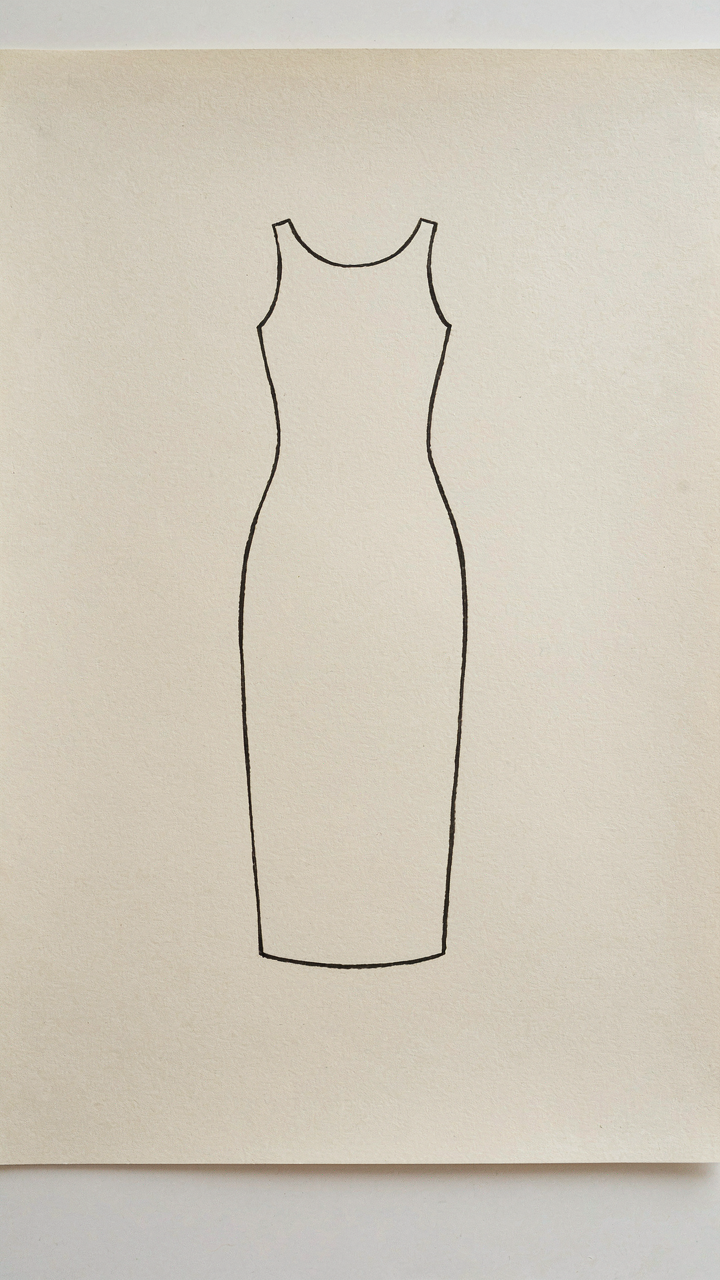
Most wedding guest advice says add layers and texture for depth. Wrong. Depth comes from proportion and material quality, not visual clutter. A single silk charmeuse dress in a neutral tone with zero embellishment reads as more refined than a patterned number covered in beading. The restraint itself becomes the statement because it assumes you don’t need validation through decoration.
Visual Weight Without Volume
Physics teaches us that mass and surface area determine how an object appears in space. Your clothing works the same way. A dense, compact silhouette in a heavy fabric draws the eye more deliberately than a loose garment in the same material. Choose tailored cuts that skim the body without clinging. Monochromatic dressing concentrates visual weight vertically, making you appear both intentional and composed. Solid fabrics hold attention better than prints because the eye doesn’t scatter across competing patterns.
The protocol is this: limit your outfit to one focal point, execute it with precision, and let everything else recede. If your statement is a structured blazer, keep the shirt beneath it plain. If it’s elegant trousers in a refined fabric, wear a simple top that doesn’t compete. Every element either anchors the outfit or it dilutes it.
Beyond The Black Dress: A Palette Of Subtle Power
When Color Works Harder Than Fabric
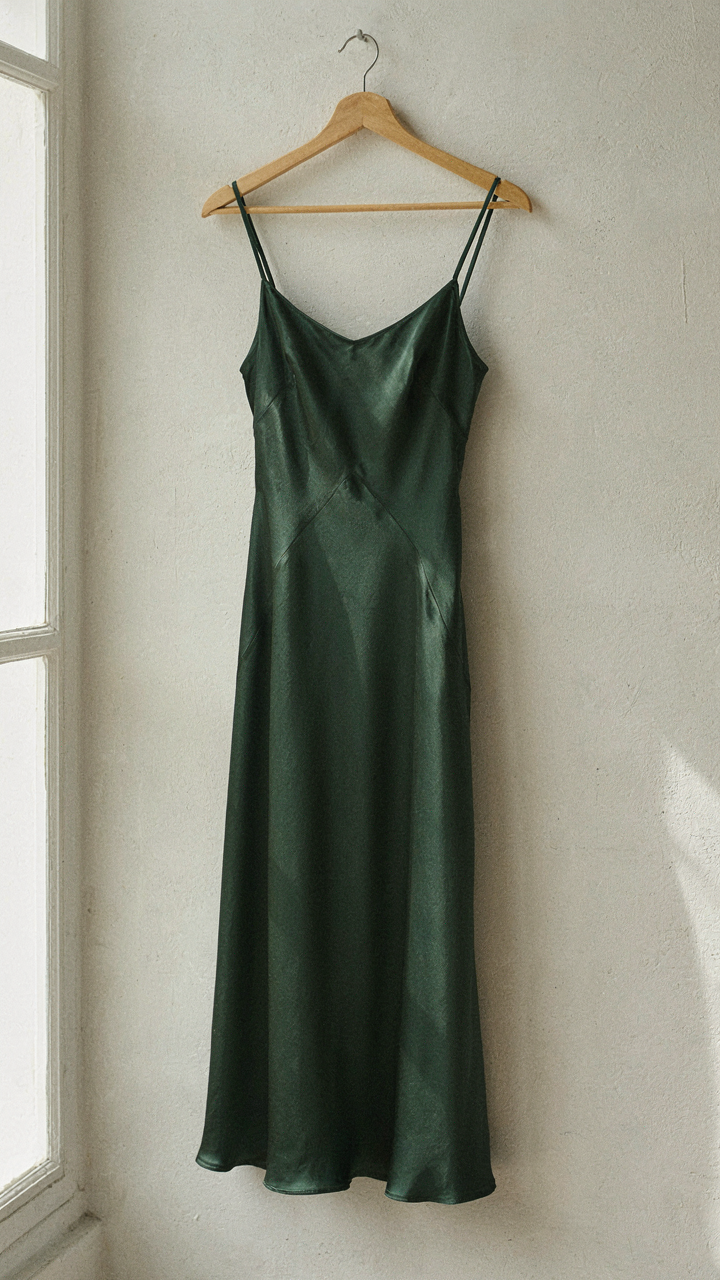
You want people to notice you didn’t try. That’s the real agenda here, and it’s valid. The mechanism is contrast: wearing expected colors at formal events creates visual noise because everyone else made the same decision. Unexpected colors signal editorial choice, which reads as authority. Charcoal, deep navy, burgundy, and forest green accomplish this without signaling rebellion. They sit in the space between safe and memorable. The chemistry is simple. Formal events operate on unspoken permission structures. Breaking the black-and-neutral default within a refined palette shows you understand the rules well enough to bend them deliberately.

Muted jewel tones and deep earth colors work because they carry visual weight without aggression. Sage, taupe, slate, and deep plum feel expensive because they’re harder to source in quality fabric and they demand better tailoring to avoid looking washed out. This is why fast fashion rarely stocks them beyond one season. A well-cut dress or separates in these tones photograph better, last longer in your rotation, and position you as someone who thinks in seasons rather than trends. The constraint forces better decisions upstream.
Muted Tones And The Neuroscience Of Trust
Color psychology borrowed its language from neuroscience, but most people get the mechanism backwards. Muted tones don’t relax people. They signal restraint. Your nervous system reads restraint as competence. Deep hues and low saturation activate the same trust response as quality materials and proper fit because they indicate the wearer isn’t competing for attention through volume or brightness. This is why luxury brands default to restricted color palettes. Saturation is the enemy of perceived value.
The depth of a color matters more than the color itself. A muted burgundy communicates differently than a bright red, even though they’re technically the same hue. Depth signals intention and editing. Shallow, bright colors feel accidental or cost-conscious. When you choose a dress in deep forest green or charcoal plum, you’re choosing a color that requires specific lighting and intentional styling to work. That friction is the whole point. It proves you didn’t grab the first option. The protocol is straightforward: select one muted tone as your base, confirm it photographs well under indoor lighting before purchasing, then commit to quality construction in that single color.
The Accessory Algorithm: Precision, Not Accumulation
One Anchor Piece, Everything Else Invisible
You’re afraid that fewer accessories means you’ll disappear into the background. That’s backwards. The mechanism is constraint: limit yourself to one dominant accessory, and every other element you choose gains weight by contrast. This works like signal-to-noise ratio in engineering. Too many signals destroy the message. One clear signal reads.

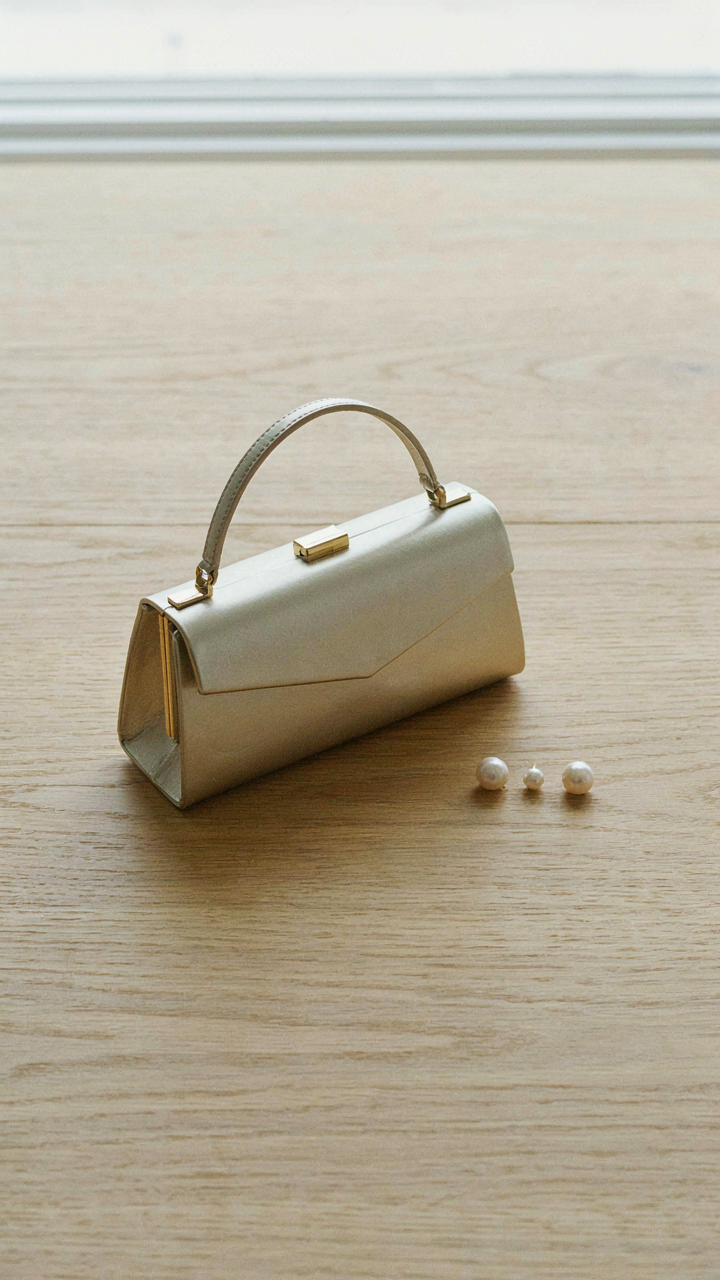
Most wedding guest advice says “layer your accessories for interest.” That’s how people end up looking cluttered. Pick one statement piece—a structured metallic clutch, a silk scarf, a singular bold brooch—then build everything else to support it, not compete with it. Your shoes, bag, and jewelry become supporting infrastructure, not performers fighting for attention.
- Structured metallic clutch: Catches light without screaming. Pairs with neutral jewelry and simple shoes. Creates a focal point at chest and hand level where people actually notice it.
- Silk scarf or wrap: Drapes elegantly, introduces texture and subtle color. Works as both practical layer and design anchor. Minimal jewelry keeps the scarf as the dominant visual.
- Singular bold brooch: Pinned to lapel or shoulder seam. Commands attention through placement and craftsmanship. Demands that other metals and jewelry recede.
- Structured leather belt: Defines silhouette at waist. Acts as both functional and aesthetic anchor. Allows shoes and bag to remain understated.
- Statement earrings only: When paired with bare wrists and simple necklace, creates a clean visual hierarchy. The ear draws the eye upward toward your face.
The second you add competing pieces—matching bracelet, necklace, and earrings all in different metals, plus a patterned bag—you’ve lost the algorithm. One statement piece means your other accessories fade into the function they serve. That’s not invisibility. That’s clarity.
Complementary Elements As System, Not Collection
Complementary doesn’t mean matching. It means each element has a reason for existing beyond decoration. Your bag carries things. Your shoes support your weight. Your jewelry reflects your wrists and neck. When accessories serve a function first and aesthetic second, they read as refined instead of assembled.
The real work happens in metal consistency. If your statement piece is gold, your shoes and bag hardware don’t fight for dominance—they echo. If your watch is silver, your bag clasp follows that language. This isn’t about matching everything. It’s about building a coherent material palette. Leather bag, leather shoes, unified metal tone, minimal jewelry that acknowledges those metals without competing. The system works because nothing contradicts anything else. Your eye doesn’t jump between bronze, rose gold, and silver wondering which one was supposed to matter.
The Fit Imperative: Why Tailoring Trumps Brand
Off The Rack Versus Tailored Presence
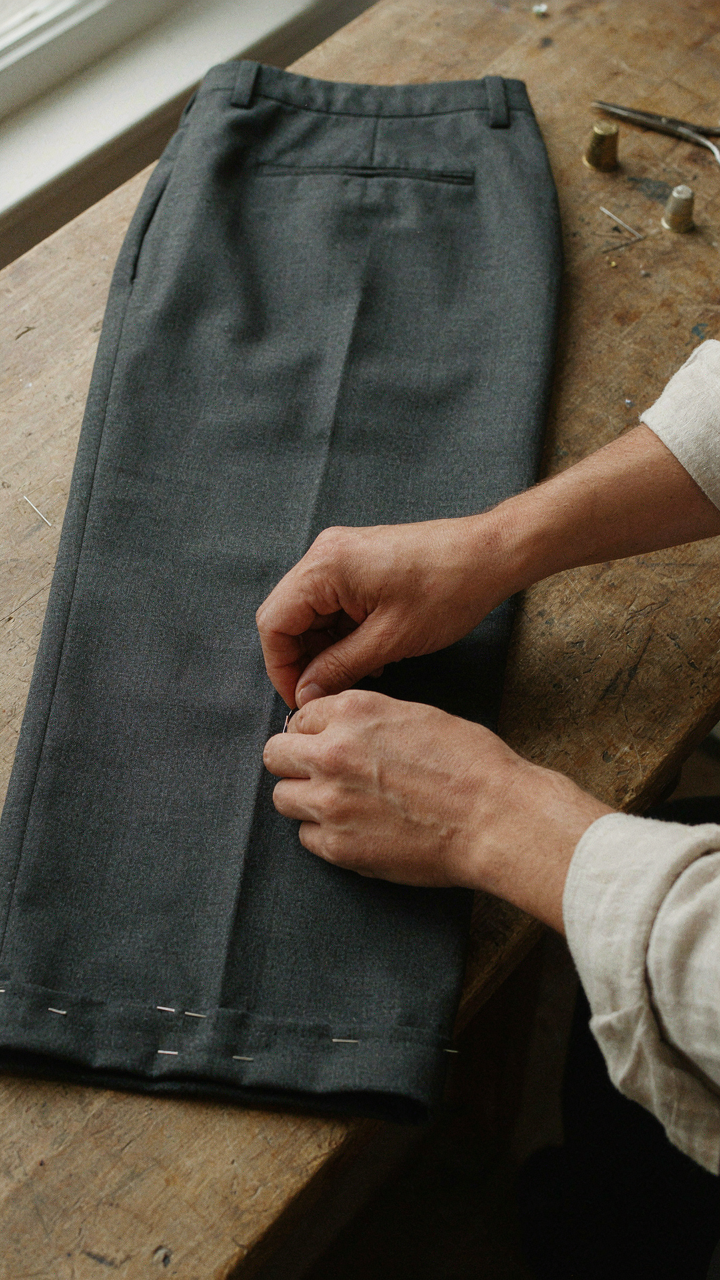
You care about this because you’re afraid cheap tailoring will broadcast that you couldn’t afford the original garment. Wrong fear. The mechanism is simple: fit controls how fabric drapes on your body, and drape is what your eye registers as quality or carelessness before your brain processes the label. A 2,000 dollar dress that bunches at the armpit reads as poor. A 300 dollar dress with precise seams reads as intentional. Off-the-rack assumes an average body. Bespoke assumes your actual body exists. The difference between these two isn’t luxury. It’s accuracy.

Tailoring is economics applied to fabric. You’re not paying for prestige. You’re paying to eliminate waste motion and visual noise. The collar sits flush against your neck instead of gaping. The hem breaks at your shoe without pooling. Sleeves end where your wrist begins, not two inches past it. These adjustments cost 40 to 120 dollars. They return 500 dollars in perceived refinement because they make every other choice you made look deliberate instead of accidental.
Essential Alterations That Change Everything
Hem length sets the baseline. A skirt or dress that breaks at the natural ankle bone reads as controlled. Break it at the mid-shin or mid-calf by accident, and you’ve signaled you either don’t know your body or didn’t care. Get the hem adjusted first. This is non-negotiable. A tailor charges 25 to 40 dollars for a basic hem. It’s the single highest-return alteration available.
Shoulder seams anchor the entire silhouette. They should sit exactly where your shoulder bone ends, not inch down your arm and not angle toward your neck. Taking in or letting out shoulder seams costs more than a hem—50 to 75 dollars—because it requires structural work. It’s worth every cent because a shoulder that sits right makes everything else appear intentional. Sleeve length, bust fit, and neckline all cascade from this one decision. After hem and shoulders are correct, assess the waist seam or side seams. Bring in the sides if fabric pools at the ribcage or sides. This is the second-most visible fix. Do these three alterations before wearing anything to a formal event.
The One Strap Dress Deception: Modernity Without Vulgarity
What Actually Matters When Choosing One Strap
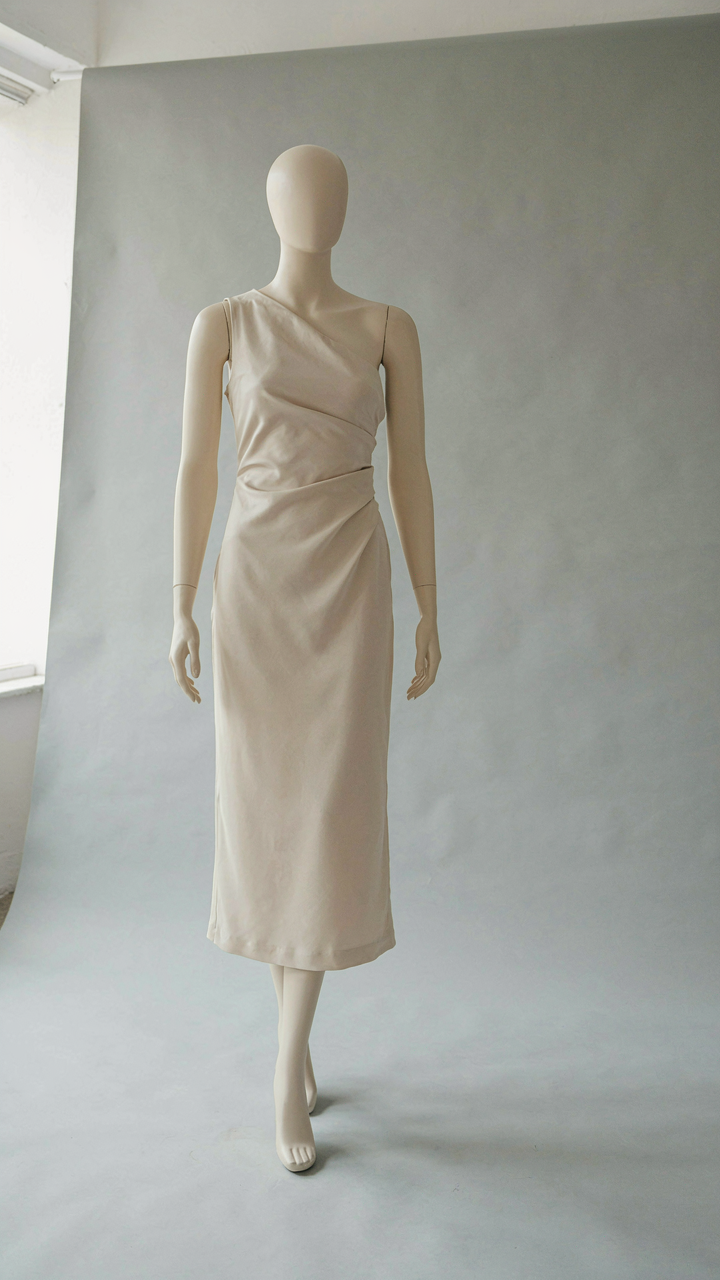
You want the one strap because it signals you know fashion rules well enough to break them carefully. Here’s the mechanism: a one-strap dress works because it creates asymmetry without chaos. Fashion design borrows from visual balance theory in art, where asymmetrical weight distribution feels more dynamic than symmetrical repetition. One strap anchors that imbalance. The dress reads modern because it abandons the safety of matched shoulders, yet remains elegant because the asymmetry is intentional and architectural, not accidental.

Fabric density matters more than the strap itself. Silk charmeuse, crepe, or structured cotton hold a one-strap silhouette without sagging or twisting at the shoulder. Cheap jersey collapses inward and creates wrinkles that scream compromise. The dress should have a fitted bodice that supports the single strap anchor point. A loose, flowing top makes the strap look like a correction rather than a design choice. Buy from brands that engineer the shoulder seam as a load-bearing element, not an afterthought.
Where Modern Restraint Meets Ceremony Demands
Generic advice says one-strap dresses are too bold for traditional weddings. That’s incomplete. One-strap works at refined ceremonies precisely because it avoids the theatrical. A minimalist one-strap in black, navy, or champagne functions like a tuxedo jacket with one unconventional button placement: it acknowledges formality while rejecting blandness.
Length, color, and opacity create the actual restraint. Midi length keeps the silhouette formal. Full opacity prevents distraction. Matte finishes read more refined than shine. The strap itself should be thin and sit high on the shoulder, not drooping to the collarbone like club wear. Pair the dress with structured jewelry and a clean updo, and the one-strap detail recedes into the design rather than dominating it. This is how you wear modern without wearing performance.
Beyond The Clothes: The “Presence” Operating System

Calm Confidence As Your Real Uniform
You’re reading this section because you suspect clothes alone won’t save you, and you’re right. Calm confidence operates like signal strength in physics: it broadcasts further than fabric ever will, and people receive it before they consciously notice what you’re wearing. Most advice stops at “be confident,” which is useless. The mechanism is different. Confidence at a wedding reads as anxiety management. Your nervous system state determines how people perceive your outfit’s coherence.

Understated elegance demands a specific physiology. Slow your breathing before entering. Keep your shoulders back and down, not hunched or thrown back. Maintain eye contact three counts longer than feels natural. These aren’t performance tricks; they’re neurological resets that change how your body carries clothes. When your physiology is settled, even a simple linen blazer and trousers read as intentional rather than indifferent. The outfit becomes invisible because the person wearing it isn’t broadcasting static.
Movement Beats Posture
Forget standing still and “poised.” That’s theater, and it reads as insecurity. Real restraint lives in how you move through space and interact with others. The Bauhaus principle applies here: eliminate waste. Every gesture should be economical. Don’t gesture broadly when a slight turn of your head suffices. Don’t reach across someone when you can ask them to pass something. This isn’t coldness; it’s respect for the room’s energy.
Interaction quality matters more than visibility. Speak at the volume of the person next to you, not the room. Listen longer than you speak. When you move, move with purpose: to greet someone, to reach food, to find a seat. Restless movement erodes the elegance your outfit claims. You build presence not by occupying attention but by being fully present where you stand. This is the protocol: settle your body, move only when necessary, speak only when adding to the conversation.
Decoding The “Refined Ceremony” For Your Wedding Fits For Guests
Where Elegance Actually Lives In The Room
You’re worried you’ll look like you don’t belong. That’s the real question underneath all this. The mechanism is simple: refined ceremonies signal wealth and taste through constraint, not display. Every culture and geography has its own constraint language. What reads as elegant restraint in New York reads as underdressed in Dubai. What works in a countryside chapel fails in an urban loft wedding. You’re not choosing an outfit. You’re decoding a local dialect of restraint.

The common mistake is assuming elegance is universal. It isn’t. A minimalist palette works in Scandinavian contexts because restraint signals confidence there. In Southern or Middle Eastern weddings, texture and richness signal respect for the occasion. The refined ceremony isn’t a fixed aesthetic. It’s whatever version of “not trying too hard” that specific community recognizes as trying the right amount. Ask the couple or someone who knows their family’s traditions. Don’t guess.
Constraint Without Contradiction
The common advice here is “wear what you already own” or “just dress up basics.” That’s incomplete. The real move is eliminating contradiction in your outfit. Contradiction happens when different pieces send conflicting signals. A vintage designer blazer with mall-brand shoes contradicts itself. A high-end fabric paired with loose, shapeless tailoring contradicts. The mechanism is borrowed from fashion semiotics: every element broadcasts a message, and when messages conflict, the viewer perceives either carelessness or inauthenticity.
Adapting without compromise means editing ruthlessly. Remove one accessory you think you need. Choose one quality fabric and build around it. Skip the trend piece entirely. Let the ceremony’s formality level dictate what stays and what goes. A refined guest outfit has fewer pieces than you think it needs, not more. The final check: could each item stand alone and still read as intentional? If no, remove it.
The Real Obstacle Isn’t The Dress Code; It’s Your Insecurity About Defining Your Own Standard

You don’t need permission to dress well. The wedding guest outfit that works isn’t the one that blends in or plays it safe. It’s the one that reflects who you actually are. Most people fail here because they chase someone else’s definition of elegant instead of building their own. Today, find one piece in your closet that makes you feel like the version of yourself worth becoming. Wear it to the wedding. The rest follows naturally when you stop waiting for validation and start trusting your eye.