


Beyond The List: The Anti Hoarding Manifesto For Carry On Packing
The Trap Of Worst Case Scenarios
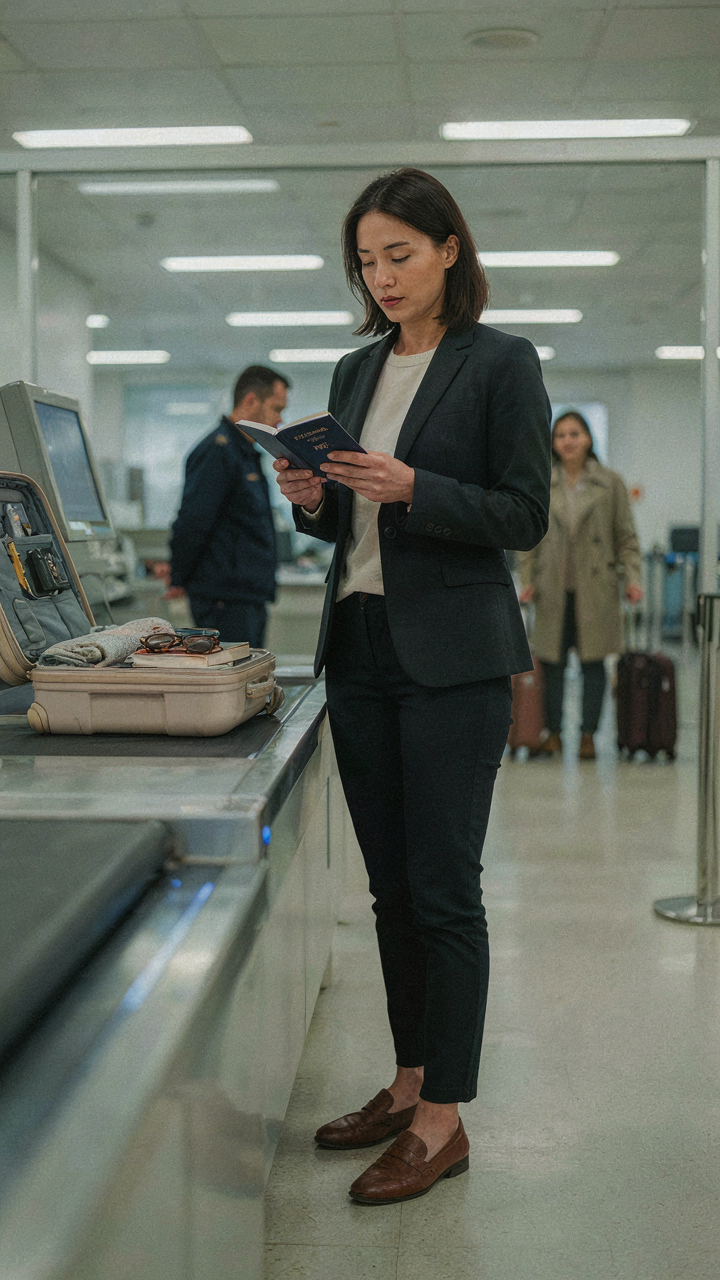
You’re worried you’ll look unprepared. The real mechanism is this: your brain treats packing like insurance, not like logistics. You throw in items for situations that have a 2% chance of happening because admitting those situations probably won’t happen feels like tempting fate. That’s not rational risk management. That’s superstition dressed up as planning.
The airline doesn’t care about your comfort buffer. Your carry on has fixed space and weight limits. Every item that addresses a “just in case” scenario is real luggage space stolen from things you’ll actually use daily. Stop treating your bag like an emergency kit and start treating it like a tool designed for one specific trip with one specific climate and one specific schedule.
What You’re Really Afraid To Lose
Emotional attachment to objects is economics dressed up as memory. You keep that third outfit because discarding it feels like admitting you won’t need it, which means admitting the trip won’t go that way, which means losing control of a narrative you’ve built in your head. You’re not protecting yourself from uncertainty. You’re protecting yourself from the reality that you can’t control everything.
Strip each item down to its actual function on this trip. If you can’t name the specific day and scenario where you’ll use it, it doesn’t board the plane. This isn’t minimalism as lifestyle. This is minimalism as decision making. You make one hard choice per item now instead of fifty small regrets when you’re dragging an overstuffed bag through an airport at gate closing time.
The Minimalist’s Protocol: How To Pack A Carryon, Not A Suitcase
Start With What Actually Matters
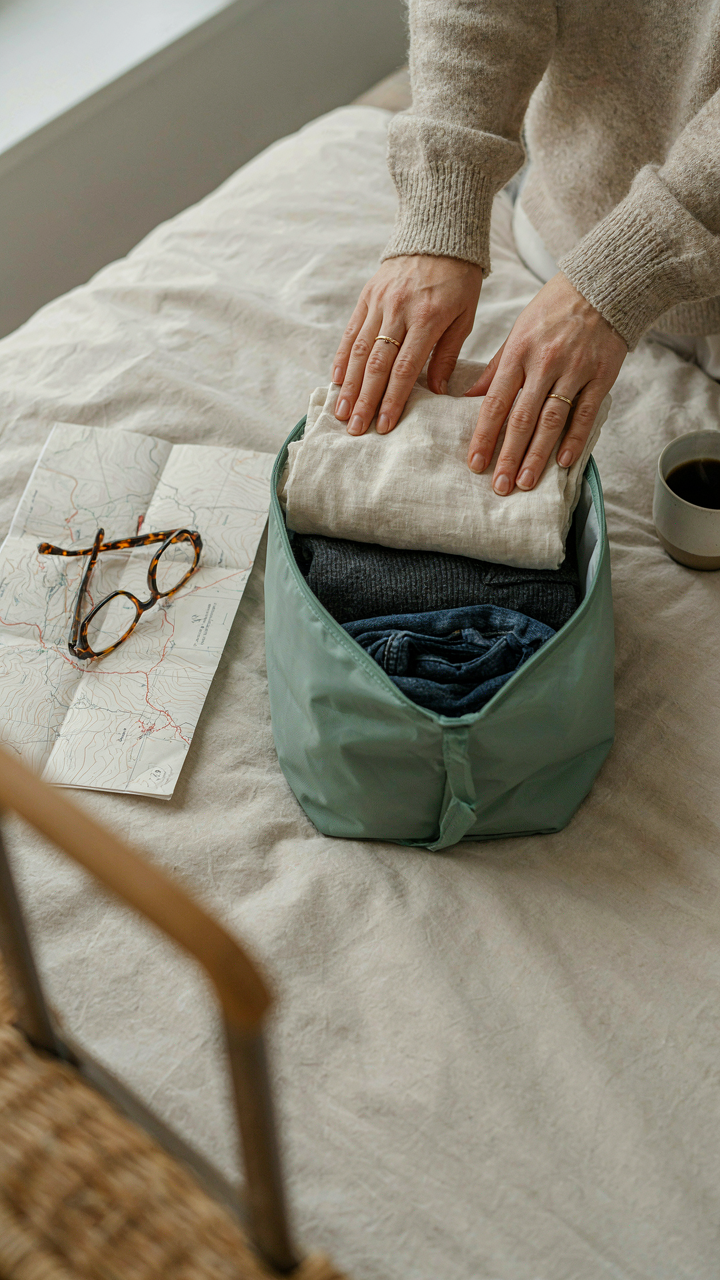
You want to feel in control. That’s the real reason you’re reading this. The mechanism is constraint: the carryon format forces you to stop pretending you need most of what you own. You don’t pack what you might wear. You pack what you will wear on specific days in specific contexts. That distinction kills half your luggage before you start. Most packing advice treats this backwards, suggesting you “choose versatile pieces” as if versatility solves the problem. It doesn’t. Specificity does.

Your non-negotiables are items that solve problems you actually face on this trip, not problems you imagine. A woman traveling for ten days in a temperate city needs different non-negotiables than someone heading to a mountain region in winter. Map the trip first: climate, activities, professional requirements, social settings. Then list only the pieces that address those realities. If you don’t have a formal dinner planned, formal wear isn’t non-negotiable. If you’re not hiking, hiking boots aren’t non-negotiable. Write down the number of days and the number of outfit changes you genuinely need. The rest is noise.
Cut Everything That Duplicates
The reason people fail at carryon packing is they keep backup versions of things they already own. One pair of shoes that work for multiple contexts beats three pairs that each work for one context. This is the efficiency principle from logistics: each item must earn its space through multiple uses. A black blazer worn over casual clothes looks like one outfit. Worn over workout clothes, it’s another. That’s not versatility marketing. That’s redundancy elimination.
You identify redundancy by asking what each item replaces or makes unnecessary. If you pack a cardigan and a light jacket, one is redundant unless they serve genuinely different purposes in genuinely different scenarios. If you pack two pairs of jeans, the second one is a backup, not a necessity. Backups consume space that a compressed packing cube could fill with something actually useful. The protocol: list every item. Next to each, write the problem it solves. If two items solve the same problem, remove one. Do this ruthlessly until removing one more item would actually limit your ability to function on the trip.
The “One In, One Out” Travel Capsule Wardrobe Rule
Build A Rotating Foundation Of Basics
You want to pack light without looking like you’re wearing the same thing twice. That’s the real fear here. The mechanism is constraint-based design from industrial manufacturing: you remove options until what remains forces compatibility. Every piece you pack must work with at least two others. This isn’t minimalism for moral points. It’s mathematical efficiency applied to your suitcase.

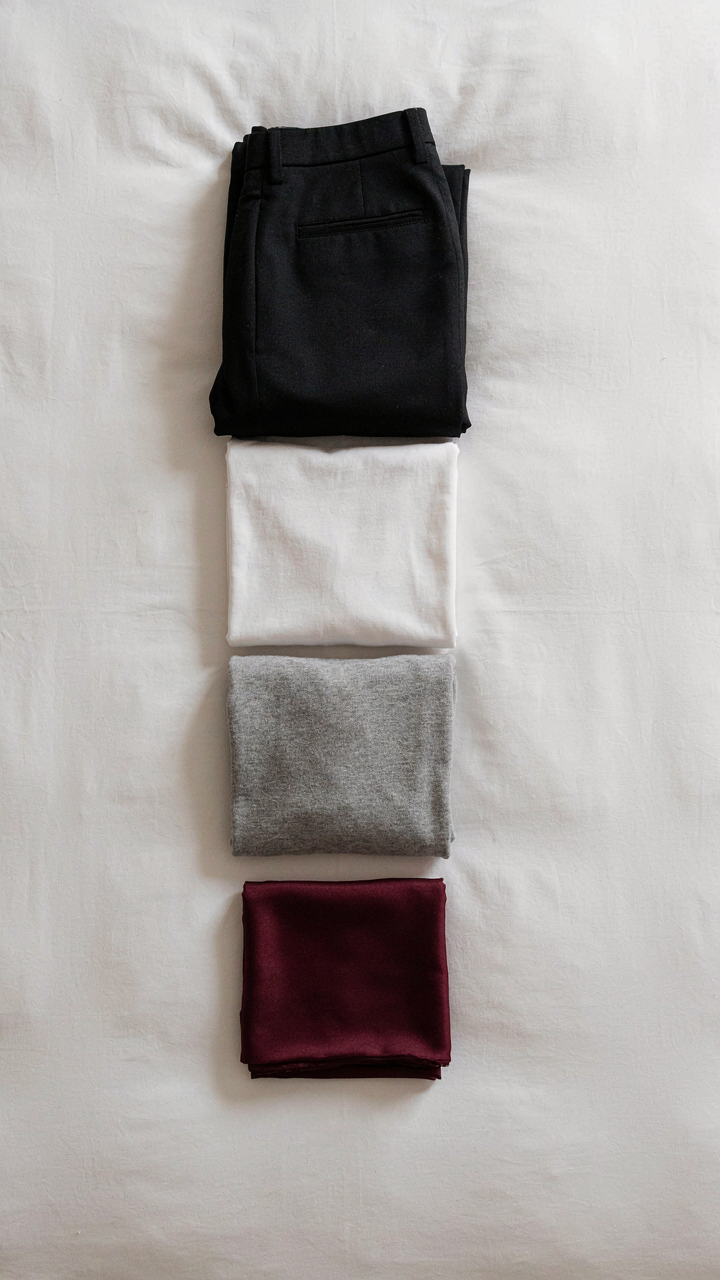
Start with neutral base layers that absorb color without demanding attention. A white cotton tee, a gray long-sleeve, black trousers, one pair of jeans. These don’t compete. They combine. Each base piece anchors multiple outfits. The rule works because you’re not choosing between unrelated items each morning. You’re choosing which combination of the same compatible pieces to wear.
The Restricted Palette That Actually Works
Most advice says pick three colors and stick to it. That’s incomplete. You need to understand color temperature consistency, not just color theory. Every piece must sit in the same undertone family or the outfit reads broken, not intentional. Warm neutrals with warm neutrals. Cool neutrals with cool neutrals. Never mix them.
Select one dominant neutral (black, gray, beige, or navy), one secondary neutral that shares its undertone, and one accent color that repeats across at least three items. A navy base layer, cream secondary, and burgundy accent across a scarf, one top, and accessories. That limitation forces the math to work. You stop thinking about whether pieces match and start moving faster. Pack only items that appear in this palette, then verify each new addition works with existing pieces before it enters your bag.
Strategic Compression: Maximizing Space, Not Just Folding
Rolling Versus Folding: The Real Trade Off
You want to believe one method wins decisively because decisions feel safer that way. The mechanism is density versus access. Rolling compresses air out and stacks vertically, gaining roughly 20 percent more volume per item. Folding preserves wrinkles less and lets you grab one piece without disturbing others. Neither is objectively superior. Rolling works for knits, casual layers, and bottoms. Folding serves structured pieces, delicates, and anything you need mid-trip without rewrinkling.

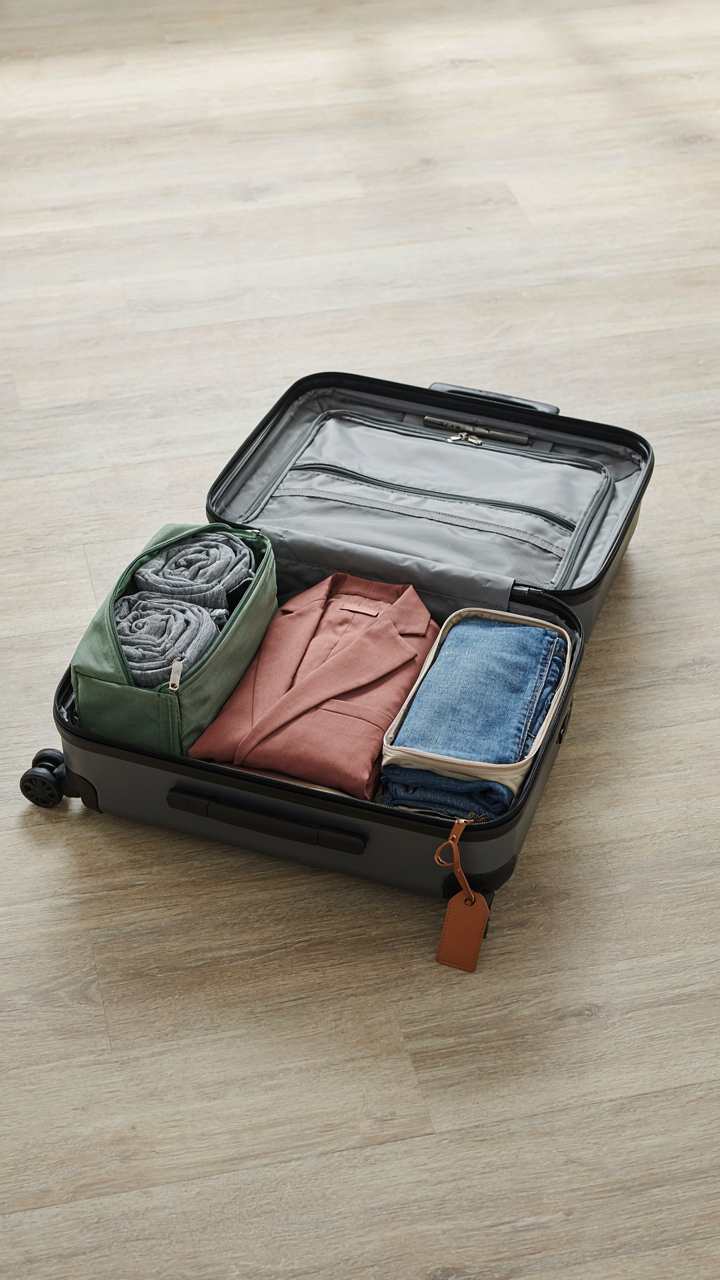
The hybrid approach beats purity. Roll your base layers, casual tops, and pants into compact cylinders that stand upright in your bag. Fold blazers, button-ups, and anything prone to creasing on top or in external pockets where pressure stays minimal. Stop searching for the one right way. Instead, match the method to the garment’s properties and your access pattern.
Packing Cubes As Organizational Load Bearing
Packing cubes function like load bearing walls in architecture. They’re not storage. They’re structural. Without them, fabrics shift and compress unevenly, and you waste searchable space. With them, each cube holds a category and volume stays predictable. A medium cube for tops, a small for undergarments, a slim for bottoms creates four separate zones you can rearrange or remove without unpacking everything.
The tactical move: use cubes to separate by wear cycle, not by item type. One cube for day one through three outfits. Another for days four through six. This eliminates decision friction and prevents rewearing the same piece before laundry access. You move a single cube to your hotel room, dress from that cube, then rotate it back. Compression happens as a side effect of organization, never as the primary goal.
The “Economic Utility” Of Every Item: Carry On Packing Tips

Cost Benefit Analysis Per Item
You want to feel like you made a smart decision, so you’re looking for permission to keep things. That’s the real reason this section matters. Here’s the mechanism: economics calls this “sunk cost fallacy,” and carry-on packing inverts it. You don’t evaluate items by what you paid for them. You evaluate them by what they do divided by their weight and space footprint.

Weight matters more than price. A $200 jacket takes up the same cubic inches as a $20 shirt. If you wear the jacket three times and the shirt seven times on a two-week trip, the shirt has higher utility per unit of space. Strip the emotional attachment to cost. Ask only: how many times will I actually wear this divided by the inches it occupies in my bag.
The True Cost Of Excess Space
The real opportunity cost isn’t money. It’s flexibility. Every extra item you pack removes your ability to acquire something you actually need mid-trip. Luggage space is inventory, and inventory committed to low-utility items is inventory wasted.
Common advice says “pack what you love.” That’s incomplete. Pack what performs multiple functions and gets worn repeatedly. If you bring five tops you might wear instead of three you will wear, you’ve loaded dead weight. That dead weight costs you the ability to pack a second pair of shoes, an extra charger, or underwear. When you need something and don’t have it, the cost becomes real. Audit your bag once before sealing it. Remove anything you haven’t assigned to at least two specific days or wear combinations.
Adapt Or Die: Your Carryon Packing List Europe Reality Check

Climate And Culture Shape What Actually Works
You want to pack once and look put-together everywhere. That’s the real motive here, and it fails because you’re ignoring the mechanism: environment controls what functions. Think of packing like supply chain optimization. Your inventory only matters if it matches the demand of the location. A wool sweater rated for alpine temperatures wastes carryon space in southern Spain. Research doesn’t mean scrolling Instagram. It means checking historical temperature ranges for your exact travel dates, not seasonal averages.

Culture determines what reads as normal versus out of place. Europeans dress for temperature, not for activity. Athletic wear signals low status. Neutral, layered pieces work across regions. A woman traveling through Scandinavia in July needs different fabrics than someone in Italy in April. Your packing list fails when you ignore these specifics and treat Europe as one climate zone. Pull actual weather data. Check what locals wear in photos from the exact week you’re traveling. This takes thirty minutes and saves you from packing wrong.
Buy What You Need When You Arrive
The mythology around carryon packing says you must predict and pack everything upfront. This is false. The real constraint is weight and space, not item count. You can’t pack seven outfits perfectly. You can pack three core pieces and add two more items locally. This reframes the entire packing problem. Most European cities have affordable, quality basics available in the first two hours of arrival. Zara, H&M, and Uniqlo exist everywhere. A single extra shirt costs less than the checked baggage fee you’re trying to avoid.
Incidentals especially should source locally: specific toiletries matched to water hardness, pantyhose in local shade ranges, a cardigan in the exact weight you discover you need mid-trip. You arrive with core layers and one outfit for the first day. By day two, you’ve added two pieces that fit the actual climate you’re experiencing, not the climate you guessed. This approach eliminates the packing paralysis that kills carryon-only trips. Buy on arrival, pack smarter, move lighter.
The 6 Day Trip Test: How To Pack For A 6 Day Trip & Beyond

Scaling Without The Bloat
You want proof you can travel light without looking unprepared. Here’s the mechanism: most people confuse “more days” with “more stuff” when the real variable is rotation capacity. A 3-day trip uses each item once. A 6-day trip uses each item twice. The math is straightforward, but everyone ignores it and packs linear instead of cyclical. You don’t need six tops for six days. You need three tops that work in two rotations.

Start by taking your 3-day carry-on list and identify which pieces actually perform double duty. Neutral colors, wrinkle-resistant fabrics, and layering items survive a second wear without looking slept in. Bottoms repeat easier than tops. One pair of jeans worn on days one and four looks different when styled differently. The constraint isn’t time. It’s your willingness to repeat patterns most people won’t notice.
Planning Laundry Into Your Packing Strategy
Laundry operates like inventory turnover in retail: the faster you cycle stock, the less you need on hand. Your hotel sink or laundromat visit isn’t a failure of packing discipline. It’s your resupply mechanism. Hotels with sinks cost nothing to use and extend your rotation capacity by two to three days without adding weight to your bag.
- Hand wash delicates in the hotel sink: Underwear, lightweight shirts, and socks dry overnight on a towel rack. This single habit eliminates the need to pack days’ worth of socks and undergarments.
- Use laundry strips for compact efficiency: These weigh almost nothing, take up minimal space, and work in any sink or small basin you find at your accommodation.
- Plan sink laundry for every 3-4 days: Schedule a 30-minute evening wash session rather than waiting until you run out of clean items. Consistency beats scrambling.
- Identify hotels with laundry facilities before booking: Public laundromats near your accommodation give you a backup option if sink washing isn’t viable for bulkier items.
- Hang dry strategically to preserve shape: Use hangers and clothespins to dry items near a window. Air circulation prevents mildew and keeps fabrics intact better than crumpled packing.
Commit to one laundry session midway through your trip as non-negotiable. This single decision cuts your base packing load in half and removes the anxiety around running out of clean clothes before you leave.
Mastering The 1 Week Vacation Packing List For Endless Journeys

Build Your Repeatable Core
You want to feel prepared without thinking. That’s the real fear underneath this section—that you’ll land somewhere and realize you packed wrong, wasting mental energy on logistics instead of living. The mechanism is simple: systems thinking from manufacturing demands constraint first. In production, you build one reliable process, then scale it. Your carry-on kit works the same way. You identify the non-negotiable items that solve 80 percent of real problems across different climates and trip types, then you stop adding to that base. The items don’t change. The trip length changes.

Start by tracking what you actually used on your last three trips. Not what you thought you’d use. What your hands touched. This data matters more than any list someone else built. Common advice says “pack for the climate,” which is true but incomplete. Pack for the activities you’ll do, the weather patterns that actually occur during your travel window, and the one specific gap every woman encounters: the absence of functional pockets in most clothing. Your core kit solves real friction points, not imagined ones. One belt, one cardigan, one pair of shoes that handle both walking and evening plans—these items compress the mental load and the physical weight.
Test, Document, Adjust
Most people pack the same wrong items twice because they don’t record what failed. Iteration requires data, not intention. After each trip, spend ten minutes logging what you needed but didn’t have, and what you carried but never touched. The second list is where you cut weight on the next round. Your core kit isn’t sacred. It evolves based on evidence, not guilt or trends.
The protocol is blunt: photograph your packed bag from two angles, save the image, and write five bullet points on what worked and what didn’t. Before your next trip, review those notes. Remove one item that added weight without solving a problem. Add one item that genuinely addresses a gap you documented. This single cycle—document, remove, add—compounds over six to eight trips into a kit that actually fits your life instead of some blogger’s aesthetic. You’ll have fewer clothes, less stress, and genuine certainty about what goes in that bag.
Your Overstuffed Bag Isn’t A Resource; It’s A Liability. Learn To Shed The Dead Weight

Most women pack for the trip they imagine, not the trip they’re actually taking. You don’t need contingencies for every emotion or outfit scenario. Strip your bag down to what you’ve worn in the last thirty days. Pick one outfit formula and repeat it. Then remove one more item. This isn’t minimalism for Instagram. You move faster, think clearer, and actually enjoy travel when you stop treating your carry-on like an insurance policy. The best packing list is the one that lets you move.