

The “Adaptive Armor” Protocol For Japan Travel Outfit Ideas
Layering As Temperature Insurance, Not Fashion
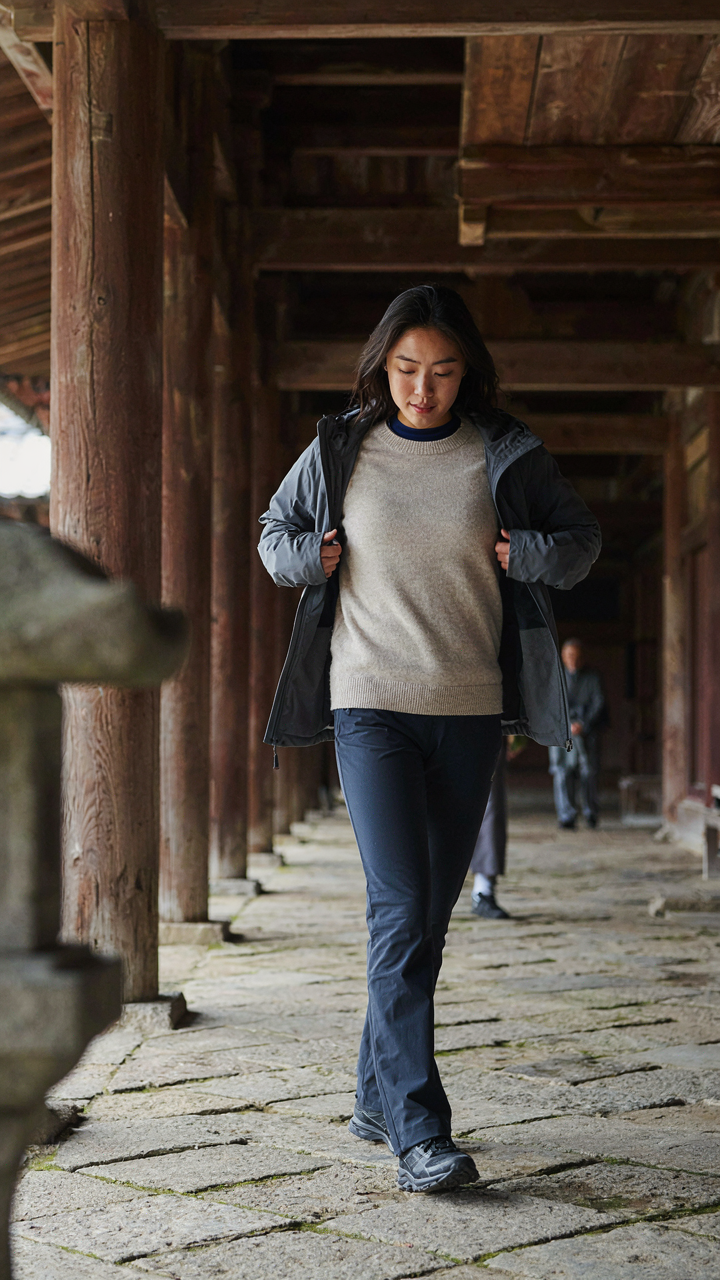
You want to look intentional without packing a suitcase the size of a carry-on. The real mechanism here is this: Japan’s seasonal temperature swings and indoor climate control create a 15-20 degree Celsius variance between street and interior spaces. Layering isn’t about looking European or fashionable. It’s defensive strategy. You regulate your core temperature without changing outfits.
The protocol is simple. Build a three-layer system: a base layer that wicks, a mid-layer that insulates, and an outer shell you shed indoors. Temples in Kyoto run cold year-round because of stone and airflow. Trains blast air conditioning to compensate for packed bodies. A casual linen shirt over a fitted long-sleeve base layer solves both without looking overwrought. You move through the day adding or removing one piece, not fumbling through multiple outfits.
Fiber Engineering For Climate Adaptation
Temperature regulation is a physics problem, not an aesthetic one. Thermal resistance and moisture vapor transmission are the two variables that matter. Merino wool manages both simultaneously, which is why Japanese outdoor brands use it obsessively. Cotton fails in humidity because it absorbs moisture and loses insulation value. Polyester traps heat. Merino breathes, dries fast, and regulates temperature across a wider range than any single synthetic.
The practical move: use merino wool for your mid-layer on temple visits and cooler months. Pack one merino crewneck and rotate it. Pair it with linen or cotton on top because the combination creates air channels that cotton alone cannot achieve. For your base layer, use a thin synthetic blend that wicks, not cotton. This isn’t overthinking. This is the difference between being uncomfortable for four days and staying stable throughout a week-long trip.
Beyond Beige: The Japan Capsule Wardrobe Color Matrix
The Neutrals That Actually Work
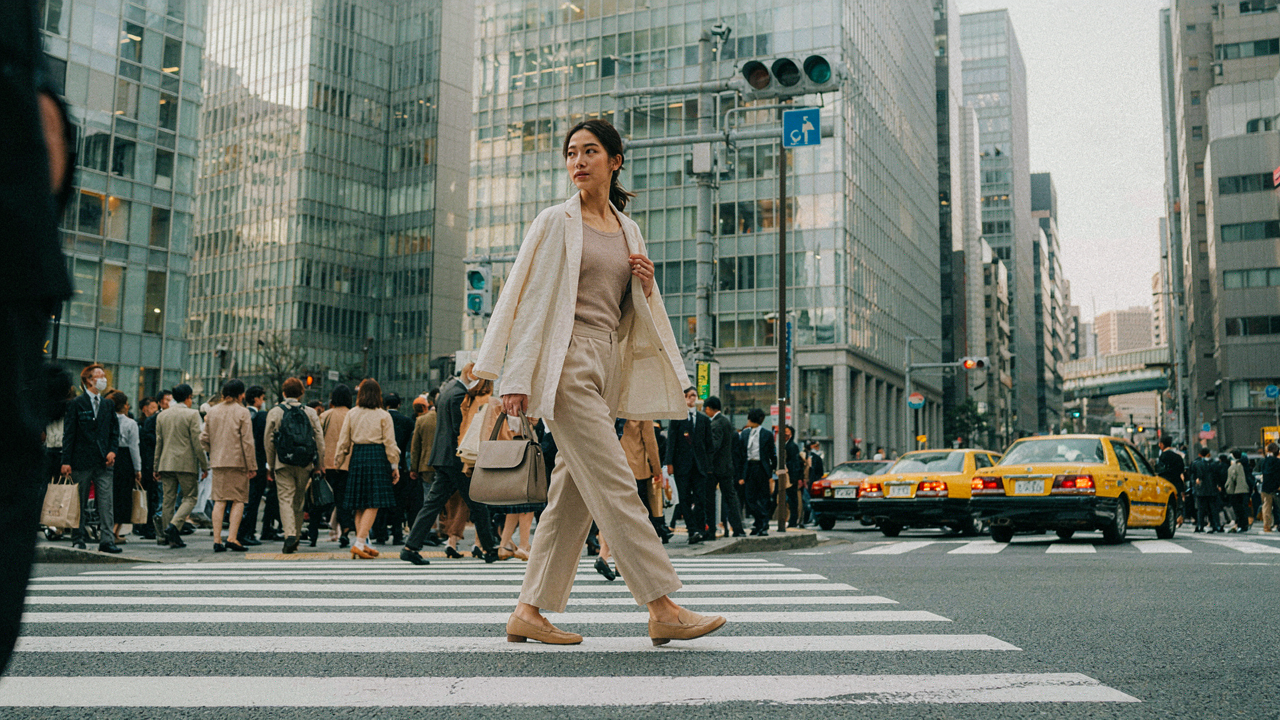
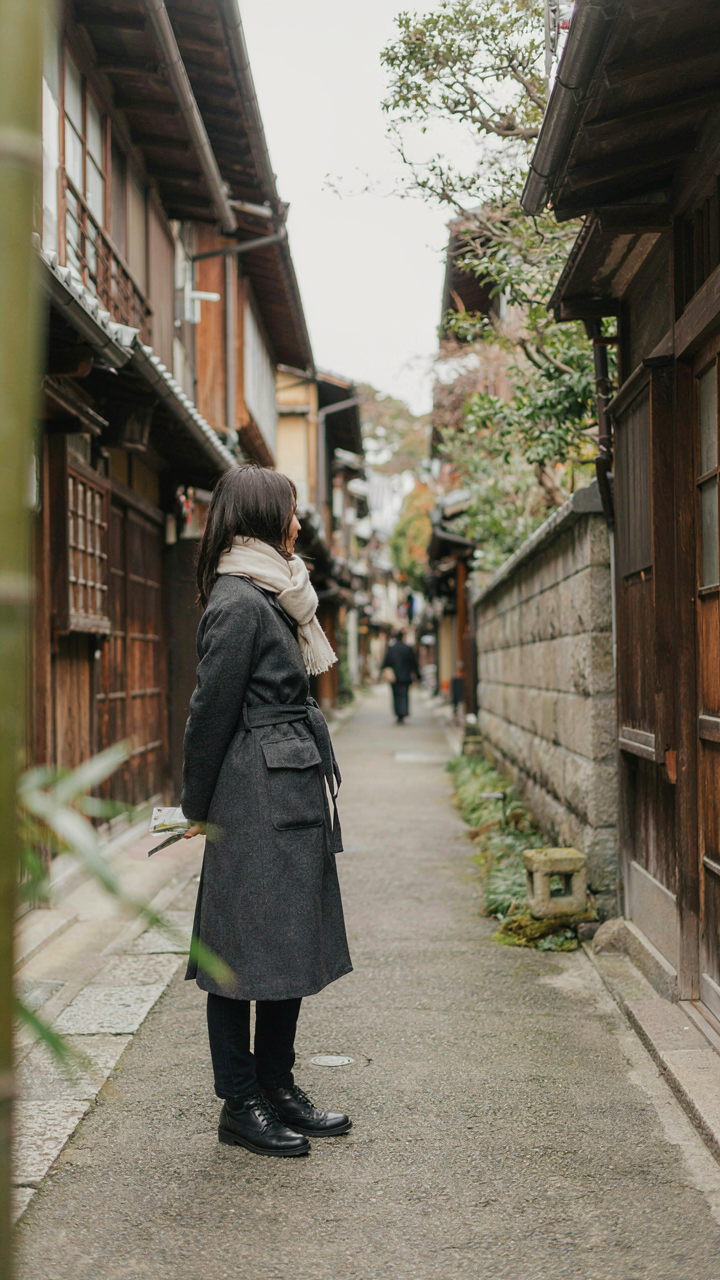
You want to blend in without looking like you’re trying to blend in. That’s the real tension here. The mechanism is contrast ratio: Japan’s urban palette leans toward muted, desaturated tones because they reduce visual noise in crowded spaces. Black, charcoal, navy, and cream dominate Tokyo and Kyoto streets not because of some aesthetic conspiracy but because they absorb attention rather than demand it. These colors create what designers call “visual rest.” Your nervous system processes them faster, which means locals perceive you as less foreign.

Avoid the mistake of thinking beige alone solves this problem. Beige is passive and reads as indecisive. Instead, anchor your core in black or charcoal for outerwear and basics, then layer cream, soft gray, or warm taupe underneath. This combination lets you move between temple grounds and train stations without the jarring tonal shifts that mark you as a tourist. The depth comes from texture and fit, not color intensity. Pair a charcoal linen shirt with cream trousers. The contrast lives in the fabric structure, not the hue.
Colors That Read Wrong
Red signals celebration or warning in Japanese contexts. Bright red, especially in formal settings, connects to festival wear or warning tape. Temples require restraint. Wearing crimson to Fushimi Inari doesn’t offend, but it broadcasts that you didn’t think about your environment. White holds different weight here. While white works in summer, excessive white reads as clinical in winter months. The real error isn’t picking one forbidden color but failing to notice how saturation changes meaning.
Navy paired with cream creates visual harmony without monotony. Forest green works because it echoes natural temple grounds. Charcoal with touches of muted ochre or rust feels intentional rather than accidental. The rule isn’t “avoid color” but rather: keep saturation low and let neutrals do structural work. When you do introduce a secondary color, restrict it to accessories or a single garment. This prevents the outfit from competing for attention and keeps the focus on where you’re actually going.
The Temple Trekker’s Toolkit: Footwear And Accessories
Shoes That Won’t Betray You In A Shrine
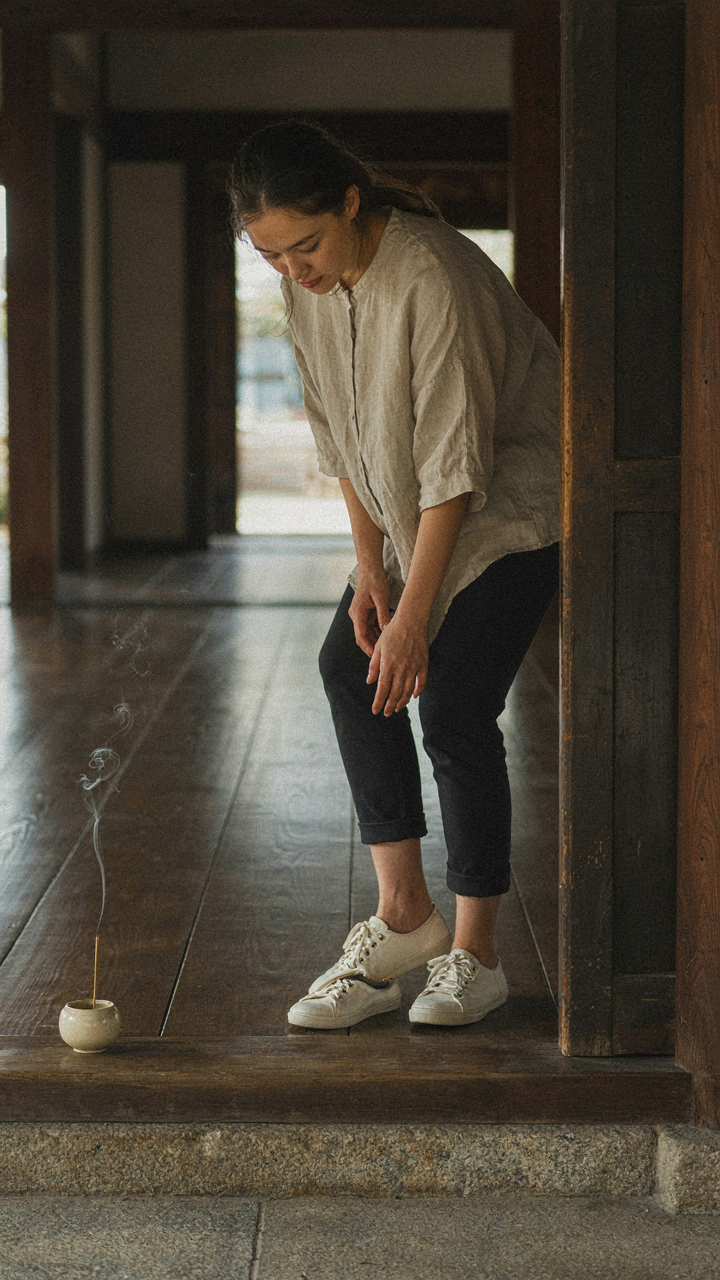
You’re worried you’ll look like a tourist breaking protocol at a temple. The real mechanism is that Japanese temples demand shoes you can remove fast without fumbling, then walk barefoot on uneven surfaces without losing dignity or your footing. This isn’t about looking good. It’s about friction and surface contact.

Bring two pairs maximum: slip-on loafers or minimalist sneakers for city streets, plus a dedicated pair you can remove in three seconds flat. Leather-soled shoes fail on temple floors. Temple grounds are polished wood, worn stone, and gravel. Your shoe needs to come off instantly and your bare foot needs grip. Merrell or similar minimalist brands solve both. The loafer works because you step out of it without bending down or unlacing. No socks, or bring ones you can peel off in the shoe. Japanese visitors often go barefoot in their own homes and temples without ceremony. You do the same.
Carry Utilities, Not Decorations
The consensus says bring a small crossbody bag and call it minimal. That’s incomplete. Real minimalism means every object removes friction from your day, not adds texture to your outfit. You need a bag that holds what moves you between temple and city without demanding attention.
A structured tote or small backpack beats a crossbody here. You’ll remove it at temple entrances anyway. Stock it with: a small towel or handkerchief for drying hands after purification rituals, sunscreen in a compact container, phone and cash in separate pockets to prevent loss, and a lightweight scarf that works as both warmth and temple coverage if needed. Jewelry stays home. Watches stay home. Metal accessories that jingle betray your position in quiet spaces. The bag itself should be neutral cotton, canvas, or linen in black, grey, or beige. When you’re standing in a shrine courtyard, nothing about your gear should compete with the space around you.
Japandi Capsule Wardrobe: Blending Function With Aesthetics
Minimalism Meets Survival Logistics
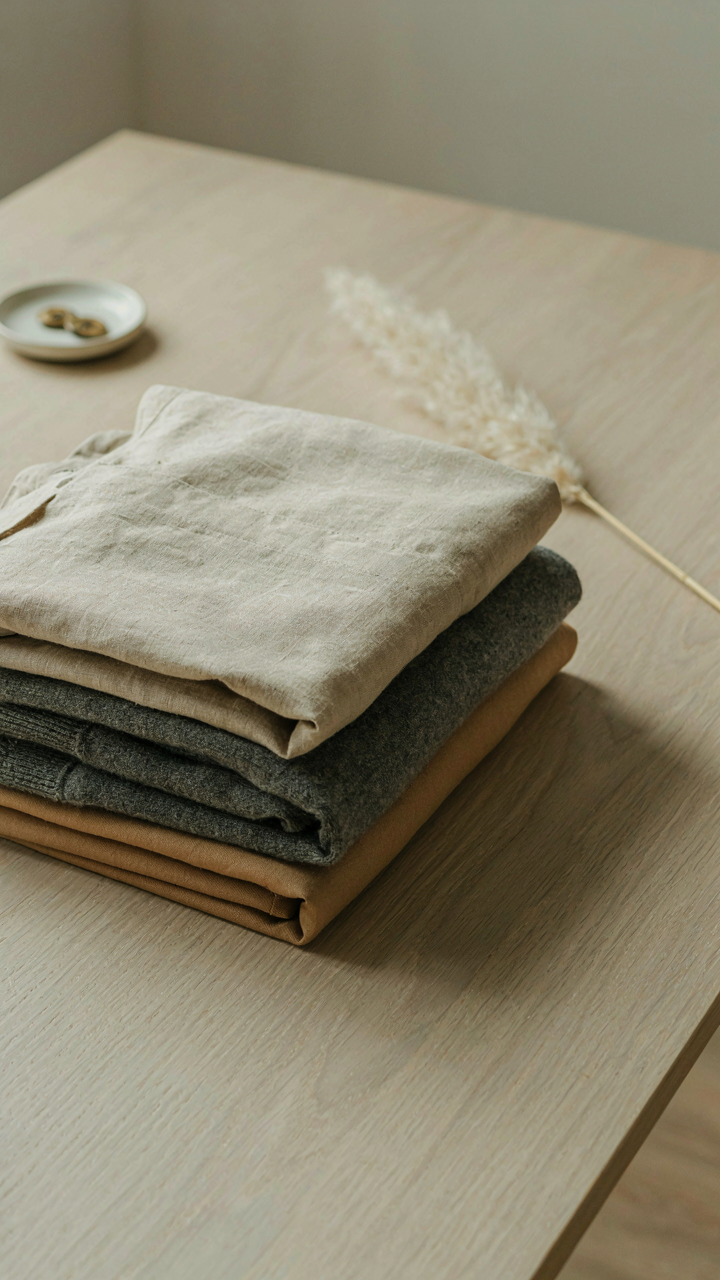
You want to look intentional without trying, because effort reads as insecurity in Japan. Here’s the mechanism: Japandi—the collision of Japanese minimalism and Scandinavian functionalism—strips away the decorative layer and leaves only what solves a problem. Every piece does two jobs at once. This isn’t aesthetics pretending to be practical. It’s practicality that happens to look clean because ornament wastes resources.

Japanese design tradition discards visibility as a measure of value. A garment proves itself through durability, fit precision, and how it combines with other pieces, not through visual noise. Scandinavian design added the constraint: use fewer materials, repeat fewer colors, build outfits through layering logic rather than novelty. For city trips and temple visits, this means your ten items generate dozens of combinations because each one functions across contexts. You’re not traveling with a wardrobe. You’re traveling with a system.
Neutral Anchors And Deliberate Texture
Build around four colors: black, navy, cream, and one earth tone like taupe or olive. These aren’t suggestions for harmony. They’re load-bearing walls. Every other piece you pack must work with at least three of these four. The mistake most people make is treating a capsule like a smaller version of a full wardrobe. It isn’t. It’s a grammar. Colors are the vocabulary. You’re limited on purpose.
Japanese craftsmanship obsesses over natural fiber quality because synthetics announce themselves—they catch light wrong, wrinkle unpredictably, fail in humidity. Cotton, linen, and merino wool absorb and release moisture without looking damp. For a Japan trip spanning cities and temples, choose pieces in these fibers explicitly. One structured linen shirt replaces three casual cotton ones because it performs across temperature shifts and doesn’t scream “tourist.” Texture becomes your visual complexity. Weave matters more than pattern.
The “Information Theory” Of Packing: Maximizing Wardrobe Entropy
Each Item Carries A Bit Value
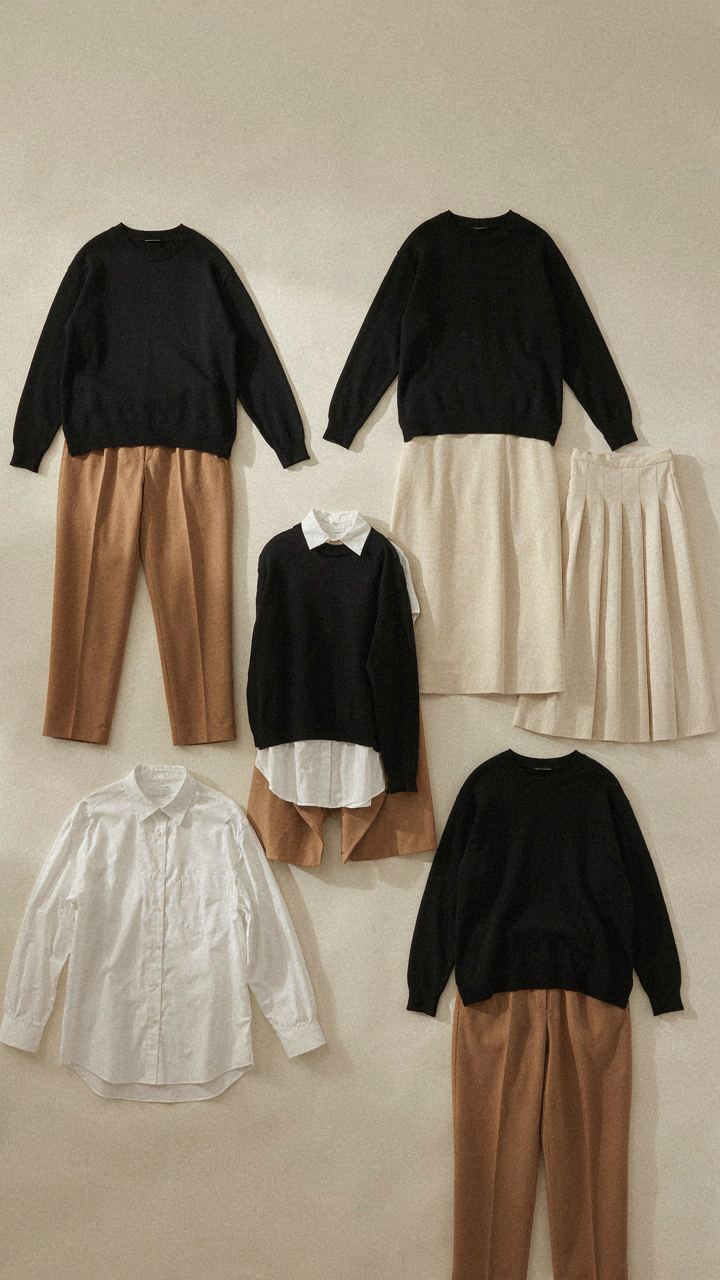
You want to pack less because you’re terrified of looking unprepared or hauling dead weight through train stations. The real mechanism is information theory: each piece in your japan capsule wardrobe functions like a bit in a data system. A bit’s value isn’t its existence, but how many different outputs it enables. A black crew neck sweater generates far more outfit combinations than a novelty graphic tee because it connects to more items across color, texture, and formality levels. The sweater is high bit value. The graphic tee is low bit value. You’re not minimizing clothes for virtue. You’re maximizing signal by eliminating noise.

Japanese design philosophy understands this intuitively. The Tokyo uniform trend isn’t about looking cool. It’s about compression. Every garment in a well-built capsule works across multiple contexts: temple visits, casual meals, train travel, museum hours. A linen shirt worn open over a thin tank functions as three items depending on layering and context. A neutral-toned trousers pair in a quality fabric moves from casual to semi-formal with a single accessory swap. This is bit efficiency. You’re creating maximum communicative flexibility with minimum physical mass.
Redundancy Kills Combinations
Most packing guides tell you to bring “backup options.” That’s the exact opposite of capsule logic. Redundancy compresses your outfit combinations faster than anything else. If you pack two similar cardigans in slightly different shades of beige, you’ve wasted a packing slot and created zero new outfits. You now have twelve outfit variations instead of fifteen. Two neutral-toned tees in the same weight perform the same function. Bring one. The second tee is pure deadweight masquerading as safety.
The math is unforgiving. A capsule with five tops, three bottoms, and two layers generates roughly thirty distinct combinations before repeating. Add a redundant sixth top that mirrors one you already own, and you’ve sacrificed portable space for zero new outfits. Japanese travelers understand this because Tokyo trains are crowded and luggage room is literal currency. Build your capsule by asking one question: does this item create a new combination with something I already packed, or does it duplicate function? If it duplicates, leave it home.
Japan Spring Outfit Travel: Navigating Seasonal Extremes
Layers Win When Weather Refuses To Commit
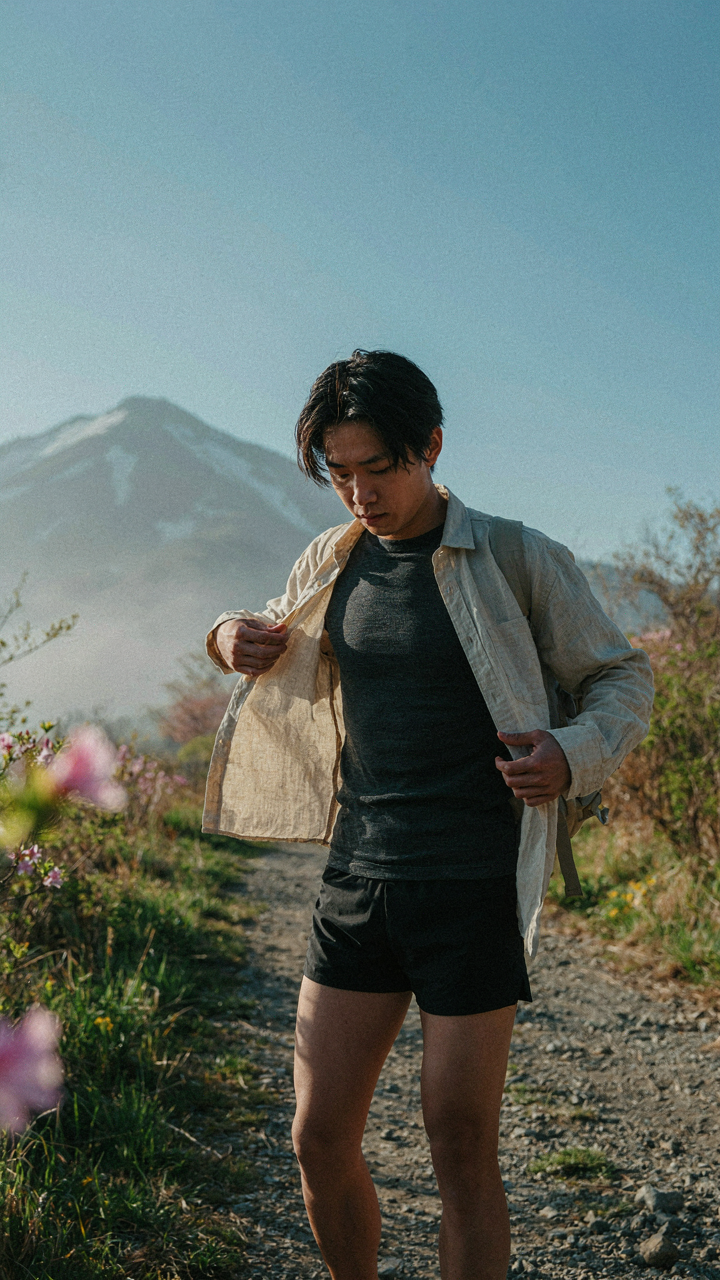
You’re anxious about looking unprepared in front of strangers, which is why you’re reading this instead of just packing a jacket. The real mechanism here is thermodynamic flux: spring in Japan doesn’t follow a linear temperature curve. You get 50°F mornings that spike to 70°F by afternoon, then drop again. This isn’t random. Coastal regions warm faster than inland areas. Urban heat islands create 5 to 10 degree swings compared to temple grounds. A japan capsule wardrobe for spring accounts for this using material layering as a variable, not a fixed solution.

Forget the generic “just bring layers” advice. That assumes all layers function the same way, which they don’t. Start with a base of merino wool or a synthetic blend that wicks moisture and regulates temperature without bulk. Add a lightweight overshirt in linen or cotton that you remove entirely by mid-afternoon. Top it with a structured overshirt or lightweight jacket that compresses into a daypack. The jacket does the real work: it blocks wind (which magnifies cold) and sheds light rain without trapping sweat. Wear the minimum, remove pieces as you move, not vice versa.
From Sakura Season To Unexpected Rain
Spring rain in Japan hits fast and doesn’t announce itself politely. You’ll be photographing cherry blossoms at Ueno Park when clouds roll in and the temperature drops 10 degrees in minutes. A japan capsule wardrobe that handles this doesn’t add random rain gear. It replaces one piece with a dual-purpose item. Swap your structured overshirt for a water-resistant technical shirt or a wool blend with a DWR finish. These materials shed water on contact without feeling plasticky or trapping heat when conditions clear again.
The actual protocol: check hourly forecasts before you leave your accommodation, not just the daily prediction. Japan’s weather apps show precipitation probability by the hour. If rain probability exceeds 40 percent between 2 and 5 PM, keep your water-resistant layer on you. If it stays below 30 percent, leave it at your hotel and move faster through your itinerary. Don’t pack an umbrella into a capsule wardrobe meant for movement. Instead, keep one umbrella at your hotel base and accept that some temples require you to leave it at the entrance anyway.
Fall Japan Outfits Women: Beyond The Autumn Stereotype
The Vertical Dressing System
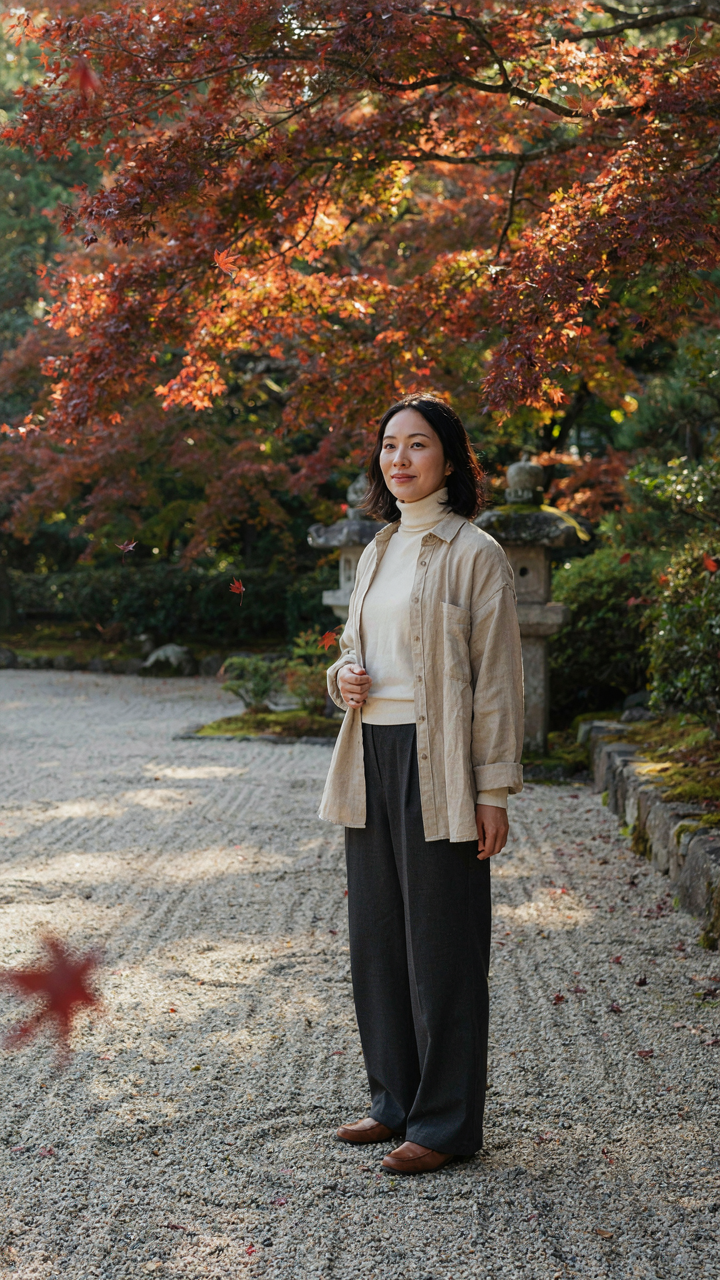
You want fall outfits that photograph well without looking like you tried. The real mechanism here is thermal layering borrowed from engineering: manage air pockets, not just clothing bulk. Japan’s fall temperature swings from 15°C in early morning Kyoto to 22°C by afternoon. A single heavy sweater fails because you can’t shed it. The capsule solution stacks thin, high-surface-area pieces that trap warmth when worn together and work solo when removed.

Build your base with merino wool tees in cream or charcoal. Add a lightweight turtleneck. Drape an unstructured linen overshirt or a single-breasted wool blazer. These pieces layer without creating a rigid sandwich. The blazer comes off at temple visits where you’ll remove shoes anyway. The overshirt stays as a walking layer in the city. Your core temperature stays regulated because you control coverage, not because you own heavier fabric.
Moving Between Concrete And Stone
Swapping city streets for temple grounds requires a single material pivot, not a wardrobe reset. The mistake everyone makes is treating these as different dress codes. They’re not. They’re different ground conditions with different friction profiles.
In Kyoto’s downtown, your shoes take pavement impact. Wear leather loafers or structured flats that won’t flex with repetitive concrete walking. Once you reach temple grounds, you remove shoes anyway, so sole durability matters less than getting there intact. Pack a second pair of socks, not extra outfits. Switch socks before entering the temple. The same capsule blazer works in both settings because fit and fabric neutrality, not destination-specific styling, drives versatility. Your pants shift from structured trousers in the city to slightly softer wool blends at rural temples. Same color family. Same silhouette. Same top layer.
Japan Summer Capsule Wardrobe: Beating The Heat And Humidity
Fabrics That Actually Move Moisture
You’re worried you’ll look like a tourist sweating through silk in 35-degree heat. The real mechanism is capillary action: fabric moves sweat away from skin or traps it against you. That’s the entire game.

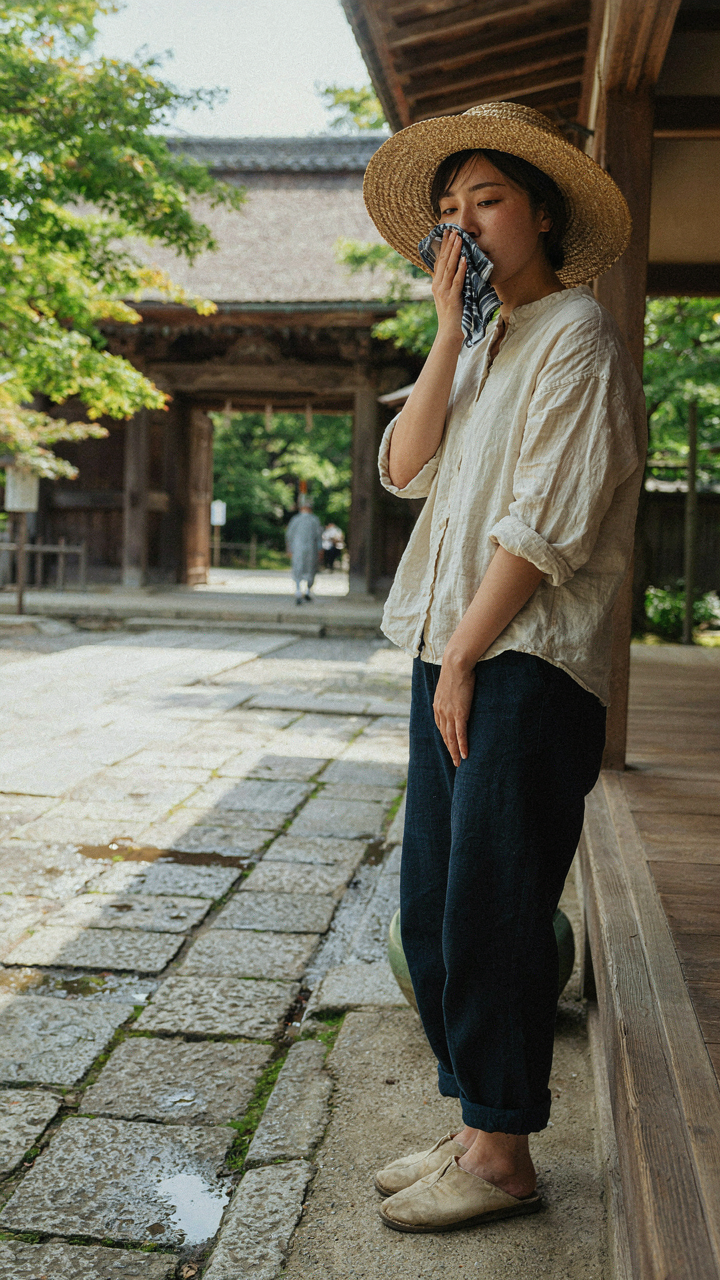
Linen dominates Japanese summer style because it wicks moisture horizontally across the weave rather than absorbing it vertically. Cotton absorbs sweat and holds it. Linen releases it. When you’re moving between temple visits and city streets, this difference compounds hourly.
- Linen blends (60-70% linen content): Reduce wrinkles compared to pure linen while maintaining breathability. Japanese summer wear relies on this ratio for both function and appearance.
- Ramie: Stronger than linen, dries faster, and absorbs less moisture. Found in premium Japanese summer garments, particularly shirts designed for humidity zones.
- Rayon (viscose): Breathes well and dries quickly, though it wrinkles. Japanese designers use it in lightweight layers because it compresses for packing.
- Cotton gauze: Open-weave construction allows air circulation. Common in Japanese summer tops because it’s casual but functional in temples and restaurants.
- Synthetic blends with natural fibers: Polyester mixed with linen or cotton improves durability and reduces wrinkles without killing breathability. Practical for repeated washing during trips.
Quick-drying matters more than comfort when you’re in humidity. A linen piece dries in 3-4 hours. Cotton takes 8-12. You need clothes ready for the next activity, not hanging in your capsule waiting. This is why Japanese summer wardrobes lean linen despite the wrinkles.
Layering For Sun And Sweat
Most capsule advice ignores the real problem: you need sun blocking and evaporative cooling happening simultaneously. These aren’t competing goals if you layer correctly.
A lightweight long-sleeved linen shirt over a moisture-wicking base layer handles both. The linen blocks UV while allowing sweat to evaporate from the base layer underneath. Temples require covered shoulders and long sleeves anyway. This solves the requirement and the heat problem in one layer.
Dark colors absorb more heat than light colors, but they also hide sweat stains and dirt better during 12-hour walking days. Japanese travelers favor dark neutral tones not for aesthetics but because they show neither heat damage nor moisture accumulation. Cream and white linen works for temple visits where you’re indoors most of the time.

A wide-brimmed hat rated for UV protection matters more than sunscreen for your scalp and neck. Japanese summer style includes hats as functional infrastructure, not accessories. Pair it with a lightweight neck covering (often a thin scarf or tenugui cloth) that wraps quickly and dries in minutes when wet. You can dampen it for evaporative cooling during walking breaks. This is how locals manage the heat without constant shade-seeking.
The Post Trip Wardrobe Audit: Optimizing For Future Expeditions
What Actually Worked In Real Conditions
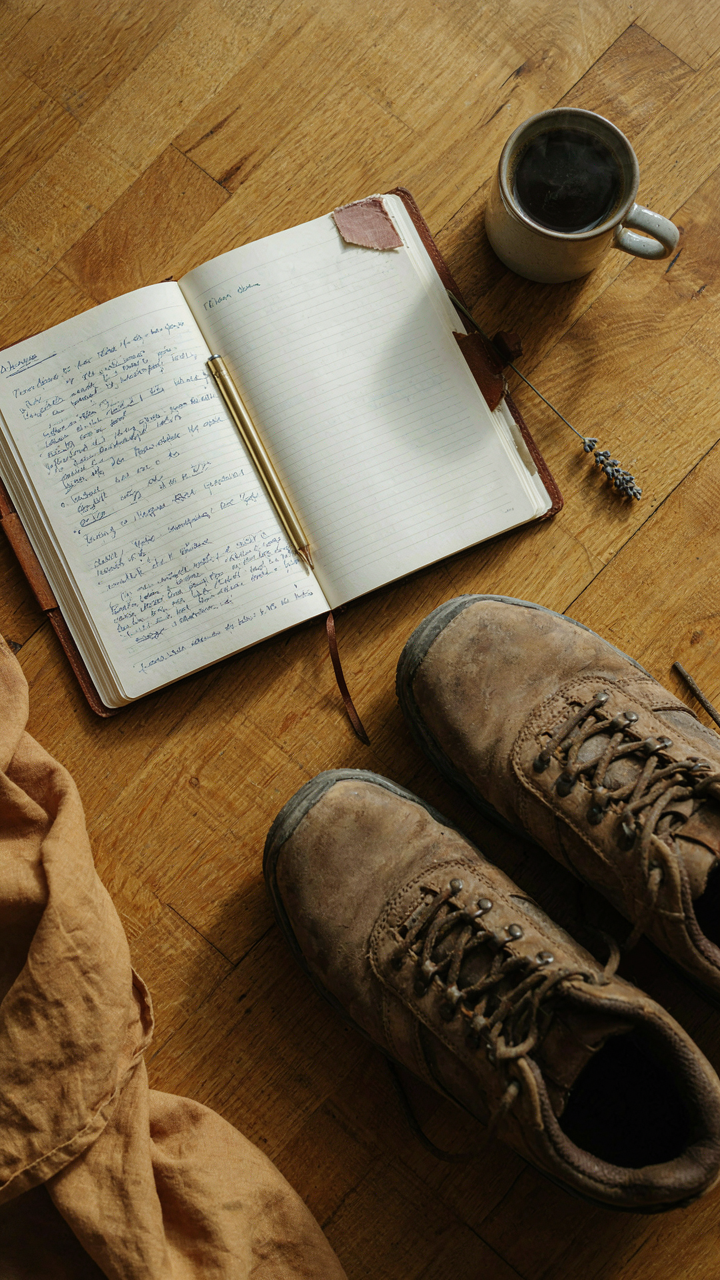
You’re doing this audit because you want proof your system wasn’t wasteful. That’s the real motive. Here’s what matters: treat each piece like data from an experiment. Temperature shifts, humidity levels, and actual foot traffic reveal what fabric performs versus what looked good in your closet. Merino wool didn’t pill. The linen wrinkled worse than expected. These aren’t preferences—they’re facts that change your next packing decision.
Document which items you wore twice versus zero times. The gap between “I thought I’d wear this” and “I actually reached for this” shows where your mental model failed. Uniqlo Airism held up in Kyoto’s summer. That cotton blend didn’t. Temple grounds demand shoes with real grip, not the comfortable pair that slipped on stone. Write down specific moments: which shirt during the Fushimi Inari visit, which pants on the rainy Philosopher’s Walk. Your future self needs those specifics, not vague feelings about what worked.
Refinement Through Subtraction And Replacement
The common advice says add and rotate. That’s incomplete. Real optimization means identifying the weakest performer in each category and replacing it, not expanding the rotation. Boots became the constraint—they took up volume but only served two days. Swap them for packable slip-ons that handle both temple visits and urban walking. That’s a system upgrade, not a wardrobe expansion.
Track fit against movement, not against mirrors. Did the jacket restrict your arms during temple exploration? Did the pants bunch at the knee after eight hours walking? Fit fails aren’t about aesthetics—they’re friction that compounds across a week. Replace one piece every three months based on this data alone. Consistency builds only when weak links get cut and stronger alternatives get tested immediately. Apply this replacement protocol before your next trip, not after the packing panic begins.
The Real Obstacle Isn’t Your Luggage; It’s Your Inability To Anticipate Complexity
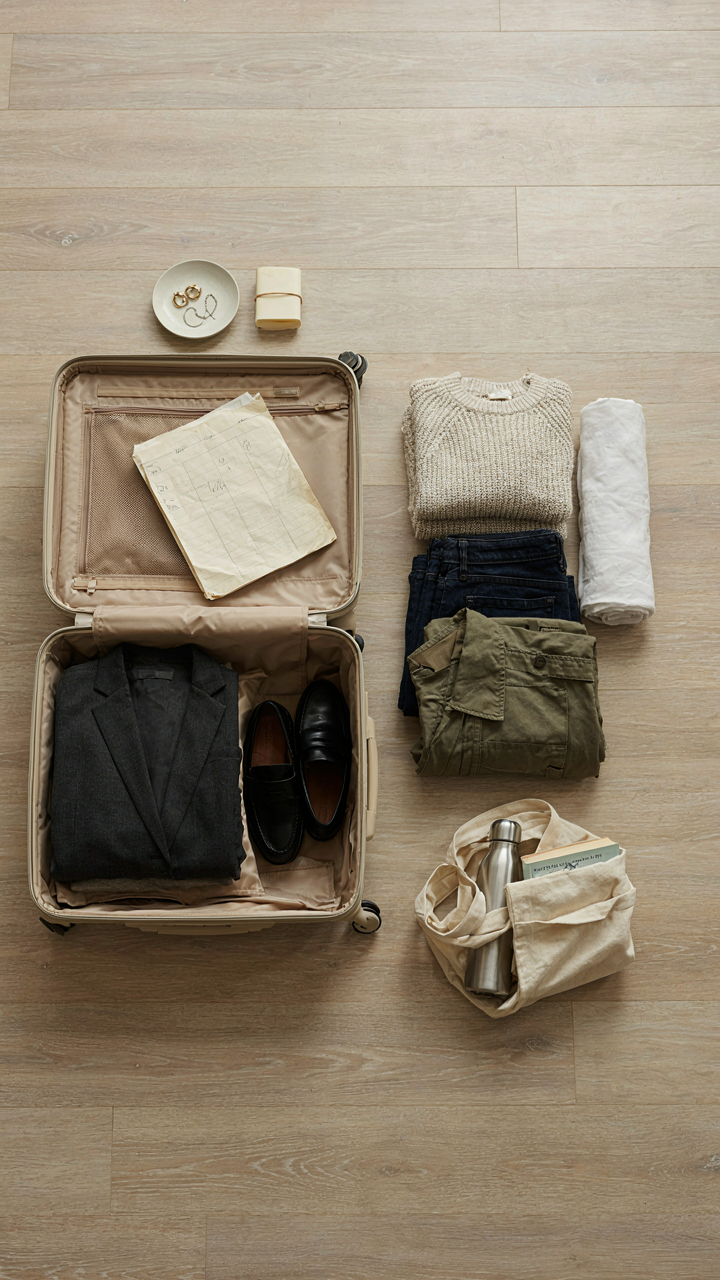
Most travelers pack poorly because they refuse to sit with uncertainty. You want a formula. A checklist. Something that kills the anxiety of “what if.” A Japan capsule wardrobe forces you to think three weeks ahead, to know your own body in different climates, to accept that you won’t have every option. That mental shift beats any packing hack. Spend one hour tonight writing down every activity you’ll do in Japan, then choose five pieces that cover all of it. Your problem isn’t fabric. It’s that you’ve never actually planned anything.