

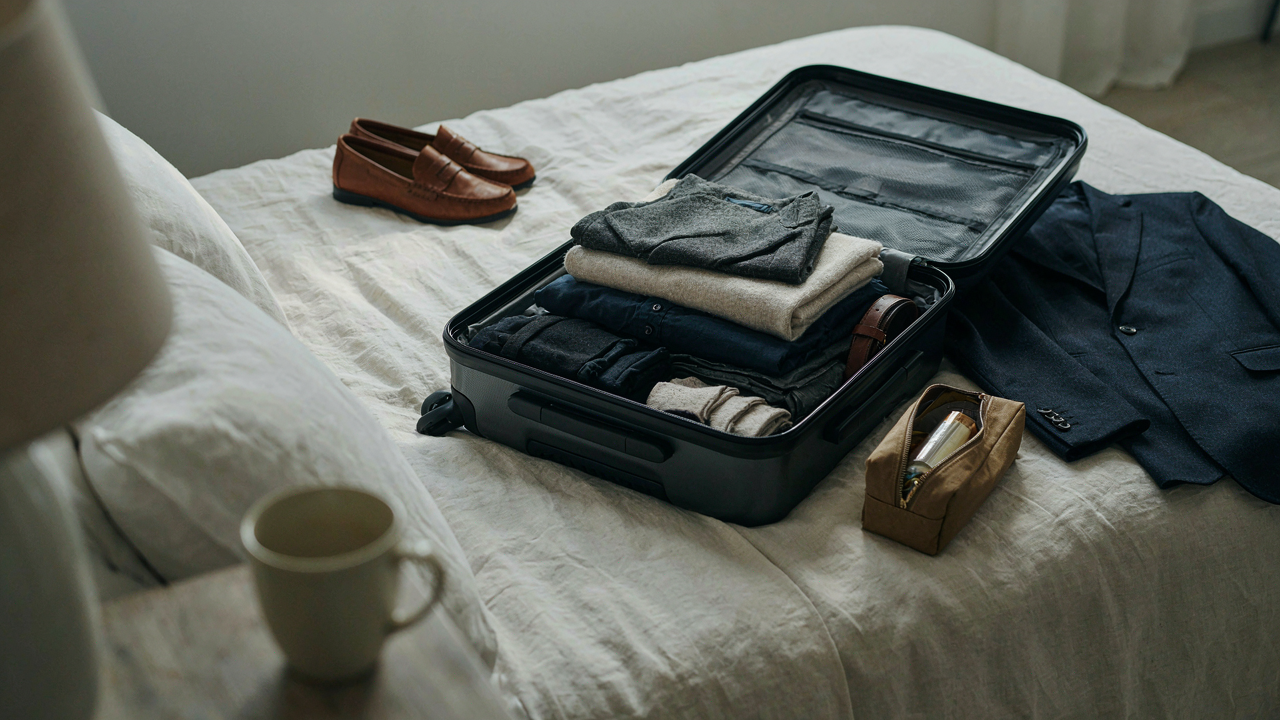
The “Non Negotiable Nine” Principle: Your Core Europe Packing Outfits

Clothes Are Not The Foundation
You think this section is about which shirts to buy. It’s actually about admitting you’ve been packing wrong your entire life. The real mechanism is constraint-based design borrowed from engineering: you don’t build a bridge by adding weight until it breaks. You define the load it must bear, then work backward. Your load is fourteen days, one bag, twelve European cities. Everything else follows from that.
Nine core pieces solve this because nine is the mathematical threshold where outfit combinations exceed sixty without redundancy. Each piece must earn its weight by functioning in multiple contexts: day use, evening use, layering potential, climate adaptation. This isn’t minimalism for status. This is ruthless elimination for function. You pick items that reset your mental calculation of “outfit” from “matching set” to “modular system.”
From Casual To Dinner In One Outfit
Economics calls this “elasticity of demand.” Fashion calls it versatility. Both miss the point. What matters is optical distance: how differently does the same piece read at breakfast versus dinner? A dark crew neck sweater at 8am reads casual. Styled with darker trousers and a layered blazer at 8pm, nobody recognizes it as the same item. Optical distance is high. Cost per outfit is low.
The pieces that maximize optical distance are neutral in color, minimal in graphic detail, and precise in fit. Slim, not baggy. Neutral, not patterned. This is why fast fashion fails on two-week trips: pieces are cut loose or trend-forward, which means they read the same way regardless of context. Your nine pieces must have professional tailoring and zero logos. Fabric weight matters more than brand. Cotton-linen blends, structured knits, and quality denim move across contexts. Flimsy synthetics broadcast “I didn’t plan this.”
Beyond Packing For Europe In Fall: The Seasonal Adaptability Matrix

Layering As Temperature Insurance
You want this section because you’re terrified of being cold in public and looking unprepared. The real mechanism is this: layering isn’t about quantity. It’s about thermal resistance stacking. Each layer traps air. Air doesn’t conduct heat away from your body. The closer a layer sits to your skin, the more it matters for moisture management. The outer layer matters only for wind and water defense. Most people reverse this logic and buy thick outer jackets instead of a proper base.

Three layers cover 90 percent of European fall conditions. A merino wool or synthetic base layer manages sweat without absorbing it. A mid layer like a fleece or lightweight sweater adds insulation without bulk. A water-resistant shell handles rain and wind. This system lets you adjust by removing or adding layers, not by changing entire outfits. You control temperature, not the weather. Pack the base and shell as non-negotiables. The mid layer rotates based on your personal heat response and forecasted lows.
Fabric Selection Over Fashion Timing
Everyone says pick natural fabrics for comfort. That’s incomplete. Natural fabrics feel good initially but fail in specific conditions. Merino wool, for example, breathes and regulates temperature better than cotton because it handles moisture vapor transfer without losing insulation when damp. Synthetics like polyester and nylon dry faster and resist wrinkles better, which matters in a carry-on where you rewear items three to four times. The real trade-off isn’t comfort versus durability. It’s care burden versus performance.
Fabric intelligence means choosing based on use case, not brand preference. Cotton absorbs sweat and dries slowly, making it wrong for base layers but fine for an outer shirt you change daily. Linen wrinkles aggressively, making it impractical for tight packing. Wool blends and synthetic blends give you performance without the drawback of pure materials. When choosing fabrics, ask: how many times will I wear this before washing, and what happens to it when damp? Your answers determine everything.
The “Cultural Context” Filter: Your Europe Travel Outfits Ethos

Blend In, Don’t Broadcast
You care about this because standing out means friction—unwanted attention, price gouging, social friction you didn’t budget for. The mechanism is simple: Europeans dress for their context, not for validation. Americans often wear gym clothes or branded logos in public. Europeans wear neutral colors, fitted proportions, and zero graphic text. This isn’t snobbery. It’s environmental reading. Your capsule works because it operates on the principle of camouflage—not hiding, but matching the ambient dress code so thoroughly that you disappear into the street.

Dark jeans, a plain white or cream shirt, and a structured blazer make you functionally invisible in Paris, Berlin, or Barcelona. Not invisible as in forgettable. Invisible as in “local.” This matters operationally. You move through markets without vendors flagging you. You sit in cafes without drawing the eye of pickpockets. You get better service in restaurants because staff read you as someone who belongs, not someone passing through on their phone. The real tactical advantage isn’t about belonging. It’s about removing a variable that complicates your trip.
Walkability Beats Everything Else
Everyone says “comfortable shoes” and calls it a day. That’s incomplete. The actual constraint is that you’ll walk 15,000 to 25,000 steps daily through uneven cobblestone, up metro stairs, and across bridges. Your outfit needs to work after six hours of movement, not just look good for the first two. This is a physics problem: weight distribution, material performance, and foot fatigue compound hourly.
Wear a structured flat or low-heel leather shoe—not a sneaker, not a heel. Leather breathes and molds to your foot; it doesn’t compress like foam. Pair it with merino wool socks that wick moisture and regulate temperature without bunching. Your pants must have a structured waist that doesn’t dig into your hip flexors after sitting on a train for three hours, then standing again. Skip stretchy fabrics and oversized silhouettes. Fitted clothes that move with you, not against you, are the protocol. Your clothing must perform on mile seven the way it performed on mile one.
The “Strategic Amplification” Method: Two Week Travel Capsule Wardrobe

Garments That Carry Weight
You’re worried you’ll look repetitive. The real problem is you’re thinking about outfits instead of systems. Ecology uses the concept of keystone species—organisms that have disproportionate impact on their environment relative to their abundance. Your capsule wardrobe works the same way. One navy blazer worn three different ways beats five mediocre jackets worn once each. The item that anchors multiple outfits is your keystone piece.

Start with bottoms that pair with everything: navy chinos, dark jeans, and one neutral pant in cream or grey. These three pieces anchor roughly 70 percent of your combinations because every top you pack will work with them. Then build tops around this anchor—not the other way around. A white linen shirt, a fitted black sweater, and a striped tee create different moods with identical bottoms. The mechanism is constraint, not variety. Fewer options that work together beat more options that don’t.
Adaptation Through Real Feedback
Most advice tells you to “plan ahead and stick to it.” That’s wrong. You won’t know what actually works until you wear it in the climate, light, and social context you’re in. Cybernetics—the study of feedback loops in systems—shows us that rigid plans fail in dynamic environments. Your outfit choices change the moment you step outside. A sweater you thought necessary becomes suffocating. A thin layer you packed works in ways you didn’t anticipate.
Pack one item per category and swap it mid-trip if it’s not performing. Bring your heaviest layer but also identify one lightweight backup you can buy locally if needed. After three days, you’ll know which pieces actually survive contact with real travel. Which shoes hurt. Which fabric wrinkles beyond redemption. Which colors clash with the local architecture and look obviously foreign. Document what works and what doesn’t—not in a journal, but by wearing and observing. The protocol is simple: wear, assess, adjust, repeat. This is how systems self-correct under uncertainty.
Accessories As Force Multipliers: Elevate Your Fall Packing List Outfits
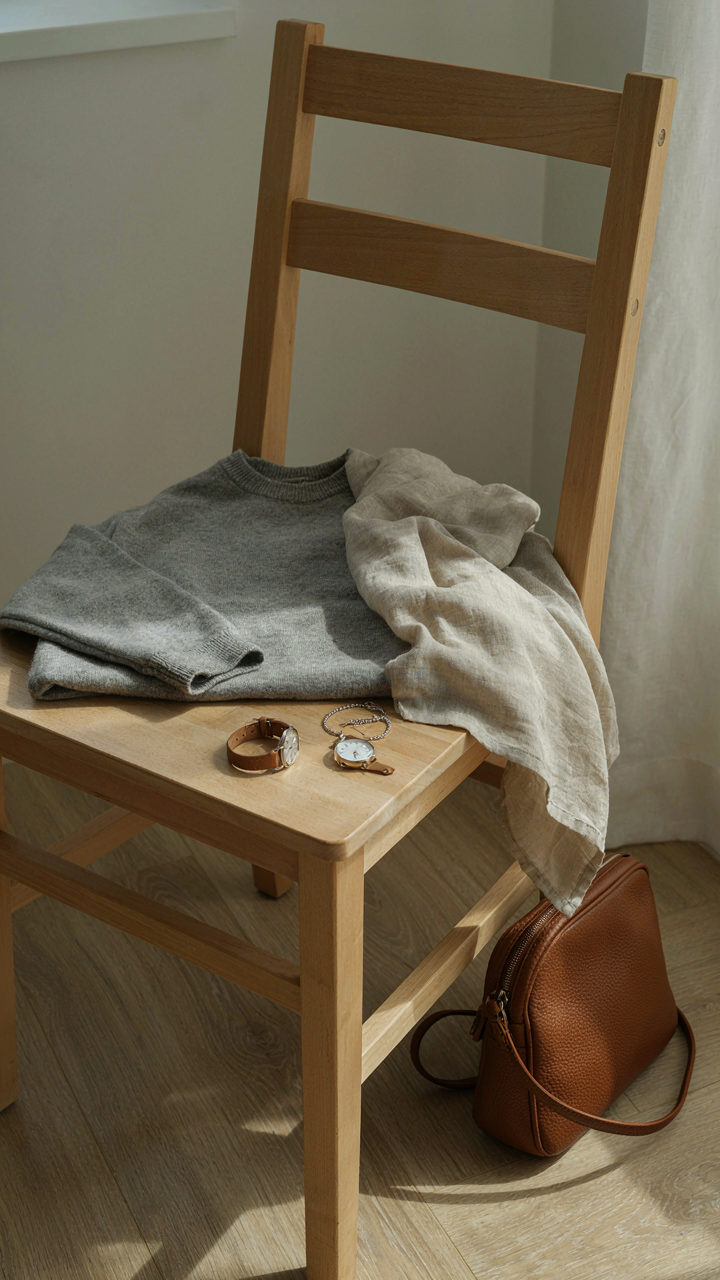
The Scarf And Jewelry Equation
You want people to think you packed intentionally instead of grabbing whatever was clean. Here’s the mechanism: a scarf and two pieces of jewelry rewire how your brain perceives outfit repetition. In economics, this is called “perceived differentiation”—you’re manufacturing novelty without adding weight or volume. A grey sweater worn Tuesday looks entirely different Thursday when you layer a linen scarf and swap your watch for a gold chain. The same five base pieces cycle through two weeks without anyone clocking the rotation, including yourself.

Pack one lightweight scarf in a neutral that matches your base palette—linen in cream, cotton in charcoal, or silk in navy. Add one delicate bracelet, one watch, one pair of small earrings. That’s it. These items take up 40 grams combined and unlock six additional outfit variations. The scarf doubles as a beach cover-up, a shoulder drape in over-air-conditioned museums, and a makeshift pillow on trains. Jewelry requires zero thought once selected because it works across every outfit you’ve already planned.
Bags That Carry The Load
The mistake everyone makes is packing a dedicated daypack plus a crossbody. You don’t need both. Pick one structured bag that handles day excursions and tote your daily essentials. A medium leather crossbody or canvas tote—nothing oversized—becomes your second bag. It fits a water bottle, a book, your phone. Choose something in black, brown, or natural canvas that pairs with every outfit without negotiation.
Your primary bag lives at the hotel. Your secondary bag travels with you. This division means you never carry excess. The secondary bag should weigh under 300 grams empty and collapse flat when not in use. Leather or canvas aged well and photograph better than synthetic materials, but the real advantage is durability—these bags outlast the trip by years, so you recoup the investment. Buy once, use across all future packing scenarios.
The “One Carry On” Fall Travel Outfit Mandate: Less Is Leverage

How To Actually Pack A Carry On Without Wasting Space
You’re worried people will judge you for wearing the same outfit twice. That’s not the real problem. The real problem is you don’t know the mechanical difference between packing and compression. Packing is just shoving things in. Compression is collapsing air out of fabric so it takes up half the volume. The carry-on constraint forces compression thinking, which is why experienced travelers fit two weeks into what casual packers can’t fit into one week.

Rolling clothes compresses fabric along its length rather than stuffing it flat, which preserves structure and saves space. The real leverage comes from combining three methods: rolling for everything, compression cubes for off-duty clothes, and hard-sided packing organizers for shoes and dense items. Hard organizers don’t compress but they stack predictably. This matters because predictable stacking means you can visualize what actually fits before you’re at the airport panicking.
- Rolling: Roll everything except structured jackets. Roll pants lengthwise, then fold in thirds. Socks and underwear go inside rolled shirts to use dead space efficiently without adding volume.
- Compression Cubes: These reduce soft items to blocks. Put wrinkle-prone pieces in one, casual layers in another, workout clothes in a third. You can remove one cube without disturbing the rest.
- Shoe Organizers: A slim hard case holds four shoes without crushing them or wasting space. Place heavier shoes at the bag’s base for weight distribution and structural stability.
- Toiletry Compression Pouch: Use a flat, zippered case rather than a hanging organizer. Flat takes half the vertical space and fits flush against the bag’s side wall.
- Cable Pouches: Dedicate one small cube to electronics and charging cables. This prevents tangling and creates one predictable block that fills remaining gaps.
Every cubic inch of a carry-on is finite. Waste one inch per category and you’ve consumed six inches across six categories. The compression cube system works because it forces intentional packing decisions before you start filling the bag. You decide what matters, organize it, then fit the bag around those blocks. You don’t throw things in and hope.
Wearing Your Heaviest Piece On The Flight
The mechanism here is weight distribution. You have a fixed carry-on volume and weight limit. Your bulkiest item probably weighs nothing but consumes 30 percent of your space: your fall jacket. Wearing it on the plane solves two constraints simultaneously. You remove the heaviest volume consumer from your bag and you wear something that takes five to seven pounds off what you pack.
This strategy only works if you actually choose a jacket that works for multiple contexts. A wool overshirt or a technical blazer in neutral colors works both as outerwear and as a layering piece in your hotel room. You wear it during flight, then wear it again during three to five days of travel. This isn’t fashion advice. This is mathematical elimination of redundancy. When you board, you’re already wearing outfit number one of your trip.
Curating Your Capsule Wardrobe For Europe: The Elimination Protocol

The One Job Rule
You’re afraid you’ll look underdressed or miss a social moment. The real problem is simpler: you own clothes that only solve one problem. In supply chain language, this is inventory bloat. Every piece in your two-week capsule must work at least two contexts. A blazer that only goes to dinner doesn’t belong. A shirt that pairs with exactly one bottom doesn’t belong. Start by removing anything that requires other specific items to function.

The mechanism works because constraint forces design. When you own ten outfits that each need five pieces, you’ve packed a suitcase. When you own fifteen pieces that combine into thirty outfits, you’ve built a capsule. Test combinations ruthlessly. If a pair of trousers only matches three tops instead of five, it’s dead weight. Layer this filter across your entire selection and watch your pile shrink without losing versatility.
Outfit Rehearsal Before Departure
Most guides skip this step because it sounds tedious. It’s actually where failures surface before they strand you in Lisbon with no clean options. Lay out seven complete outfits on your bed two days before travel. Wear each outfit for two hours around your home. Notice what actually works together versus what looked right in theory.
You’ll catch fit problems, color clashes, and comfort failures that pictures never reveal. A sweater that seemed neutral might clash with your jeans. Shoes might pinch during extended walking. A fabric combination might feel wrong against your skin. Wear each outfit once to expose these gaps. This step cuts last-minute panic packing and forces you to solve problems while you can still swap pieces, not when you’re boarding a flight.
Maintenance & Renewal: Extending Your Two Week Capsule Wardrobe

The Laundry Mechanic That Changes Everything
You’re worried about looking grimy halfway through. That fear drives you to overpack. But the real issue isn’t dirt—it’s that you don’t understand how fabric actually dries. Cotton and linen take 24 hours in normal humidity. Synthetics take 4-6 hours. This isn’t a preference; it’s physics. Most people wash on day four and panic because they’ve never timed a dry cycle. You’ll wash every two or three days in Europe, not weekly, because your rotation demands it.

The mechanism is simple: alternate wearing layers instead of full outfits. Wear your base layer twice before washing. Wear your mid-layer three times. Save your outer layer for the entire week. You’re not adding laundry; you’re compressing it. Hand-wash in your hotel sink using a bar of soap or travel detergent packets. Wring aggressively. Hang in the bathroom with the window open and door shut. European hotel rooms have actual airflow, unlike American climate-controlled boxes. Check fabric tags before you leave home and you already know what you can salvage wet.
What Actually Worked After Day Seven
By day seven, you’ve collected data most travelers never gather. You know which pieces created outfit combinations that didn’t exist in your head before packing. You know which shoes rubbed your feet in ways you didn’t anticipate. You know which colors clashed with the light in Southern Europe versus Northern Europe. This isn’t sentiment—this is evidence. Compare what you’ve worn five times against what you’ve worn once. The worn pieces earned their space. The worn-once pieces didn’t.
The protocol: lay everything out on day seven. Photograph each piece. Note which combinations you actually built, not which you planned. Identify the dead weight—the shirt that looked good at home but feels wrong in context, the pants that didn’t pair as promised. On your next two-week trip, remove those pieces entirely and replace them with something that served a real function. The capsule evolves through subtraction and targeted replacement, not accumulation. Your next wardrobe will be tighter because this one taught you what works.
The Real Problem Isn’t Your Suitcase Size; It’s Your Inability To Trust Your Own Taste

You don’t need permission to wear the same outfit twice. You don’t need ten options when three work. The capsule wardrobe isn’t about minimalism. It’s about making decisions once and living with them. Pick your five pieces today. Wear them for two weeks across Europe. Stop outsourcing your confidence to fashion blogs. Your taste either exists or it doesn’t, and you only find out by committing to it.