

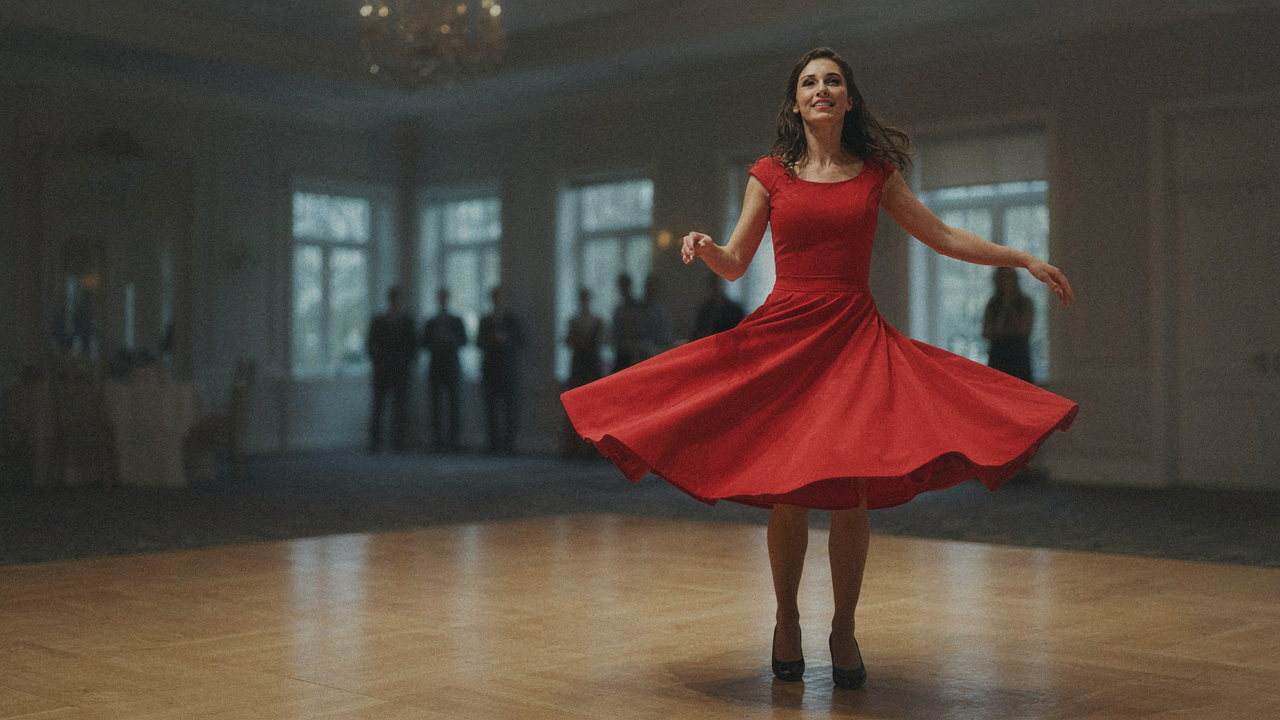
The Kinetic Dress Code: Decoding Dance Floor Dynamics
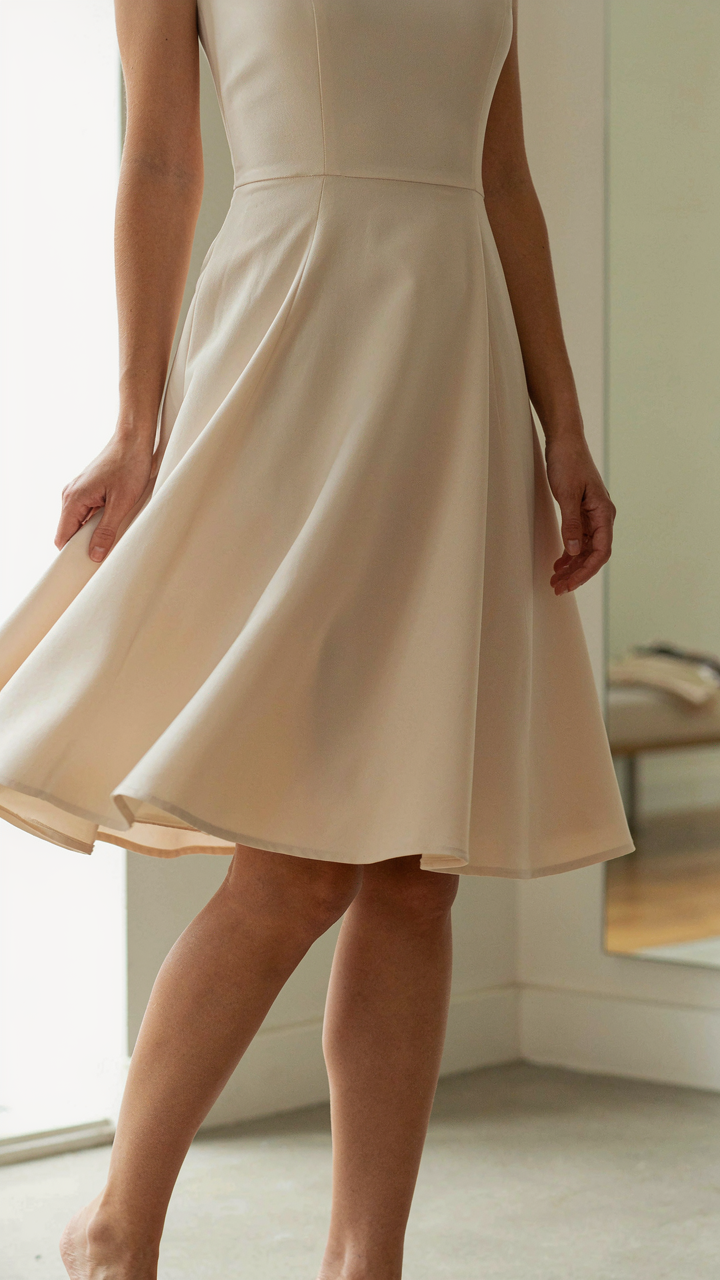
How Fabric And Cut Control Movement
You want to look good dancing because you’re terrified of looking awkward. That fear is valid, and it’s solved by physics, not fashion sentiment. A fit and flare dress works through lever mechanics: the fitted bodice acts as your anchor point, while the flared skirt behaves like a pendulum. Heavier fabrics resist motion. Lighter fabrics amplify it. The cut determines how your body transfers energy into the garment instead of wasting it fighting restriction.
The relationship between fabric weight and movement range is direct and measurable. A structured cotton blend or crepe holds its shape through rotational movement, allowing your hips to move without the skirt bunching or tangling around your legs. Conversely, thin rayon or chiffon flares wider but loses form faster, creating drag that slows your movement velocity. The seam placement on the flare, typically at the hip or waist, dictates the swing radius. Lower placement gives more swing. Higher placement constrains it. Choose based on how much directional freedom you need on the specific dance floor you’re entering.
When Fit And Flare Fails You
Most people blame the dress when the dress is doing its job correctly. The actual failure points are predictable and avoidable. A fitted bodice that’s too tight across the ribcage restricts your breathing and arm lift, turning a dress designed for movement into a corset. This happens when the dress size is wrong or the bodice is cut too narrow for your frame. A flare that’s too full creates momentum lag, especially during quick directional changes or when pivoting. The skirt fights your body instead of following it.
The third failure is fabric choice at the wrong weight. Stiff taffeta or structured tulle looks architectural on the hanger but becomes restrictive once you’re moving. Your legs can’t generate the momentum needed for the skirt to flare because the fabric demands too much energy to displace. Test the dress by standing and moving your hips side to side in the fitting room. If the skirt doesn’t respond immediately to your movement without you forcing it, the fabric or construction is wrong. Move to a lighter-weight option or a dress with a higher slit, which reduces the fabric volume your legs need to push through.
Fitted Bodice, Unleashed Skirt: The Illusion Of Effortless Grace
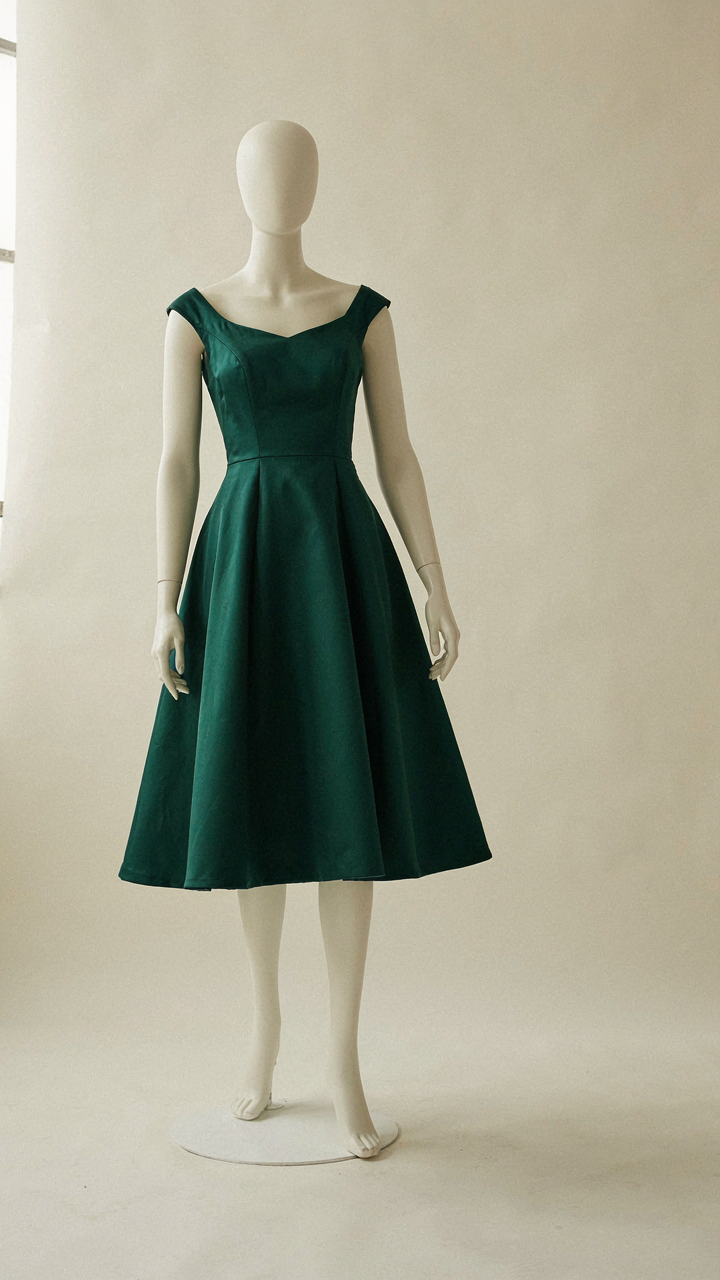
The Bodice That Holds Without Strangling
You want to look controlled and put together while moving freely. That’s not vanity—it’s the basic requirement that separates a dress that works from one that sabotages you. Think of bodice construction through the lens of structural engineering: load-bearing capacity paired with minimal material. A fit and flare dress transfers the visual and physical weight from your upper body to the skirt, so the bodice must anchor without rigidity.

The common advice says “just wear a corset liner” or “get it tailored.” Wrong. The mechanism is different. You need a bodice with internal structure—darts, princess seams, or panel construction—that molds to your shape without external compression devices. Natural fibers like cotton-blend structured fabrics or stabilized synthetics hold their shape through movement without cutting into your ribs or restricting your breathing. The bodice should feel like a second skin, not a vice.
Maximum Twirl Volume, Zero Tangling Risk
Skirt volume without function creates a dancing liability, not an asset. The fit and flare design solves this through proportional geometry: the skirt begins at your natural waist or hip, then expands outward at a controlled angle. A too-rigid flare catches on legs and tangles around hips during movement. A too-loose construction wraps around you like fabric chaos.
The real skill is in how the dress transitions from fitted to full. Seams positioned at your side body—not your front or back center—allow the skirt to swing with your body instead of against it. Aim for a skirt that sits 4 to 6 inches away from your legs at rest and moves with you when you move. Length matters: midi cuts (hitting at mid-calf) minimize tripping risk while preserving the twirl effect. Test the movement by actually dancing in the dress before you buy it, not just standing and swishing fabric.
Beyond Stretch: Fabric Engineering For The Social Athlete
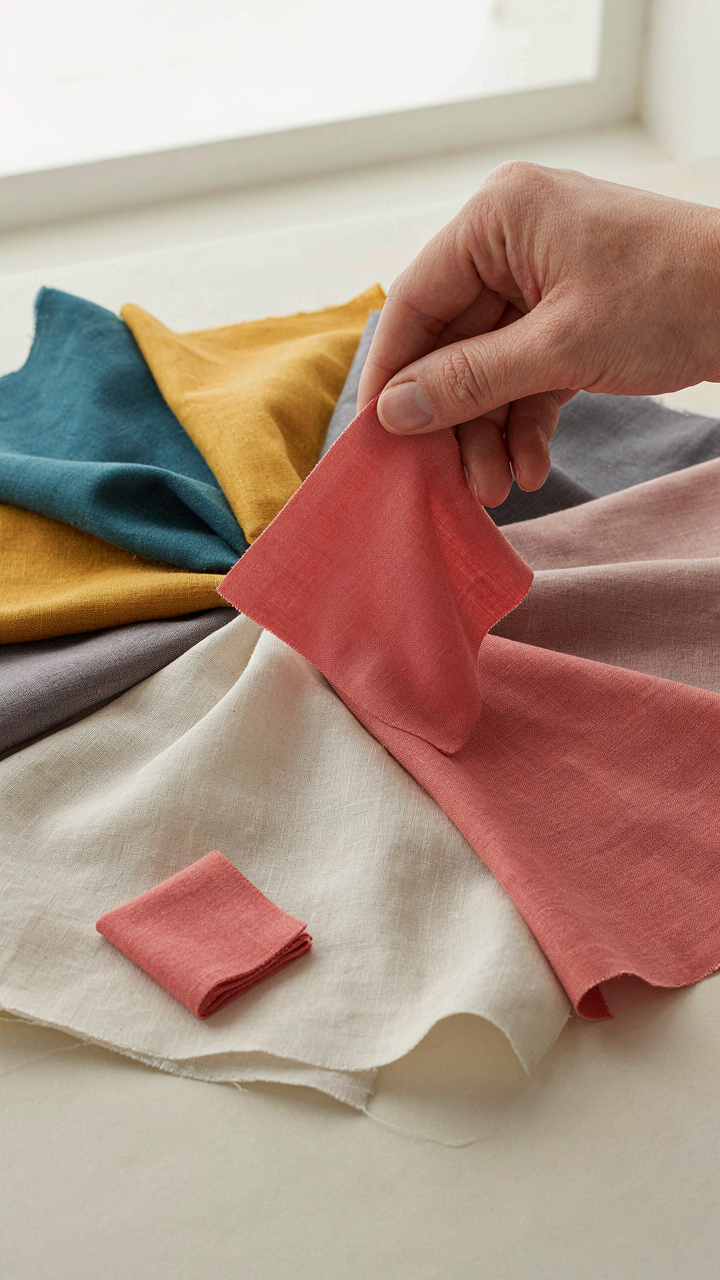
The Physics Of Movement Without Restriction
You want fabric that won’t betray you under scrutiny. Most people think stretch equals comfort, but stretch alone fails the moment you stop moving. Physics calls this “elastic recovery” – the material’s ability to return to its original shape after deformation. In a fit and flare cocktail dress, this means the bodice snaps back to form after you lean, twist, and move through a crowded room without sagging or bunching.

Breathability and drape operate on separate tracks. A fabric breathes when it allows moisture vapor to escape without trapping heat against skin. Drape describes how cloth hangs and moves with your body in real time. A fit and flare needs both working together: the fitted bodice demands recovery to maintain structure, while the flare demands enough fabric weight to move without clinging to legs. Cotton-heavy blends recover poorly. Polyester-dominant blends often drape stiffly. The engineering problem is choosing the intersection where both properties coexist.
Synthetic Blends That Hide What Your Body Does
The consensus says synthetics look cheap. This is outdated thinking from people who’ve never worn modern performance fabrics. High-grade nylon and polyester blends wick moisture before it becomes visible sweat stains, manage temperature through airflow, and recover from compression faster than natural fibers. A well-engineered fit and flare in 88 percent nylon and 12 percent spandex maintains its fitted silhouette through a full night of movement while keeping skin dry.
Visible sweat transforms a social situation. The dress that performs gets a second wearing. Pick synthetic blends with a matte finish rather than glossy – the finish determines whether light reflects in ways that read as cheap or intentional. Nylon performs better than polyester for recovery and breathability in this application. Check the care tag: hand wash or delicate cycle prevents degradation of the elastane fibers. Your dress should feel structured at the waist and ribs on day one and day thirty.
The “Cap Sleeves, Not Restraints” Protocol: Arm Freedom
Why Cap Sleeves Actually Work For Dancing
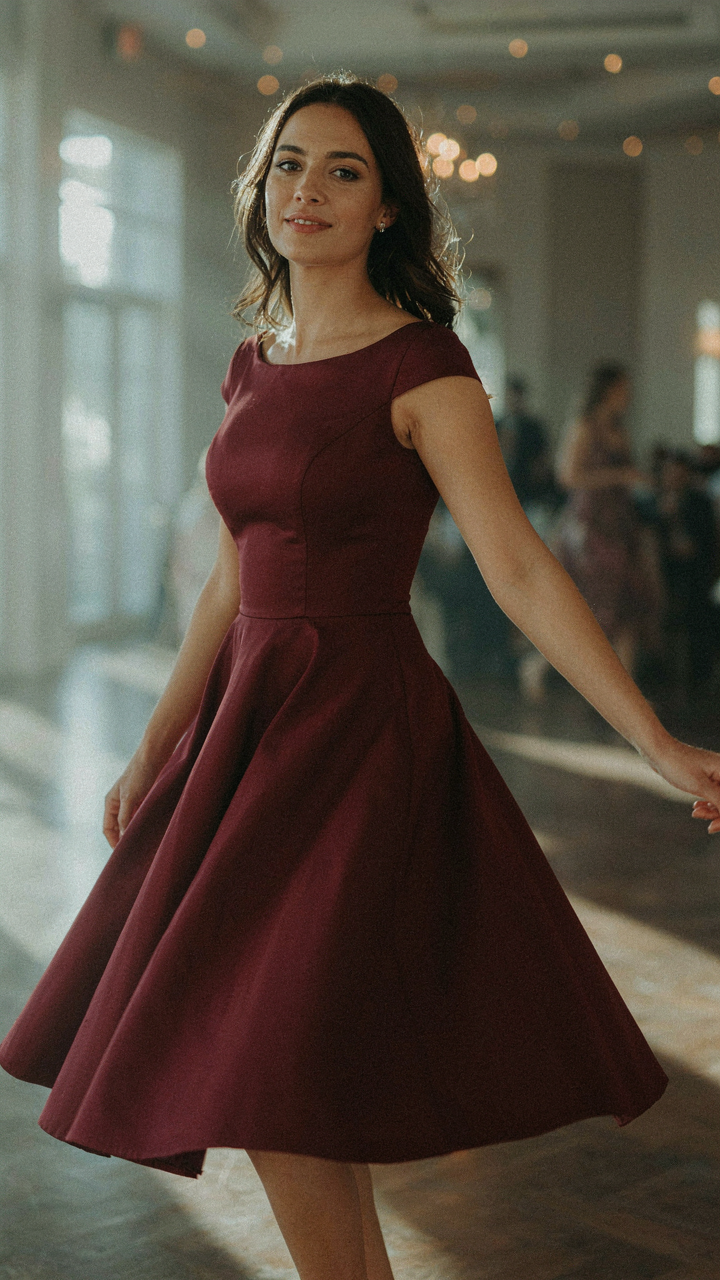
You want to look polished without feeling trapped. That’s the real calculation. The mechanism here is borrowed from biomechanics: range of motion. Your shoulder joint needs a clear arc to move through, and sleeve design either permits or blocks that arc. Cap sleeves solve this because they sit on the shoulder point itself rather than constraining the upper arm. They’re short enough to vanish during movement but structured enough to hold their shape and read as intentional. Most cocktail dresses fail here by extending too far down the arm or cutting armholes too tight for actual shoulder rotation.

A well-cut cap sleeve stays put during movement instead of riding up or slipping down. The seam lands exactly where your shoulder ends, giving your arm full freedom without the dress fighting back. This matters for dancing because your shoulders drive most upper body motion, whether you’re turning, raising your arms, or moving side to side. When the sleeve interferes with that motion, you compensate by tensing your neck and upper back, which kills your stamina and makes you look stiff. Cap sleeves eliminate that compensation entirely.
Armhole Depth: The Chafe And Restriction Reality
The common advice to “just make sure the armhole fits” misses the actual problem. Most off-the-rack fit and flare dresses use armholes cut shallow and forward-facing, which puts pressure on the side of your chest and underarm when you raise your arms. That’s not a fit issue you solve by sizing up. That’s a design issue. The armhole needs to be cut deep enough that when your arm raises ninety degrees, the fabric sits two inches below your actual underarm skin. Anything closer creates friction and restricts your range.
The cut of the armhole also matters more than the depth alone. Armholes should angle slightly back toward your shoulder blade rather than cutting straight down your side. This follows the actual geometry of your shoulder joint and prevents the seam from pulling forward when you move. Test this by raising your arms while wearing the dress and checking if the seam tugs at your chest or if it stays stable. If it tugs, the armhole is cut too shallow or too far forward. You need zero friction and zero pull when your arms are in full motion.
Formal Dresses Short: The Strategic Hemline For High Steppers
Where Your Knee Sits Matters Most
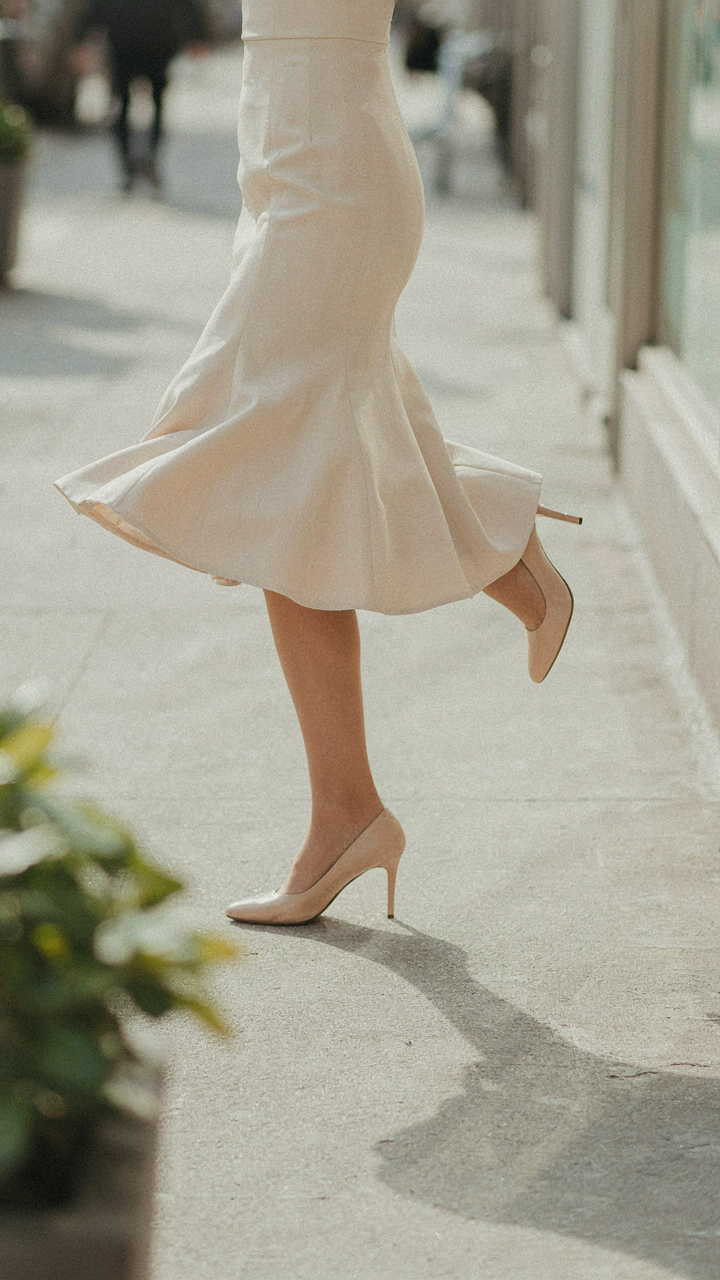
You want the hemline short enough to dance without tripping, but long enough that you don’t feel exposed. That tension is real, and it matters because most women choose wrong here. Think of hemline position as leverage in mechanics: the further from your body’s center of rotation, the more energy you burn moving fabric through space. A knee-length or slightly above-knee fit and flare cocktail dress sits at the sweet spot where your leg can extend without the skirt creating drag. Anything mid-thigh cuts your stride efficiency. Anything mid-calf kills momentum entirely.

The standard sits between one inch above and one inch below the kneecap. This range lets your quadriceps drive movement without the fabric pooling around your feet or riding so high that the dress loses its intended silhouette. Test this by standing and performing a high step forward. The skirt should graze your thigh without bunching or swinging wide enough to throw off your balance. Most dance-ready fit and flare dresses land here by default because the formula works. Shorter hemlines demand a more fitted waist and hip to stay proportionate. Longer hemlines need additional weight in the fabric to hang properly while you move.
The Foundation Layer That Changes Everything
Undergarment choice is structural engineering applied to your body. Wrong foundation and the dress moves independently of you. Correct foundation and the dress becomes an extension of your movement. Most advice says “wear what feels comfortable,” which is why most women feel their dress shifting during the second song. A fitted slip or bodysuit under a fit and flare dress anchors the fabric to your torso, preventing the skirt from swinging into your neighbor’s drink or riding up during spins.
The slip should match your dress length and skin tone, hitting just above or at the hemline. A built-in shelf bra or low-back slip eliminates visible panty lines while creating the smooth surface the dress needs to drape correctly. Thicker slip fabric (usually satin or structured cotton blend) prevents the dress from clinging to every contour of your legs. This is why ballroom dancers wear slips under every dress they own. You move with intention and confidence when you know nothing will shift, ride, or expose itself unexpectedly. Choose a slip first. Build your dress selection around that foundation.
The Biomimicry Of The Fit And Flare: Design Inspired By Movement
Why Bodies Dictate Silhouettes
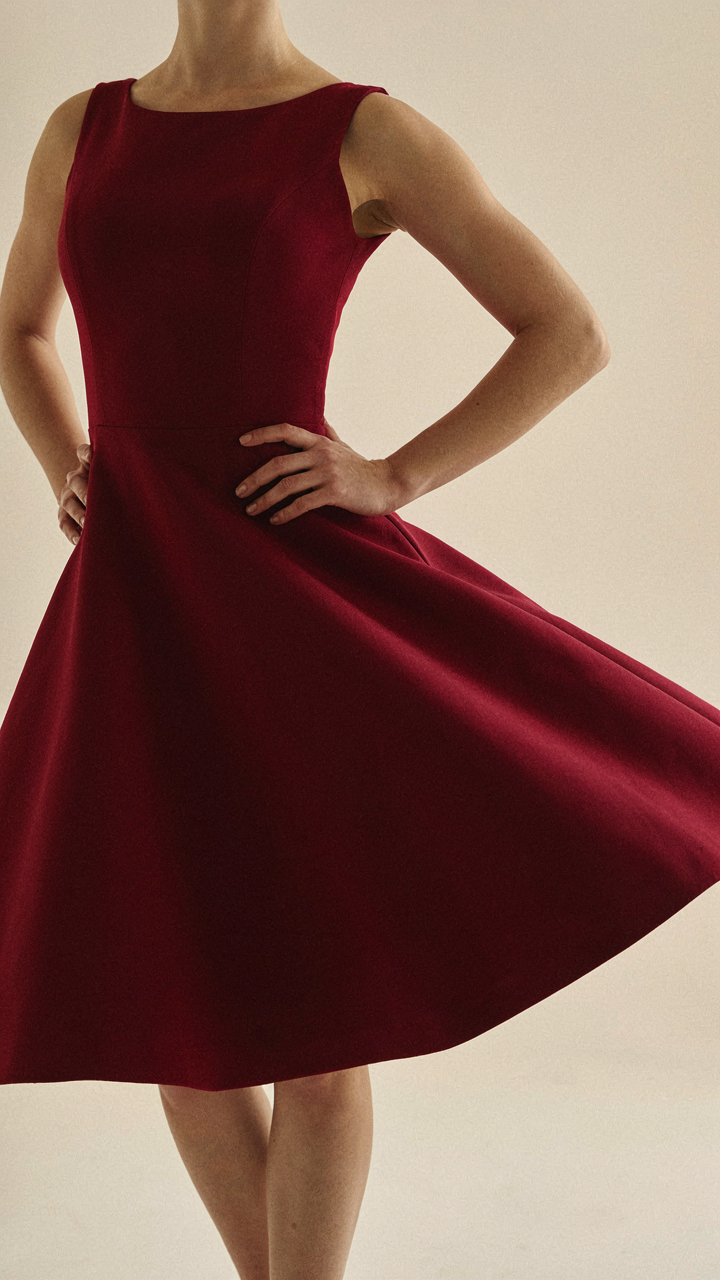
You want to believe a dress is just fabric cut right. It’s not. You’re actually asking whether the shape matches how humans move, and whether that match means you won’t look stiff or out of control on a dance floor. The real mechanism is adaptation: evolutionary biology shows us that form follows function because dysfunction gets eliminated. A fit and flare dress applies this principle directly. The fitted bodice anchors to your center of mass while the flared skirt expands around your hips and thighs, the exact points where your legs generate rotation and stride.

The fitted portion isn’t tight for aesthetics. It’s engineered to stabilize your torso during movement so your legs and arms work independently without dragging the entire dress with them. The flare begins at your hip bone, which is the structural hinge where your legs attach. This isn’t coincidence. Designers who understood garment mechanics built the flare to start where your body’s actual pivot points are, not where they guessed they should be. The result: the dress moves with you instead of fighting you.
How Animal Motion Rewrites Dress Construction
Movement in nature follows predictable physics. Watch a horse accelerate: its front half stays relatively stable while its hindquarters generate power. A fit and flare dress remaps this principle onto human locomotion. Your torso is the stable anchor, your hips and legs are the engine. The fitted bodice plays horse-front. The flare plays horse-hind. When you pivot to dance, the flare doesn’t resist. It responds to the rotation of your hips because it’s cut to hang from the widest point of your pelvis, not cinched at your waist.
The seam placement matters more than fabric choice. Most fit and flares place the transition from fitted to flared somewhere between your natural waist and hip bone, usually one to two inches below your waist. This positioning means gravity pulls the flare outward while your movement pulls it inward, creating a dynamic equilibrium that keeps the dress positioned correctly regardless of how hard you’re dancing. The fabric drapes in vertical panels from that seam, not horizontally wrapped, so each panel swings independently. You move the dress moves with you instead of absorbing and resisting every directional change.
Classic Fit And Flare A Line Midi Dress: The Unspoken Advantage
Why Midi Length Matters For Movement
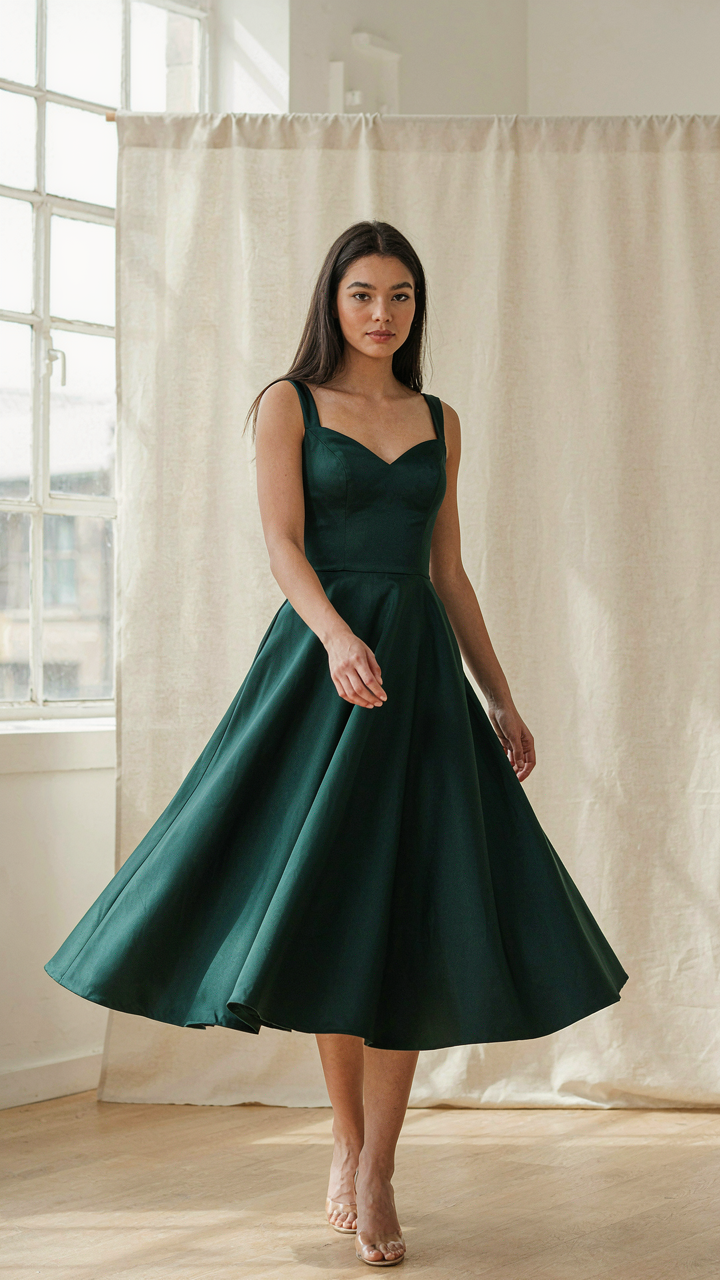
You’re worried people will judge you for tripping, or worse, for dancing poorly because your dress betrayed you. Here’s the mechanism: physics calls it “moment of inertia” – the resistance an object has to changing its motion. A midi dress positioned at mid-calf reduces the rotational force needed to change direction compared to floor-length alternatives. The shorter lever arm means your legs initiate turns and weight shifts without dragging excess fabric. Your body moves first. The dress follows instead of leading.

The A-line silhouette compounds this advantage. The skirt flares outward from the waist, creating negative space around your thighs and calves. When you move, fabric doesn’t cling to your legs or tangle between them. Midi length stops before your ankle, eliminating the single biggest hazard: stepping on your hem mid-pivot. This is why cocktail dancing staples historically favored knee-to-mid-calf hemlines – not for modesty, but for biomechanical freedom.
Fabric Weight And The Flow Equation
Heavy fabric looks authoritative but kills momentum. You need weight that resists collapse without resisting movement. The fabric must hold its shape during stops while yielding during transitions. Cotton blends, structured rayons, and crepe weaves achieve this balance. Lightweight silk or chiffon reads elegant but collapses into your body when you stand still, destroying the silhouette. Dense polyester feels cheap and moves too rigidly. The sweet spot is fabric that has body but bends.
Structure plus drape is the non-negotiable combination. The bodice should use structured materials – cotton-poly blends or blended rayons with enough weight to sculpt your torso without sagging. The skirt portion needs lighter weight in the same fiber family so it transitions smoothly at the seam. When you move, the structured top stays put while the skirt responds to your motion. Test this by pinching the fabric: it should return to shape within two seconds, not instantly and not slowly.
The Cocktail Party Conundrum: Dressed For Impact, Ready For Action
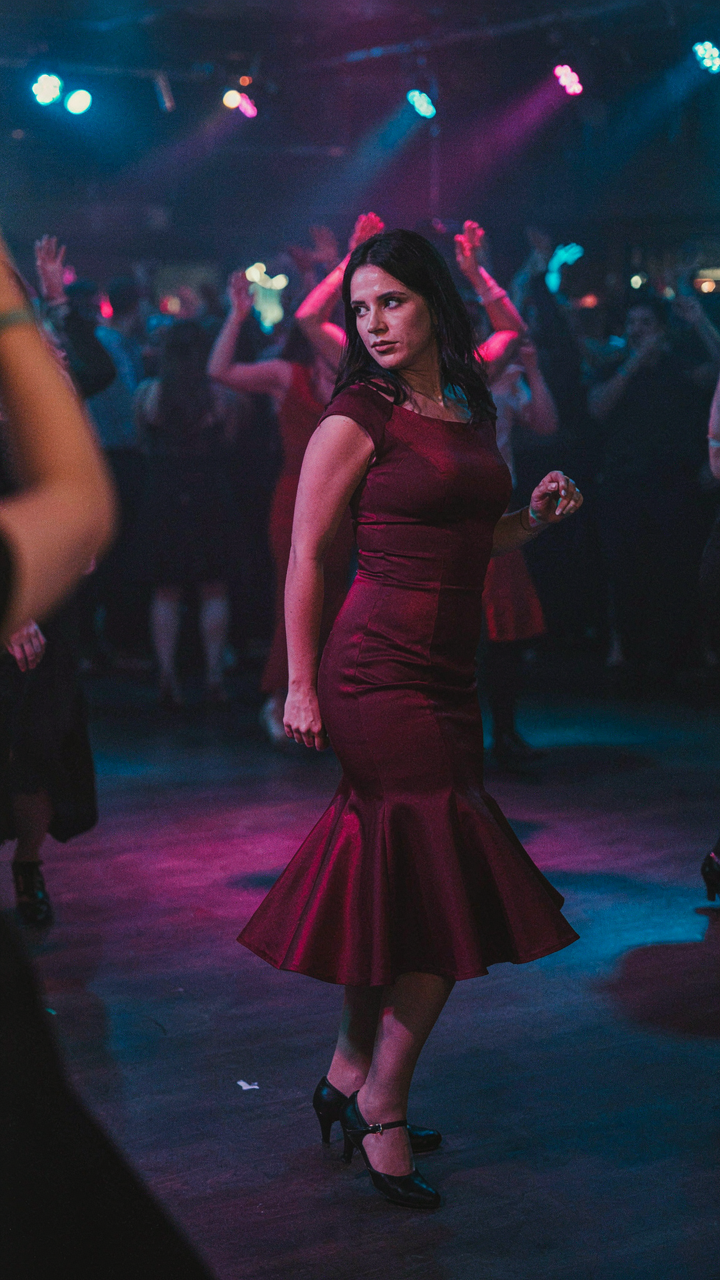
Accessories That Don’t Sabotage Movement
You want to look polished without broadcasting that you’re terrified of looking underdressed. That fear makes people over-accessorize, and over-accessorizing kills mobility in a fit and flare dress. The mechanism is simple: every piece you add becomes a variable that either anchors or frees your body.

Long pendant necklaces and dangling bracelets create collision zones with the flared skirt when you move. They tangle, swing, and demand constant micro-adjustments that break your rhythm on the dance floor. Keep necklaces short (16 to 18 inches) or skip them entirely. Choose structured bracelets or thin bangles that stay put. A clutch on your wrist matters more than you think because it forces you to keep one arm positioned consistently, eliminating erratic motion that throws off your balance in a fitted bodice.
The Foundation Nobody Discusses
Footwear determines whether you dance or just sway. Most people treat shoes as decoration, but they’re the only tool that connects you to the floor.
- Block heels (1.5 to 2.5 inches): Provide stability without sacrificing elegance. They distribute weight across a wider surface, letting you pivot and move without ankle strain. Ideal for extended dancing sessions.
- Metallic or nude tones: Elongate the leg visually and work with any fit and flare dress color. They read as intentional, not default, and blend seamlessly with the overall silhouette.
- Closed-toe pumps: Keep your foot from sliding forward during quick directional changes. The toe box supports lateral movement better than open sandals, reducing the risk of rolling your ankle while dancing.
- Slingback or ankle strap: Prevents your shoe from slipping off mid-movement. The strap anchors your foot to the sole, critical when the flared skirt creates momentum that pulls your center of gravity away from your base.
- Leather or suede soles: Grip the floor enough for control but allow the glide you need for smooth footwork. Rubber soles stick too much and force you to lift your feet higher, exhausting your legs faster.
The real decision tree: If you’re dancing more than standing, prioritize stability over heel height. A lower, anchored shoe outperforms a high heel that forces compensation patterns through your knees and hips. Test your choice by walking briskly, then pivoting sharply on the ball of your foot. If you feel secure, the shoe works. If you feel uncertainty in your ankle, it doesn’t.
The Real Obstacle? Your Fear Of Looking Good While Breaking A Sweat

Most people don’t avoid fit and flare cocktail dresses because they can’t dance in them. They avoid them because they think moving their body somehow negates the effort of getting dressed. That’s backwards. A dress that moves with you, that lets you breathe and dance without restriction, is the only dress worth wearing anywhere. Stop choosing between looking good and feeling good. Buy the dress today. Wear it to the next event. The only thing stopping you is the permission you’re waiting for.