

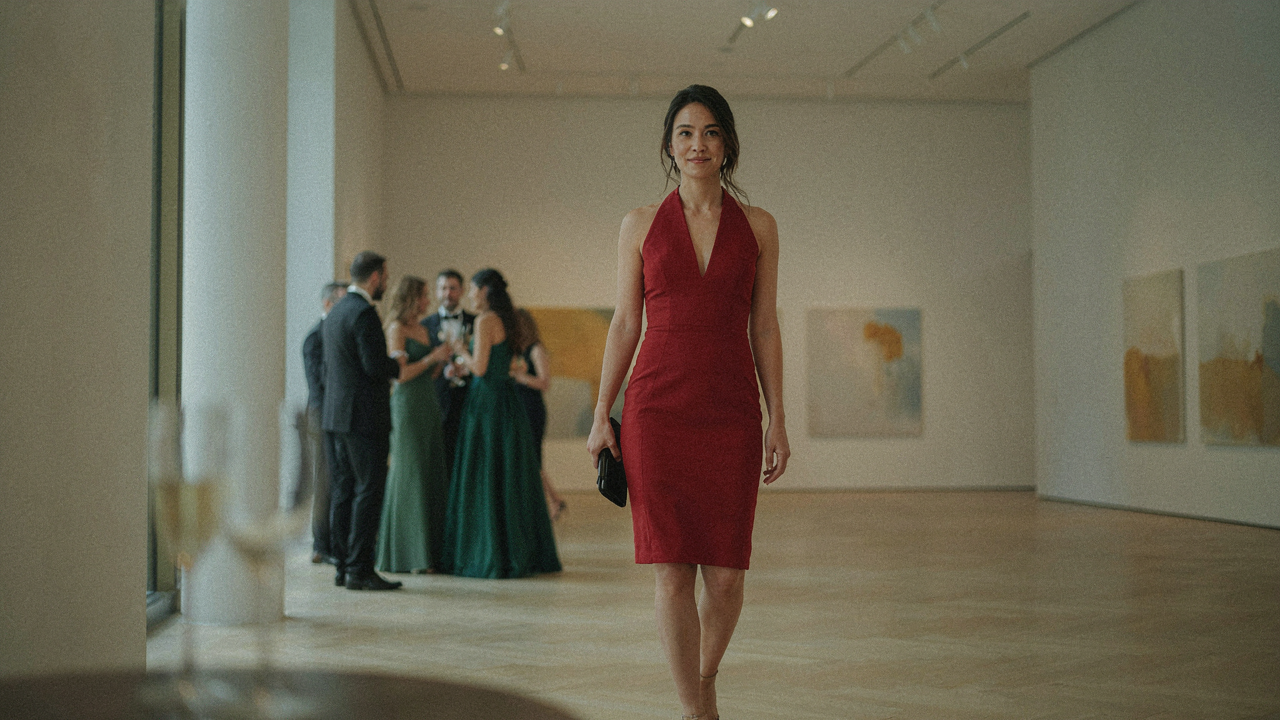
The Drape Algorithm: Engineering Allure, Not Just Exposure
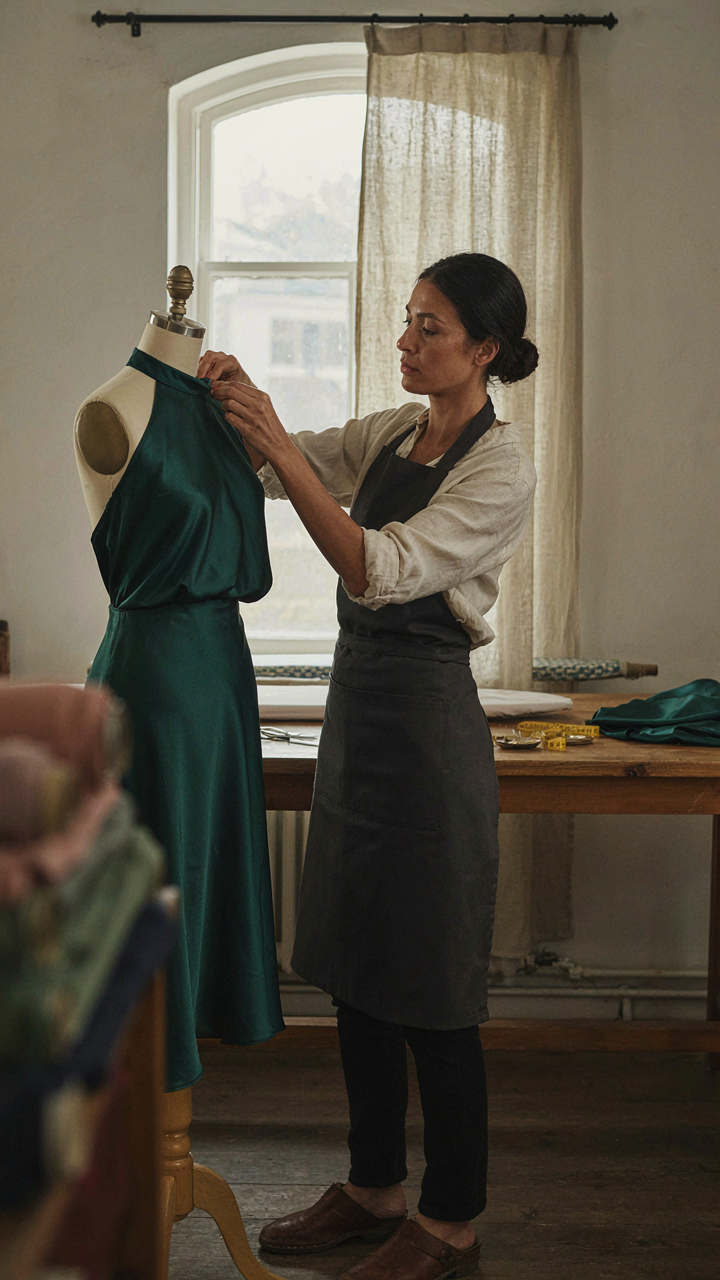
Weight And Flow Work Together
You want this dress to make you look intentional, not desperate to prove you have shoulders. The real mechanism: fabric weight determines how the halter neckline sits and moves. Physics governs drape. Silk charmeuse, crepe, and structured cotton blends fall differently than jersey or chiffon. Heavier fabrics anchor the halter at your shoulders and create clean lines. Lighter fabrics float and shift, which reads as less controlled. Choose weight first, then silhouette. A halter in 4-ounce silk charmeuse will hold its shape through an entire event. Jersey at the same weight will stretch and shift by hour three.
The halter’s job is geometric precision, not drama. Cotton blends with slight stretch work better than pure silk for all-day wear because they maintain tension without requiring constant adjustment. The fabric supports the neckline’s responsibility: frame your collarbones and shoulders without sagging or riding up. Test the specific weight and fiber content before committing. Drape samples at a fabric store to see how each material behaves. A halter dress fails when fabric choice makes the neckline work against you instead of for you.
Strategic Cuts Shape Your Silhouette
Most advice about halter dresses stops at “show your shoulders,” which misses the entire point. The real lever is how the armhole and neckline intersection cuts the body’s visual lines. A high armhole that angles inward creates shoulder definition. A dropped armhole that extends wider makes shoulders appear broader. A halter with a narrow back panel emphasizes waist definition. A halter with a wider back panel grounds the torso and lengthens the neck line visually. These aren’t style choices. They’re proportional mechanics.
The cut also determines whether the dress flatters or exposes. A halter with a curved front panel that follows your ribcage creates visual continuity. A straight panel reads as architectural and formal. A halter with a defined waist seam pulls the eye inward and creates the illusion of definition, even if your natural waist isn’t pronounced. Your actual body shape doesn’t change, but how the dress intersects your body’s landmarks either enhances or undermines your silhouette. Choose cuts that align the dress seams with your natural body structure, then the neckline works instead of fighting you.
Halter Mini Dress: The Kinetic Energy Of Attraction
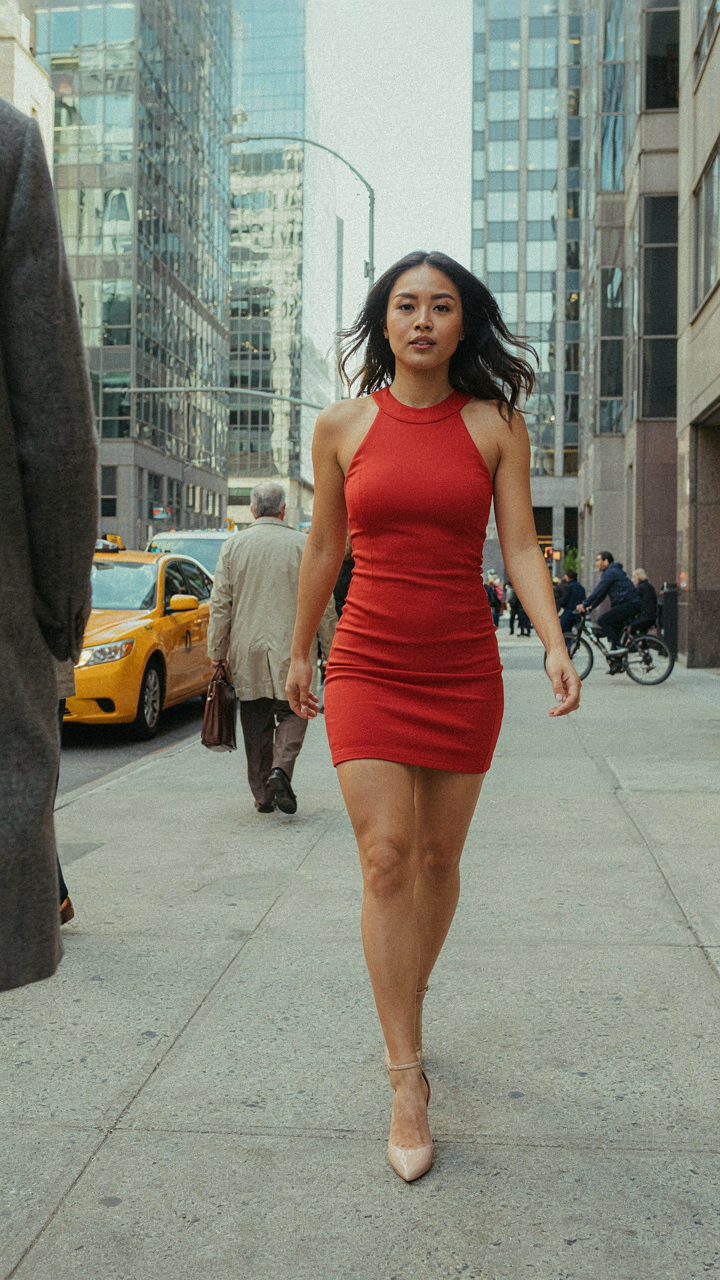
Why Movement Reads As Confidence
You want people to perceive you as composed and in control. Here’s what actually happens: physics operates on your body before psychology operates on their mind. A halter mini dress moves with deliberate constraint because the neckline anchors fabric from above while bare shoulders expose the kinetic chain that generates motion. Your arms swing. Your shoulders rotate. The dress responds to actual biomechanics instead of fighting them.

Movement amplifies what’s already there because restricted fabric reveals the source of motion rather than obscuring it. When you walk in a halter mini, observers track shoulder mobility and stance stability before they process anything aesthetic. This reads as confidence because confidence is physical competence made visible. The dress doesn’t create the effect. It removes the visual noise that would mask it.
Impact Zones At Minimal Coverage
Short length isn’t about exposure for its own sake. It’s about maximizing the area where motion concentrates most information density. Your legs carry 50 percent of your body weight in motion. Your stride length, knee extension, and hip alignment broadcast stability and control more efficiently than any other body region when visible.
A halter mini positions bare shoulders and exposed legs as a single visual system. The dress creates no competing focal points. Observers process leg movement and shoulder carriage simultaneously, which compresses the time required to register confidence or instability into a single glance. Wear the halter mini when you need to communicate physical presence in confined spaces like cocktail venues where observation happens at close range and fast.
The Deconstructed Elegance Principle: When Less Is Actually Less
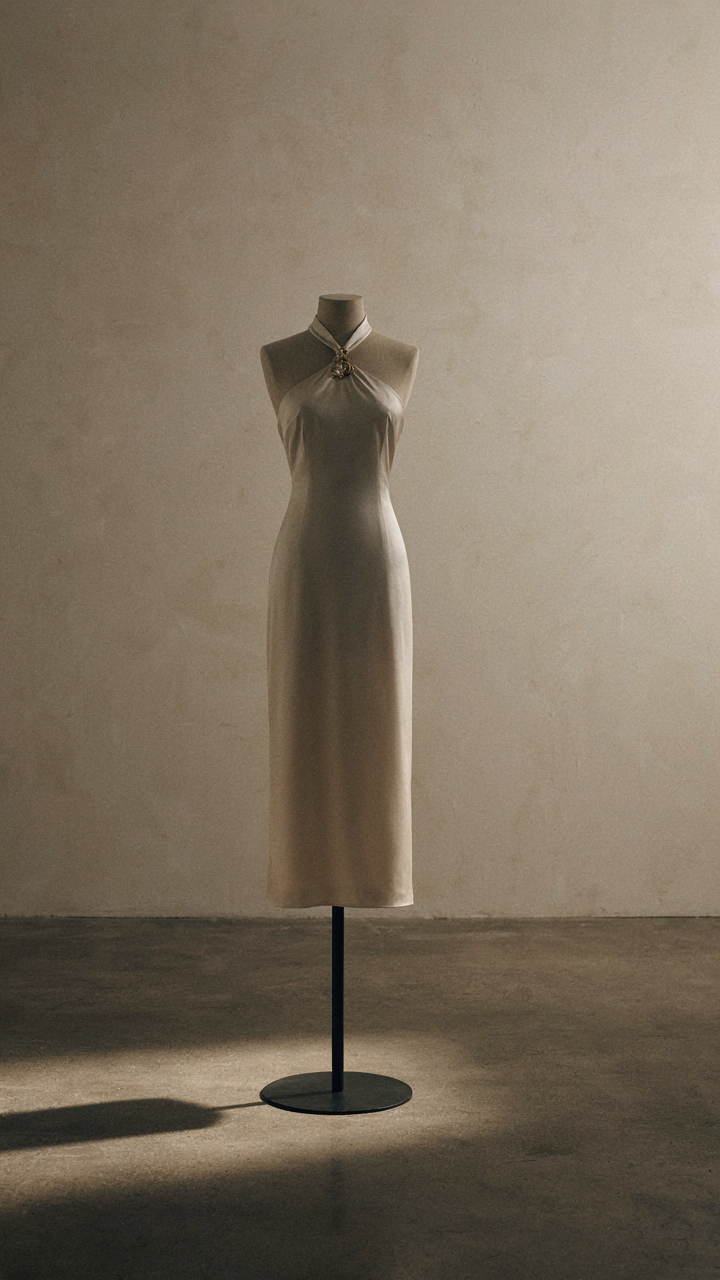
Blank Canvas Beats Blank Stare
You want minimalism because you think it signals sophistication. The real mechanism is that a halter cocktail dress operates like negative space in design: the absence of fabric on the shoulders and back only works if the remaining elements have purpose. A bare halter neckline demands that every other detail earn its place. Remove the neckline, then remove the embellishment, and you have abandoned elegance for invisibility. The dress becomes a placeholder instead of a statement.

A halter without intentional construction reads as unfinished. The straps need weight, the bodice needs structure, or the hem needs intervention. Something must catch the eye and hold it. Minimalism without deliberate choice is just underdressed. The halter silhouette exposes you because it removes the visual anchors that hide mediocre tailoring. This is why minimalist halter cocktail dresses fail at parties: they rely entirely on fit and fabric quality, with no design flourishes to compensate for either.
Where The Eye Lands First
Strategic embellishment on a halter cocktail dress works like a spotlight operator controlling audience attention. Place a beaded geometric pattern at the bust, and the viewer’s gaze locks there before noticing the bare shoulders. A metallic waistband creates a horizontal break that flatters proportions while drawing focus away from areas you want to minimize. The principle is simple: embellishment is directional. It points. Embellishment without strategy scatters focus and makes the dress feel costume-like instead of considered.
The most effective embellished halter cocktail dresses concentrate detail where the halter structure begins, not scattered across the entire garment. A clustered embroidery at the neckline transition or a single statement brooch at the sternum creates a focal point that justifies the exposed back. This concentration of detail is what separates a deliberate design choice from decoration for its own sake. When placing embellishment, ask which single zone commands attention. Build everything else around that zone.
Midi Dress Red: The Signaling Theory Of Color
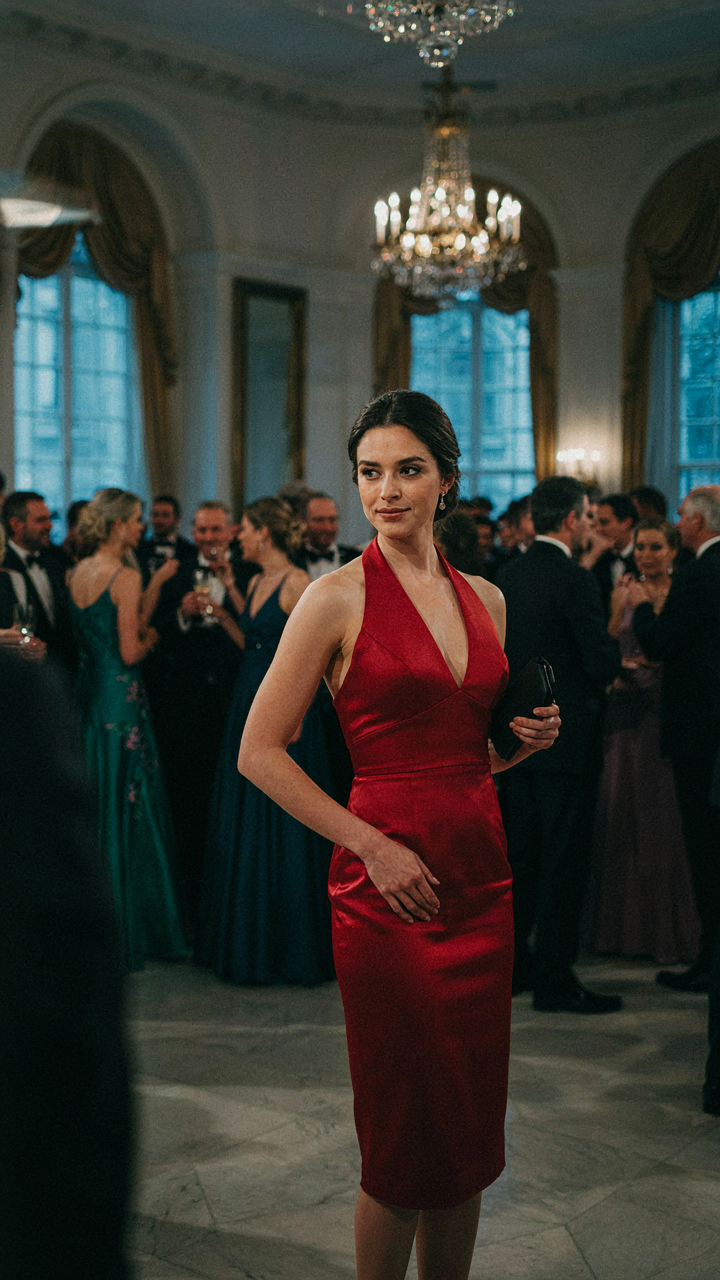
What Red Actually Does In A Room
You want red because you think it makes you look confident. That’s the real reason. But here’s the mechanism: in game theory terms, red functions as a costly signal. You’re broadcasting that you can afford the social risk of visibility. A halter cocktail dress in red removes the escape route of blending in. You’ve committed.

Red triggers a neurological response in high-stakes social environments because it activates the same attention centers that process threat or status. Courtrooms, boardrooms, galas—these are spaces where people scan for power indicators. Red doesn’t create power. It announces that you’ve already decided to occupy space without apology. The dress itself becomes the vessel for that choice.
The Non Verbal Contract
Forget the generic advice about red meaning passion or energy. That’s marketing language. Red in a halter cocktail dress means one specific thing: you’ve elected to be read first and questioned second. The halter neckline compounds this because it exposes the collarbone and shoulders, eliminating fabric as a buffer zone between your body and the observer’s gaze.
Red demands coherence in every other element. Stumble on hair, makeup, or posture and the dress amplifies the inconsistency rather than hiding it. This is why red works: it forces alignment between your internal state and external presentation. You wear red when you’re actually ready to be visible, not when you’re hoping to appear that way. The dress polices your own authenticity.
Beyond The Fringe Dress: Texture As A Sensory Hook
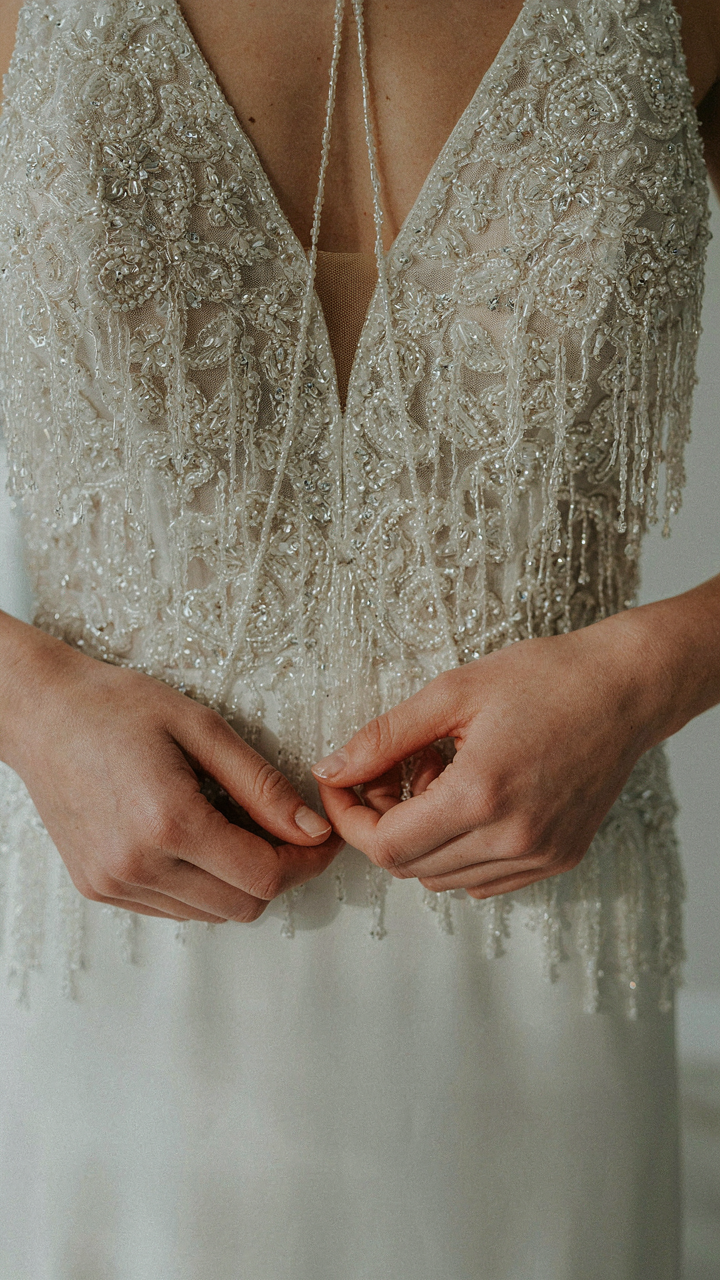
When Touch Becomes Status
You want people to notice you’re not cheap. That’s the real play here. Texture works because it signals quality before anyone sees the price tag. In sensory psychology, tactile information bypasses rational evaluation and hits the limbic system first. A halter cocktail dress in beaded silk or sequined mesh triggers that response the moment someone stands next to you. Your skin doesn’t lie about fabric cost.

Fringe, beading, and layered textures create physical weight and dimension. They catch light differently than flat fabric, which means the dress moves and changes as you move through space. This isn’t decoration. It’s a material contract that says the garment was made with deliberate construction, not mass production shortcuts. That distinction registers, even subconsciously.
Movement That Demands Attention
Fringe operates on momentum. Physics calls this kinetic energy, and halter cocktail dresses with fringe movement create a visual echo that extends your presence beyond your actual body. The fabric continues moving after you stop, which means the dress occupies attention longer than a static garment.
The mechanism is simple: fringe movement catches peripheral vision. People notice motion before they consciously process anything else. On a halter neckline, fringe on the bodice or hem creates a secondary focal point that draws the eye downward deliberately. You control where attention lands by choosing fringe placement. Draping beaded fringe from the shoulders elongates the silhouette. Lower placement on the hem adds verticality without the neck-heavy look. Test placement in motion, not standing still.
The “Vestido De Festa” Protocol: Decoding Global Glamour
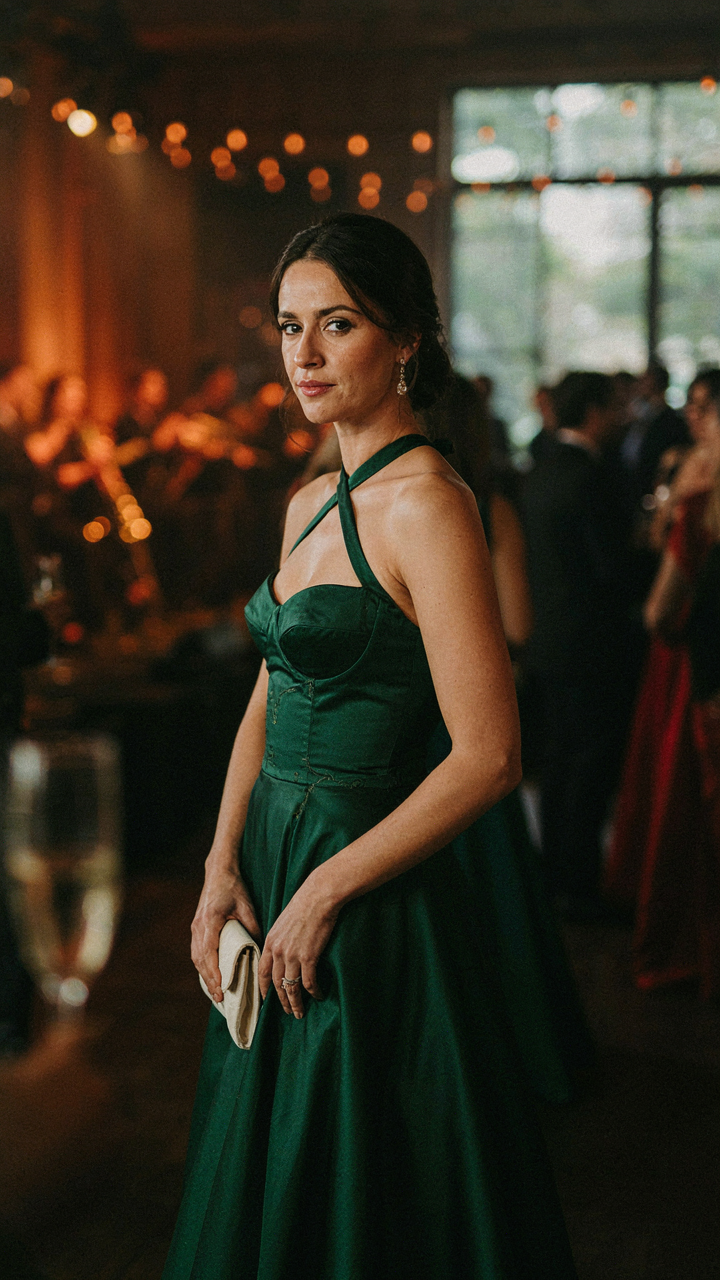
Why Brazilian Formality Rewrites The Rules
You want to look intelligent by dressing in ways that signal you understand something others don’t. Here’s the actual mechanism: a halter cocktail dress functions differently depending on the social contract of the country wearing it. In Brazil, the vestido de festa tradition treats bare shoulders as formal enhancement, not casual exposure. The halter neckline there anchors a dress to evening wear, not daytime. American and Northern European markets read the same silhouette as less formal. The difference isn’t aesthetic—it’s cultural permission.

Brazilians engineered the halter cocktail dress into black-tie territory through consistent repetition at high-status events. The design carries social weight in Rio that it doesn’t in New York. This matters because you’re not buying a dress, you’re buying a signal system that only works in specific markets. Ignore this and you’ll wear something that reads as “trying too hard” in one city and “appropriately dressed” in another. The halter structure itself doesn’t change. The context does.
Translating Status Signals Across Borders
The common advice says “just adapt the dress to your local culture.” That’s lazy and wrong. You need to identify which specific elements of the halter dress carry status in your target market, then amplify those while stripping others. In European markets, minimal jewelry paired with a halter cocktail dress signals restraint and wealth. In Latin American and Middle Eastern contexts, richer fabrics and statement pieces with the halter design signal abundance and confidence. The halter neckline stays constant. Everything supporting it shifts.
The protocol is mechanical: research three high-status events in your actual location, document what women wore, identify the halter dress wearers, note their fabric choices, jewelry density, and hair styling. Compare those choices to what works in your home market. The gap between them is your translation layer. Wear the halter cocktail dress with the support system that matches where you actually need to perform, not where you think you should perform.
Couture Evening Dress: Investment In Irreverence
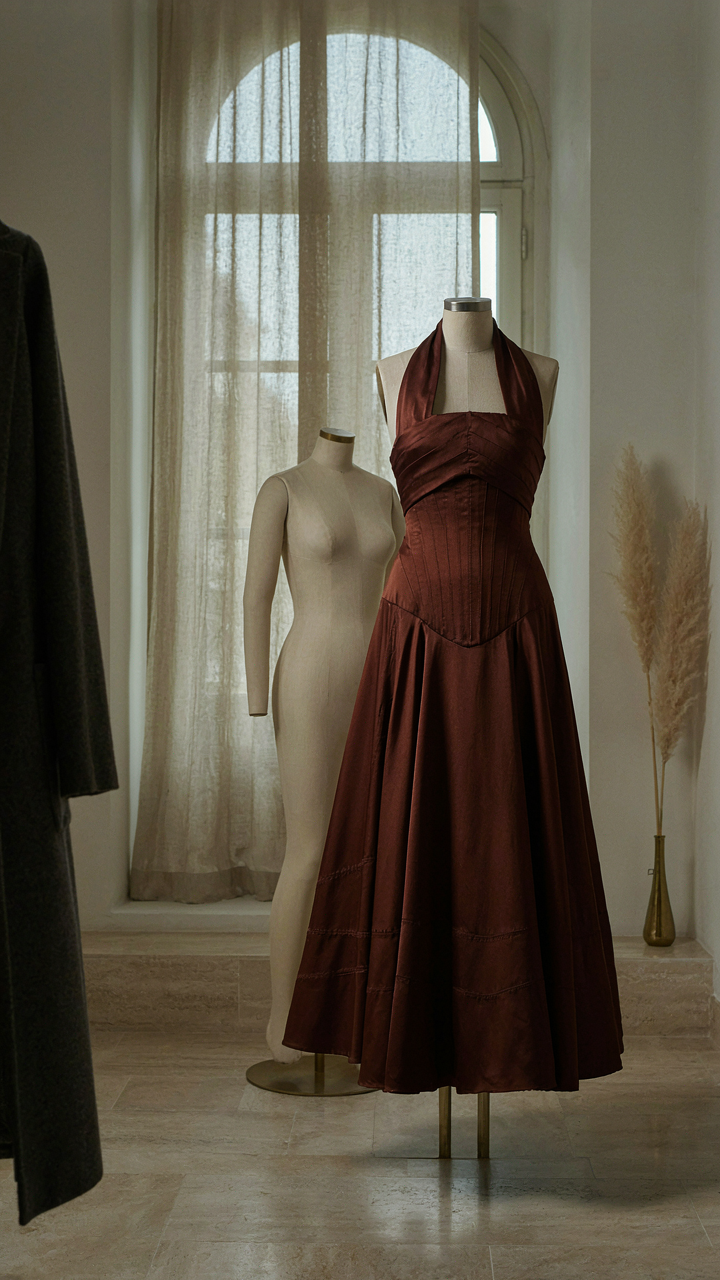
Your Personal Brand Needs A Thesis
You want permission to spend money on something that signals taste. That’s the real calculation here. A couture halter cocktail dress functions as a curated statement about who you are when you’re not trying to fit in. Most people buy dresses to match an event. The move is different: you build an event around the dress because it represents a deliberate aesthetic choice you’ve already made.

The halter neckline itself becomes part of your brand architecture. It eliminates ambiguity. You’re not playing it safe with a conventional silhouette. The bare shoulders and exposed collarbone create visual authority. When you own a piece from a designer who understands this mechanism, you’re not purchasing fabric. You’re purchasing a position statement that travels with you into rooms full of people making snap judgments based on what you’re wearing.
Designers Who Break The Formula
The advice to “find a designer that speaks to you” is lazy. Real couture halter dresses come from designers who reject the consensus about what evening wear should do. Think in terms of structural rebellion, not emotional resonance. A halter dress from a designer who respects convention will look like every other halter dress. The ones that matter come from designers who treat the halter as a constraint to solve, not a template to follow.
Alexander McQueen, Versace, and Marchesa build halter cocktail dresses that redefine the silhouette through unexpected construction. They anchor the halter in asymmetrical lines, manipulate the drape to create movement other designers miss, or pair it with materials that change how light hits bare skin. Your action: identify one designer whose structural approach to evening wear aligns with how you actually want to move through space. Buy one piece from them. Wear it until it becomes part of how people recognize you.
The Beaded Bodice Algorithm: Micro Details, Macro Impact
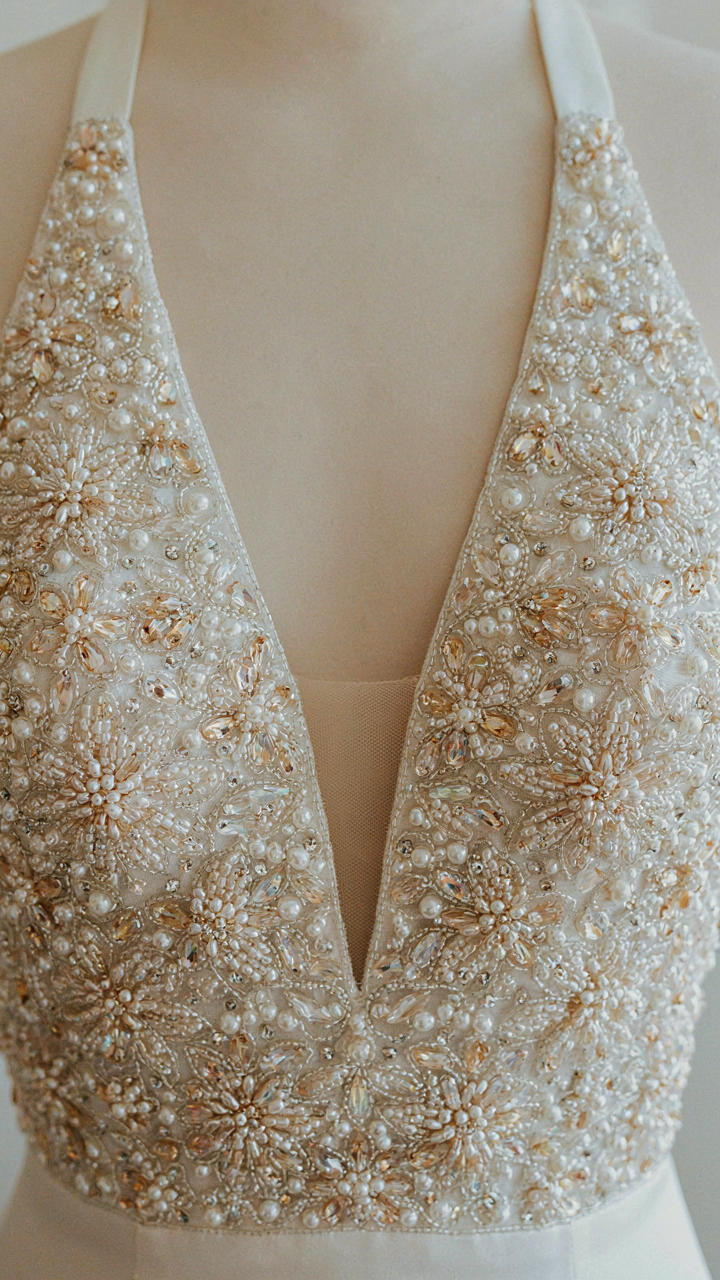
Why Beadwork Signals Investment
You want people to know you paid for quality without saying a word. Beadwork functions like an economic signal in fashion economics: the labor required to hand-apply beads creates scarcity, which consumers read as value. A halter cocktail dress with intricate beading takes exponentially longer to produce than a plain one. Manufacturers pass this cost to retail price. Your eye recognizes density of beadwork as a proxy for authenticity and expense, whether you admit it or not.

The mechanism is supply and demand made visible. Hand-beaded sections use techniques passed through garment production for decades: sewn-on rhinestones, embroidered seed beads, appliqued crystal clusters. Each method requires trained labor. Machine beading exists but lacks the depth and irregular placement of hand work. A halter dress with concentrated beading at the bodice signals the wearer invested in craft, not just fabric. This perception sticks before someone touches the garment.
Where Beads Anchor The Eye
Beadwork placement in halter cocktail dresses follows the same attention principle that governs visual hierarchy in graphic design. You don’t scatter beads evenly. You concentrate them where the body naturally draws focus: the center chest, the upper bodice, along the neckline.
- Center chest concentration: Beading clustered at the sternum creates vertical emphasis and flatters the torso by drawing eyes upward toward the face.
- Halter neckline definition: Beads trace the halter straps or frame the neckline opening, making the neck and shoulders appear longer and more defined.
- Waist delineation: Strategic beading at the waistline creates contrast between upper and lower dress, establishing proportion and silhouette clarity.
- Asymmetric placement: Beads concentrated on one side of the bodice create movement and visual interest without appearing unbalanced or costume-like.
- Gradient density: Beading that increases in density toward the center and thins toward the edges creates a three-dimensional illusion on flat fabric.
Poorly placed beads diffuse attention. Dense beading everywhere reads as busy, not elegant. The real execution rule: leave negative space. Your eye moves faster through empty space and lands with more impact where beads stop. A halter dress achieves maximum visual power when beadwork occupies roughly thirty to forty percent of the bodice, concentrated on areas that photograph and present well in direct light.
Floral Cocktail Dress: The Biosemiotics Of Attraction
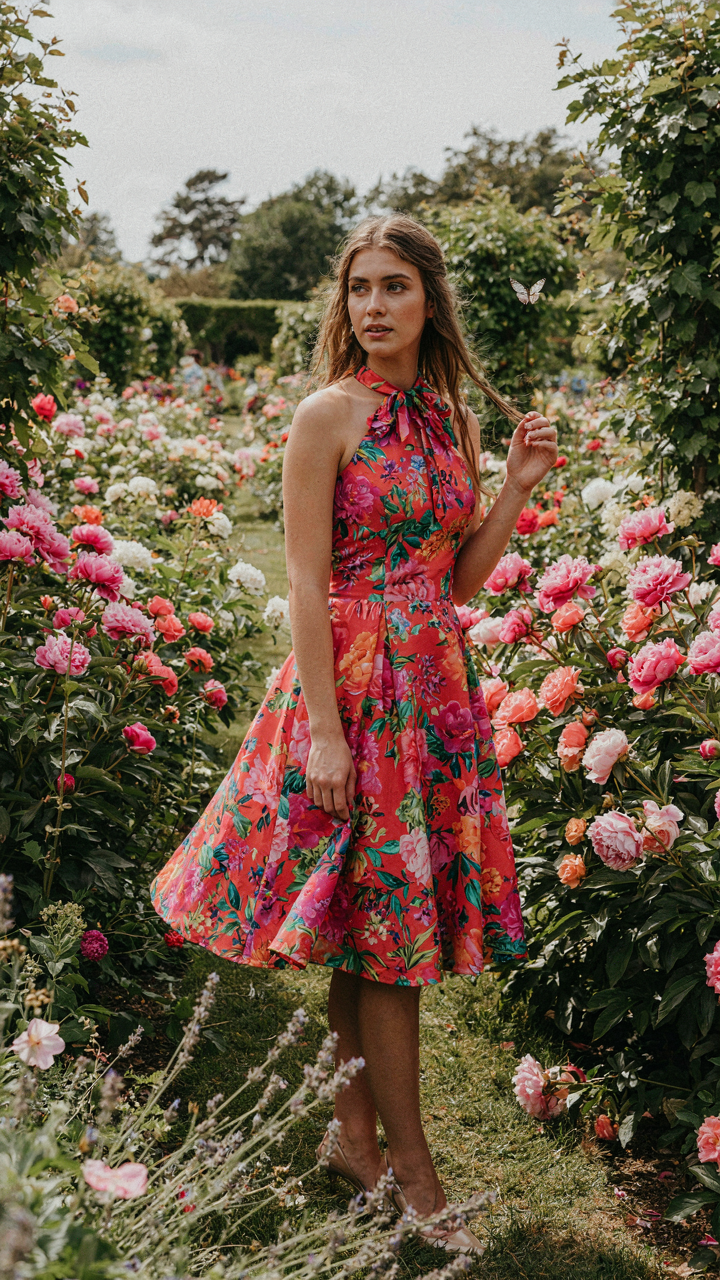
Why Flowers Work On The Nervous System
You’re reading this because you want to know if floral patterns give you an edge. They do, but not because flowers are “pretty.” Biology wired us to respond to flowering plants as signals of resource abundance and seasonal fertility. A halter cocktail dress with florals triggers the same recognition system that made our ancestors stop and pay attention. That’s the mechanism. Your body reads the pattern before your brain registers what you’re wearing.

The halter neckline amplifies this response by exposing the collarbone and shoulders, the body’s most visible fertility markers in primate communication. Florals alone mean growth and abundance. Florals plus bare shoulders mean accessible vitality. This isn’t manipulation. It’s how human perception actually works. When you combine the two in a halter cocktail dress, you’re not being subtle, and that’s the point.
What Color And Pattern Actually Signal
Everyone says “wear colors that make you feel confident.” That’s incomplete advice masking the real mechanism. Biosemiotics teaches us that colors and patterns communicate meaning independent of individual preference. A halter cocktail dress in deep crimson florals sends a different message than pale pink ones because humans decode saturation as hormonal health and dominance. Pattern density works the same way. Busy florals signal youth and energy. Sparse ones signal restraint and status.
The pattern’s scale matters tactically. Large florals on a halter cocktail dress draw focus to the garment itself, which works when the cut is the statement. Small, intricate florals direct attention upward to your face and shoulders, which works when you want the dress to frame rather than dominate. Neither is better. The choice depends on what you’re communicating about access and intention that night. Pick the pattern scale based on the room you’re entering, not your gut feeling.
The Real Elegance Isn’t Bare Shoulders; It’s Understanding The Game You’re Playing
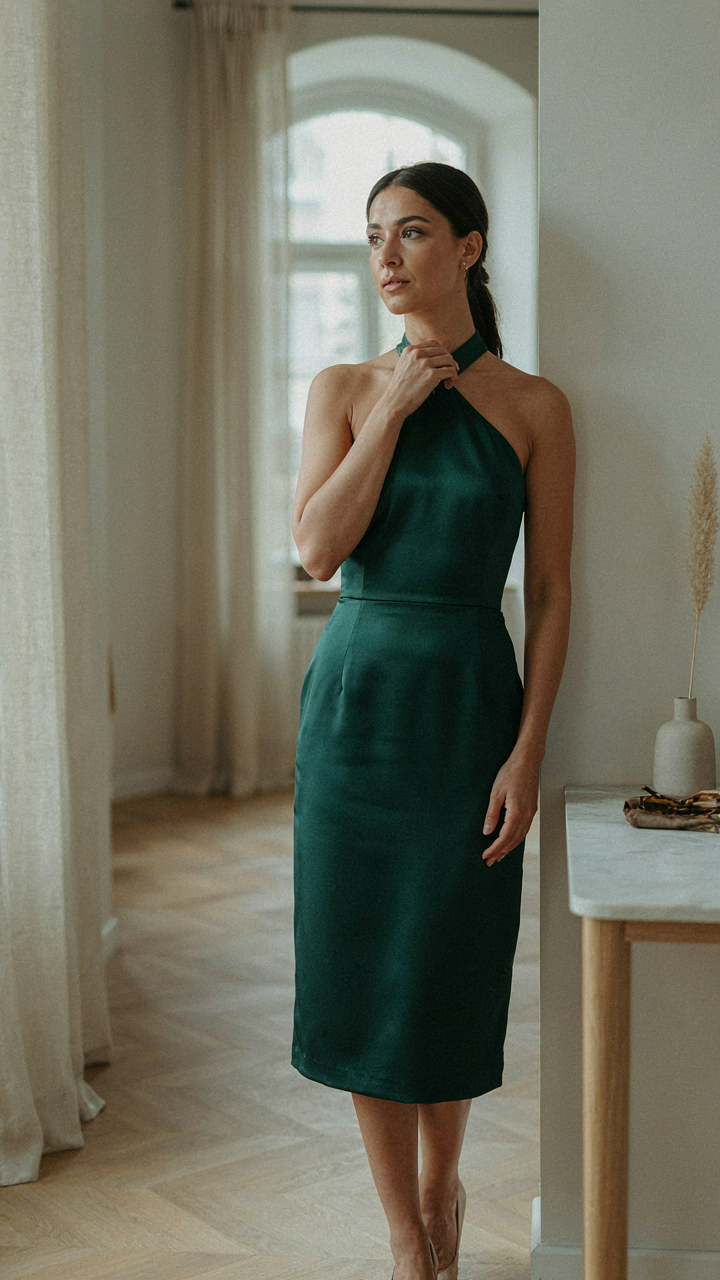
Most women buy a halter cocktail dress thinking the garment does the work. It doesn’t. The dress is a tool. Elegance lives in knowing why you chose it, how it fits your body, and what signal you’re actually sending. Stop picking dresses based on trends. Pick them based on the specific impression you want to make in that specific room. Your next move? Audit your closet. Find one halter dress you already own and wear it with intention, not accident. Elegance is just strategy wearing better clothes.



