


The “Dress 15” Protocol: Beyond Basic Black
Read The Room Before You Dress It
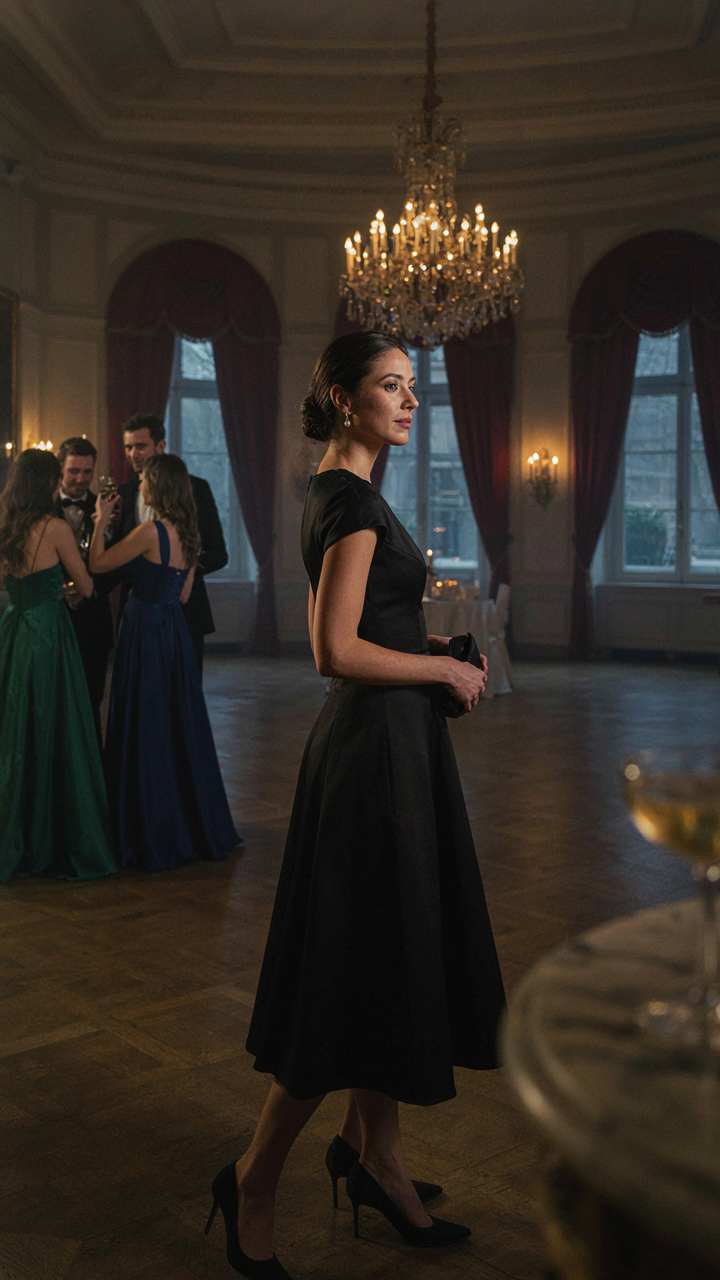
You want the dress to do the social work for you so you don’t have to think about it. That’s the real reason you’re here. The mechanism is simple: a midi cocktail dress succeeds or fails based on one variable—whether it matches the formality level and implicit rules of the specific event, not based on how expensive or trendy it is. Black works everywhere because it signals deference to the event’s authority. Everything else requires you to read first.
Formal events operate like hierarchies. A black-tie gala expects submission to strict codes. A semi-formal dinner allows interpretation. A cocktail reception invites personality within bounds. The midi silhouette sits in the middle of the formality spectrum, which is why it’s versatile and why it’s also where most people fail—they treat it as a blank canvas when it’s actually a statement that needs context. Before you choose color, fabric, or neckline, identify whether the event leans traditional, modern, or creative.
Color Carries Signal Strength
Psychology assigns meaning to color, but fashion uses color as a social frequency. Burgundy, navy, and charcoal read as “I respect the occasion’s weight.” Jewel tones like emerald and sapphire signal “I have taste and confidence.” Neutrals like taupe and cream work only if the event is upscale-casual or daytime. Bright colors and pastels demand either a very modern venue or a wedding where you’re explicitly not the bride. Red is the one color that always communicates intensity—use it when you want attention, not when you want to blend.
The real error most people make is choosing color based on what flatters them personally rather than what fits the event’s unspoken dress code. A midi cocktail dress in the wrong color reads as a miscalibration, not a fashion choice. You choose color by working backward from the event type. Black and jewel tones are your safe perimeter. Once you’ve locked in color, that choice constrains every other decision—fabric weight, heel height, and accessory intensity all follow from it.
Deconstructing Women’s Cocktail Attire: The Intentional Silhouette
How Lines Control What Others See
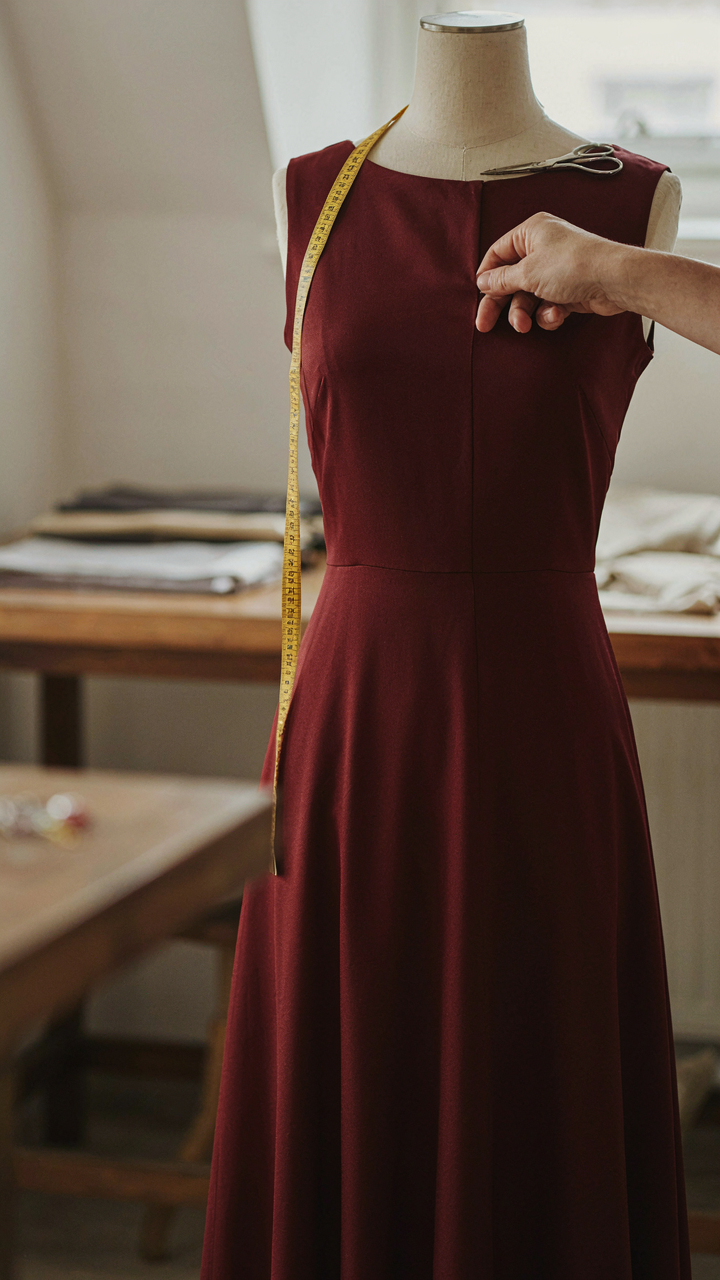
You want this dress to work because you’re tired of guessing whether you look appropriate or invisible. Here’s the mechanism: silhouette is geometry applied to your body. Dress lines either elongate, compress, or redirect the viewer’s eye. A midi cocktail dress works through line placement, not mystery. Vertical seams lengthen your frame. Horizontal cuts at the waist, hip, or knee break the line and create proportion. The neckline sets the entry point where attention lands first.

Most fashion advice skips this because it requires actual thinking. Instead of “find what flatters you,” the real move is understanding how each line interacts with your proportions. A-line silhouettes create width at the hem, balancing narrower shoulders. Fitted bodices with flared skirts use contrast to define shape. Asymmetrical hems or diagonal cuts force the eye to move, which reads as intentional rather than accidental. Your job is matching the line architecture to the actual dimensions of your body, not hoping a style works.
Fabric Weight And How It Moves
Fabric is physics. The heavier the material, the more it holds its intended shape independent of your body. Light fabrics conform to every contour, which exposes everything beneath. This matters for midi cocktail dresses because the length compounds this effect. A silk charmeuse holds structure and drapes cleanly. Cotton blends absorb body heat and cling. Polyester blends often read cheap because they don’t move with the body, they fight it.
Drape quality determines whether a midi dress reads polished or costume. Quality fabrics have weight distribution that pulls downward naturally, creating clean lines from hip to hem. Poor fabrics bunch, twist, or create unwanted volume. When selecting a midi cocktail dress, test the fabric by holding it at arm’s length and moving it. If it snaps back to shape quickly, the weave is tight enough to hold structure. If it flows slowly with weight, you’ve found the material that won’t betray your movement.
Elegant Midi Dresses: The Unspoken Power Of Proportion
Where The Hemline Lands Matters More Than Length
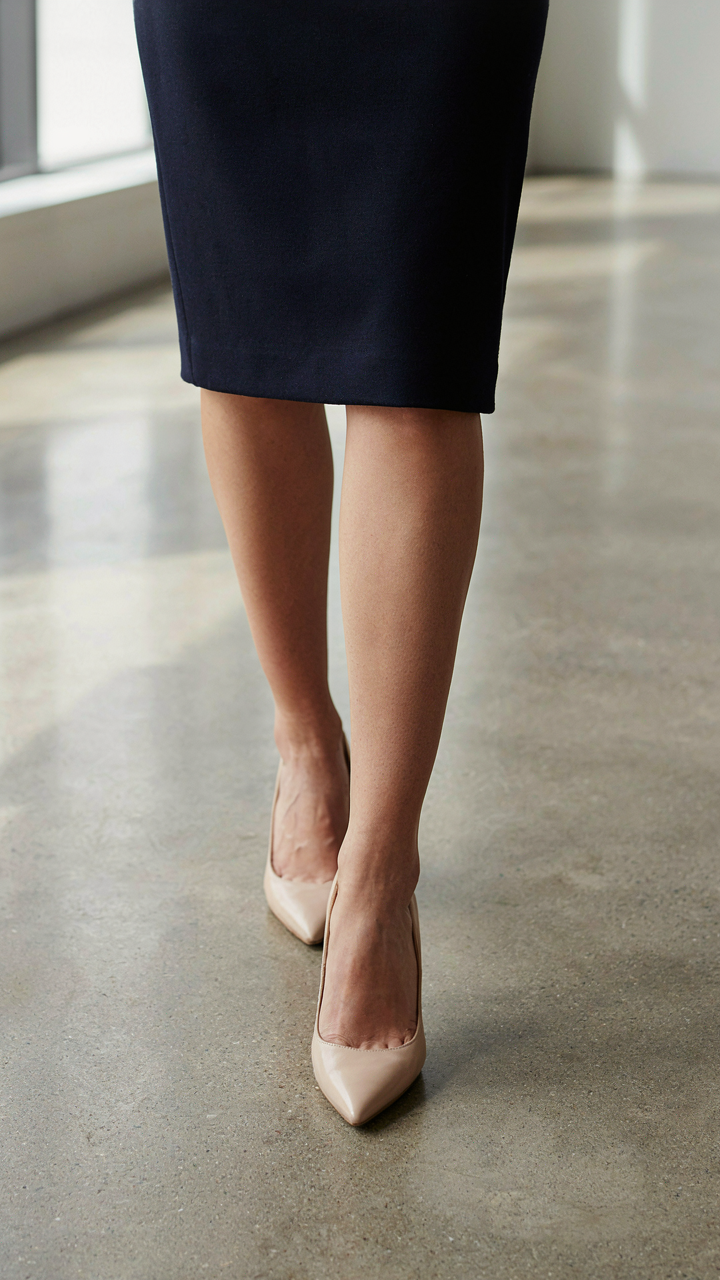
You care about this because hemline placement determines whether people read you as intentional or indecisive. Borrowed from optics: a midi dress functions like a focal length adjustment. Where the break hits your leg controls what viewers actually register. A midi that cuts at the widest part of your calf reads heavy. At the narrowest part of your ankle reads elongated. At the natural calf-to-ankle transition reads balanced. The physics is simple. Your leg represents the bottom third of your visual frame. The hemline is the dividing line. Lower division lines make frames feel stable and grounded. Higher division lines create visual tension. Most advice treats all midi lengths as interchangeable. They aren’t. The specific point where fabric meets leg rewires how your whole silhouette reads.

Midi dresses typically fall between knee and ankle, but the 26 to 28 inch inseam range (from waist to hem) hits most body types at the ankle bone or just above. This matters because that specific placement creates a visual reset. It interrupts the leg line without cutting it off. Your eye doesn’t land on the ankle as an endpoint but as a transition. This works for formal events because it signals control and precision rather than accident. Measure from your natural waist to where you want the hem to hit. Order accordingly. Don’t assume brand sizing. One inch changes the entire message the dress sends.
Strategic Layering Stops The Eye Where You Want It
You don’t need to match metallics or follow “complementary color rules.” You need to direct attention. Where you place a clutch, a necklace, or a shawl determines what part of your body the viewer’s eye lands on last. That endpoint is where people remember you. A midi cocktail dress paired with a statement necklace makes people remember your face. The same dress with a belt redirects focus to your waist. A shawl draped asymmetrically creates a secondary line that competes with the dress silhouette. You’re running an attention economy. Your accessories are the budget. Spend it where it matters for the specific room and event you’re entering.
The mechanism: the human eye follows interrupted lines. A bare collarbone into a high neckline creates a visual line that stops at your jawline. A belt on a midi creates a horizontal line that anchors focus. An ankle bracelet with heeled shoes extends the line past the hemline, making your legs appear longer by giving the eye something to follow beyond the dress endpoint. Choose one anchor point per outfit. Build accessories around it. If you want focus on your upper body, skip the ankle detail and commit to a necklace or earrings. If you’re emphasizing legs, go simple on top and add definition at the wrist or ankle.
The Behavioral Economics Of Glam Dresses: Signaling Status

What You’re Really Buying
You care about this because status matters, and clothes are the fastest currency to spend it. Costly signaling theory says this directly: signals that are expensive to fake work precisely because they’re expensive. A midi cocktail dress functions as a biological display mechanism—like a peacock’s tail, it costs resources to acquire and maintain, which proves you have resources. The dress isn’t about beauty. It’s about proof.

Economics calls this separating equilibrium. A high-quality midi dress separates you from people who can’t or won’t pay for one. The fabric weight, seam construction, and fit precision all cost money. Someone wearing a fast-fashion midi can’t replicate the signal without paying the price. That’s the entire mechanism. The dress works because it’s hard to fake.
Wardrobe Construction As Asset Allocation
Everyone says “buy what you love.” That’s incomplete thinking. Your clothing collection is a portfolio. You allocate capital across different dress types based on expected return—measured in social credibility, professional advancement, or romantic signaling. A midi cocktail dress is a mid-cap holding. It works for more events than a gown but signals more intentionality than casual wear.
Treat acquisition like portfolio rebalancing. You don’t buy a single dress and call it done. You build a cohesive set where pieces compound in value through versatility. A structured midi in neutral fabric with quality construction can be styled five different ways across multiple seasons. That’s return on investment. Each wear lowers the cost-per-appearance, while the dress maintains its signaling power because quality materials age well, not poorly.
Navy Blue Midi Dress: The Understated Authority Code
Why Navy Works When You’re Not Sure
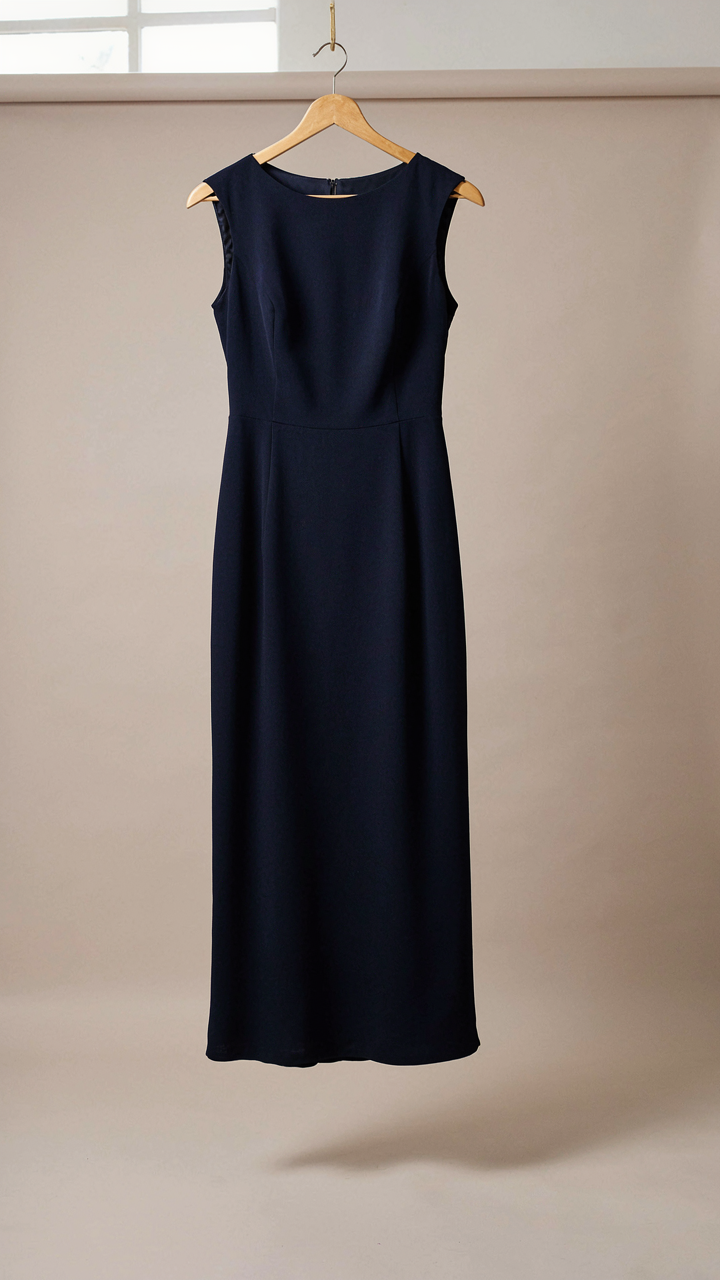
You want to disappear into competence instead of standing out as trying. Navy blue operates like a signal jammer in design theory—it neutralizes the noise of color so your presence registers as intentional restraint instead of decoration. The dress doesn’t compete with your face, your words, or your role in the room. That’s the mechanism you’re paying for.

Navy midi dresses anchor formal events because the color reads as institutional without being cold. It works across skin tones, lighting conditions, and body types because it doesn’t demand flattery—it demands respect. The fabric weight matters more than the hue at this point. A structured midi in navy commands attention through cut and posture, not through color saturation.
Matching Fabric To Visual Weight
Monochromatic impact isn’t about wearing one color—it’s about controlling contrast ratios so your silhouette becomes the focal point, not the decoration. Common advice says to add texture and layers to a solid-color dress. That’s incomplete. Navy absorbs light differently depending on fiber content. A matte crepe navy reads serious. A satin navy reads ceremonial. A jersey navy reads casual.
The midi length in monochromatic navy creates a visual line from shoulder to ankle without interruption. Shoes, clutch, and jewelry must match the contrast level you’ve set. If your dress is matte, shiny metallics break the unity. Flat finishes hold the monochromatic field intact. Start with footwear that matches your dress saturation level, then build outward from there.
The Strategic Deployment Of Burgundy Midi Dress: Depth And Distinction
Why Jewel Tones Actually Work
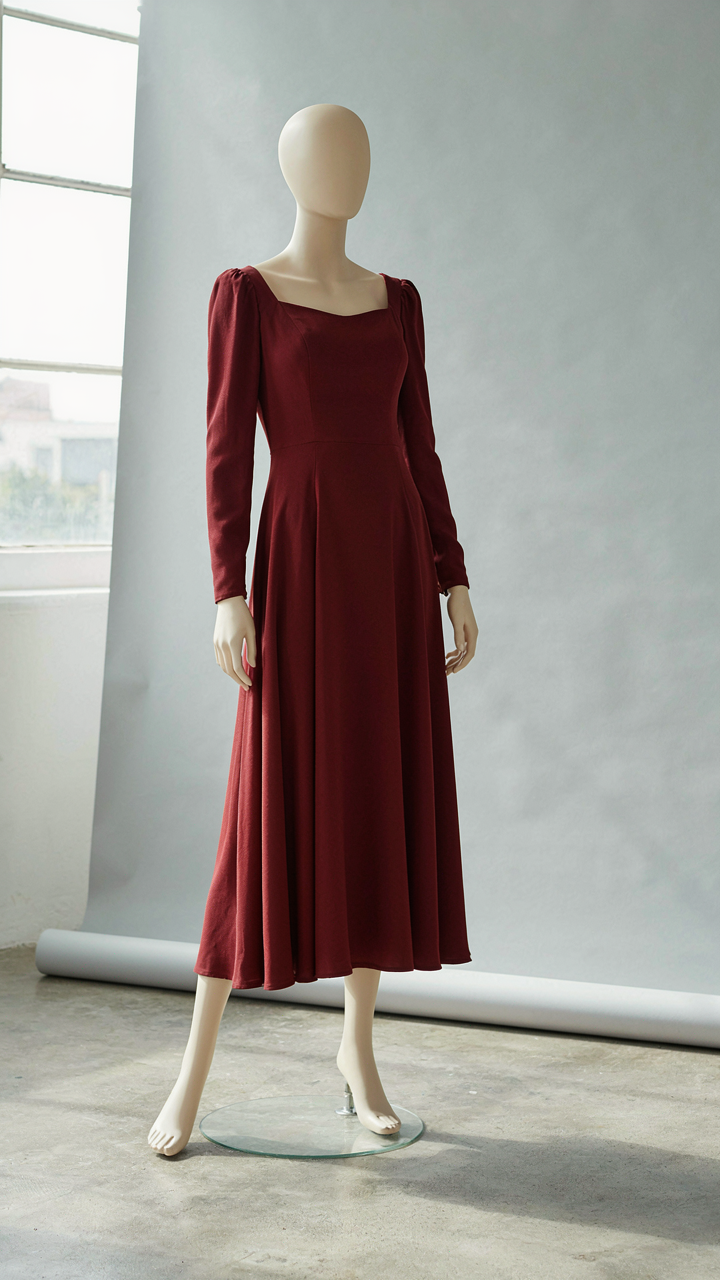
You want burgundy because it signals wealth without screaming it. That’s the real motive here. Burgundy operates like color theory’s contrast principle: it sits opposite the visible spectrum from the pale, washed-out tones most people default to, so it commands optical dominance in a room. The midi silhouette amplifies this because the length distributes the saturated color across your entire frame instead of concentrating it, which prevents the visual aggression of a full-length gown in the same shade.

Burgundy midi dresses work at formal events because the color reads as restraint masquerading as boldness. It’s not red. It’s not black. It occupies a specific position that says you understand formality without performing obviousness. The fabric weight matters here: heavier materials like crepe or structured jersey hold the color’s depth, while flimsy fabrics flatten it into generic wine-colored dress territory. Pair it with minimal accessories and let the color do the labor.
Dressing For Season Without Changing The Silhouette
The mistake people make is swapping out the dress entirely when seasons change. Wrong move. You keep the midi burgundy and adjust the permeability and layering underneath. Winter demands opaque tights or bare legs with heeled booties that ground the formal tone. Summer shifts to bare legs with strappy heeled sandals or metallic flat sandals, depending on venue formality. The dress stays the same. The supporting infrastructure changes.
Fabric composition matters when you’re not changing dresses. A heavyweight crepe burgundy midi works October through March. For warmer months, the same silhouette in silk charmeuse or a cotton blend maintains formality while managing body heat. The color stays burgundy. The fiber content adapts. This is efficiency: one investment, multiple deployments. Swap shoes, adjust hosiery, modify the base layer. The dress remains the centerpiece across all seasons and contexts.
Cocktail Dresses For Weddings: Navigating Social Hierarchies
What The Invitation Actually Tells You
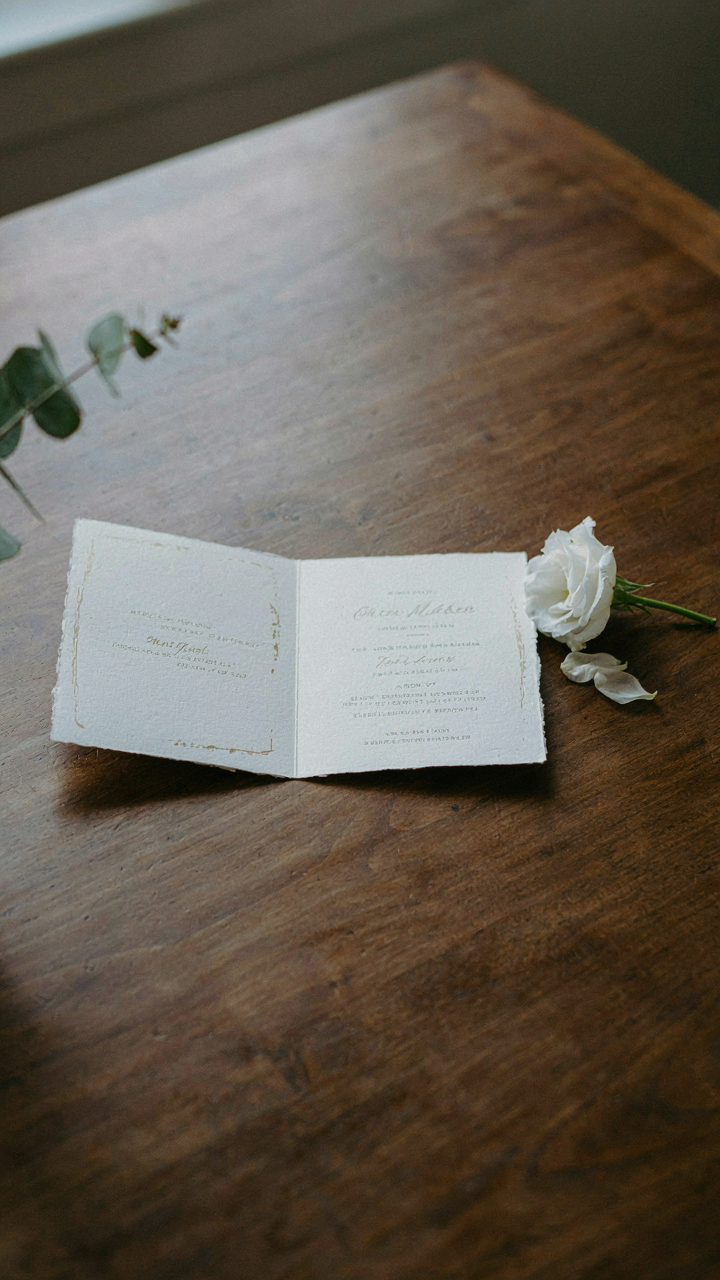
You care about this because you don’t want to look like you don’t belong. The real mechanism is this: invitations encode a dress code that signals your social position relative to the couple, and the midi cocktail dress sits in a specific bandwidth of that signal. “Cocktail attire” means formal enough to show respect, informal enough to avoid upstaging. A midi dress hits that mark because it reads as considered without demanding attention. Black-tie requires floor length. Business casual permits knee length. Cocktail attire requires the middle ground, and that’s where the midi lives.

The distinction matters because it’s not about rules you follow to be polite. It’s about matching the formality ceiling the couple set. If you show up in a floor-length gown to a cocktail wedding, you’re communicating that you didn’t read the room. If you wear a short dress, you’re signaling you didn’t take it seriously. The midi cocktail dress solves this because the silhouette itself communicates “I understood the assignment.” The calf-to-midi length sits between knee and ankle, which is the visual language of “formal but not black-tie.” Your dress does the work so you don’t have to think about it.
Reading The Room Without Guessing
Most advice says “match the venue and time of day.” That’s incomplete. What actually matters is the couple’s social circle, not the location. A wedding at a country club at 6 PM might demand different formality than an evening wedding at the same venue if the guest list shifts. The midi cocktail dress works across these variables because it’s neutral enough to adjust up or down depending on what you see when you arrive. Bring a blazer or structured shawl. Skip the shawl if others dress simpler.
The real protocol: arrive 10 minutes early. Scan three guests before committing to your outfit choice. If you see floor-length hems, the midi still works—you’ll be slightly less formal but not out of place. If you see knee-length dresses, the midi reads as respectfully elevated. If you see mixed lengths, the midi is your safe default. The midi cocktail dress functions as a calibration tool because its length inherently communicates “I took this seriously without overcommitting.” That’s not luck. That’s design working correctly.
Dressy Dresses: Function Over Fluff
Movement Without Restriction
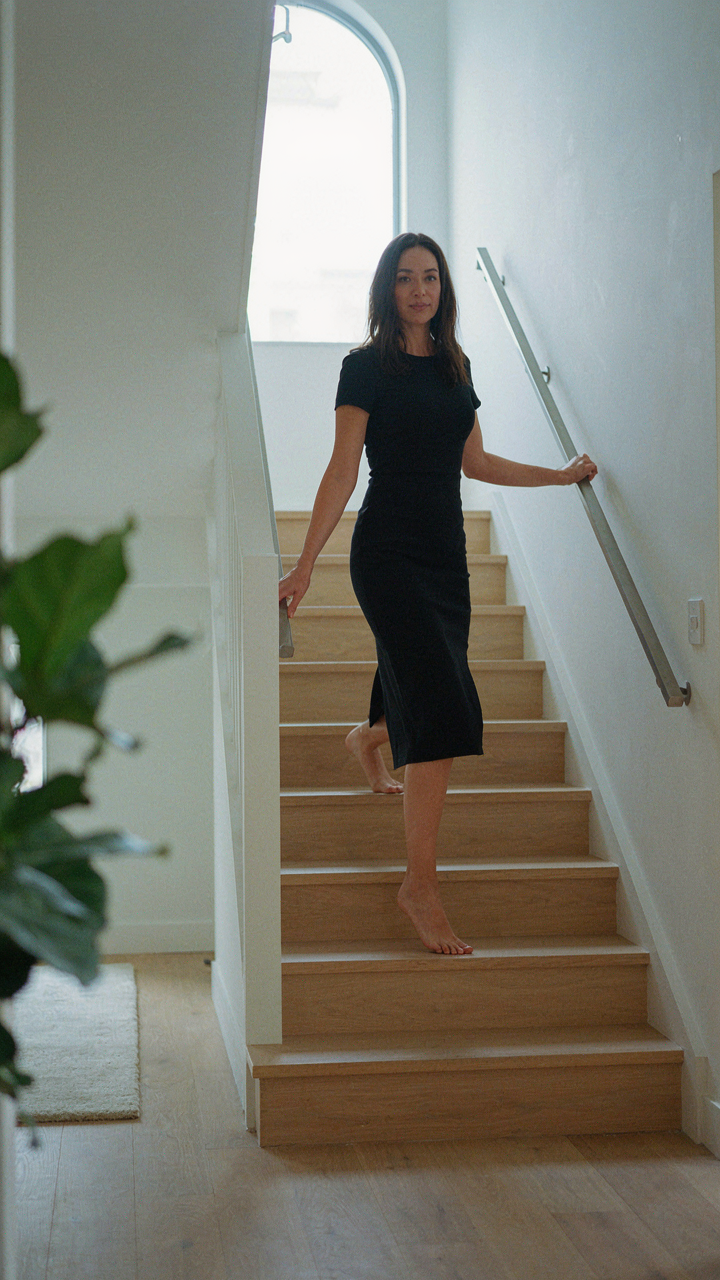
You want the dress to disappear so people focus on you, not on whether you can sit down. The physics term is “range of motion” – and a midi cocktail dress either grants it or sabotages it. A dress that forces you into posture corrections or constant tugging kills your authority the moment you enter a room.

The mechanism is fabric weight and cut placement. Heavy crepe or structured satin at the hip with a slit or A-line silhouette preserves mobility. Tight pencil cuts below the knee eliminate it. Test any dress by sitting, walking stairs, and reaching across a table before buying. Discomfort compounds over four to six hours.
Rewearing Strategy Across Settings
The real advantage of the midi cocktail dress is simple: one piece solves multiple events with minimal wardrobe waste. This isn’t versatility for its own sake. It’s about owning fewer things that work harder.
- Cocktail receptions: Pair with heels and a structured clutch. The midi length signals formality without black-tie pretension.
- Dinner dates: Add a leather jacket and swap heels for flats. The dress reads casual without losing polish.
- Office holiday events: Layer with a tailored blazer. Midi length keeps it from reading as weekend wear.
- Rehearsal dinners: Wear as-is with statement jewelry. The dress carries enough weight to stand alone.
- Upscale brunches: Pair with flat sandals and a linen overshirt. The midi transitions naturally into daytime contexts.
The constraint forces intentional buying. Choose neutral colors, clean lines, and timeless silhouettes first. Pattern and trend-specific details lock you into single-use territory. A navy or charcoal midi with side seaming works for years across dozens of occasions.
Midi Cocktail Dress: The Optimal Strategy, Not Just A Trend
The Real Cost Of Cheap Rotation
You want permission to buy disposable dresses without guilt. Here’s the mechanism: fast fashion depletes your decision-making bandwidth faster than it depletes your wallet. Every low-quality purchase forces you to replace it within one season, which means you’re mentally shopping constantly instead of wearing what you own. The midi cocktail dress category demands investment because it sits at the intersection of formality and frequency—you’ll wear it dozens of times across years, not twice.

Quality midi cocktail dresses in structured fabrics like crepe or ponte hold their shape through repeated dry cleaning and movement. A sixty-dollar polyester dress from a trend brand deteriorates after five wearings; a two-hundred-dollar dress in natural blends or performance synthetics survives thirty. You’re not paying for status. You’re paying to eliminate the cognitive load of perpetual replacement shopping.
Strategic Repetition Beats Variety
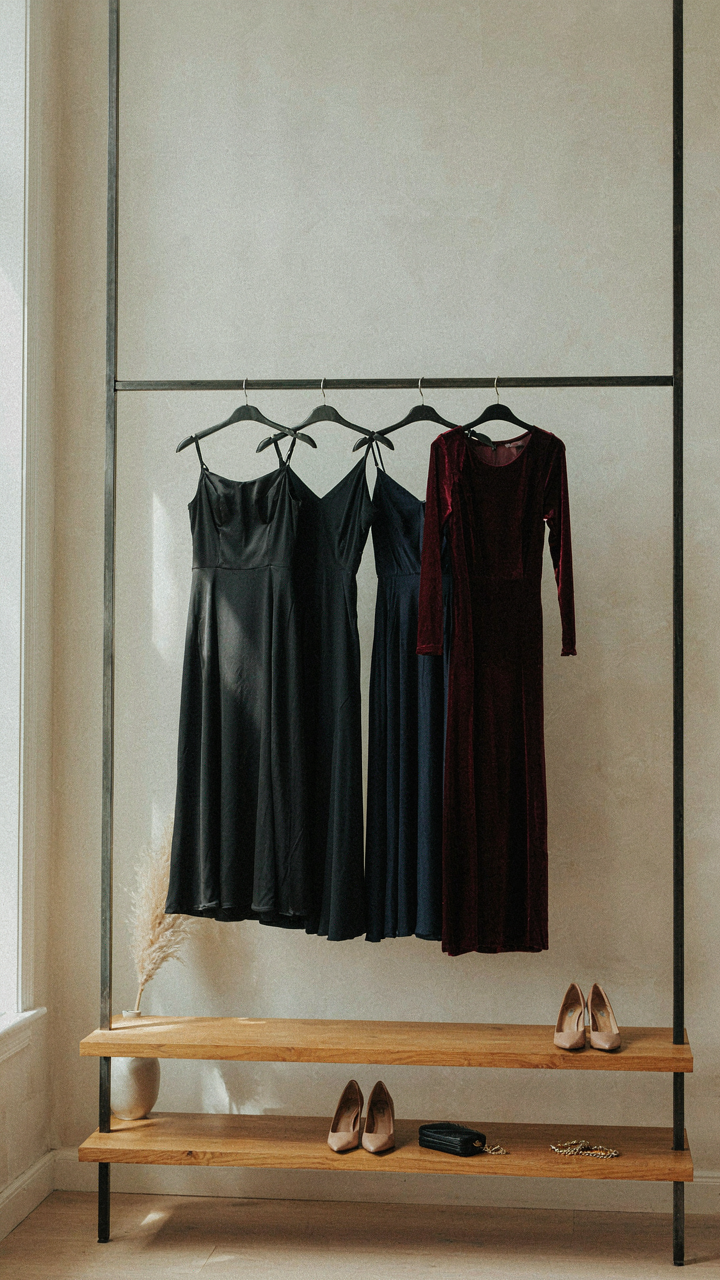
Most people treat their formal wardrobe like a museum—one piece per occasion, never worn twice. That’s economically backwards. A midi cocktail dress operates on the principle of leverage from economics: maximum output from minimum input. You acquire four to five core pieces in neutral bases, then swap accessories, footwear, and outerwear to create distinct looks.
Build your core around black, navy, and one jewel tone in midi length. These three pieces cover ninety percent of formal events when you vary their presentation. Add a structured blazer, statement earrings, and a different shoe for each wear. One dress becomes five different outfits without the storage burden or capital waste of buying five separate dresses.
Your Attire Isn’t The Problem; Your Lack Of Strategic Intent Is
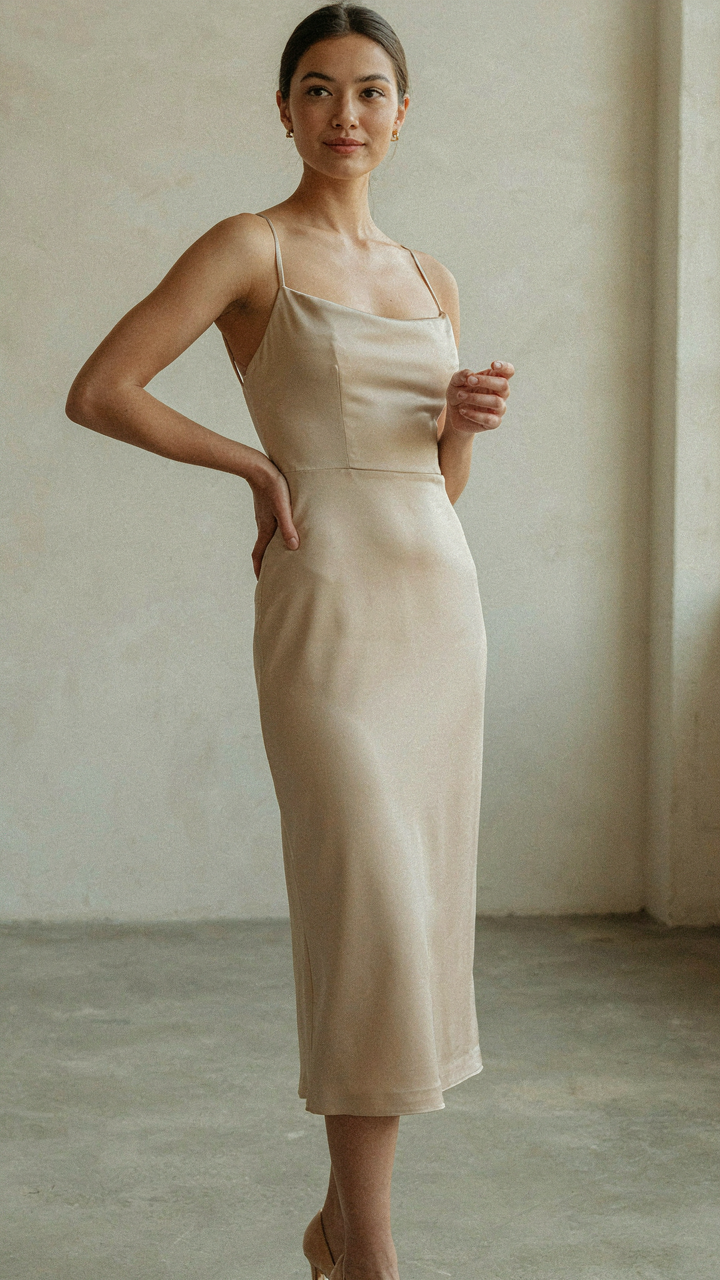
Most people buy a midi cocktail dress and hope it solves their problem. It won’t. The dress is just fabric until you decide what message you’re sending. Before your next event, answer this: who are you trying to impress and why? Then pick your midi dress with that answer locked in. The right outfit isn’t about looking good. It’s about looking intentional.



