

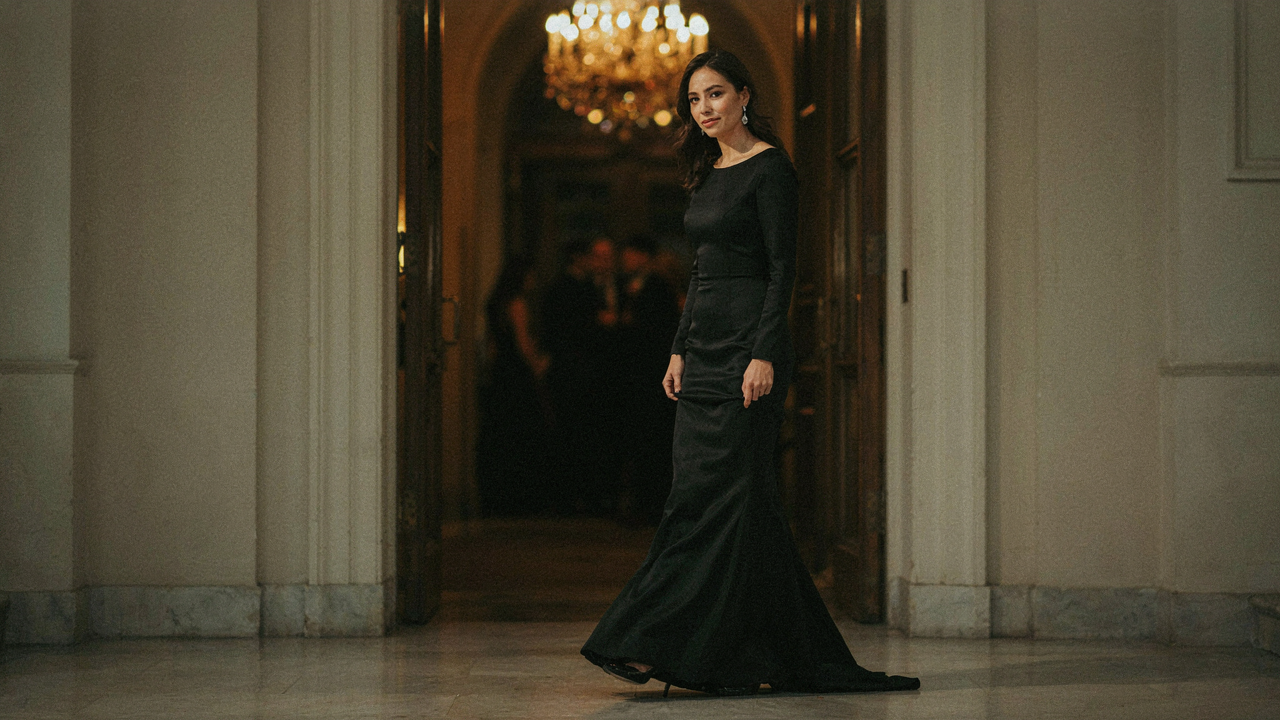
The “Versatile” Black Dress Lie
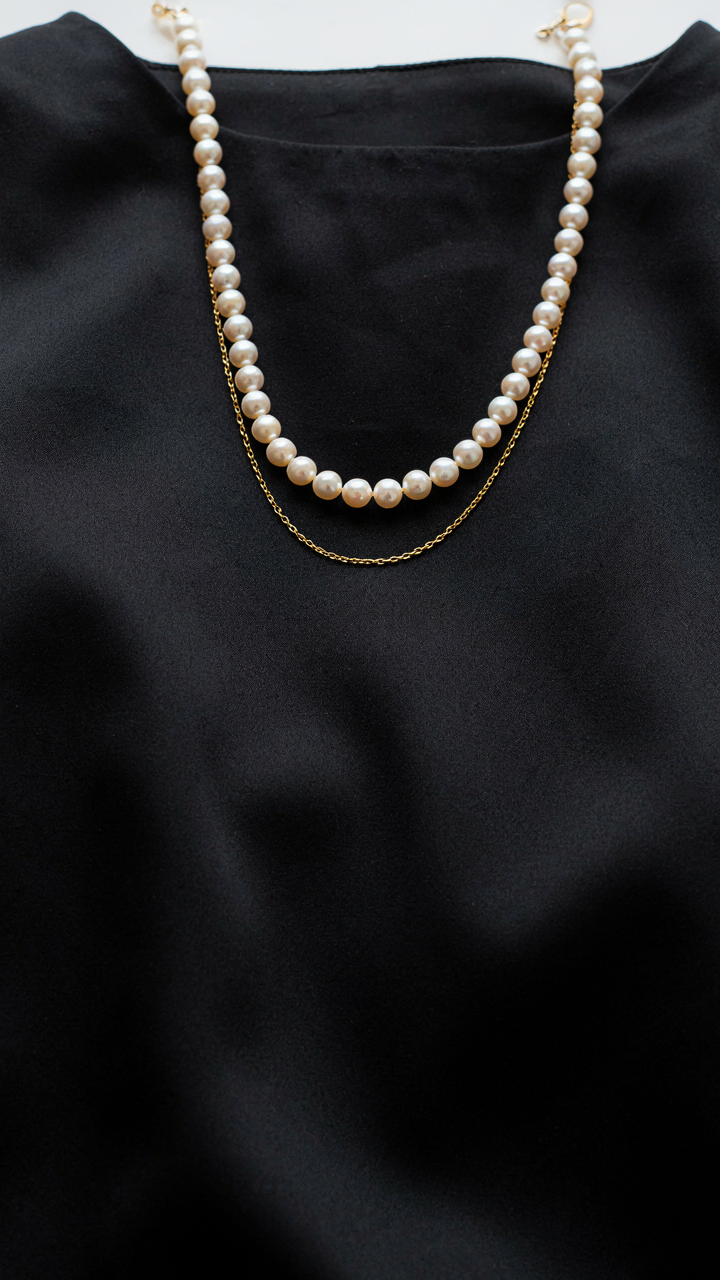
Black Isn’t A Blank Canvas
You want to believe black is neutral so you don’t have to think hard about what goes with it. Here’s the mechanism: black isn’t colorless—it’s the absence of light reflection. This changes how every material around it reads. A pearl next to black becomes sterile. Gold becomes warm. Silver becomes cold. The dress fabric itself (silk versus cotton versus wool) absorbs light differently, shifting how jewelry should sit against it. Black demands specificity, not compromise.
The common advice says “black goes with everything.” That’s lazy and wrong. Black actually creates contrast aggressively. It pushes jewelry forward instead of letting it integrate. A delicate necklace vanishes. A bold one feels forced. The black dress doesn’t adapt to jewelry—the jewelry has to respond to the dress’s refusal to blend. This is why mismatched pieces feel worse on black than on any other color. The contrast amplifies poor decisions.
Understanding The Dress’s True Character
The fabric weight and finish of your black dress determines which metals and gemstones actually work. A heavy crepe absorbs light and demands jewelry with visual presence—pearls read as dull against it, but rubies or sapphires cut through. A silk charmeuse reflects light subtly and pairs with anything that has dimension. Cotton knit flattens shine entirely and needs matte metals or textured stones. The dress isn’t a backdrop. It’s a visual competitor that either elevates or sabotages what you wear with it.
Neckline depth, sleeve length, and waistline placement are the actual constraints. A high crew neck means earrings carry the entire visual weight—any necklace becomes redundant. A V-neck or strapless allows statement necklaces to work because they don’t compete for attention. Long sleeves eliminate bracelets as a focal point. These structural realities determine where jewelry can land without creating visual chaos. Before you choose a single piece, map the dress’s architecture and identify which zones are actually available for adornment.
Beyond “Pop Of Color”: The Contextual Catalyst Method

Event Formality Sets The Actual Rule
You want jewelry that works everywhere because you’re afraid of looking wrong. Stop. Formality level determines what metal, weight, and visibility your pieces demand—this is the real constraint, not personal preference.

A black tie gala requires restraint. Gold, silver, or platinum work equally, but scale matters: smaller stones, refined cuts, minimal movement. Cocktail events tolerate bolder statements—larger gemstones, mixed metals, architectural pieces. Casual evening gatherings accept playful pieces traditional events reject. The event’s formality dictates the signal strength your jewelry broadcasts, not the other way around.
Personal Branding Wears Your Real Position
This isn’t about self-expression. It’s about consistency. Your jewelry signals what you’ve earned, what you value, and what circles you move in—whether you intend it or not. People read this instantly, before you speak.
Wearing signature pieces across multiple black dress occasions builds recognition. A specific metal preference, gemstone type, or distinctive silhouette becomes your marker. This works because it’s coherent and repeatable, not because it’s trendy. Choose metals and styles you’ll wear for years, not seasons. Your jewelry should feel like a position you’ve staked, not an experiment you’re running.
Black Dress Jewelry: The “Complementary Contrast” Fallacy

Tonal Layering Over Color Blocking
You want permission to break the rules without looking like you don’t know them. That’s the real reason you’re reading this section. The mechanism is borrowed from color theory in painting: value contrast matters more than hue contrast. A black dress doesn’t need gold or silver to pop. It needs jewelry at a different tonal depth than the fabric itself. Matte finishes against shiny black create separation. Polished metals against matte black do the same work.

Most advice tells you to pick warm or cool metals based on your undertone. This is incomplete. The actual lever is surface finish hierarchy. Wear brushed gold on a glossy black dress and you’ve solved the visibility problem without adding visual noise. The fabric and metal read as separate objects because light behaves differently on each surface. This is why a dull platinum piece can work better than a bright one on the same outfit.
Material Mismatches That Actually Work
The common take says materials should feel cohesive. This is lazy reasoning. Textile and metal work together precisely because they’re fundamentally different, not similar. Pair a chunky silk or linen black dress with cold metal jewelry. Pair a tight knit black dress with warm wood or bone elements. The contrast signals intentionality instead of accident. The eye registers these as deliberate choices, not safety plays.
Resin, stone, and pearl all break the metallic monotony without clashing. A black dress with ceramic or concrete-inspired jewelry reads modern because the material pairing is unexpected but not random. The rule isn’t to match materials. The rule is to choose one material from a different category than your fabric base, then commit to it completely. Don’t layer three different material types. Pick one contrast and let it carry the composition.
Jewellery For Black Dress: The “Strategic Scarcity” Protocol

Restraint Beats The Noise
You want permission to buy less because you’re afraid more jewelry will make you look desperate or confused. Here’s the mechanism: black dress absorbs light and demands visual hierarchy. Too many pieces scatter attention across your frame instead of directing it. Economics calls this “signaling efficiency”—you’re maximizing what the observer actually registers per item worn. One perfect piece reads as intentional. Three mediocre ones read as indecision.

The common advice says “let your jewelry do the talking.” That’s vague nonsense. What actually happens is this: your eye has finite processing power. Black dress creates a neutral canvas with zero competing visual elements. Every piece you add fights for dominance on that canvas. Remove the fight by removing the competitors. One statement piece on a black dress lands harder than five scattered pieces on a patterned one.
One Anchor, Everything Else Disappears
A statement necklace, a dramatic cocktail ring, or chandelier earrings function as the focal point. Pick one. Everything else becomes supporting infrastructure, not a second act. Necklaces command the upper body and face. Rings work when hands are visible during conversation or when you gesture. Earrings work best when hair is pulled back and they have clear sightlines.
The placement rule is mechanical: statement piece goes where light naturally falls and where eye contact happens. For evening events, that means shoulders, hands during active socializing, or the side of the face if earrings are oversized. Delicate bracelet on the wrist works only if you’re wearing short sleeves. Bracelets disappear under long black sleeves, so they’re wasted resources. Pair your anchor with exactly one secondary piece—a thin ring if you wore the necklace, or small stud earrings if the ring is large. That’s the protocol.
Accessories For Black Dress: The “Architectural Anchor” Principle
When Structure Matters More Than Sparkle
You want people to notice you without looking like you’re trying. That’s the real problem here, and it’s solved by treating jewelry like architecture, not decoration. In architecture, load-bearing walls carry weight and define space. In jewelry, structural forms do the same thing for your visual presence. A geometric cuff or angular pendant doesn’t float on your body—it anchors itself through clear lines and mass distribution.

Most advice tells you to match metals or “let the dress breathe.” Wrong. The black dress is a blank canvas that needs definition. Jewelry with actual structure creates visual weight and directs attention where you want it. A sculptural necklace with defined angles sits differently than delicate chains. It commands space. Your eye lands on it first because the form has presence, not because it’s loud.
Engineering Your Presence With Geometry
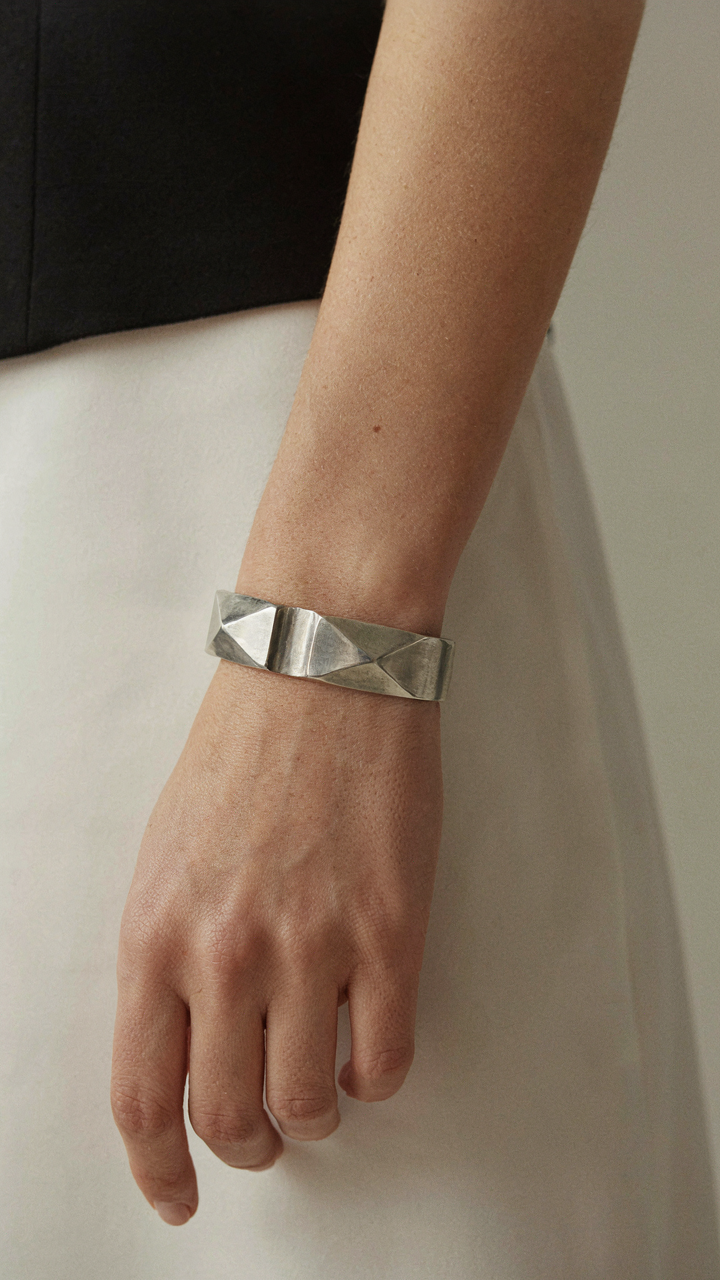
Borrow from industrial design: negative space is load. A bracelet that’s all surface feels heavy and cheap. A bracelet with negative space—cutouts, gaps, geometric voids—creates visual weight without actual mass. This is why geometric statement pieces work with black dresses. They’re not random. They follow a structural logic.
The mechanism is simple. A chunky bracelet with clean lines creates visual anchors at your wrist. These anchors break up the monochromatic field of black fabric. Your body reads as segmented, intentional, controlled. A delicate chain bracelet doesn’t create anchoring points—it dissolves into the dress. Choose pieces where the form is the function. Rings that stack and layer create rhythm. Earrings with defined geometry frame the face. A structured pendant with clear angles sits flat against the body and reads from distance.
Jewelry That Goes With Black Dress: The “Kinetic Empathy” Framework
Pieces That Breathe, Not Sit
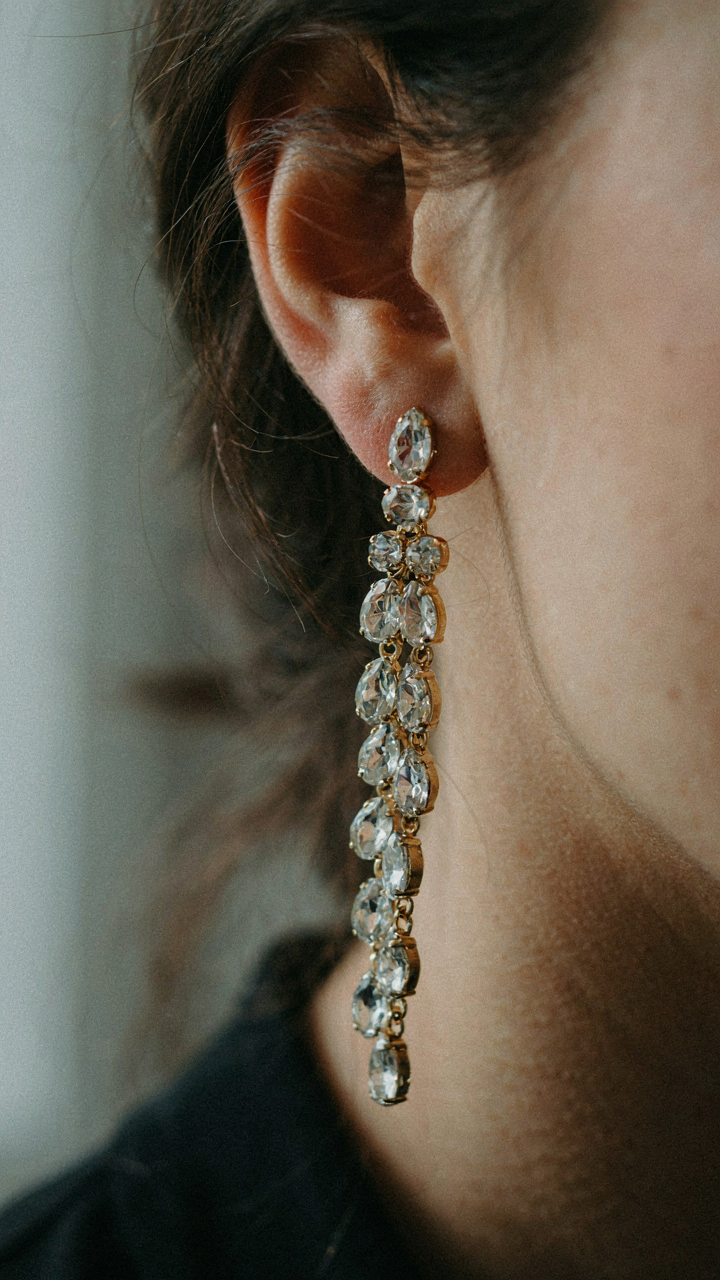
You want people to notice the effort without noticing you’re trying. That’s the real problem here. Movement solves it because stillness reads as costume. Borrow from dance and kinesiology: momentum is the principle that separates jewelry worn from jewelry that wears you. A rigid choker broadcasts insecurity. A piece with swing, dangle, or articulation signals control.

Chains that move with your body work because they create micro-narratives. Long pendant necklaces, chandelier earrings, and bracelets with segmented links all operate on the same rule: they respond to your motion, not against it. This is why a simple gold cuff fails but a bracelet with graduated links succeeds. The kinetic energy of the piece extends your presence into space. Black dress absorbs light and flattens; moving jewelry counteracts that by introducing visual rhythm.
How Light Changes Everything
Most advice says match metals or go bold. That’s incomplete. Physics governs how jewelry interacts with black fabric, and the mechanism is refraction, not color harmony. Black absorbs 95 percent of visible light. Your jewelry doesn’t compete with the dress—it redirects what little light remains back to the viewer’s eye.
Polished metals bounce light in clean angles. Matte finishes diffuse it gradually. Gemstones refract light through their depth. On black, a matte gold ring becomes invisible. A polished one reads as intention. A diamond catches light independent of angle. Choose polish or faceted stones when wearing black to evening events because these create observable contrast. Smooth satin-finish pieces require proximity to see; save those for intimate dinners. The choice determines whether your jewelry communicates across a room or demands closeness.
Black Dress Jewelry Ideas: Your Personal “Iconography Index”

The Pieces That Actually Mean Something
You want permission to wear jewelry that matters to you instead of what the rulebook says you should wear. Here’s the mechanism: jewelry functions as a status signal only when the viewer recognizes the code. The moment you wear something because it aligns with your actual history or values instead of borrowed taste, the signal shifts from “I’m trying to impress” to “I know who I am.” Black dress amplifies this because it removes visual noise and forces every other element into sharp relief.

Personal meaning doesn’t make a piece less formal or appropriate. It makes it more legible to people who matter. A vintage watch inherited from your grandfather reads differently than a new luxury watch you bought. Both work with black dress. The difference is internal coherence. When you choose pieces tied to your decisions, achievements, or people you respect, you stop worrying whether they’re “correct” because they already are correct for you.
The System That Prevents Drawer Chaos
The common advice here is garbage: “invest in classic pieces” tells you nothing actionable. You end up with eight similar necklaces and nothing that coordinates. Instead, build around constraints. Decide on three metal finishes you’ll actually wear: gold, silver, or rose gold. Not all three. One primary, one secondary if any. This constraint forces coherence. Every new piece must work across your black dresses, your work clothes, and your weekend wear. This eliminates duplicates before you buy them.
- Gold base with one secondary metal: Choose silver or rose gold as your occasional accent. This prevents dilution. Most people stop here and never waiver.
- Earrings as the anchor: Buy two to three statement earring options in your primary metal. Earrings change the entire feel of a black dress without requiring a full outfit restart.
- One versatile necklace: A 16 to 18 inch chain in your primary metal. Long enough to layer, short enough to wear alone. No pendant required.
- Rings across your hands: Two to three in your primary metal, one in secondary. Rings are the lowest-stakes way to build a system because you can wear multiple simultaneously without looking overloaded.
- Bracelets as rare deployments: Most people own too many bracelets they never wear. Limit to one in your primary metal. Wear it deliberately on specific occasions, not by default.
This system scales because every new piece must answer one question before you buy it: Does this work with what I already own? If the answer requires explanation or exceptions, the piece doesn’t belong in your collection. Reject it and move forward.
Jewelry To Wear With Black Dress: The “Subtle Subversion” Technique

Break The Symmetry Rule
You’re reading this because you’re afraid of looking boring. The real mechanism is contrast. In design, contrast is the difference between elements that makes each one visible. A black dress erases visual noise, so your jewelry becomes the only signal. Most advice says “match the formality” or “go understated.” Wrong. Understated jewelry on a black dress reads as absence, not elegance. You need pieces that reject the dress’s visual weight, not defer to it.

The move is asymmetry where the dress provides symmetry. Wear a single substantial earring instead of a pair. Layer chains of different lengths instead of one necklace. Pair a minimalist bracelet with a statement ring on the opposite hand. Black absorbs light and flattens the body, so jewelry must create deliberate visual breaks. The dress does the work of formal clothing already. Your jewelry’s job is to prove you made a choice.
Details That Command Attention
Small surfaces carry outsized information when context is stripped bare. A black dress removes color, pattern, and texture as anchors for the eye. Jewelry detail becomes the only place scale matters. Everyone knows to add a watch or cuff. That’s the consensus mistake. A single piece of jewelry with visible craft—hand-hammered edges, articulated segments, or intricate setting work—dominates a black dress background because nothing else competes for focus.
Real jeweler’s marks matter here. An 18k gold bracelet with visible maker’s stamp reads differently than smooth gold. A signet ring with an engraved initial works because it proves intentionality. Vintage pieces outperform new costume jewelry for this reason. Wear jewelry that shows its construction. A black dress is a blank canvas, and jewelry that whispers gets lost on it. The mechanism is density of information. Small pieces with maximum detail density create presence.
The Real Problem Isn’t Your Jewelry; It’s Your Fear Of Looking Wrong

You already know what works. Gold commands attention. Silver disappears. Statement pieces cost money but buy confidence. The real issue? You’re waiting for permission to own your choice. Stop asking if your jewelry matches your dress. Start asking if it matches who you want to be that night. Pick one piece today that scares you slightly, then wear it. Confidence isn’t the result of perfect jewelry—it’s the result of committing to it.




