

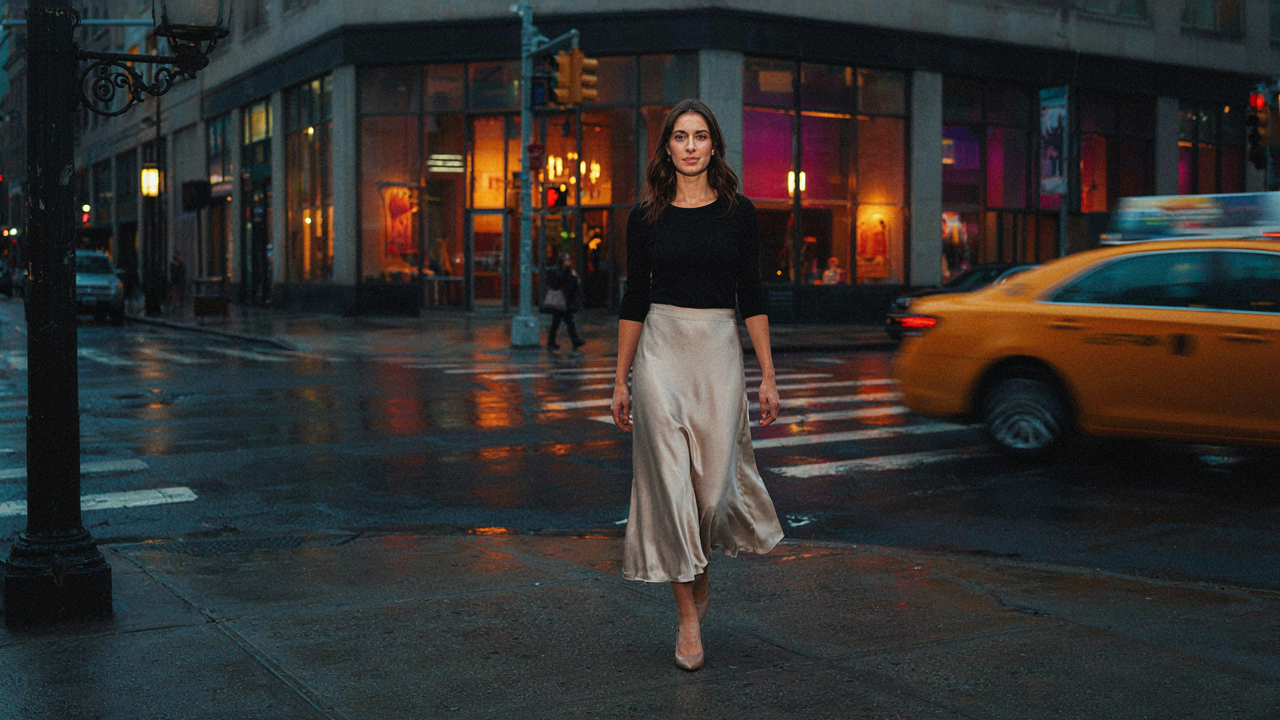
The Illusion Of Effortless Elegance: Why Most Satin Midi Skirt Outfits Fail
Where The Outfit Actually Dies
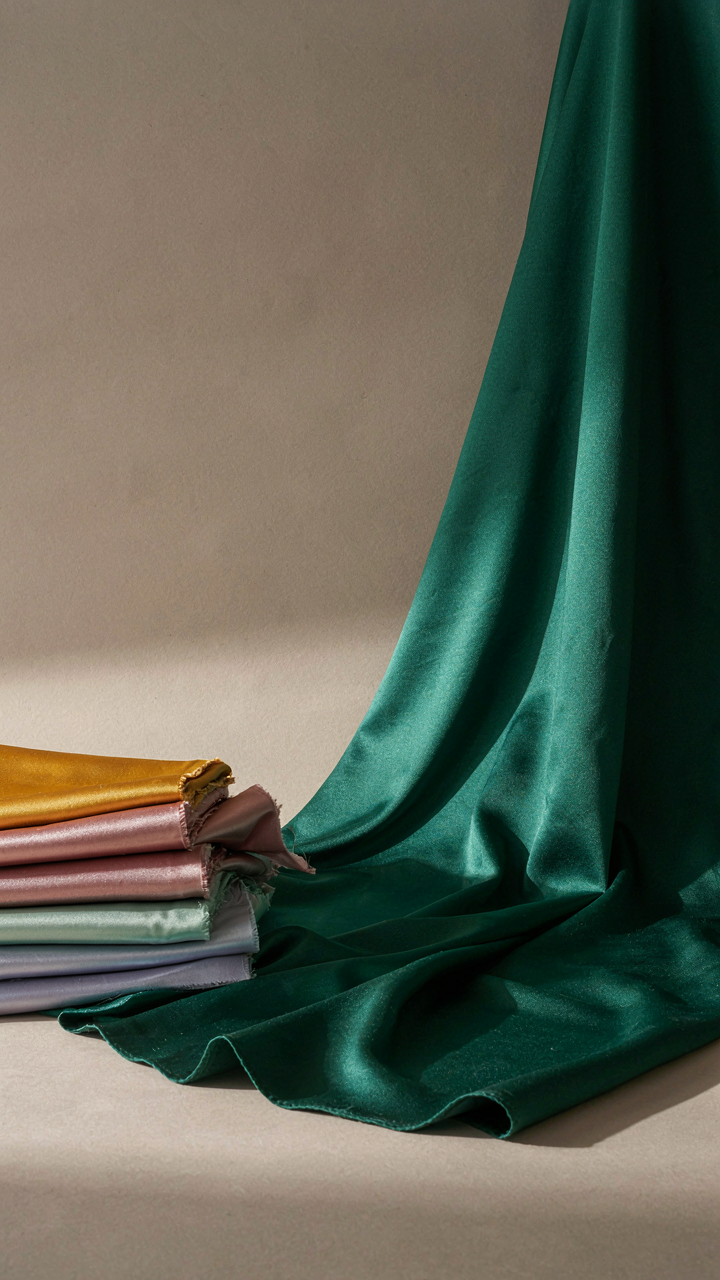
You care about this because you’ve spent money on the skirt and don’t want to look cheap. Here’s the real mechanism: fabric quality compounds. A satin midi skirt in quality silk or silk-blend reads as intentional. The same cut in polyester reads as costume, no matter what you pair it with. Most people ignore this and focus entirely on the other pieces, hoping to elevate a weak foundation. That doesn’t work. The skirt fabric sets the ceiling for the entire outfit’s perceived cost and care. Everything else just fills the space below it. Cheap satin broadcasts that you didn’t know the difference or didn’t care enough to pay for it.
The second mistake is proportion blindness. A satin midi skirt has weight and drape. Pairing it with heavy, oversized tops creates visual clutter. The outfit becomes about competing fabrics instead of complementary ones. You need pieces that breathe visually and let the skirt’s shine do its job. A fitted turtleneck, a structured blazer, or a simple silk camisole works because they don’t fight for attention. The skirt already has texture and movement built in. Everything else must step back or it all collapses into visual noise.
The Real Mechanism Of Restraint
Sophistication is an economics problem: every piece competes for visual bandwidth. A satin midi skirt for cocktail wear already commands space through its sheen and cut. Adding statement jewelry, a bold pattern top, and metallic heels doesn’t amplify elegance, it dilutes it. Instagram aesthetics teach maximalism because it photographs well in feeds crammed with noise. Real cocktail elegance operates on subtraction. You pick one focal point and delete everything that wasn’t invited to support it. If the skirt is your statement, the top is subordinate. If you’re featuring a structured blazer, the skirt becomes the neutral anchor.
The protocol is direct: commit to one visual anchor per outfit, then make every other choice a supporting player. Test this by photographing your outfit and removing one element at a time. If the outfit improves when you subtract something, that piece was competing, not serving. The outfit works when removing anything makes it visibly worse. That’s when you’ve stopped decorating yourself and started designing an appearance.
Satin Midi Skirt: The Unconventional Power Play For Any Event
Why Other Cocktail Formulas Fail You
You want to look expensive without trying. Most cocktail advice tells you to match a “level” to an event, as if formality exists on a single axis. That’s wrong. The satin midi skirt operates like a signal that can be amplified or dampened depending on what you pair it with, which means you control the perceived formality, not the venue. Satin’s sheen catches light and reads as intentional investment. Cotton or linen at the same length reads as casual default. The material is the mechanism.

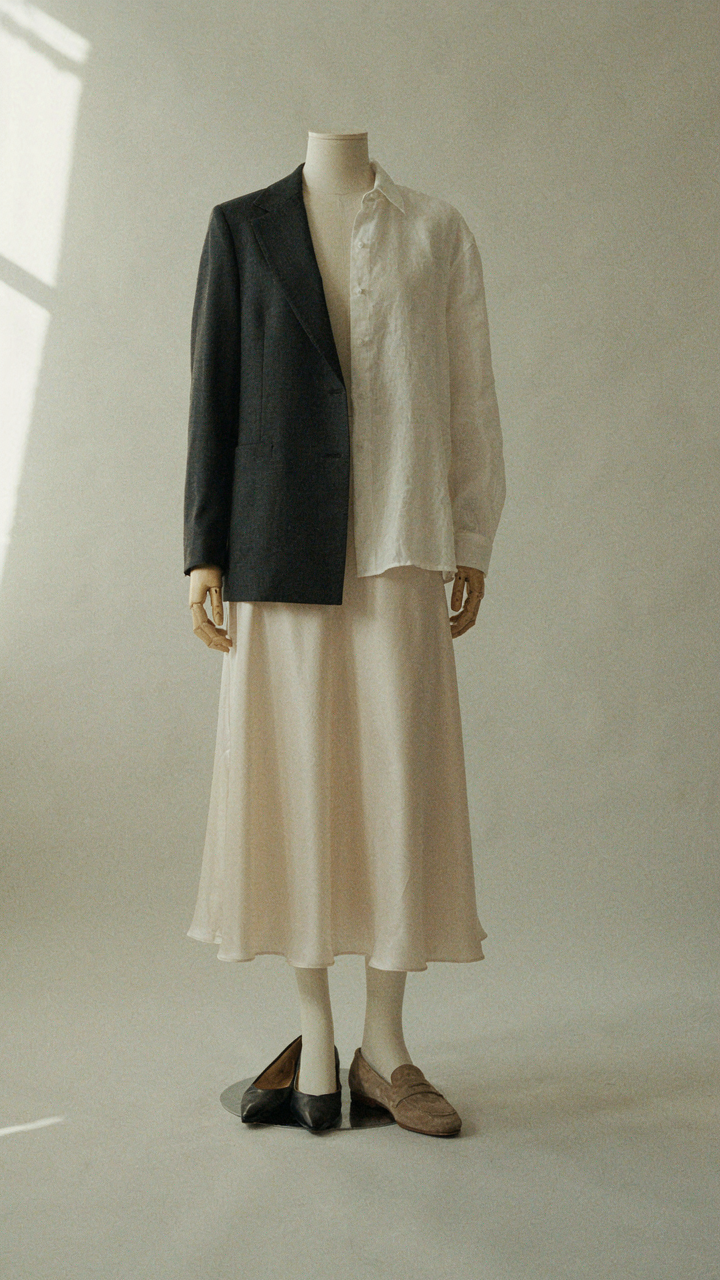
The reason this works is material physics. Satin’s tight weave reflects light uniformly, creating visual weight that casual fabrics cannot match. A black satin midi skirt paired with a structured blazer and pointed flats signals formal restraint. The identical skirt with a linen shirt and loafers signals editorial cool. You’re not buying different outfits. You’re buying a piece that accepts instruction from its environment. That control is what separates people who look like they’re trying from people who look like they know something.
Dressing The Skirt Up And Down Without Changing It
The satin midi skirt doesn’t have a fixed formality level because its context is entirely determined by silhouette and proportion choices around it. Wear it loose and oversized on top with flat shoes and you get editorial casual. Tuck the same skirt into a fitted bodysuit, add a structured coat and heeled boots, and you’ve entered black-tie territory without purchasing new pieces. The skirt’s only job is to anchor the look and provide visual texture. Everything else communicates the actual message.
This is the real mechanism: silhouette vocabulary overrides event vocabulary. A structured cream blouse tucked into your satin midi with a leather belt and ankle boots works for cocktails at 6 PM. Remove the belt, add an oversized sweater that drapes past the hips, swap boots for ballet flats, and the same outfit functions for casual dinner at 8 PM. You’re not rebuying. You’re recontextualizing. The protocol is simple: control the top half, change the shoes, adjust the accessories. The skirt stays constant because it’s neutral enough to accept any instruction you give it.
The Counter Intuitive Rules Of Accessorizing Your Satin Skirt
Stop Treating Accessories Like Insurance
You’re adding pieces because you’re afraid the outfit looks incomplete. That’s the real problem nobody names. Satin midi skirts command attention by design—the fabric reflects light, the cut defines your silhouette. Accessories work on the same principle as signal-to-noise ratio in communication: every addition either strengthens your message or dilutes it. Most people dilute it by adding more.

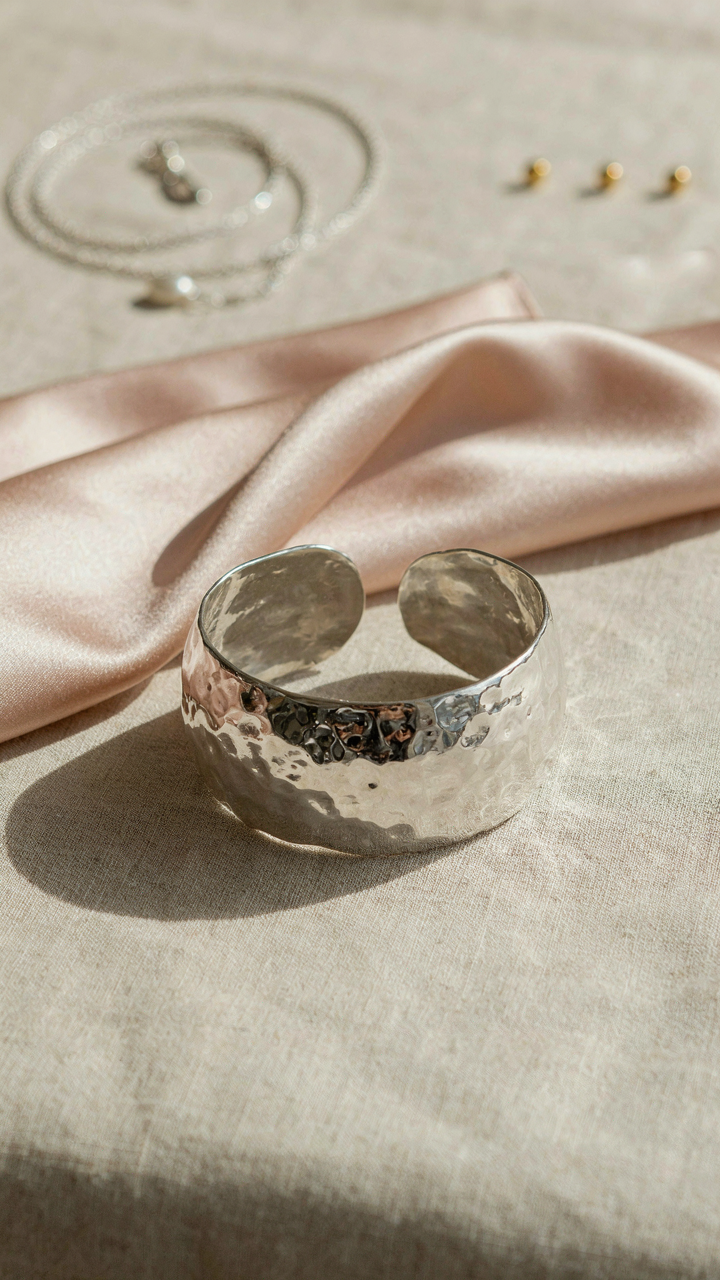
The mechanism is simple. A satin midi skirt already occupies visual real estate. Draping it with a clutch, earrings, a belt, a bracelet, and a necklace creates competition for attention instead of hierarchy. One intentional piece—a structured shoe or a single metal cuff—stops the eye and anchors the outfit. Everything else becomes visual static that weakens the impact you built with the skirt itself.
Texture Pairing Creates Intentional Tension
Rough Against Smooth Wins The Room
Designers use contrast theory in fabric layering: opposition creates perceived depth where similarity creates flatness. Your satin midi skirt is smooth, reflective, and inherently formal. Pairing it with textured accessories—suede shoes, a knit bag, a woven belt—creates visual interest without adding volume or competing for attention. The contrast tells a story about intention rather than uncertainty.
This isn’t about balance in the aesthetic sense. It’s about preventing the eye from going numb. Satin-on-satin creates a monotone visual experience that reads as costume rather than cohesion. A rougher texture anchors the formality and makes it feel earned. Choose one textured piece that touches the satin directly—a suede pump, a leather belt—and let everything else stay minimal or match the satin’s finish to avoid visual chaos.
Decoding Fabric Psychology: Why Satin Demands Respect
Silk’s Lineage And Why That Matters
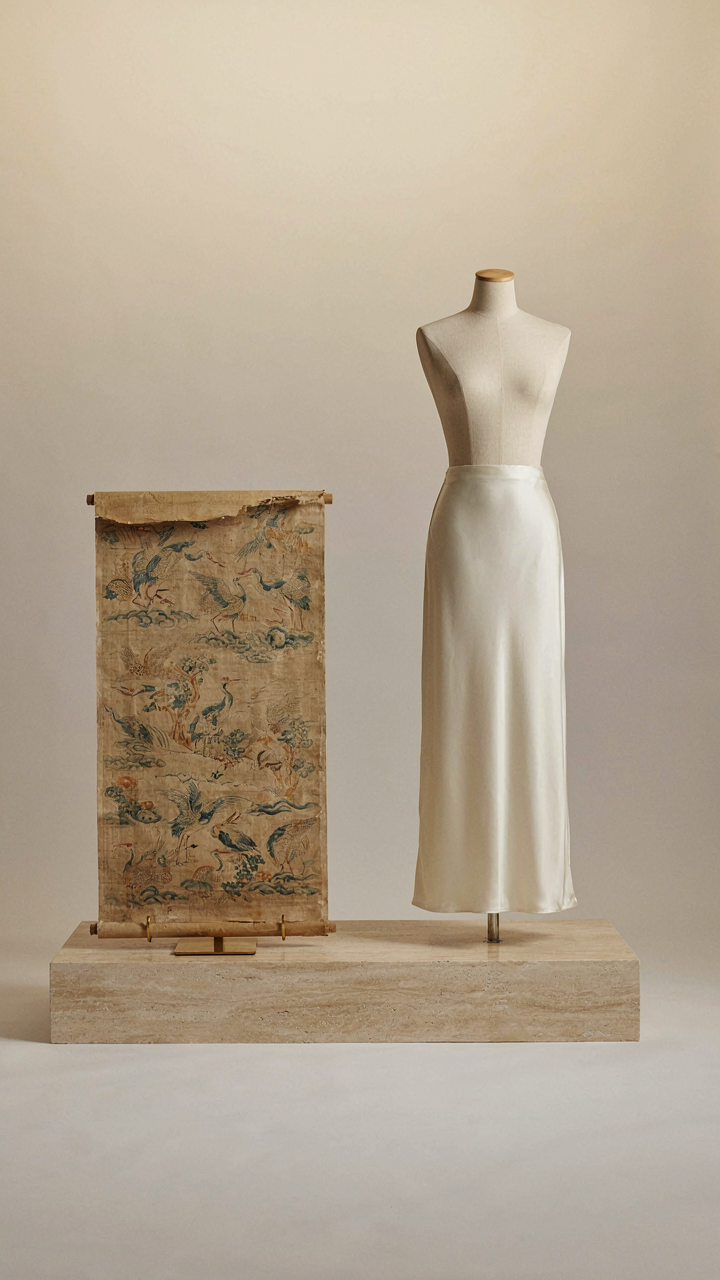
You care about this section because you want permission to spend money without feeling foolish. Here’s the mechanism: satin’s status doesn’t come from marketing. It comes from material scarcity. Silk production required controlled conditions, specialized labor, and trade routes that took months to traverse. For centuries, only wealth could access it. That history embeds itself into how people perceive the fabric today.

Satin isn’t a fiber. It’s a weave structure applied to silk, polyester, or cotton. The diagonal pattern of interlocked threads creates that reflective surface and drape. Medieval European courts understood this distinction and priced silk accordingly. Modern cocktail satin carries that ancestral weight forward. When you wear satin to an event, people register the choice at a primal level before they register conscious thought. The fabric signals intention and investment.
Quality Over Logos Wins Every Time
The advice you’ve heard is backwards. Don’t chase brand names on satin midi skirts. Chase fiber content and construction. A garment labeled “luxury” from a recognizable house often uses polyester satin blended with cheap bindings and seams that split at the waist after three wears. Meanwhile, a lesser-known label using 95 percent silk with French seams will outlast it by years and hold its shape through repeated wear.
Examine the seams first. Quality construction means flat, tight stitching with no puckering. Check the hem. A satin midi skirt worth money has a rolled hem or a French hem, not a raw edge glued down. Feel the weight. Real silk-satin has density and drape that moves with your body. Polyester satin feels thin and static. Cost per wear matters more than the price tag. Buy the skirt that survives the season, not the one that looks good in the photo.
The “Gravitas Protocol” For Satin Midi Skirt Ensembles
Where Weight Lives In Your Outfit
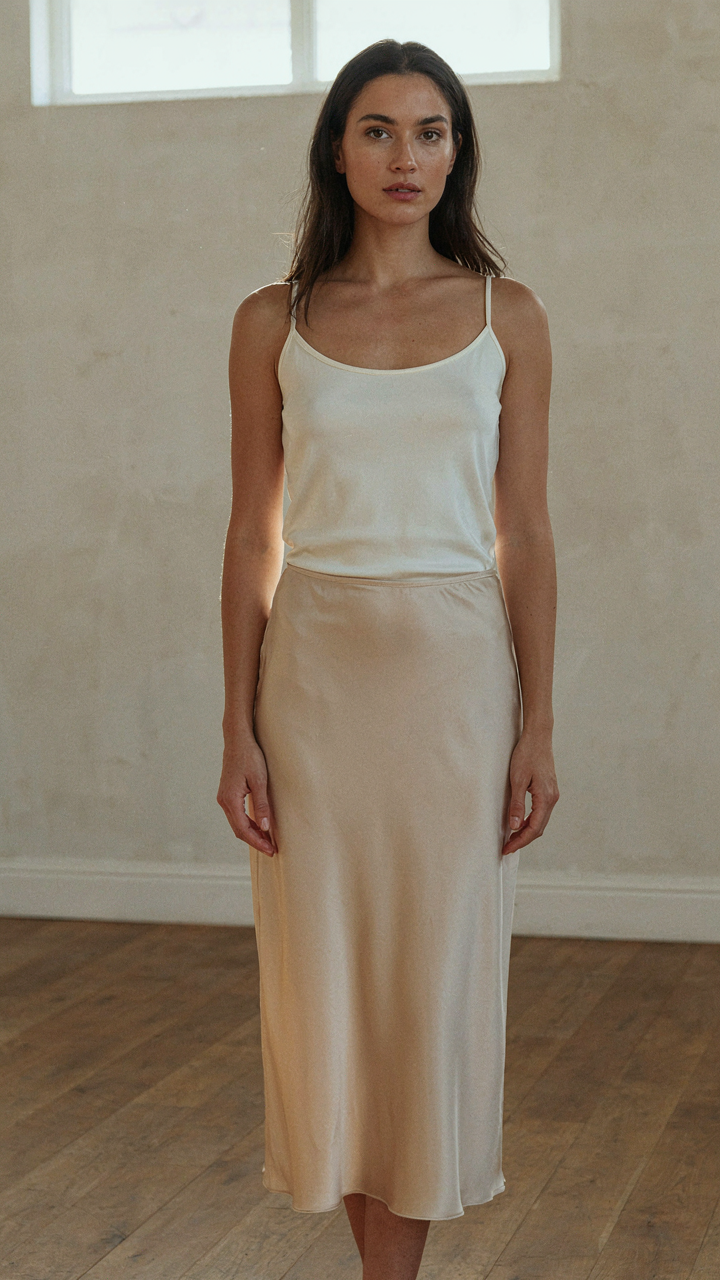
You care about this because you sense that most women’s outfits look unstable, and you’re right. Physics teaches us that objects with low center of gravity command authority, and the satin midi skirt is the fulcrum. Its weight sits mid-thigh to ankle, which means everything above it must counterbalance or the whole composition collapses into visual noise. This isn’t aesthetic preference. It’s mechanical.

The satin midi forces a choice: top heavy or bottom heavy. Most people choose wrong by making the top equally substantial. Instead, anchor the skirt’s heft with a fitted, minimal top. A silk camisole or tucked blouse creates the physics of dominance. The satin catches light and draws the eye down, so your proportions lock into place. That’s how you move from “wearing a skirt” to owning a room.
Breathing Room Builds Command
The advice that you should “balance” a satin midi with equal visual weight everywhere is lazy and incomplete. It actually diffuses authority. Negative space is the omitted element that amplifies what remains. Leave your collarbone visible. Keep your arms bare or sheer. Let the satin have uninterrupted fabric flow from hip to hem without layering over it.
When you subtract visual competition from around the satin midi, the skirt becomes the statement, and the viewer’s brain registers confidence instead of clutter. This mechanism works because negative space forces the eye to settle on what’s there. A bare shoulder next to draped satin reads as intentional. Pair the skirt with a cropped top or a tucked piece that ends at the natural waist, then let fabric dominate the lower half without obstruction.
Beyond The Holiday Party Outfit: Repurposing Your Satin Midi Skirt

From Formal To Everyday Smart Swaps
You’re afraid the skirt won’t earn its price tag outside December. Here’s the actual mechanism: a satin midi skirt fails in everyday rotation because you pair it wrong, not because the garment lacks versatility. Swap the heels and structured blazer for sneakers and an oversized cotton shirt. The satin fabric reads casual instantly when it’s not framed by formal pieces. Tuck it loosely, add a crossbody bag instead of a clutch, and the skirt becomes a weekend uniform, not a one-night investment.

The real work is breaking the visual associations your brain locked in during the party. Satin reflects light differently than cotton or linen, so it will never disappear into a background casual look. Lean into that. Pair it with a fitted t-shirt and denim jacket, not another dressy layer. The contrast between the skirt’s sheen and basic textures actually signals intentionality, not overdressing. You’ve now created a distinct silhouette that works for errands, coffee, or low-stakes social time.
The Cost Per Wear Math
Economics teaches us that every asset has a replacement cost threshold where utility matters more than rarity. Your satin midi skirt hits that threshold after twelve wears. Most people calculate one or two parties, declare the item inefficient, and abandon it. That’s incomplete math. A $120 skirt worn twelve times costs $10 per wear. Stretch that to thirty wears across a year, and you’re at $4 per wear, competitive with disposable fast fashion that degrades after five washes.
The mechanism is frequency of context, not versatility of the skirt itself. A satin midi skirt generates more wears when you stop treating it as category-specific formal wear. One dinner party, two brunch outings, three casual weekend looks, four work events that allow minor dressing up, five date nights. That’s fifteen wears in a season before the garment even ages. Track your actual satin midi skirt cocktail outfit rotation for ninety days. The number will surprise you if you’ve actually integrated it into regular rotation and not kept it locked in the formal-only closet section.
Satin Midi Skirt Wedding Outfit: Defying The “Guest” Stereotype

Standing Out Without Upstaging The Bride
You’re worried people will think you’re trying to steal focus. Here’s the mechanism: weddings operate on a visibility hierarchy, and the bride sits at the apex. A satin midi skirt doesn’t threaten that hierarchy because satin reads as textured formality, not bridal. The fabric catches light differently than wedding silk and demands a different silhouette entirely. The midi length itself is a constraint that prevents the theatrical presence of a floor-length gown.

The real play is proportion and restraint. Pair your satin midi with a fitted or tucked blouse, not a statement top. Keep your color in the jewel or neutral range—emerald, burgundy, navy, black, cream. Avoid white, ivory, or blush. The satin’s sheen handles the elegance; you don’t need to add more visual noise. This approach signals respect for the occasion while keeping you memorable within acceptable bounds.
Decoding Dress Codes Through Fabric And Silhouette
Generic advice says “follow the dress code.” That’s incomplete. The dress code is actually a floor, not a ceiling. A black-tie wedding doesn’t mean you can’t wear satin. It means you must. The question is whether your satin midi meets the formality bar that specific code establishes. Formal daytime weddings demand lighter colors and matte finishes. Evening weddings accept darker, more lustrous fabrics. Semi-formal events give you flexibility with both.
Read the code, then read the time and season. A summer garden wedding at noon has different rules than an evening ballroom event. Satin midi skirts work in both contexts, but the top, shoes, and accessories shift. Daytime requires simpler jewelry and lighter layers. Evening allows bolder color and metallic accents. Check the invitation for venue type and time first. That detail beats any guessing. Then build your outfit backward from the satin’s inherent formality level.
The Only 3 Tops That Matter With A Satin Midi Skirt
Crisp White Button Down
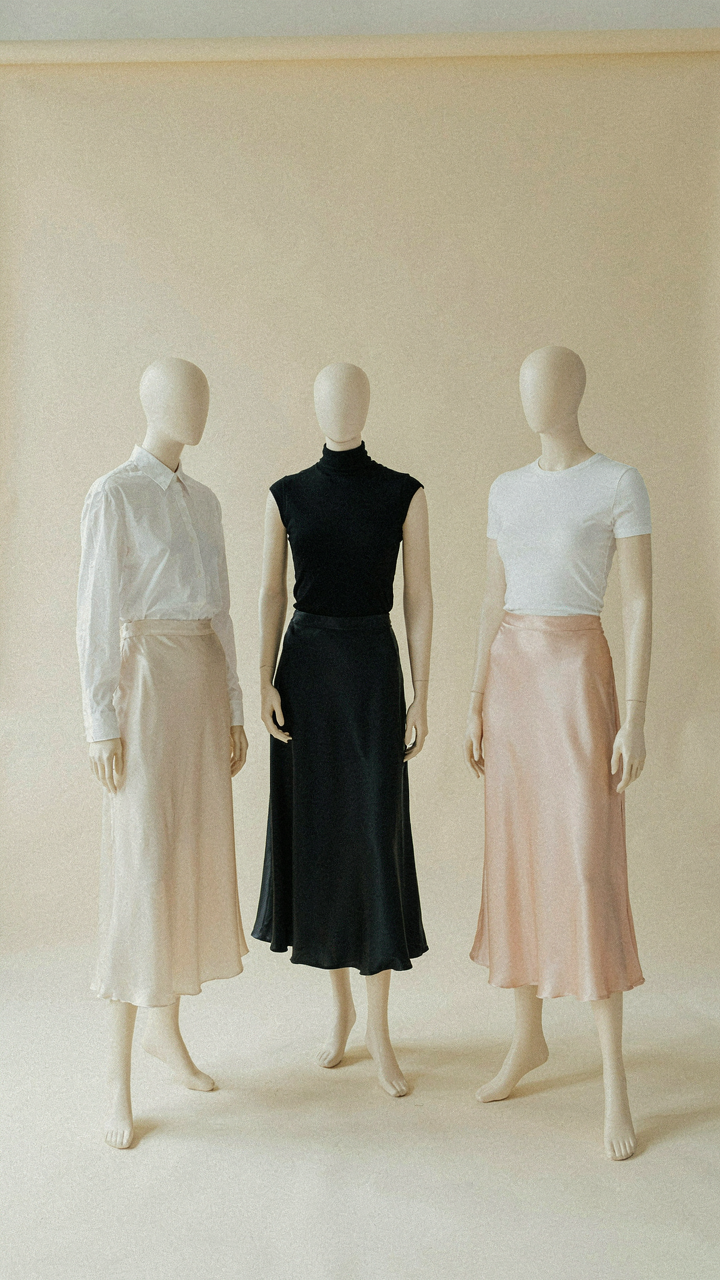
You want people to see you as competent without trying. The mechanism is contrast: satin midi skirts read formal by default, so pairing one with a button-down creates visual tension that reads as intentional rather than costume. The shirt’s structure counterbalances the skirt’s fluidity. You’re borrowing from menswear’s authority language while keeping the feminine silhouette intact. This combination works because it doesn’t apologize for either piece.

The fit of the shirt matters more than fabric content. Avoid oversized cuts that drown your proportions. Tuck it in or half-tuck it depending on the shirt’s length. Leave the top two buttons undone to create visual breathing room. This single setup works for casual dinners, client meetings, and elevated social events without modification.
Fitted Knit Silhouette
Sophistication isn’t about adding more fabric or texture. It’s about removing visual noise. A fitted knit—think merino, cashmere blend, or quality cotton—creates a clean vertical line from chest to hip. It anchors the satin skirt instead of competing with it. The knit’s density contrasts with the skirt’s sheen without clashing. You’re using material science: two different light-reflection properties that read as refined, not scattered.
- Crew neck or mock neck: Keeps the focus on your silhouette and works for business and casual settings equally.
- Long-sleeve fitted tee: Adds coverage without bulk, works in cool weather, reads more deliberate than short-sleeve.
- Fitted tank with a blazer over it: The blazer handles structure; the tank under it stays invisible but creates definition.
- Bodysuit fitted at the torso: Eliminates tucking issues and maintains clean lines throughout the entire outfit.
- Turtleneck in a neutral: Elevates instantly, pairs with satin skirts from cocktail to dinner without effort.
The second layer is where most people overthink. Your knit does the work. Everything else—a blazer, a light sweater, a structured coat—should complement, not compete. Stick to neutrals unless your satin skirt is already a statement color. Test the combination before wearing it out.
Midi Skirt Outfit Mastery: The Unspoken Rules Of Confidence

How Your Body Communicates First
You’re reading this because you want permission to feel like you belong in the room. Here’s the mechanism: a satin midi skirt cocktail outfit is a visible signal, but your nervous system sends the actual message. Posture works like physics—tension and collapse both broadcast instantly. When you wear satin, the fabric moves with your skeleton. Slouch, and the drape becomes limp noise. Stand with your spine neutral and shoulders back, and the material catches light at angles that read as intentional rather than accidental.

The satin midi becomes the second layer of communication. Your frame determines whether it hangs like punishment or flows like purpose. People read your body position before they process fabric or cut. A straight spine with a satin midi skirt at a cocktail event signals you chose to be there and you know why. Collapse your chest or tense your shoulders, and even premium fabric falls flat.
The Choice Is The Armor
Everyone tells you to be confident in what you wear. That’s incomplete. Confidence isn’t a feeling you summon before leaving home. It’s the elimination of internal contradiction. Most people wear a satin midi skirt to a cocktail event while privately believing they should look different, act different, disappear smaller. That splits your attention and reads as anxiety no matter your posture. The real move: decide satin midi is your vehicle tonight and stop negotiating with yourself about whether it’s correct. Own that decision completely. Your outfit stops working the moment doubt enters.
This doesn’t mean faking comfort. It means building your choice on solid ground beforehand. Satin midi skirts at cocktails work for a specific reason: they balance formality with movement, which matches the actual social dynamic of those events. You’re neither overdressed nor casual. You’ve matched your clothing to the context deliberately. When you know that, you don’t need confidence—you have alignment. Walk in knowing you selected the right tool for the room, not hoping it lands. That alignment is visible immediately.
Your Outfit Is Not The Problem. Your Mindset Is. Own The Room, Don’t Just Attend
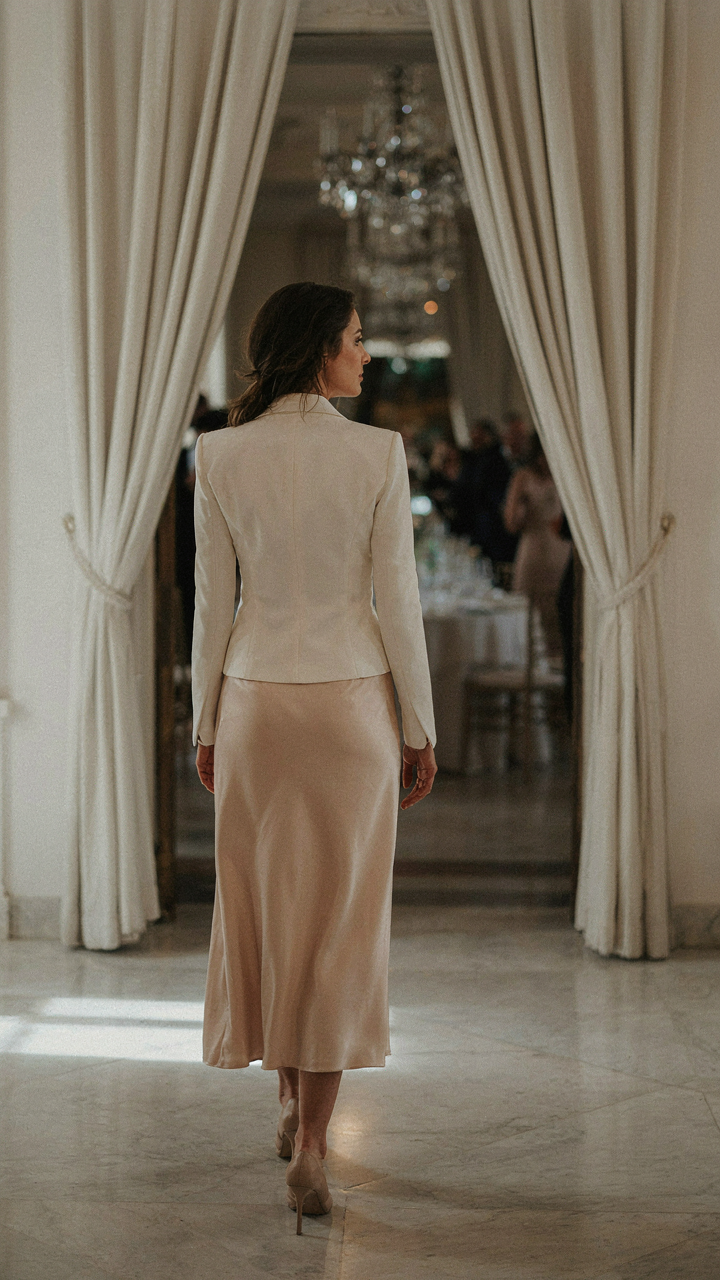
Most people show up to events wearing the right clothes but carrying the wrong energy. A satin midi skirt cocktail outfit only works if you’ve decided beforehand that you belong there. Stop treating your appearance like a disguise and start treating it like armor. Today, pick one event and walk in like you own it, not like you’re hoping nobody notices you. The outfit doesn’t make the entrance. The conviction does.



