

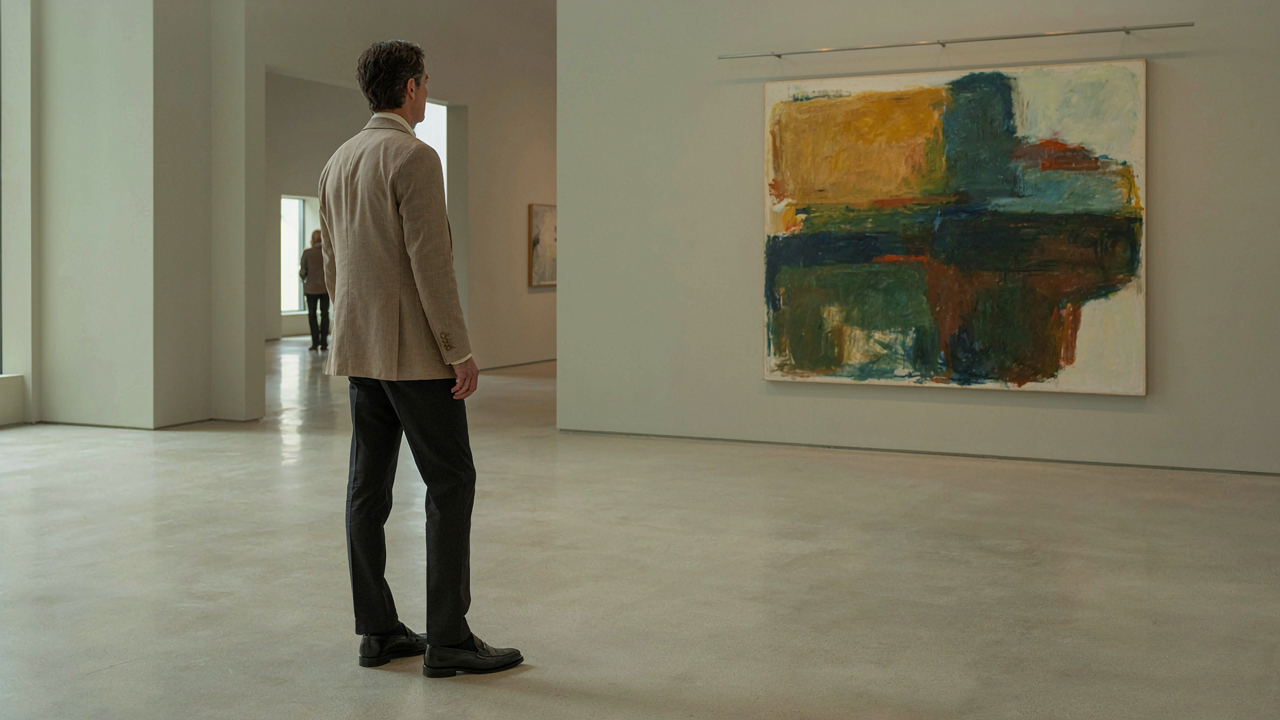
The “Elegant Edge” Fallacy: Why Generic Advice Fails You
What Elegance Actually Means
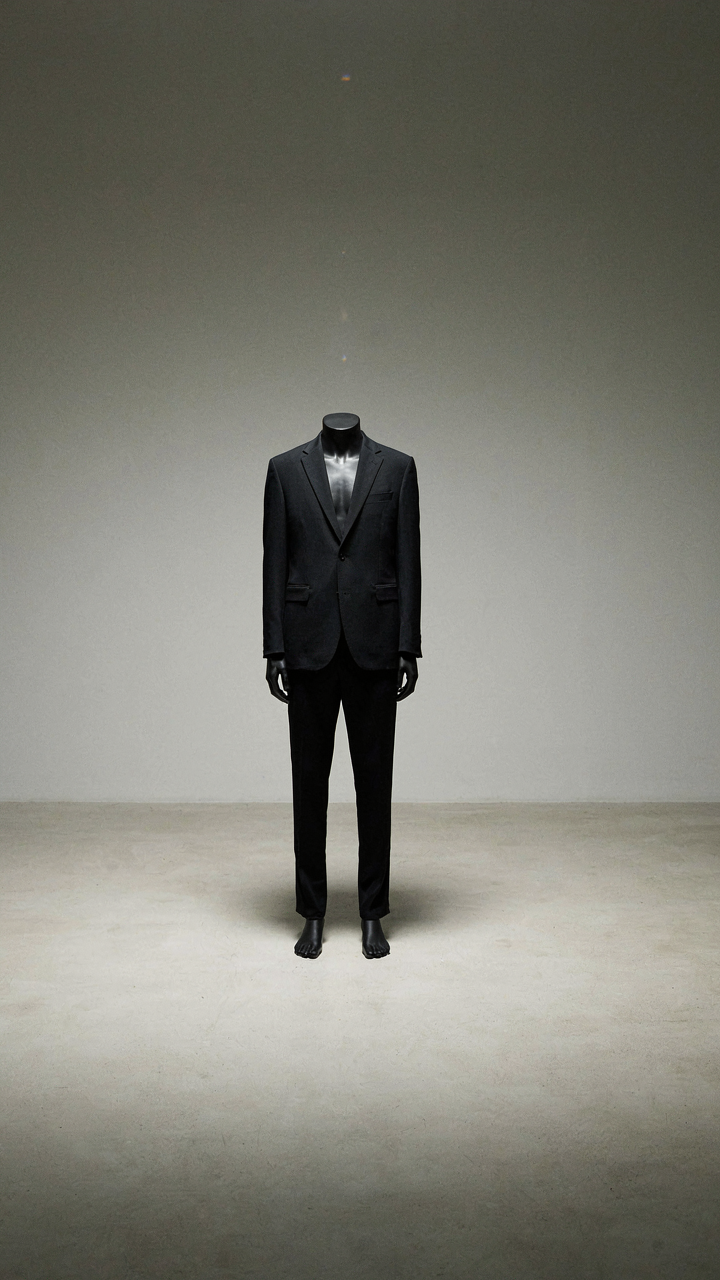
You want permission to look expensive without trying hard. Here’s the mechanism that actually matters: elegance is the elimination of visual noise, not the addition of it. Most advice conflates elegance with formality, which are different operating systems entirely. Formal wear follows rigid codes. Elegant wear removes everything that doesn’t serve a function or communicate something true about you. One requires compliance. The other requires decisions.
Elegance operates like signal theory from communications engineering. You’re transmitting information through clothing. Static and clutter degrade the signal. The gallery sees you before it sees your outfit. Every piece either clarifies that perception or clouds it. This is why minimal outfits read as more sophisticated than busy ones. You’re not reducing impact. You’re increasing signal clarity. The person wearing a perfectly fitted black blazer with one deliberate accessory transmits confidence. The person layering textures and colors transmits anxiety about being judged.
The Costume Problem With Trend Advice
Trend advice tells you to adopt an aesthetic instead of building one. That’s backwards. Trends are borrowed language you speak badly. Gallery openings attract curators, collectors, and artists who distinguish between someone wearing a look and someone expressing an actual point of view. The difference shows. Someone wearing “gallery opening chic” from a fashion blog reads as performing. Someone wearing dark tailored clothes that fit their body, materials they’ve chosen for texture rather than label, and nothing more reads as serious.
The real work is identifying which specific elements align with how you actually move, what you do for real, and the message you’re sending without words. A structured wool coat reads differently on a gallerist than on a software engineer, even in the same room. Context is yours to own. You build elegance with edge by making choices that are defensible to yourself first. You wear it because you decided it works, not because a trend cycle told you to. That conviction is what people recognize. It’s also what makes you memorable.
The Calibration Protocol: Dialing In Your Presence

Read The Room Before You Dress It
You want permission to wear what you already own and still look intentional. Here’s the mechanism: galleries operate as social hierarchies, and your outfit either signals you understand the unwritten rules or you don’t. Think of environmental calibration like signal strength in communications—you’re not changing your core message, you’re adjusting transmission power to match the receiver’s frequency. A Chelsea gallery opening demands different atmospheric pressure than a warehouse artist collective in Red Hook.

Gallery type, time of day, and artist medium matter because they determine the social density and formality baseline. A photography opening at a established gallery demands sharper tailoring than a ceramic work opening at an emerging space. Scout the gallery’s Instagram. Check past opening photos. Notice what attendees wore. This isn’t mimicry—it’s reading the operating system so you don’t install incompatible software. Your outfit lands differently when it fits the context, not when it tries to override it.
Consistency Compounds Your Signal
The mistake people make is treating each appearance as a standalone performance. Consistency isn’t boring—it’s how people develop pattern recognition around who you are. You’re building a visual shorthand that precedes your arrival. If you show up to galleries in drastically different aesthetic territories each time, you train people to see you as unstable rather than intentional.
Your personal brand across gallery events doesn’t mean wearing identical outfits. It means establishing a coherent visual DNA: a color palette you own, a silhouette logic, material preferences, and a signature detail or two. When someone sees you across a gallery, they recognize the operating system before they process the specific application. This recognition becomes credibility. Wear the same tailored blazer over different pieces. Stick to your neutrals. Choose a shoe formula and own it. The specifics change; the system stays.
Strategic Understatedness For Art Gallery Opening Outfit
Why Restraint Reads Louder
You’re worried people will think you don’t understand art if you don’t dress loudly enough. The mechanism is signal compression: in environments packed with status performers, the person who removes information wins. Minimalism isn’t about having less. It’s about forcing the viewer to work harder to decode you, which your brain reads as confidence. Gallery crowds operate like this. The person in the statement piece gets filed as “trying.” The person in the tailored neutral gets filed as “knowing.” You become the variable, not the outfit.

Subtlety works because it forces attention inward instead of outward. A monochromatic palette, clean lines, and precision fit leave no visual noise for people to dismiss. Your presence becomes the content. This is counterintuitive to most dressing advice, which treats clothes like a megaphone. At a gallery opening, the megaphone gets tuned out. The silence gets noticed.
The Real Costume Problem
Most dressing guides tell you to “express yourself” through bold choices at art events. That’s wrong. What they miss is that costume signals you’re performing a role rather than occupying a space. A costume means someone else wrote the script. An outfit means you did.
The distinction matters because gallery crowds are trained to read authenticity. Mismatched color theory, trend-chasing pieces, or anything worn to signal “I’m cultured” reads instantly as hollow. Instead, build around pieces that hold their shape, work across multiple contexts, and reflect actual preference, not aesthetic theory. Wear something you’d choose if nobody was watching. Then wear it knowing they are.
The Cognitive Load Advantage: Simplifying Your Art Gallery Event Outfit

Where Your Attention Actually Goes
You’re worried a simple outfit makes you invisible. That’s the real fear underneath this section. Here’s the mechanism: cognitive load works like bandwidth. Economics calls it “scarcity mindset”—when people are mentally taxed, they can’t process complexity. At a gallery opening, most attendees are managing conversation, drink, navigation, and art viewing simultaneously. A complicated outfit demands their processing power. A simplified one frees theirs up to notice you.

When you strip variables, you become the variable people track. A monochromatic base with one statement piece doesn’t compete for attention—it commands it because the eye has nothing to parse. Galleries are high-stimulation environments. Your outfit either adds noise or cuts through it. The distinction determines whether people remember you or the chaos of your clothing.
Your Outfit As The Anchor
Most advice says “express yourself through fashion.” That’s incomplete. Decision fatigue doesn’t just drain you before the event—it leaks into how you carry yourself there. If you’ve agonized over three shirt options, you’ll stand differently than someone who committed to one. Research on ego depletion shows reduced willpower after decision-making. You need reserve energy for actual social navigation.
Set your outfit as immutable by 6 PM the day before. This removes it from active thought during the event. Black trousers, white shirt, one specific accessory chosen already. That decision stays locked. Your mental resources stay available for conversation, observation, and genuine social presence. When you stop managing your appearance in real time, you manage the room instead.
The Evolutionary Signal: Why Authenticity Attracts

Peacocking Versus Genuine Display
You care about this section because you’re worried that looking good at a gallery opening means performing for strangers—and you’re right to worry. That’s the trap most people fall into. Evolutionary biology calls this peacocking: loud, costly displays meant to shock the system into noticing you. A peacock’s tail doesn’t help him survive. It helps him mate. But here’s the mechanism: peacocking only works when the observer can’t tell the difference between honest signals and fake ones. The moment they can, it collapses.

At a gallery opening, peacocking is the outfit that screams for attention but matches nothing about who you actually are. The borrowed designer pieces. The over-styled hair. The studied poses. People detect this instantly because they’re reading you for consistency, not flash. Authenticity in this context doesn’t mean wearing rags. It means wearing things that signal you’ve made deliberate choices aligned with your actual values. Those choices are harder to fake, so they register as real. The outfit that works is one where every piece tracks back to a genuine preference, not a trend cycle or status ladder.
Signaling Status Effectively
The common advice here is wrong: don’t try to signal status through price tags or labels. Status at a gallery opening isn’t about expense. It’s about discernment. Economics calls this the difference between consumptive spending and signaling spending. A three-thousand-dollar blazer signals money. A two-hundred-dollar vintage piece that fits perfectly and reveals knowledge of design history signals judgment. Judgment is what actually matters in these spaces.
The protocol is simple: own fewer pieces, choose them with visible reasoning. Wear a quality black turtleneck or a clean linen shirt because you understand proportion and movement, not because minimalism is trendy. Pair it with trousers that fit your body, not your aspirations. Include one piece that shows curation—a vintage accessory, an unusual fabric, something that proves you’ve thought beyond the default. This combination signals: I know what I’m doing, I respect the space, and I’m not trying to convince you of anything. That’s the only status signal that works in rooms full of people trained to spot performers.
Curating Your Personal Aesthetic: More Than Just A Gallery Opening Outfit
Build Signature Elements Into Your Wardrobe
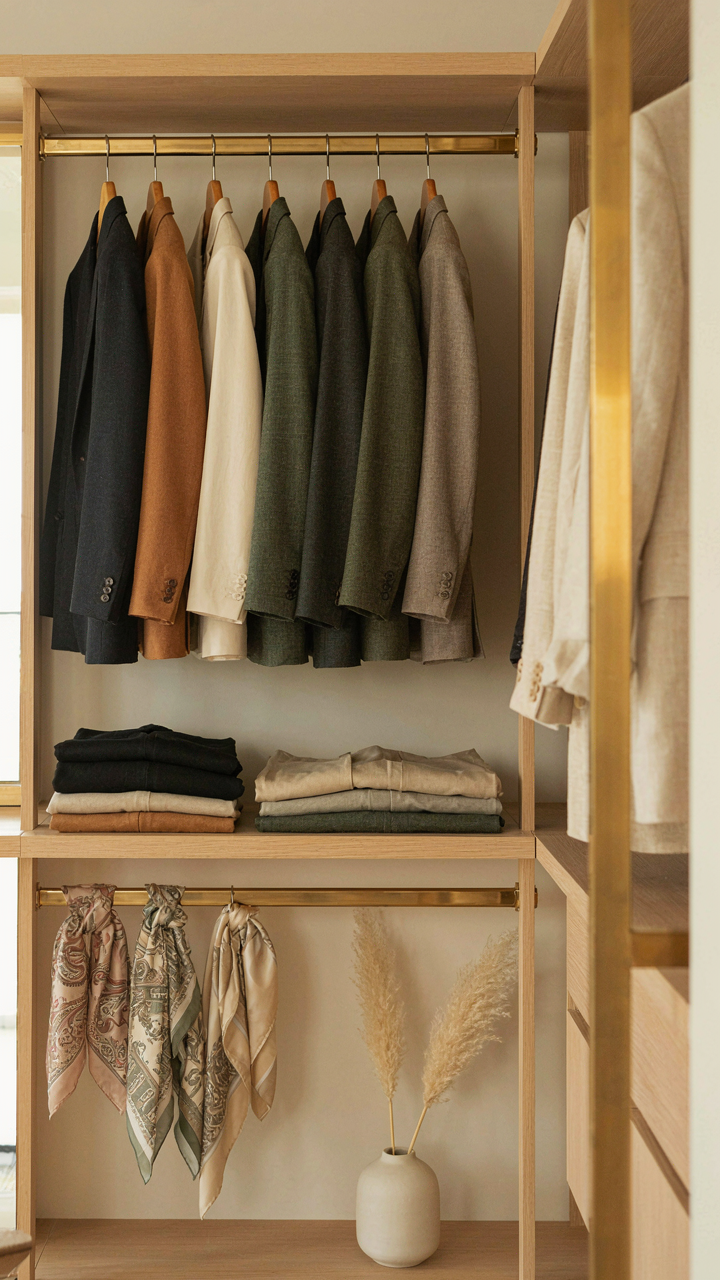
You care about this because you’re tired of looking like everyone else at the event, but you’re also afraid of looking wrong. Here’s the mechanism: signature elements work like visual shorthand. They solve the decision paralysis that kills authenticity. You’re not building an outfit each time. You’re assembling variations on a fixed identity.

Signature elements are the non-negotiable pieces that appear across your gallery looks. Think of it like a brand’s color palette in design systems. You pick three to five anchors—a silhouette preference, a fabric choice, a color range, an accessory category—then rotate within those constraints. This isn’t limiting. It’s the opposite. Constraints force coherence.
- Silhouette consistency: Choose fitted, relaxed, or structured as your default. Wear that shape repeatedly across different fabrics and colors so people recognize your visual presence before they register specific pieces.
- Fabric texture signature: Commit to one or two materials that feel and photograph distinctly. Matte finishes, linen, silk, or leather become identifiable markers tied to you specifically.
- Color anchors: Select a primary and secondary color you wear frequently. Neutrals like black, cream, or navy plus one accent shade creates instant coherence without looking repetitive.
- Accessory category: Own your choice of jewelry, belts, bags, or shoes. One consistent category signals intentionality and makes every outfit feel composed rather than assembled.
- Layering patterns: Develop a go-to layering approach: blazer plus tee, vest plus shirt, or no layers. Your default structure becomes memorable and adaptable to season changes.
The gallery opening outfit becomes a test of whether your signature reads clearly. If someone describes what you wore and their description focuses on one consistent detail rather than listing random pieces, your system works. That detail is doing the heavy lifting.
Invest In Fundamentals, Not Trends
The common advice here is wrong: most people think investing means buying expensive statement pieces. Actually, you invest in the boring foundational items that stay relevant across five gallery seasons, not five months. Trends in art gallery fashion cycle through silhouettes and proportions, but baseline pieces never die. A well-cut black blazer functions at openings in 2019 and 2025. A trend-forward cutout top doesn’t.
Investment pieces share one trait: they solve a recurring problem without announcing themselves. Dark trousers that fit your frame exactly. A white shirt that photographs clean and doesn’t wrinkle. Shoes you can stand in for three hours without thinking about your feet. These pieces have zero personality on their own. That’s the point. They’re infrastructure. Buy them once, forget about them, let them work.
The mechanism is simple: trends occupy mental space and wallet space. They demand rotation and replacement. Fundamentals occupy neither. You wear them, they function, they age gracefully or retire quietly. When you attend ten gallery openings a year, the math shifts dramatically in favor of pieces you’ll actually wear versus pieces you’ll rotate out. Build the infrastructure. Add personality on top of it, not underneath.

Navigating The Social Landscape In Your Museum Opening Outfit
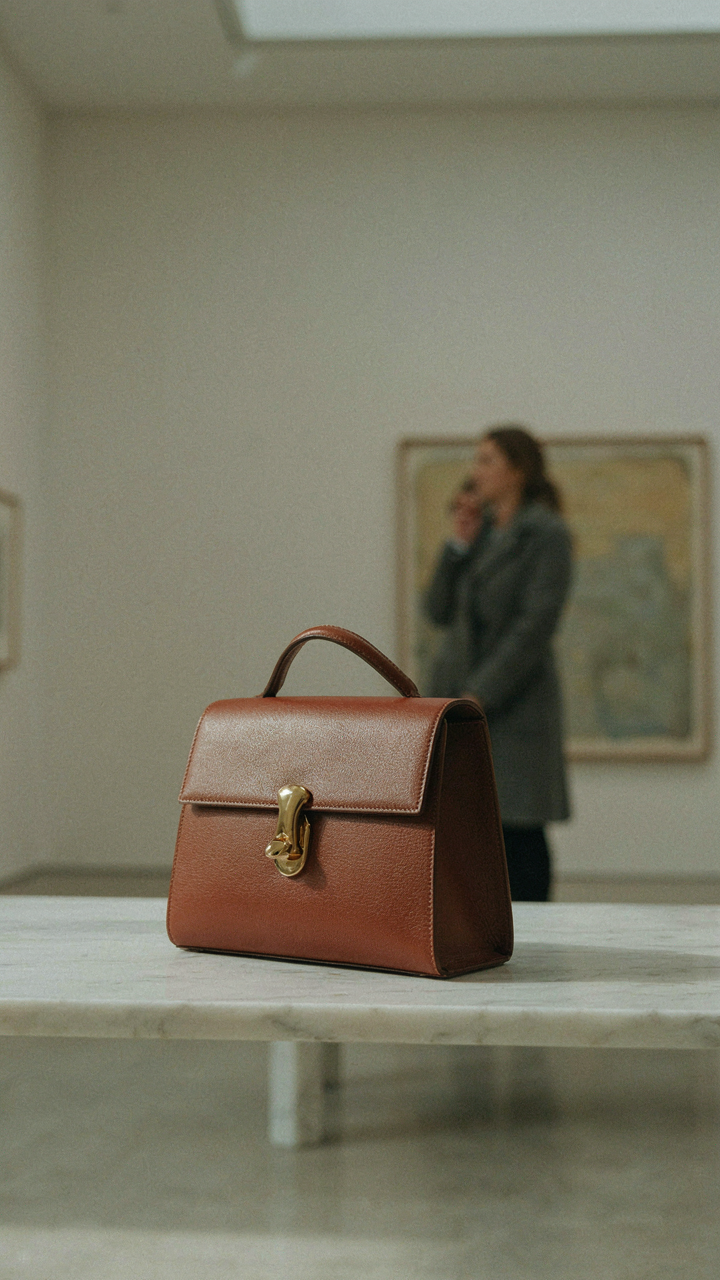
The Conversational Accessory
You want people to talk to you. That’s the real reason you’re reading this section. A quality accessory works like a signal in game theory: it communicates intent without words. The right piece—a structured bag, a statement watch, a silk scarf—functions as a conversation starter because it shows deliberate choice. Generic outfits repel approach. Specificity attracts it.
Most people miss this: an accessory isn’t decoration. It’s permission for someone to comment without seeming random. At a gallery opening, a distinctive bag or layered jewelry creates a legitimate entry point for strangers to engage. You’re not trying to look expensive. You’re making yourself approachable through intentional visual detail. The mechanism is simple. Someone notices the piece, asks about it, and a real conversation begins instead of awkward standing.
Comfort As A Social Enabler
Discomfort sabotages every interaction you’ll have. You can’t hold a conversation while managing a pinching shoe or adjusting a slipping neckline. Comfort isn’t about feeling good—it’s about freeing your attention to actually engage. Tight pants kill your posture and your presence. Shoes that hurt make you tense. Restrictive fabrics force constant micro-adjustments.
Choose fabrics that move with you: wool blends, quality cotton, structured knits. Your feet need real support, not style sacrifice. Fit matters more than trend. A well-fitted blazer in a neutral color performs better socially than a tighter statement piece because you forget you’re wearing it. When your body feels stable, your mind becomes available for the actual work of connecting with people in the room. Test your outfit beforehand and move through it. If you adjust anything more than once, change it.

The Un Outfit: Mastering The Art Of Not Trying Too Hard
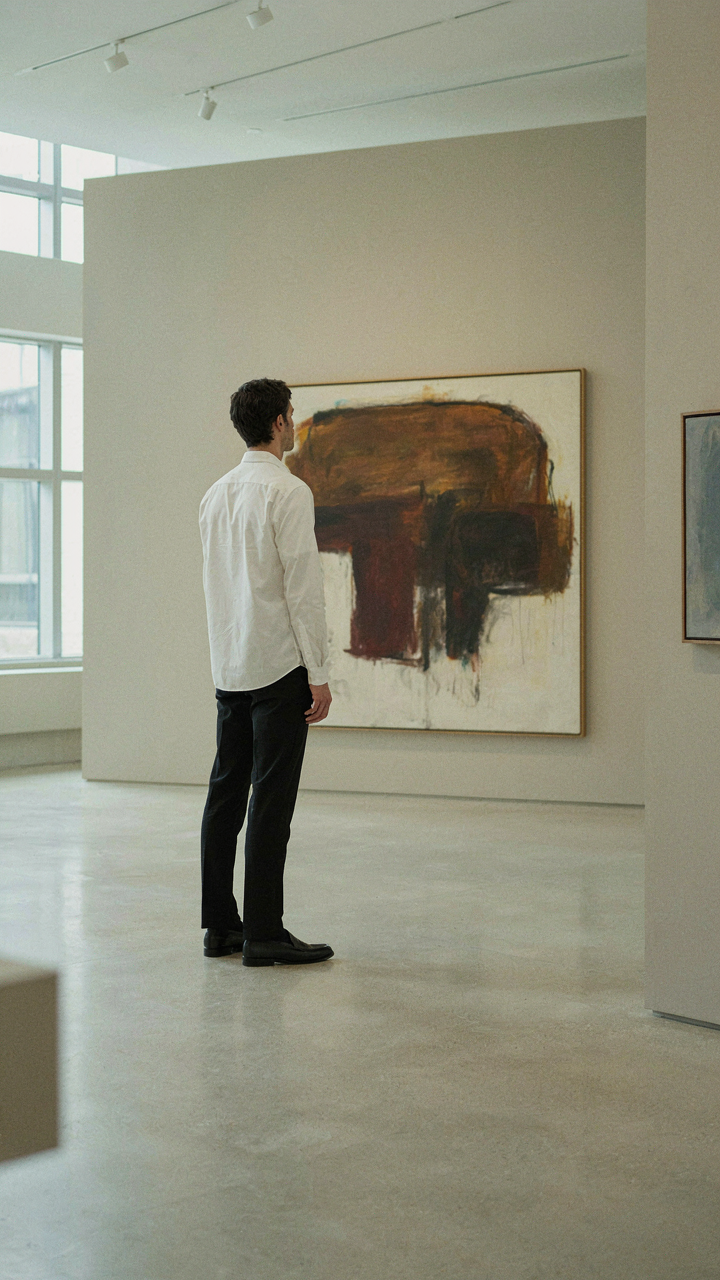
The Deliberate Uniform
You’re worried people will think you don’t care about how you look. Here’s the mechanism: trying visibly signals low status. The wealthy and confident wear the same thing repeatedly because the outfit already works. In economics, this is called the sunk cost of decision making. You’re applying it to your wardrobe by picking one formula and running it. Black tailored trousers, white shirt, one statement piece. Repeat it. The gallery crowd notices consistency, not variety.
The reason generic advice fails here is it tells you to “mix and match” and “express yourself.” That’s noise. What actually happens at gallery openings is people register whether you belong in the room. Belonging comes from a controlled image, not a curated collection. Pick neutrals as your base. Add one element that signals taste, not effort. A specific watch. A single unusual fabric. Then stop deciding.
The Authority Of Stillness
Confidence isn’t about filling the space around you with energy. It’s about taking up exactly the right amount and holding it. When you walk into a gallery opening, most people are already scanning for social cues. If your clothes seem restless, so do you. Wear something that lands the moment you arrive and stays landed. This means fabric that moves with intention, a fit that doesn’t need adjustment, colors that don’t compete for attention.
The real play is removing variables so your presence dominates instead of your outfit. Stand still longer than feels natural. Let people come to you in conversation. Wear neutral tones with one dark accent. This creates a visual anchor. Your clothes don’t announce you. You do.

The Illusion Of External Validation Through Attire Crumbles When You Realize The Real Currency Is Your Unique Perspective

Most people dress for the room. You should dress for yourself. The art gallery opening outfit that moves people isn’t the one that follows rules—it’s the one that announces you’ve already made a choice about who you are. Stop asking what works. Start asking what says something true about you. Wear that, and watch how the entire energy shifts. The clothes that matter most are the ones you’d wear even if nobody showed up.



