
The Illusion Of The Dress Code: Why Rules Are For Amateurs
Deconstructing Black Tie Vs. Your Personal Brand
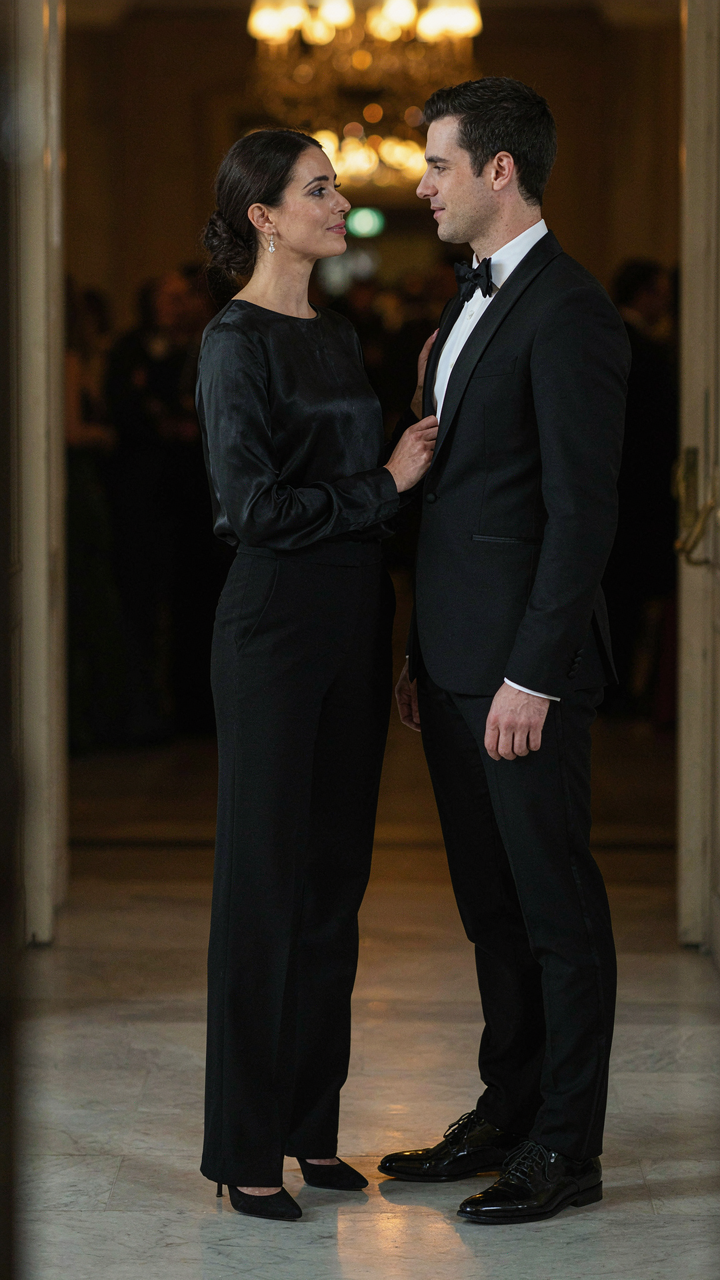
You care about this because you’re afraid of getting it wrong and looking cheap in front of people who matter. Here’s what nobody says plainly: dress codes are negotiation frameworks, not laws. Black tie originated in 19th century Britain as a signal of formality, but the actual mechanism is status compression—everyone dressing identically removes visual hierarchy so conversation becomes the differentiator. That’s the opposite of what you think it does.
A two piece set in black tie contexts doesn’t violate the code if it hits the markers: fabric weight, finish, silhouette formality. A structured blazer paired with tailored trousers or a skirt reads as black tie because the components signal formality, not because they came sewn together. The dress code gatekeepers care about signal, not assembly method. You either communicate the right status markers or you don’t, and a two piece set built from premium fabric with clean lines does exactly that.
How Two Piece Sets Exploit Dress Code Ambiguities
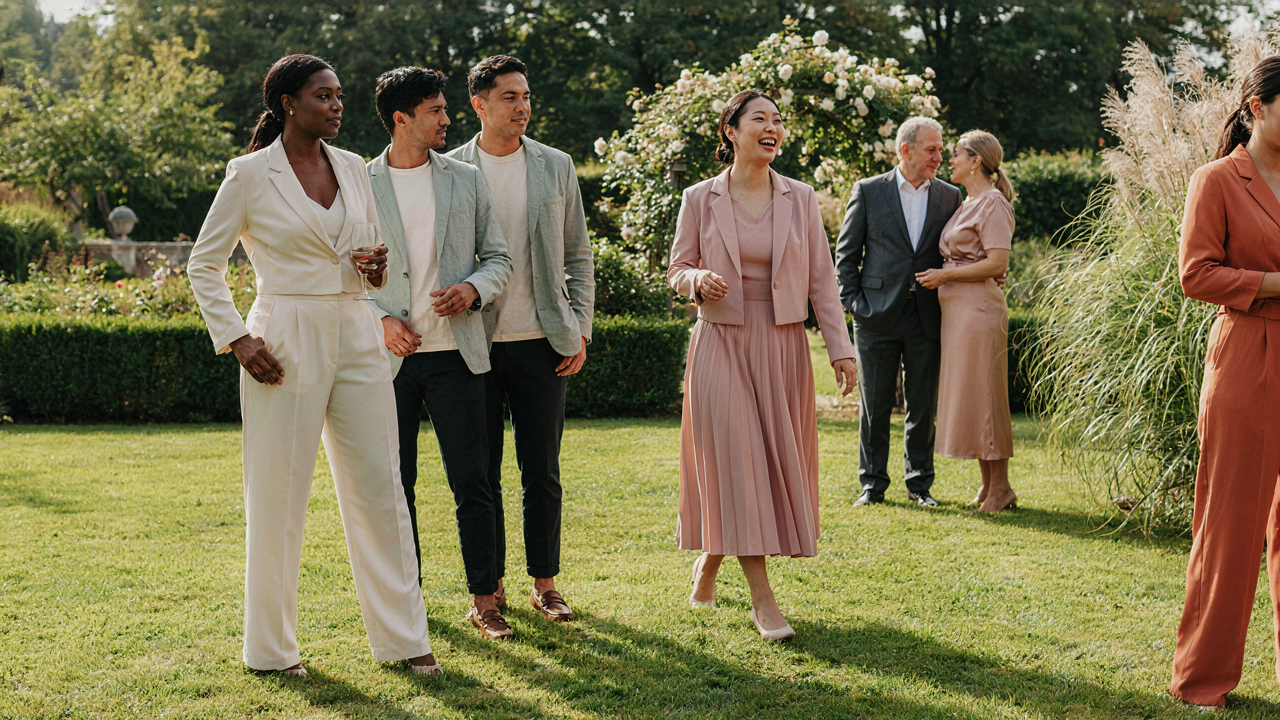
Economics has a concept called information asymmetry—when one party knows more than the other, they can extract advantage. Wedding dress codes create deliberate ambiguity so hosts avoid rigid policing, and a two piece set exploits this gap perfectly. The code says “cocktail attire” but never specifies that the top and bottom must be a matched set. You’re using the ambiguity legally.
What makes this work mechanically is that separates allow you to hit formality markers independently while controlling narrative through proportion and finish. A silk charmeuse top with a high neckline paired with high waisted trousers reads formal whether they’re the same brand or not. You’re not being clever or rebellious—you’re just using the actual grammar of formal dress, which is about individual pieces communicating together, not about matching labels. The person asking why you wore a two piece instead of a dress is the one misreading the code.
Beyond Trends: Crafting A Timeless Two Piece Wedding Guest Outfit
The Real Cost Of Cheap Fabrics
You want to look expensive without spending like it. That’s the real calculation here, and it fails the moment you buy polyester blends that wrinkle like wet paper. Economics teaches us about sunk costs—money spent that doesn’t return value. A wedding guest two-piece set made from low-grade synthetic material is sunk cost in motion: it degrades after three wears, photographs poorly, and signals you didn’t think the occasion mattered enough to invest.

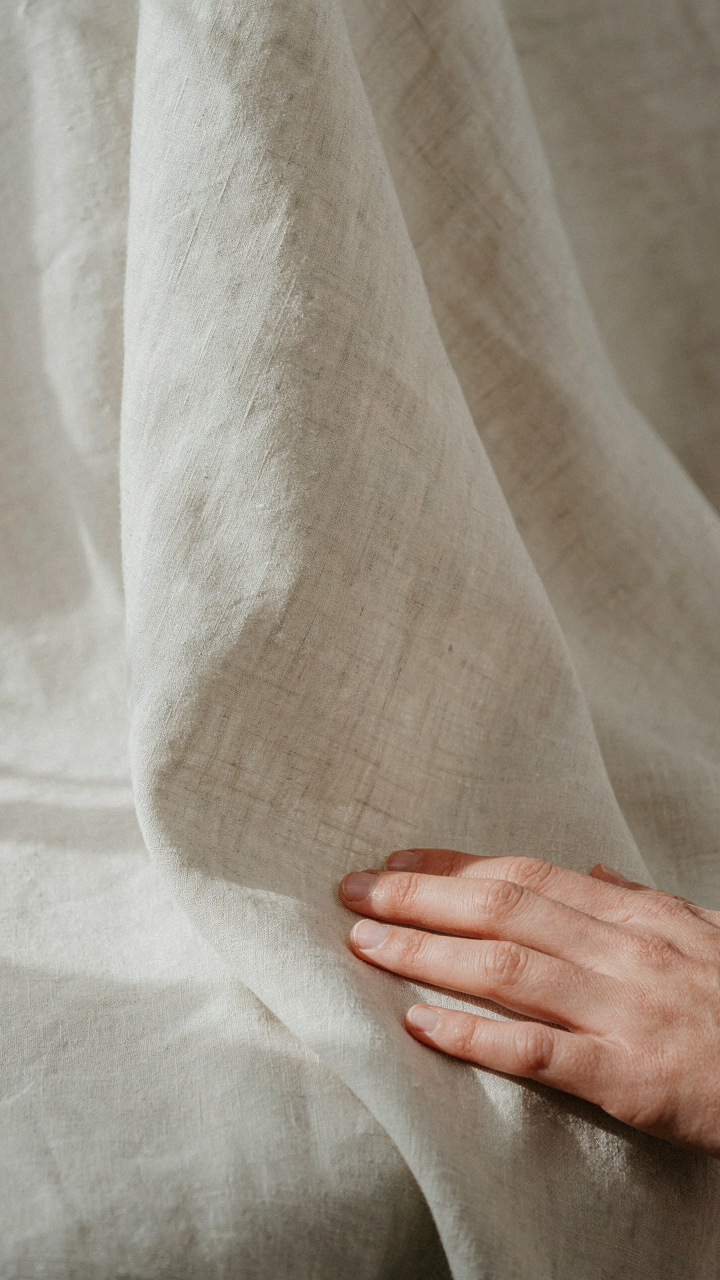
Investment pieces in quality natural fibers work the opposite way. A silk blend top or linen trousers retain structure, photograph with dimension, and survive actual use. You wear them five years minimum across multiple events. The per-wear cost drops. This isn’t luxury thinking. It’s arithmetic. One good two-piece set outperforms four cheap ones because it doesn’t fall apart, doesn’t photograph flat, and doesn’t require constant replacement.
Fabric Selection As Function, Not Decoration
Pick fabrics that do what you need them to do at the event. Linen wrinkles by design—that’s not a flaw, it’s appropriate for outdoor summer weddings. Cotton blends breathe and don’t cling to skin under heat or movement. Silk and silk-adjacent fabrics (like silk charmeuse) drape without bunching and catch light in ways that read as intentional on camera. Polyester blends trap body heat, cling to damp skin, and flatten under camera flash.
The mechanism: natural fibers manage moisture and air movement through actual physics. Synthetic materials don’t. Your two-piece set needs to perform at the specific wedding environment you’re attending. Ask yourself the venue temperature, the formality level, and whether you’ll be standing or sitting most of the event. Then choose the fabric that handles that condition. A wool blend works for winter indoor events. A cotton-linen blend works for warm-weather garden ceremonies. Matching fabric to function prevents the outfit from working against you.
The “Celebrities” Effect: Stealing Their Style, Not Their Budget
Reverse Engineering Red Carpet Two Piece Strategies
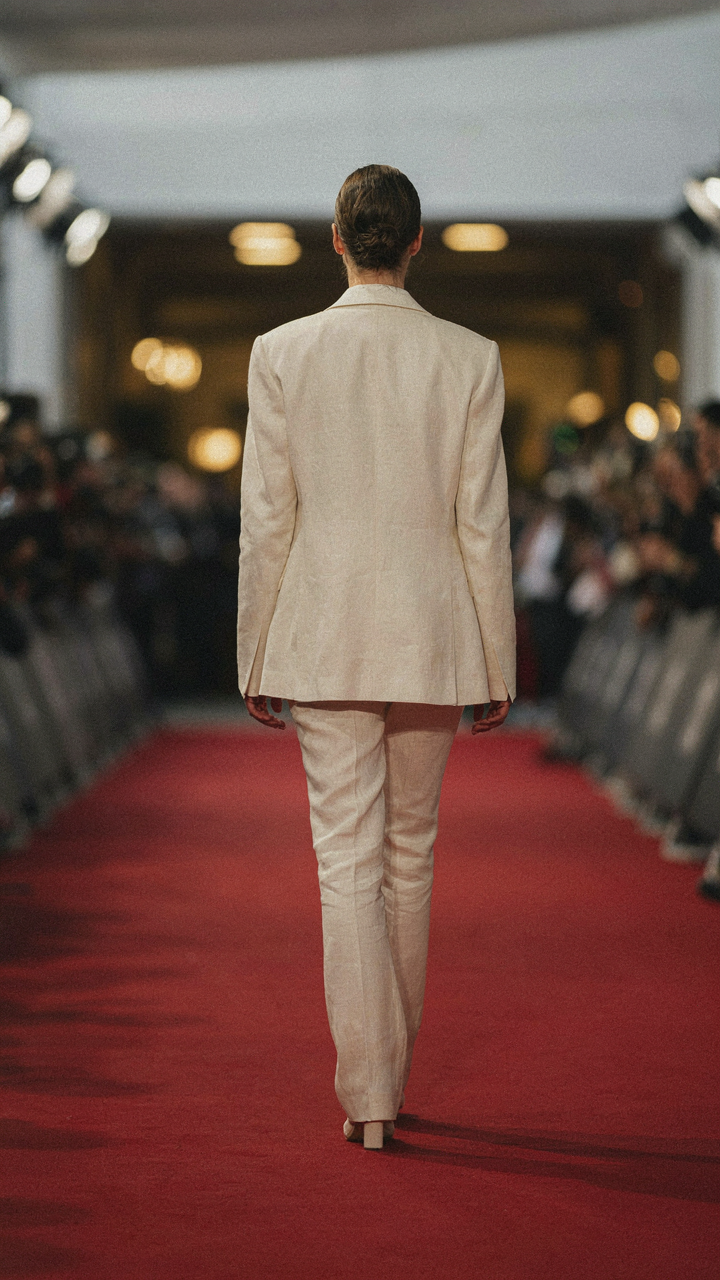
You want permission to dress like you matter without the guilt of spending like a celebrity. Here’s the actual mechanism: red carpet two-piece sets work because they solve a specific problem celebrities and stylists face—the need to read clearly from thirty feet away while looking intentional. Borrow that constraint. The proportions, color separation, and silhouette hierarchy that work on camera translate directly to wedding venues because both demand visual clarity in mixed lighting and distance.

Red carpet styling treats the two-piece as a statement of cohesion, not accident. The top and bottom aren’t separate items thrown together; they’re designed as a paired system. The color relationship, texture contrast, and fit all serve one purpose: making you look like you planned this. When you reverse-engineer this, you’re not copying celebrities. You’re copying their strategic thinking about how separates should communicate together.
Adapting High Fashion To Wedding Reality
Forget what fashion magazines tell you about “statement pieces” and “bold choices”—that’s advice for people who get paid to take risks. Your actual job at a wedding is to look appropriate and composed. High fashion gets permission to experiment because excess reads as intentional there. At a wedding, excess reads as trying too hard. The translation rule is simple: take the color story, drop the volume by forty percent, and ground it in fabrics that work in real rooms with real air conditioning and real humidity.
The specific move is this: identify the proportion relationship in a high-fashion two-piece, then execute it in neutral territory. If a runway set pairs an oversized structured jacket with fitted trousers, you do the same structure-to-fit ratio but in cream linen instead of architectural wool. The silhouette stays; the aggression recalibrates. This is how you get the visual intelligence of designer dressing without looking like you raided a fashion show.
The Two Piece Wedding Guest Outfit: An Unfair Advantage
Versatility As A Weapon: Mix And Match Power
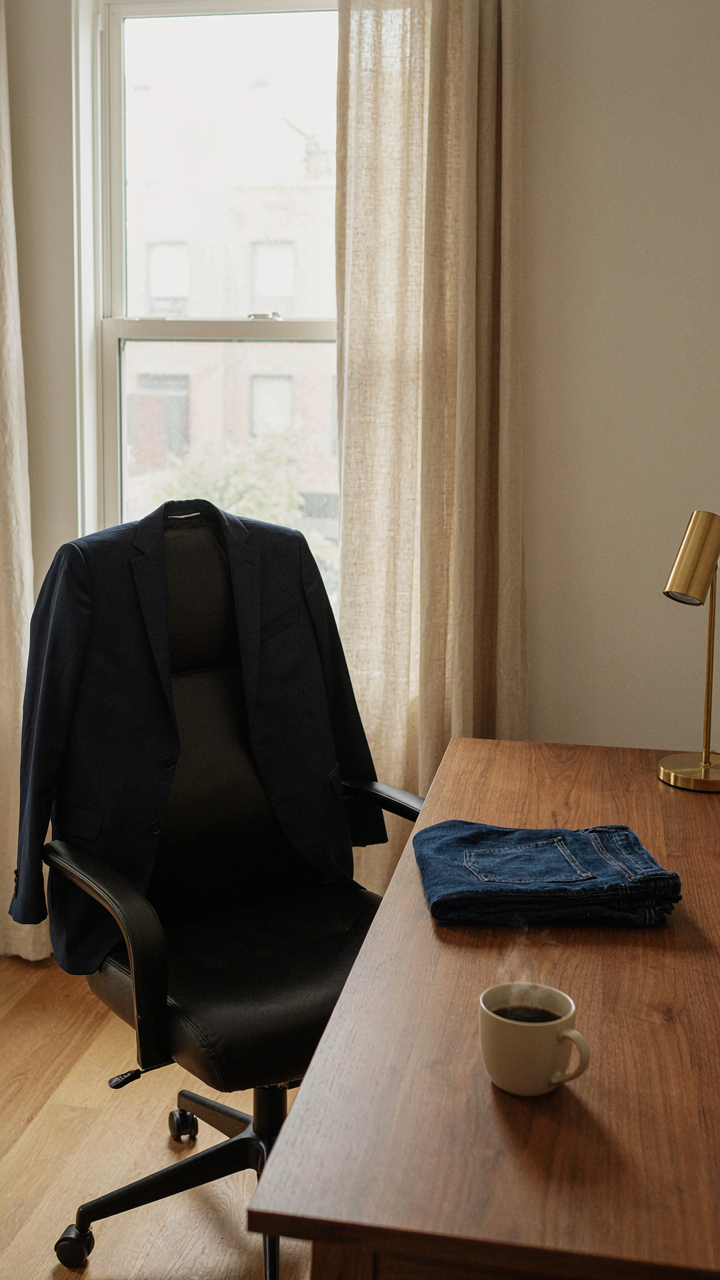
You want this outfit to justify its cost by working twice. That’s the real math here. In economics, this is called asset utilization: the return you extract from a single purchase across multiple contexts. A wedding guest two piece set operates on the same principle. The blazer separates from the pants or skirt, meaning you wear each component independently at work, dinners, and casual events. One garment becomes four outfits.

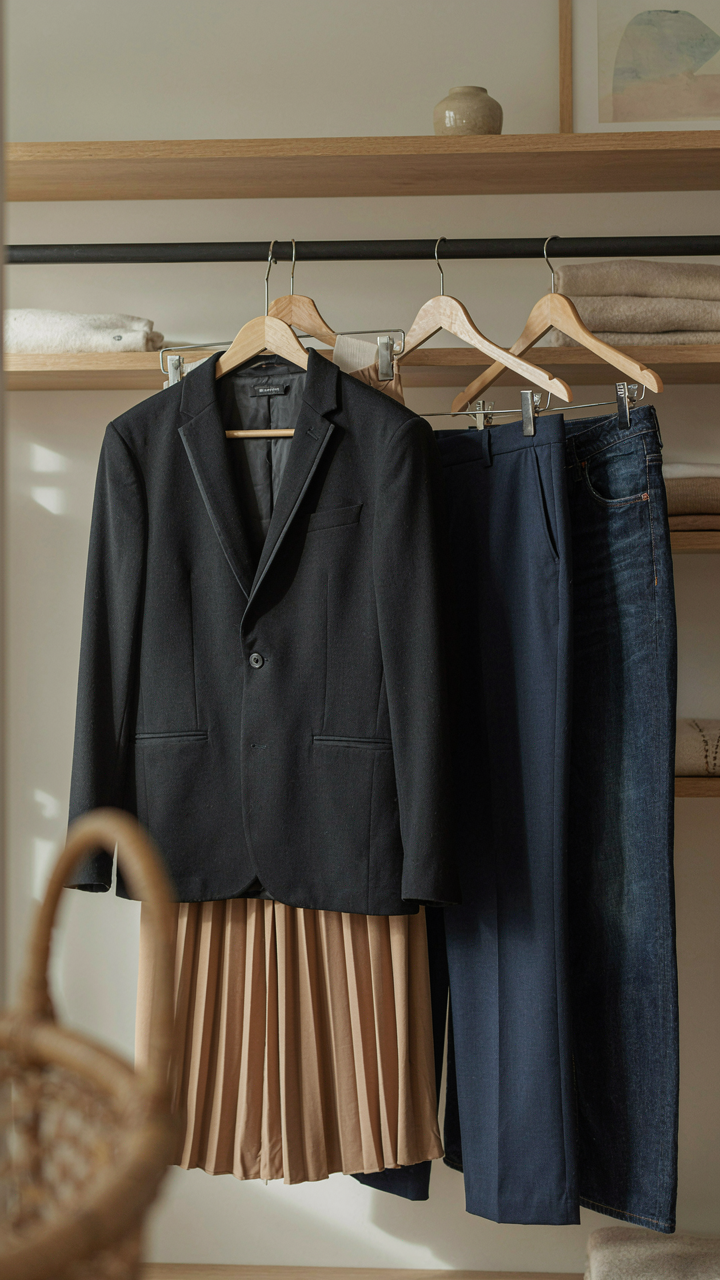
The mechanism is simple: tailored separates don’t read as “wedding only.” A structured blazer in navy or charcoal pairs with jeans as easily as it pairs with dress trousers. The bottom half works alone for professional settings or weekend plans. Brands optimized for this understand fabric weight and cut—pieces that hold shape without looking stiff, that transition between contexts without screaming “formalwear.” You’re not buying a costume. You’re buying components that compound.
Outsmarting The One Wear Dress Dilemma
Common advice says pick a dress, wear it once, move on. That’s a failure of imagination and budget management. A wedding guest two piece set solves the problem nobody states: the dress enforces a single occasion, a single season, a single mood. You’re trapped. Separates remove the trap entirely.
The top layers—blazer, structured blouse, cropped jacket—command different styling depending on what’s underneath. Silk trousers for the wedding. Denim the following week. A midi skirt in linen for summer events months later. The separates stay current across seasons because you’re not locked into a silhouette that expires with the trend cycle. Each piece ages differently, which means your cost per wear drops dramatically over time. That’s not aspiration. That’s arithmetic.
The Polished Look Protocol: Engineering Effortless Elegance
The Three Point Rule Of Accessory Mastery
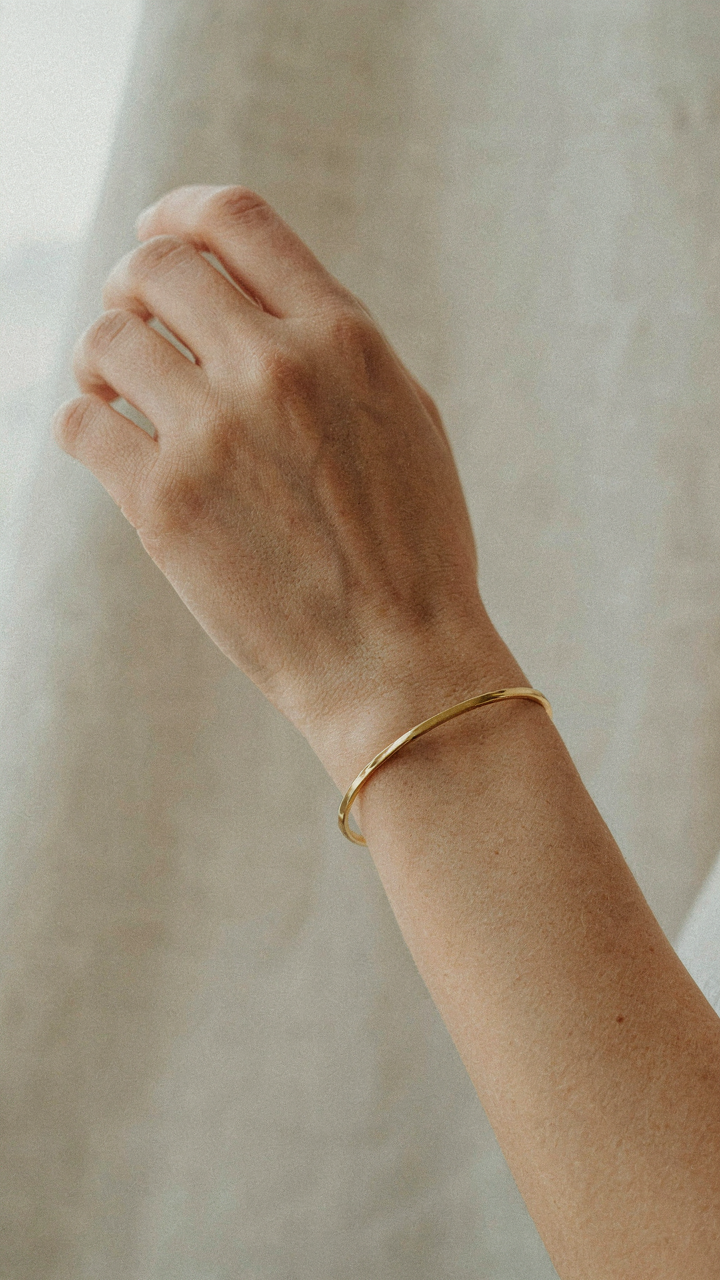
You’re worried that accessories will either make you look like you’re trying too hard or expose that you have no taste. The mechanism is constraint. Every accessory you add past three dilutes impact and signals confusion. Two piece sets already handle your top and bottom, so you’re working with jewelry, a bag, and shoes as your three points. Stop there. More pieces don’t add polish, they add noise.

Military strategists call this economy of force, the principle of concentrating resources where they create maximum effect. Your wedding guest two piece set operates the same way. Each accessory must justify its presence through contrast, material quality, or structural interest. A gold bracelet on bare skin reads. That same bracelet competing with a watch, rings, and a necklace reads as clutter. Choose one piece per category and commit to it.
Grooming As A Force Multiplier In Wedding Guest Outfits
Grooming doesn’t enhance your outfit; it determines whether your outfit works at all. Hair, skin, and nails are the visible infrastructure everything else sits on. A two piece set with pressed seams and perfect proportions collapses if your hair looks unmaintained or your nails are chipped. This isn’t about perfection, it’s about intentionality. The guest who shows up with clean, shaped hair and trimmed nails in a basic two piece set outranks the guest in designer pieces with visible neglect.
Start grooming three days before the event, not the morning of. Hair needs time to settle after washing. Nails need time to harden after trimming. Skin needs time to balance after exfoliation. A strategic grooming timeline compounds small efforts into visible polish. Show up with clean edges, hydrated skin, and hair that’s been purposefully shaped, and your two piece set automatically reads as intentional rather than assembled.
Deconstructing The “Wedding Guest” Archetype: Who Are You Really Dressing For?
The Perception Hierarchy You Won’t Admit You Care About
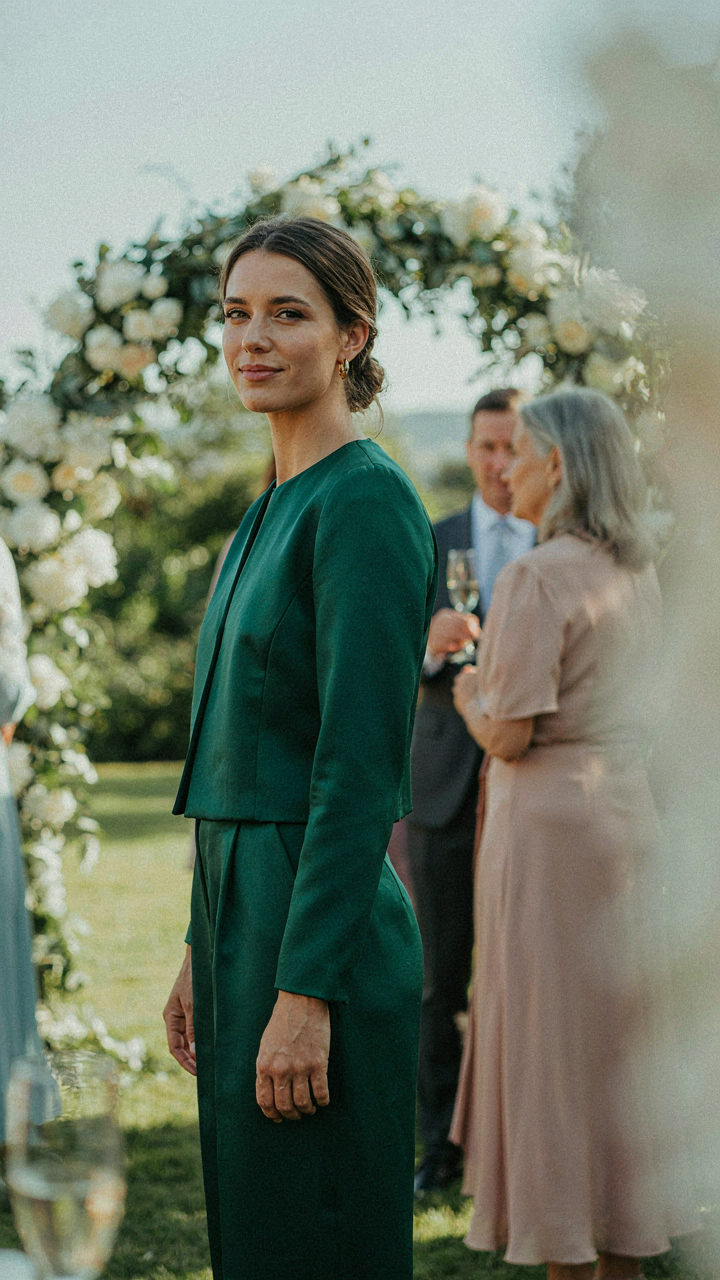
You care about this because you’re afraid of being underestimated. Here’s the mechanism: wedding guest dressing operates like a signaling hierarchy. The bride and groom sit at the top. The immediate family occupies the next tier. Everyone else competes for recognition within their social proximity. A wedding guest two piece set works because it signals you understood the assignment without demanding attention. You’re legible. You’re not trying too hard. You’re not lazy. That’s the real exchange happening.

The two piece format itself functions as a middle ground. It’s formal enough to respect the occasion but modular enough to feel chosen rather than prescribed. Single-piece dresses demand a unified statement. Separates let you negotiate between visibility and restraint. Most guests never notice the strategy. They just feel whether you belong in the room or stand outside it. The two piece accomplishes belonging by looking intentional without looking desperate.
Breaking The Symmetry Trap
The common advice tells you to match your top and bottom in tone and color. That’s incomplete. Symmetry reads as safe, which is not the same as elegant. Real elegance requires one asymmetrical choice that proves you made a decision. A lightweight silk blouse paired with structured trousers in a different fabric weight breaks the expected pattern. A cream camisole under a jewel-toned jacket stops the eye differently than identical neutrals do. This is contrast, not contradiction. The principle comes from visual hierarchy in design: dominant and recessive elements must exist in tension for the composition to land.
The trap is playing it too safe. Too many guests arrive in sets that feel accidental, like they grabbed matching separates from the safe section. A wedding guest two piece set has teeth when one element carries weight and the other recedes. Choose your dominant piece first. Then build the recessive piece around it. This creates intention. The guest list reads the room through these small choices, and they know the difference between matching and chosen.
The Art Of The Two Piece Set Wedding Guest: Beyond Basic Blouses
Unexpected Silhouettes And Textures
You’re worried people will forget you were there. The mechanism that drives this fear is simple: a forgettable outfit compounds invisibility. Think of silhouette as leverage in physics—a small change in angle creates disproportionate impact on how light hits fabric and how your body reads in a room. Instead of the default blouse-and-pant pairing, introduce one structural element that breaks the plane: an asymmetrical hem, a side-tie detail, or a wrap waistband that shifts where the eye lands. This isn’t about looking loud. It’s about creating a point of reference.
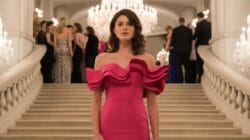
Texture does the real work here. Linen, cotton lace, silk charmeuse, and cotton jacquard read differently at distance and close range. A matte crepe pant with a subtle sheen top creates visual separation without needing loud color or pattern. Cotton twill trousers paired with a silk camisole under an open linen shirt layer accomplishes the same thing: dimension through material contrast, not novelty. The rule most people miss is that silhouette plus texture together make you legible in photographs.
Color Palettes For Real Impact
Conventional advice says stick to neutrals or pastels. That’s incomplete guidance born from fear. Color strategy isn’t about boldness—it’s about decision. Pick one undertone and commit to it. If you choose warm undertones, every piece must align: warm gold, rust, terracotta, warm taupe. If you choose cool undertones, move toward silver, slate, lavender, cool gray. Mixing undertones kills impact faster than anything else because it reads as indecision rather than intention.
The mechanism behind this is contrast within consistency. Navy and gold work together because they’re both legible and the gold reads as intentional against navy’s neutrality. Sage green with warm cream reads cohesive. Charcoal with cool silver jewelry reads strategic. The second piece set that works is one where the top and bottom share an undertone family but differ in value or saturation. When you nail this, people notice without knowing why they noticed.
Beyond The “Wedding Outfit”: Maximizing Your Wardrobe ROI
The Modular Wardrobe Concept For Repeat Wear
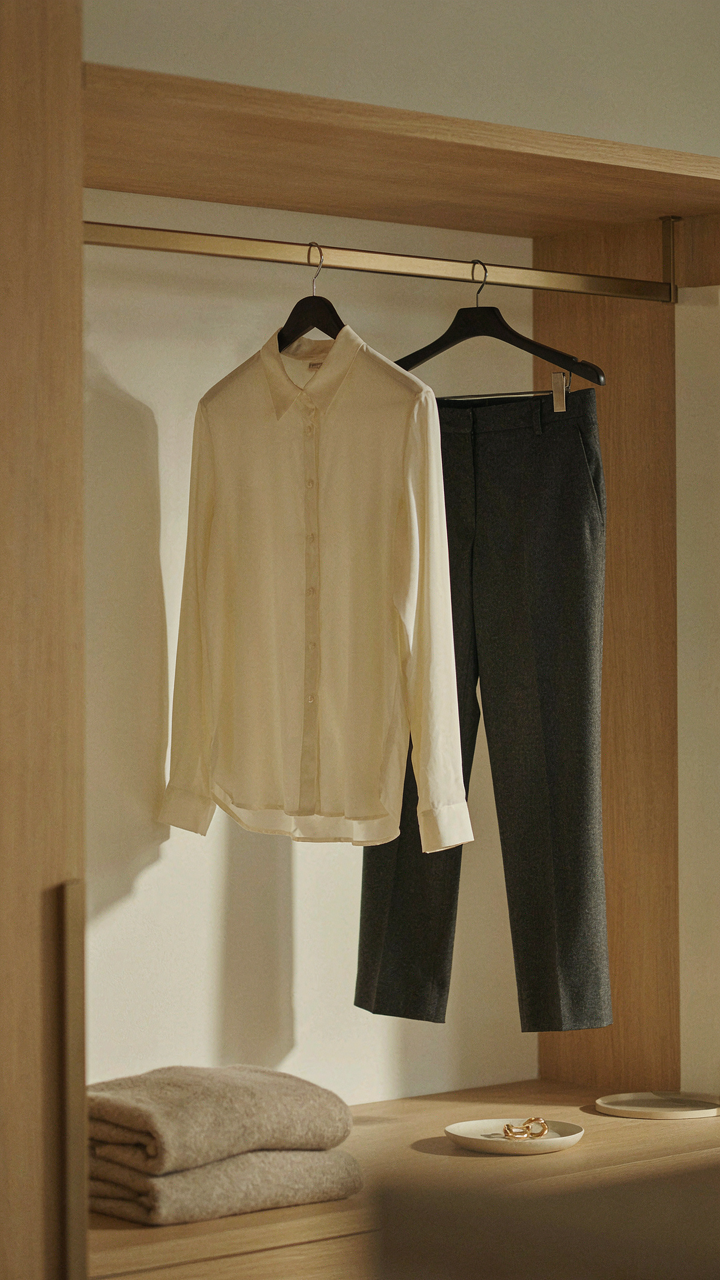
You want permission to spend money without feeling wasteful. Here’s the real mechanism: a wedding guest two piece set functions as capital, not consumption. Treat it like economics treats assets—items that generate returns through repeated deployment across different contexts. The top and bottom don’t live or die as a matched pair. Each piece is a standalone tool with independent utility. A silk blouse works at the office. The tailored trousers work to dinner. The set only exists as a category in your mind because retailers sold you that frame.

Most people buy “outfits” and wear them once. They buy a wedding guest two piece set, photograph it, then exile both pieces because they’re psychologically tethered to that single event. Break the tether first. Evaluate each component for standalone merit before you buy. Will you wear the top without the bottom? Will you wear the bottoms with a different top? If the answer to both is no, you’re buying a costume, not a wardrobe. A true modular piece survives context rotation.
Strategic Re Styling Making A Two Piece Work Harder
The common advice is to “mix and match” your pieces. That’s lazy. Real re-styling requires a protocol. Document three specific outfit combinations before purchase. Not vague ones like “with a blazer”—actual combinations. Top with khakis and loafers. Top with dark jeans and a belt. Bottom with a neutral sweater and a structured bag. Each combination should feel intentional and solve a real social situation you face. This forces you to see beyond the wedding context.
Texture and color dictate how hard a piece works. A monochrome two piece set in a neutral fabric re-styles into twelve different looks because it serves as a base layer. Add patterns, textures, or bold color, and you shrink the effective combinations by half. A cream silk set becomes a canvas. A burgundy knit set becomes a statement. Your return on investment scales with how many wardrobes you can layer it into without looking repetitive. The protocol is simple: wear it to the wedding, then wear each piece separately at least twice in the following six months before you decide if it earned its place.
The Unspoken Rules Of Wedding Guest Outfit Two Piece Confidence
Posture And Presence Your Actual Power Move
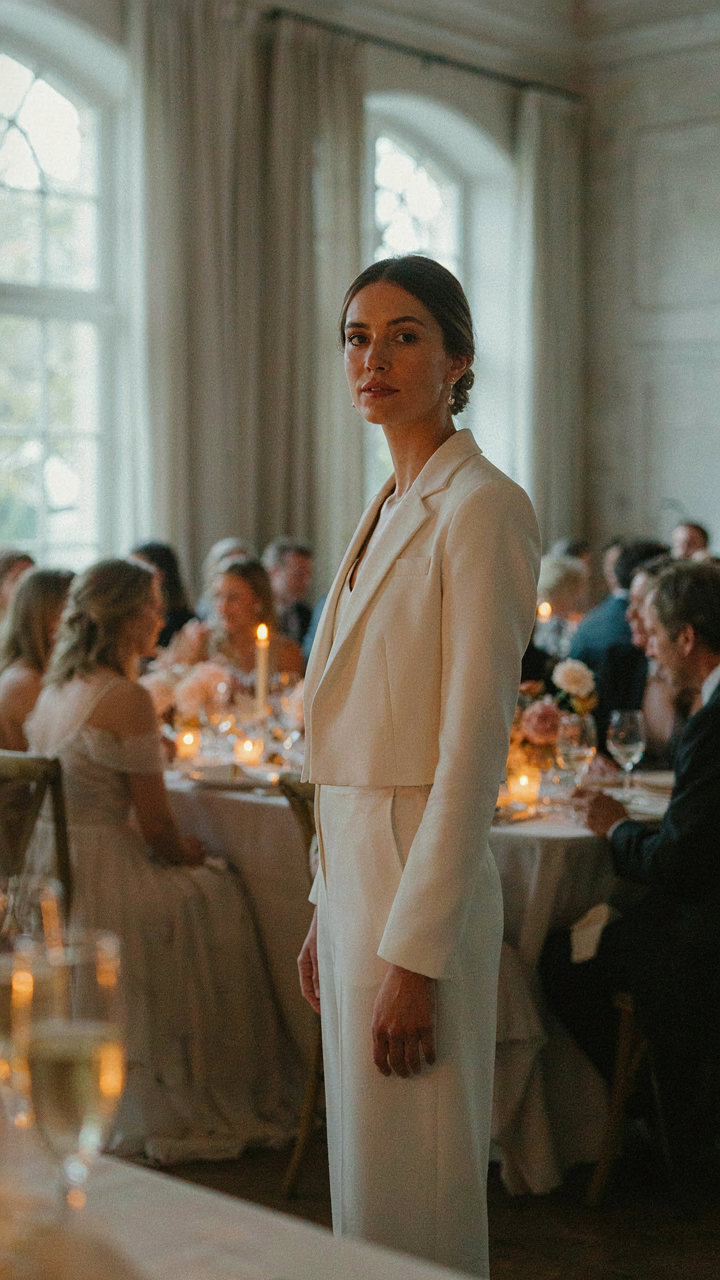
You’re worried people will judge your outfit choice. Here’s what actually happens: they judge your confidence in wearing it. Posture works like leverage in physics—a small angle shift redirects force through your entire structure. When you wear a wedding guest two piece set, your spine’s position determines whether the outfit reads as intentional or apologetic. Shoulders back, chin level, chest open. That’s not attitude. That’s mechanics.
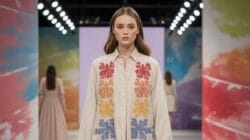
The two piece set succeeds or fails based on how you occupy the space it creates. A blazer and trousers coordinate in theory. They coordinate in practice only when your body doesn’t shrink into them. Walk deliberately. Stand without fidgeting. Make eye contact when speaking. The outfit disappears because the person wearing it becomes visible instead. This isn’t performance. It’s the difference between wearing clothes and inhabiting them.
Owning Your Choice The Antidote To Second Guessing
Most advice tells you to dress for the occasion. Wrong framework. Dress for the decision you already made, then defend it internally. You chose this two piece set for reasons: the cut works for your frame, the color matches your skin tone, the formality lands right for the venue. Anxiety happens when you pretend those reasons don’t exist. It happens when you keep one foot in doubt.
The mechanism is simple: commitment kills hesitation faster than confidence ever could. Once you’re at the wedding, changing your mind solves nothing. You either own the choice or you spend four hours radiating regret. Own it by remembering why you selected this specific set during the fitting. Wear it the same way you’d wear a uniform. The outfit becomes invisible when you stop treating it as negotiable.
The Future Of Wedding Guest Attire: Why Two Pieces Dominate
Formal Wear Is Becoming Modular
You’re reading this because you sense the old rules are broken and you want to know what replaces them. Here’s what’s actually happening: formal wear is borrowing from systems design, where modularity beats rigid structure. A two-piece set functions like a system with independent components that serve multiple configurations. One jacket pairs with five different bottoms. One pant works under three jackets. This isn’t about fashion flexibility for its own sake. It’s about economics. Guests buy less, wear more, and repeat without guilt.
The shift away from single-occasion dressing started when athleisure normalized wearing the same pieces across different contexts. Formal wear followed. Traditional wedding guest culture demanded a dress or suit pulled from the back of the closet once yearly. Two-piece sets destroyed that model. They’re designed for overlap. You wear the blazer to work. The trousers to dinner. The pairing shows up at the wedding. This changes production, pricing, and how people actually shop. Brands now sell modular formal pieces because rigid single-use garments became unsellable.
Dressing Smart Means Building Systems Not Outfits
The conventional advice says pick an outfit for each event and move on. That’s wrong. Smart dressing means building a system where pieces work across multiple scenarios. A two-piece wedding guest set isn’t an outfit. It’s infrastructure. You select separates with overlap potential. A neutral blazer in navy or charcoal pairs with dress trousers, chinos, and casual bottoms. The same jacket appears at weddings, client meetings, and dinners. The bottoms work solo at the office.
This approach cuts decision fatigue and actual spending. Instead of buying five different formal looks for five events, you buy two quality pieces and rotate bottoms. The mathematics favor two-piece sets. You reduce closet volume while increasing usable combinations. More importantly, you stop treating formal wear like costumes. Each piece has to justify its existence through repeated use. This forces you to buy better quality because you’re wearing it more. When you wear something more, you notice its flaws faster and demand durability. That’s when you start buying pieces that last.
Your Real Obstacle Isn’t The Outfit; It’s The Insecurity That Makes You Choose Mediocrity
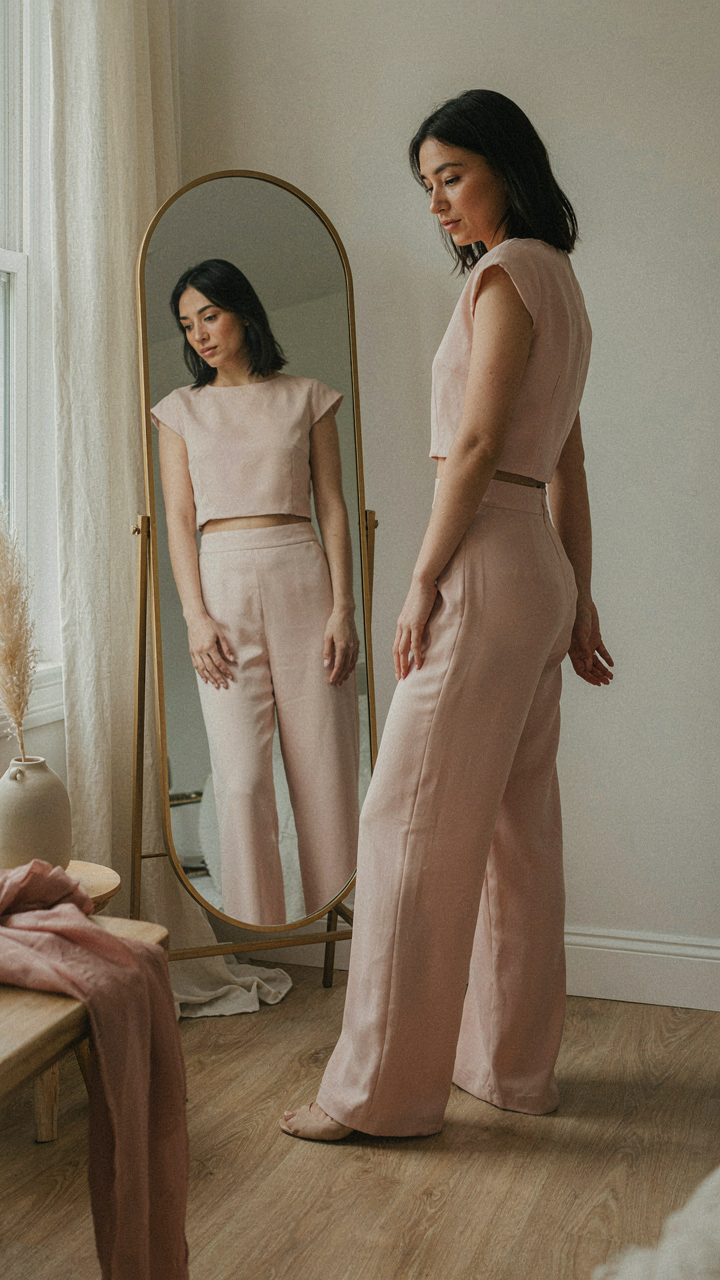
You pick safe pieces because you’re terrified of standing out. A two piece set forces a choice, and choice reveals what you actually believe about yourself. Stop waiting for permission to look intentional. Open your closet right now and grab one top and bottom combination that makes you uncomfortable. Wear it. The outfit isn’t the point. Your willingness to stop blending in is.