

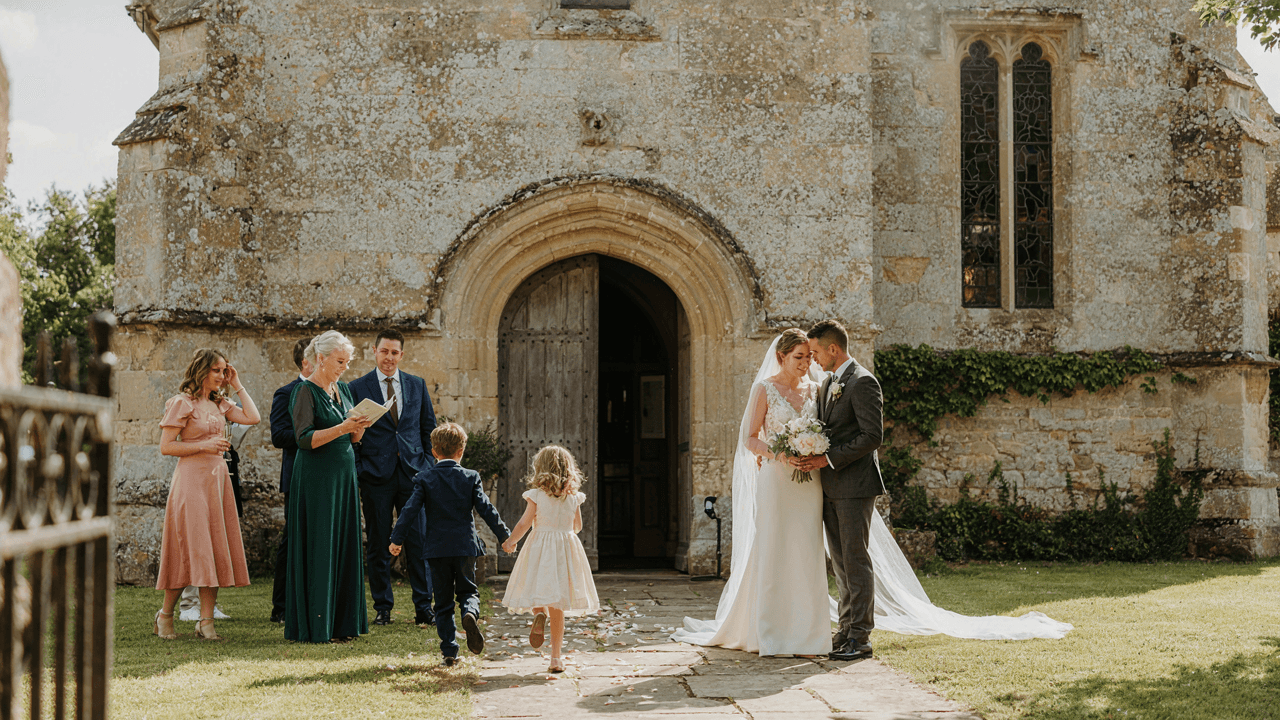
The Modesty Myth: Decoding Respect Beyond Fabric
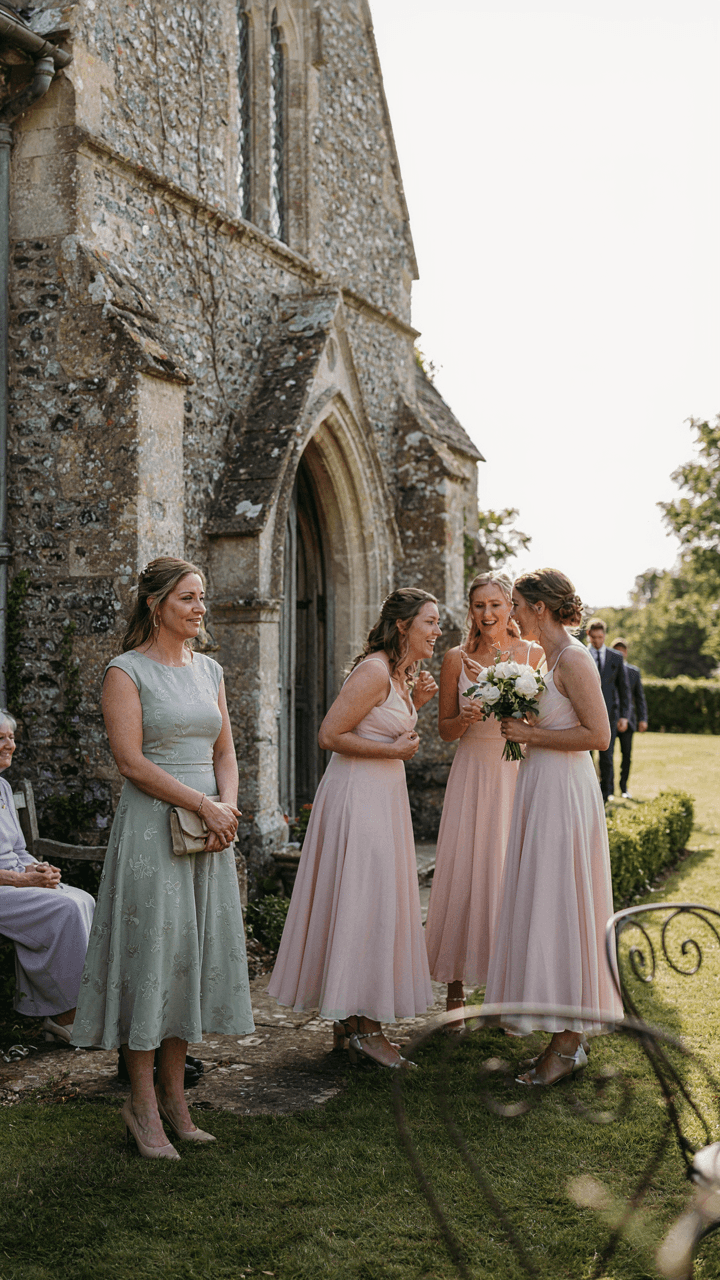
What The Dress Code Actually Says
You’re worried about judgment. That’s the real thing. But the unwritten rules at church weddings aren’t about control—they’re signal systems. Like game theory, dress codes communicate intent through constraint. You dress modestly not because fabric polices morality, but because the constraint proves you’re prioritizing the ceremony over yourself. The mechanism is simple: restricted choices communicate respect. When you dress down from what you could wear, observers read it as deference.
Most advice says “cover shoulders and knees.” That’s incomplete. The actual rule is contextual friction—the gap between what you’d wear elsewhere and what you wear here matters more than absolute coverage. A sleeveless dress at a black-tie wedding signals one thing. The same dress at a casual church service signals another. The dress code isn’t about the fabric. It’s about observable choice.
Tradition As Information Architecture
Different Christian traditions encode different values into dress expectations. Catholic, Orthodox, Lutheran, and evangelical churches communicate different priorities through their dress norms. This isn’t arbitrary. It reflects theological emphasis: liturgical traditions prioritize formality and historical continuity; evangelical settings prioritize approachability and authenticity. The dress code is the building’s language, and you’re learning it by dressing accordingly.
Your job is reading the venue’s actual protocol, not applying generic modesty rules. Check the invitation, call the venue if unclear, or observe how the wedding party dresses. If bridesmaids wear sleeveless dresses, the modesty standard isn’t stringent. If the ceremony program includes specific guidance, follow it exactly. The mechanism is compliance through observation—match the formality level the hosts signal, then dress one notch more conservative than that signal.
Guest Attire As A Social Algorithm: Optimizing Your Presence

Reading The Room Before You Dress
You care about this because you don’t want to be the person who missed the signal. Church weddings operate on input parameters that most guests ignore until they’ve already committed to the wrong outfit. The mechanism is simple: venue, time of day, and the couple’s demonstrated style create a constraint system. A 6 PM summer wedding in a non-denominational chapel demands different coverage and formality than a 10 AM Catholic Mass in winter. Morning ceremonies traditionally require more formal dress. Evening events allow texture and pattern. The couple’s engagement photos, wedding website, or direct communication from them reveals their actual aesthetic, not what tradition says they should want.

Time stamps matter tactically. Before noon weddings in traditional churches expect conservative dress codes rooted in liturgical respect. Afternoon receptions after the ceremony shift the pressure downward. Evening celebrations let you dial up texture and accessories. Your first move is checking the ceremony start time, then the venue’s official religious affiliation if listed, then searching for the couple online to see what they actually wear. This isn’t overthinking. It’s reading before acting.
Seamless Integration Without Conflict
Cybernetics teaches that systems maintain stability through feedback loops that minimize friction. Your outfit needs to be the feedback mechanism that goes unnoticed. You’re not dressing to stand out. You’re dressing to integrate so smoothly that the couple and other guests forget to evaluate you. Underdressed guests create cognitive load on everyone. Overdressed guests create the same problem. The target is invisibility through calibration.
Choose fabrics and silhouettes that match the formality level without announcing effort. A well-fitted midi dress in a neutral or jewel tone reads as present and respectful without demanding attention. Shoes that don’t require explanation work better than statement pieces. Accessories stay functional, not decorative. Your last step before leaving home: ask if any single item in your outfit would make someone stop and comment. If yes, swap it out. Friction-free presence is the mechanism that lets the couple’s day stay centered on them.
The “Context First” Protocol: Your Strategic Advantage

Reading The Room Before You Dress
You’re anxious about being underdressed or overdressed because status hierarchies operate invisibly at weddings, and you don’t want to signal that you don’t belong. The mechanism is simple: church weddings encode dress expectations through a hierarchy of observable signals that most guests never decode. The bride’s family controls the venue tone. The groom’s family controls the actual enforcement. Everyone else reads the invitation, the time, and the location to reverse-engineer what’s required.

Start by treating the wedding invitation as intelligence, not decoration. The paper weight, the formality level of the wording, the venue name, and the time all communicate a dress code language before any explicit instruction appears. A 6pm Saturday ceremony at an Episcopal cathedral sends a different message than a 2pm Saturday ceremony at a non-denominational chapel. The church itself tells you the congregation’s average formality. If the invitation says “black tie” at a Lutheran church in a rural area, that’s a mismatch worth investigating with the couple directly.
Dress Codes Are Starting Points, Not Rules
The common advice treats dress codes as fixed constraints. They’re not. A dress code is a floor, not a ceiling, and the real signal comes from understanding why that particular floor exists. “Cocktail attire” at a Catholic wedding where most guests are wearing suits means different things depending on whether the reception is at a country club or a church basement. The location matters more than the words printed on cardstock.
Your actual protocol: contact someone in the wedding party three weeks before if you’re uncertain, or observe what the couple posted on social media about their style preferences. Have they been photographed in formal settings before? Do they favor traditional or modern aesthetics? Are they the type who enforce dress codes strictly, or do they care more about presence than precision? The answer determines whether you push toward formality or dial it back. Text the bride’s best friend if you must. Five minutes of clarity prevents the entire awkward evening.
Beyond Black & White: Mastering Semi Formal Wedding Attire Nuance

How Material Changes The Game
You care about this section because you want permission to look intentional without looking like you tried too hard. Here’s the mechanism: in physics, surface properties determine how light behaves. Fabric works the same way. A matte crepe absorbs light and reads formal; a shiny polyester reflects it and reads cheap. The weave, weight, and finish signal your position in the room before you speak.

Cotton blends, wool gabardine, and natural linen communicate effort because they hold structure and age visibly. Synthetic blends that mimic these materials flatten under light and crease unpredictably. Texture compounds this effect. A subtle sheen or raised weave pattern adds dimensionality that solid flat fabrics cannot match. Silhouette matters equally. A dress or suit that skims the body without clinging works across body types; oversized or overly fitted pieces demand specific proportions and pull attention to fit rather than presence.
Restraint Over Decoration
Most church wedding guest dress advice tells you to add a statement piece or bold accessory. That’s backward. The real play is removing options until only the necessary elements remain. One accent color, minimal jewelry, single focal point. When you subtract, each piece you keep signals intentionality rather than indecision.
A dress with a minor detail at the collar beats one covered in patterns. A simple silk scarf or understated brooch works harder than multiple pieces competing for attention. Avoid mixing metallics, stacking rings, or layering necklaces. Avoid hemlines that fall awkwardly between knee and mid-calf, which reads uncertain rather than deliberate. The protocol is straightforward: choose one element to anchor the outfit, then build restraint around it.
Formal Wedding Attire: The Power Of Intentional Underdressing

Don’t Wear What The Bride Wears
You’re worried people will think you’re trying to steal attention. That’s the real concern here, and it’s backward. The mechanism is simple: the bride signals her role through visible exclusivity. When you wear what she wears, you dilute that signal. Churches operate on hierarchy. The bride sits elevated, veiled or distinguished by movement and positioning. Her dress amplifies that already-established visual dominance. You’re not competing by dressing differently. You’re actually respecting the structure by staying visibly outside it. White, cream, ivory, or heavily beaded gowns aren’t forbidden because they’re “rude in the abstract.” They’re forbidden because they replicate the bride’s actual functional role in the ceremony. The correction is tactical: choose formal wear that reads as formal without replicating bridal aesthetics. Navy, deep jewel tones, black, or muted metallics convey respect for the event’s scale without claiming the bride’s visual territory.

The secondary error people make is assuming all formal dress looks the same to onlookers. It doesn’t. A guest in a well-fitted cocktail dress reads differently than a guest in a floor-length gown in the bride’s color range. Church lighting and proximity during ceremony create unavoidable visual comparison. The bride will be the focal point regardless of your outfit—the architecture and ritual guarantee it. Your job is to occupy a different category entirely. Wear formal attire that a guest, not a bride, would wear.
Contrast Creates Clarity
Visibility in formal settings follows a contrast principle borrowed from design hierarchy: elements differ by value, color, or texture to establish relationships. Apply this to the pews. The bride occupies maximum contrast—light against dark wood, elevated position, movement during vows. Guests occupy low contrast—seated, stationary, in colors that harmonize with surroundings rather than interrupt them. This isn’t about fading into walls. It’s about choosing formality that doesn’t generate visual competition for attention during moments where attention should centralize. A guest in burgundy reads as guest. A guest in white reads as ambiguous.
The practical protocol: assess the bride’s aesthetic first. If she wears traditional white, avoid cream, champagne, or nude tones entirely. If she wears blush or champagne, white becomes safer. If she wears nontraditional color, any formal color outside that range works. Then select your formality level—cocktail length or floor-length both qualify—based on the wedding’s stated dress code. The distinction between guest and participant becomes immediate and unambiguous to anyone in the church. That clarity serves everyone.
Bridesmaid Dresses With Sleeves: Practicality Over Pious Signaling
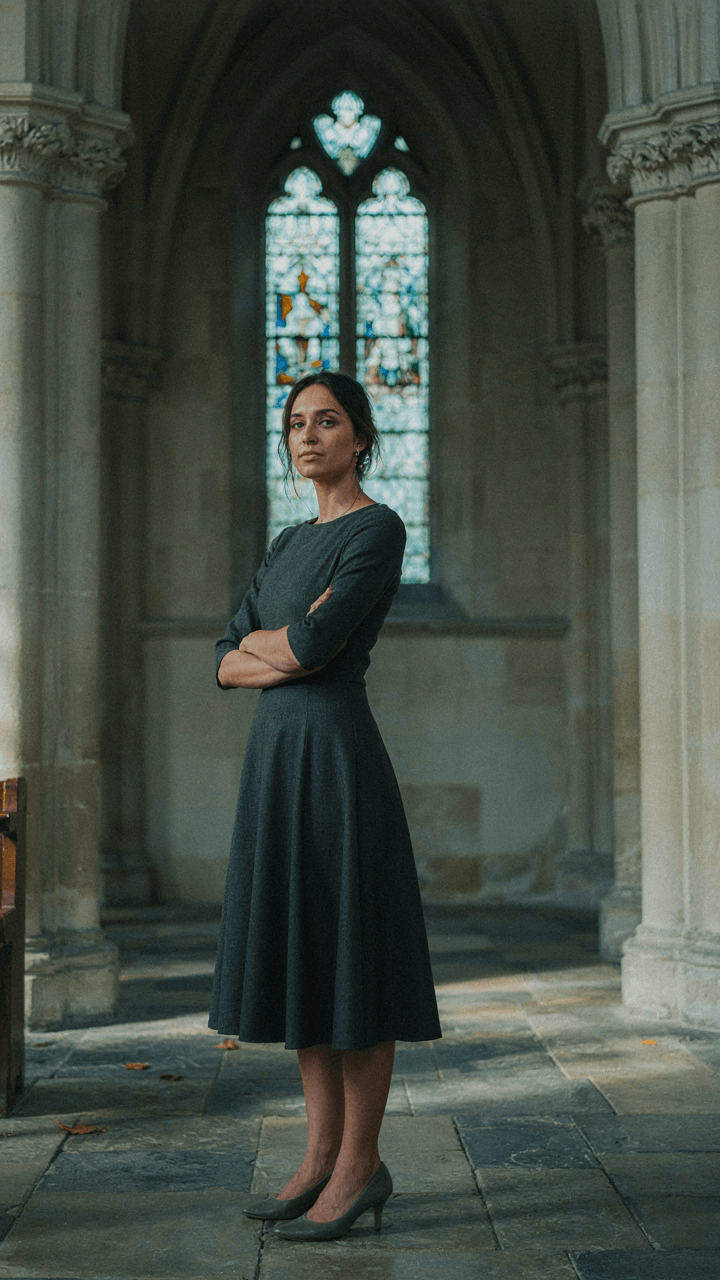
Why Sleeves Matter Beyond The Surface
You want sleeves because you’re worried people will judge your arms, and you’re hoping religious context makes that concern legitimate. Here’s the actual mechanism: sleeves regulate temperature in climate-controlled churches, reduce friction during movement, and eliminate the distraction of managing bare skin for four hours. This is basic ergonomics, not morality theater. A sleeveless dress forces your body to work harder to maintain comfort, which taxes your attention and degrades your posture by the reception.

The design choice matters most in older churches with inconsistent heating. Stone buildings stay cold. Sleeve length becomes functional the moment you’re standing for thirty minutes during ceremony. Your shoulders absorb heat loss directly. A cap sleeve, three-quarter sleeve, or full-length option keeps your core temperature stable without requiring you to tense your muscles. This isn’t about modesty codes, it’s about thermodynamics applied to fabric and skin contact.
Arm Coverage As A Functional Design Choice
Coverage reduces the cognitive load of self-monitoring during the ceremony. You attend a wedding to witness vows, not manage how your body looks from the side. When you wear sleeves, your mind stops calculating sightlines and angles. This is basic attention allocation: every mental cycle spent on self-consciousness is one removed from presence. Sleeveless dresses demand active management. Sleeved dresses let you forget your arms exist.
The practical advantage extends to movement and gesture. Sleeves anchor your shoulders and provide tactile feedback during hugging, reaching, or sitting. Your proprioception improves because the fabric creates a boundary. You’re less likely to assume awkward positions or compensate with tension in your neck. The mechanism is simple: coverage gives your nervous system clear information about where your body ends, so you move more naturally. Choose sleeve length based on the season and venue temperature, not on what you think a church expects.
The Sage Green Dress Fallacy: Color As A Tool, Not A Constraint
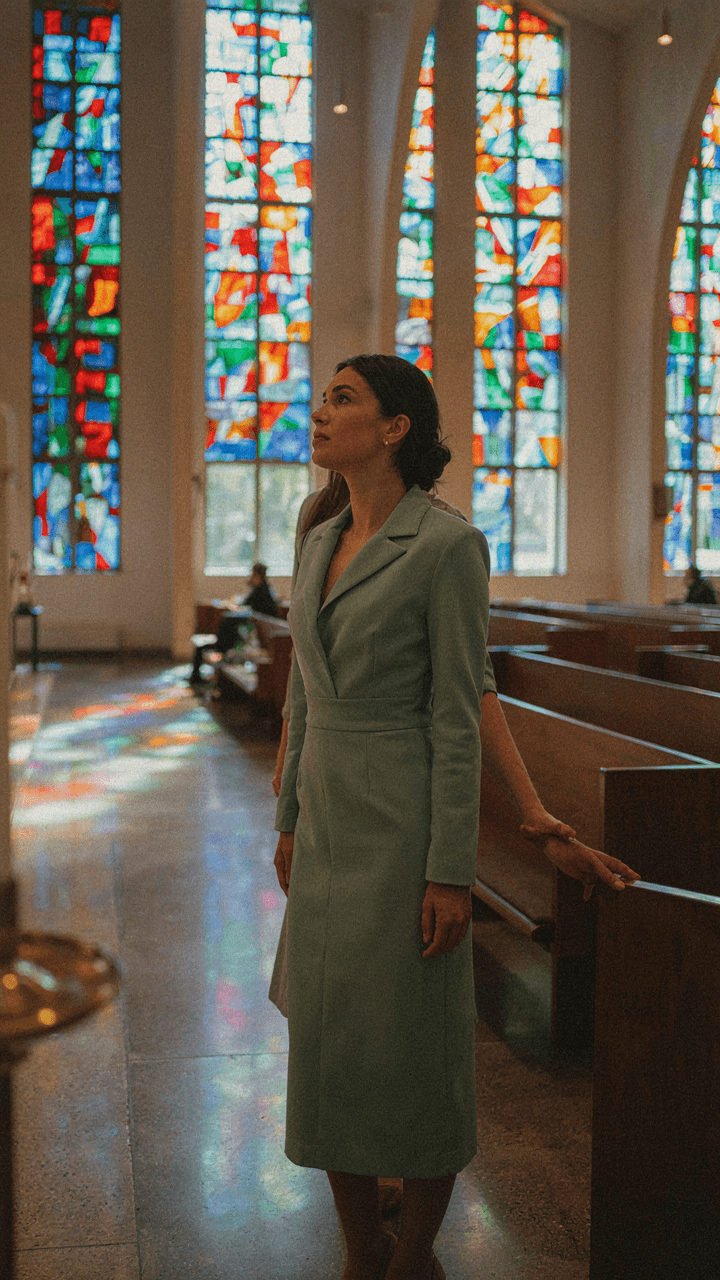
What Color Actually Signals
You’re worried sage green reads as too trendy and will make you look like you’re trying too hard. Here’s what actually happens: color functions like semiotics in visual communication—it transmits meaning through cultural association, not through inherent moral value. The dress doesn’t signal anything until context activates it.

A muted sage green in a structured, traditional silhouette sends restraint. The same shade in a fluid, fashion-forward cut sends trend awareness. Churches read the construction, not the hex code. Formal tailoring neutralizes unconventional color. Casual fabric amplifies it. Your job isn’t to police the shade itself—it’s to control what the cut and material communicate alongside it.
Matching The Ceremony’s Actual Tone
The real mistake isn’t choosing a bold color. It’s choosing any color without first identifying whether the wedding favors visual cohesion or visual variety. Most guidance on this is useless because it treats all church weddings as identical.
A formal Catholic mass with a traditional ceremony demands visual deference. That means you avoid high-saturation or bright colors that compete with the couple. A casual Protestant ceremony or contemporary service often expects guests to express themselves. Sage green works in the second context because the ceremony itself doesn’t demand visual submission. Before selecting any color, determine whether the wedding aesthetic is conservative or contemporary. Then match the saturation level to that baseline. Check the invitation wording, venue choice, and couple’s social media for signals. Don’t guess.
Modest Dresses: Architecting Your Personal Brand

The Actual Reason You Care About Comfort
You’re worried people will judge you if you look uncomfortable. That’s the real driver here, not some abstract virtue. The mechanism is simple: discomfort reads as inauthenticity. When you’re fidgeting with a neckline or tugging a hemline, you signal anxiety instead of intention. Confidence isn’t about what you wear, it’s about wearing what you’ve decided fits the context without mentally fighting it all day.

Pick a modest dress that requires zero adjustment once you put it on. This means trying it on, sitting down in it, reaching across a table, standing for two hours. If you find yourself thinking about the dress during the ceremony, it’s the wrong dress. The goal is to forget you’re wearing it and focus on the event.
When Modesty Stops Being About Rules
Common advice treats modesty like a checklist: sleeves, neckline depth, hemline placement. That’s incomplete. Modesty is actually a design principle, not a moral mandate. Think in architectural terms, where load-bearing walls create both structure and freedom. A modest neckline or sleeve length isn’t restrictive if it’s the feature you build the rest of the outfit around. Modesty becomes empowering when you use it as a design constraint, not a surrender.
Build outward from a modest baseline. A high neckline lets you wear a bold color or interesting fabric without competing signals. Long sleeves give you permission to go shorter on the hem or add texture. Work with the constraint rather than against it, and you eliminate the mental friction that comes from feeling like you’re breaking an unspoken rule. The dress disappears from your awareness, and you show up fully present.
The Green Dress Casual Trap: Knowing Your Boundaries
When Casual Masquerades As Appropriate
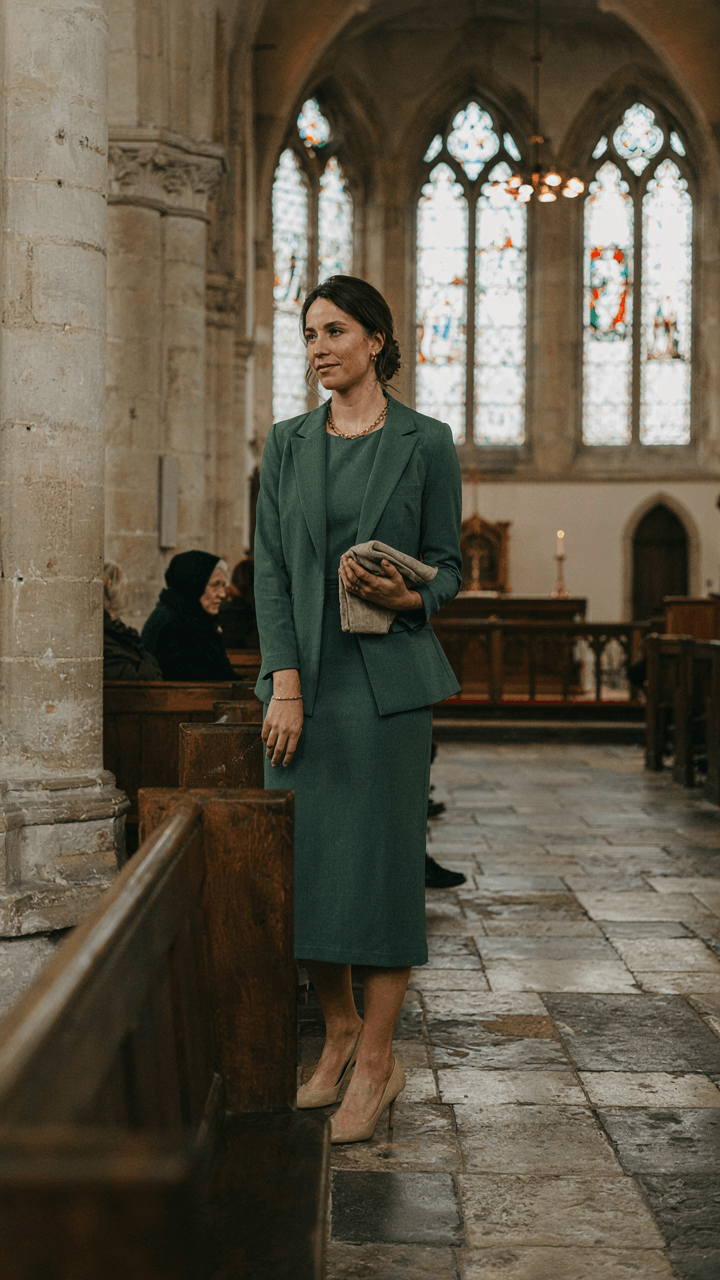
You’re drawn to this section because you want permission to wear something comfortable while appearing thoughtful. The trap is treating church formality like a suggestion instead of a code. A green dress reads casual the moment it signals leisure over intention. Cotton sundresses, unstructured cuts, flat sandals, and minimal fabric weight all broadcast “I dressed down.” Church weddings require visual deference to the space and event. The mechanism is simple: formality lives in structure, weight, and finish, not color choice.

A green midi dress with defined tailoring, structured fabric, and intentional styling works. A green linen shift in a casual cut does not. The difference between them isn’t green. It’s whether the garment signals you dressed for the occasion or dressed for comfort and happened to attend it. Churches are formal spaces by design. Your dress must acknowledge that through construction and presentation, regardless of hue. Casual cuts and casual fabrics communicate casual respect, which is a contradiction at the altar.
Building Authority Through Strategic Layers
Accessories function like load-bearing walls in architecture: they carry the weight that determines whether the structure holds. A simple green dress becomes intentional the moment you add substantive pieces that signal deliberation. Minimal or playful accessories keep it casual. Strategic layering elevates it into formality.
- Structured Blazer: A tailored jacket in cream, navy, or black transforms a simple dress into a complete formal statement and covers bare shoulders in conservative spaces.
- Quality Heel or Dressy Flat: Leather pumps or embellished flats replace sandals and anchor the outfit in formal territory through material and construction quality.
- Metal Jewelry: Graduated necklaces, drop earrings, or a delicate bracelet in gold or silver indicate occasion-appropriate effort versus casual everyday wear.
- Structured Handbag: A defined clutch or small shoulder bag in leather signals formality where a tote or crossbody keeps things casual.
- Shawl or Pashmina: A draped wrap in a complementary color adds gravitas and covers arms during the ceremony when church protocol requires it.
These accessories operate on a stacking principle: each one independently signals formality, but together they transform perception. A green dress with no blazer, sandals, and casual jewelry stays casual no matter how expensive the dress itself is. Add the blazer, upgrade the shoes, and include metal jewelry, and the same dress becomes appropriate. The mechanism isn’t magic. It’s visual weight and material intentionality combining to communicate respect for the space and event.
Your Real Fear Isn’t Offending; It’s Revealing Your Lack Of Understanding Of The Game

You’re not scared of insulting the couple. You’re scared of looking like you don’t belong. Church weddings operate on unspoken rules, and breaking them signals you’re outside the circle. Stop overthinking fabric and formality. Go to the church’s website right now, find three photos of past events, and match the dress code you see. One hour. That’s it. You already know what to wear. You’re just stalling because certainty feels like risk.