
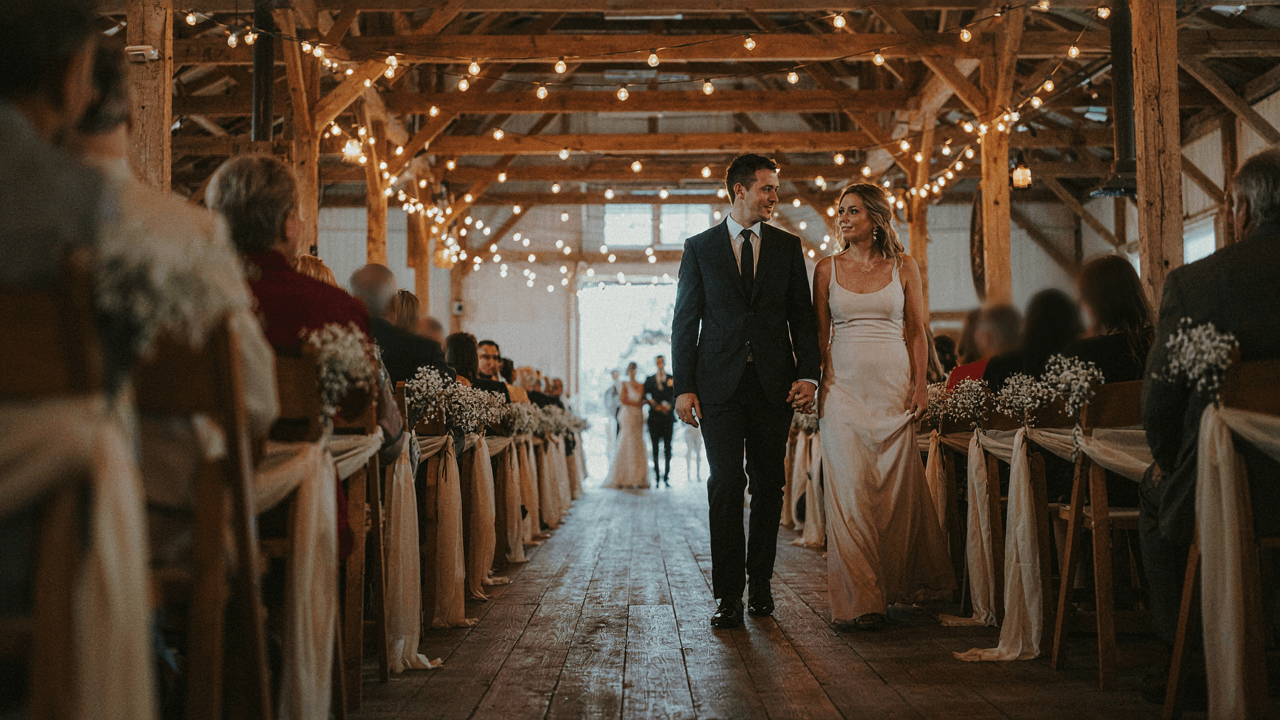
The “Barn Wedding Guest” Fallacy: Comfort Isn’t Optional
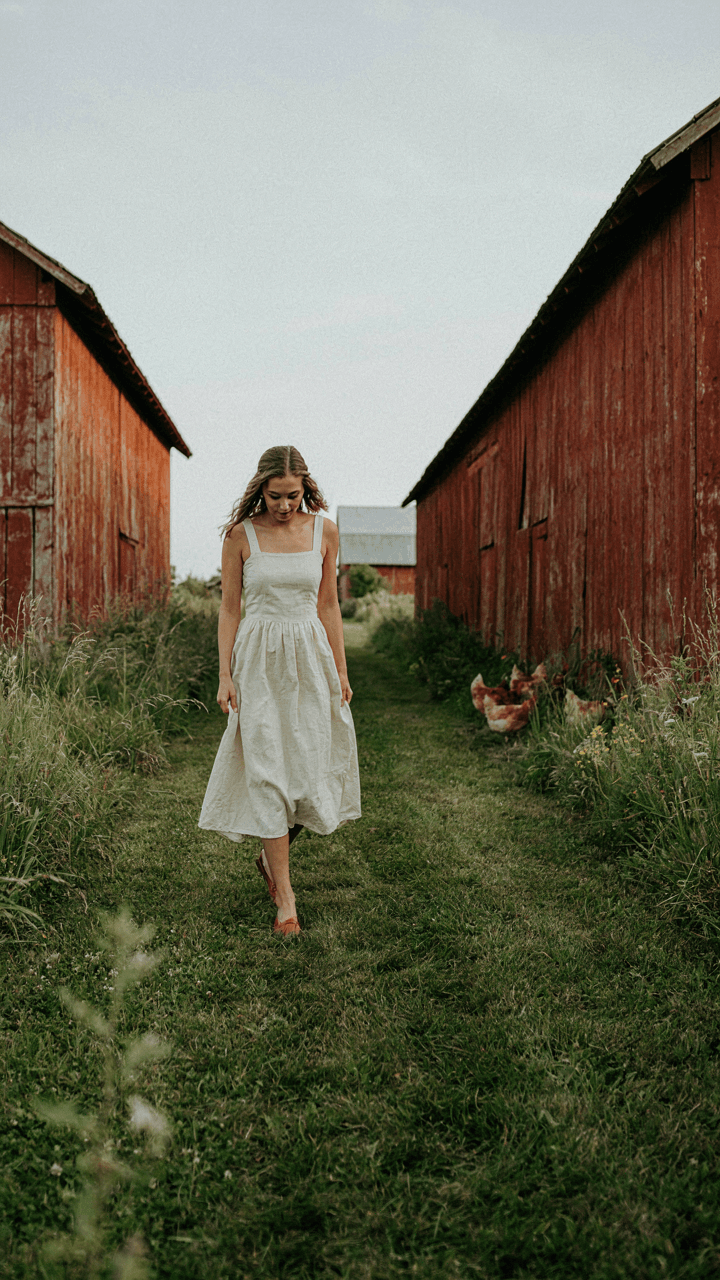
Rustic Doesn’t Mean Sloppy
You’re hoping comfort gives you permission to dress down. It doesn’t work that way. The real mechanism at play here comes from signal theory: what you wear broadcasts information about whether you respect the event and the people in it, regardless of setting. A barn venue doesn’t override this. Guests mistake “casual” for “anything goes.” That’s the trap. Barns have dirt floors, temperature swings, and uneven surfaces. None of that changes the fact that you’re at a formal commitment ceremony. The rustic-comfort myth says you can sacrifice fit, fabric quality, or intentional styling because the backdrop is rural. Wrong. Comfort and polish aren’t opponents. They’re prerequisites for the same outcome: looking like you belong there.
The venue style actually demands more strategic dressing, not less. A barn forces you to solve problems formal venues hide. You need fabrics that breathe because ventilation is poor. You need shoes with actual grip because ground shifts. You need layers because temperature control doesn’t exist. These constraints aren’t reasons to abandon standards. They’re reasons to be more deliberate about every piece you choose. Most guests show up in whatever they own that feels “barn appropriate”—usually meaning wrinkled linen and whatever shoes won’t destroy their feet. That’s settling. Real barn wedding guests dress with intention: selecting pieces that perform under real conditions while maintaining the polish the event deserves.
When Discomfort Becomes Distraction
Discomfort is a cognitive hijack—it pulls your attention inward and kills your ability to be present. Research on embodied cognition shows that physical sensation directly shapes how you process social information and interact with people around you. Tight shoes, restrictive fabrics, or inadequate layering don’t just feel bad. They narrow your focus to your own body. You stop engaging with conversations. You leave early. You take fewer photos. You remember the event as unpleasant when the problem was never the barn—it was your outfit choices. Presence matters at weddings because presence is the actual gift you give. When you’re distracted by pinching waistbands or shivering, you’re not there.
The mechanism is straightforward: your nervous system allocates resources to physical discomfort before it allocates resources to social engagement. You can’t override this with willpower. The solution isn’t accepting discomfort as part of the bargain. It’s building an outfit that eliminates discomfort before it starts. This means testing every piece beforehand in real conditions—sitting, standing, walking on uneven ground, temperature shifts. If a shoe rubs after thirty minutes indoors, it will ruin a four-hour barn event. If a fabric pulls or restricts across the shoulders, you’ll adjust your posture unconsciously and look stiff in every photo. Comfort is the prerequisite for looking natural. Test your full outfit on the actual wedding day timeline before you arrive.
The Material Science Of Being Effortless
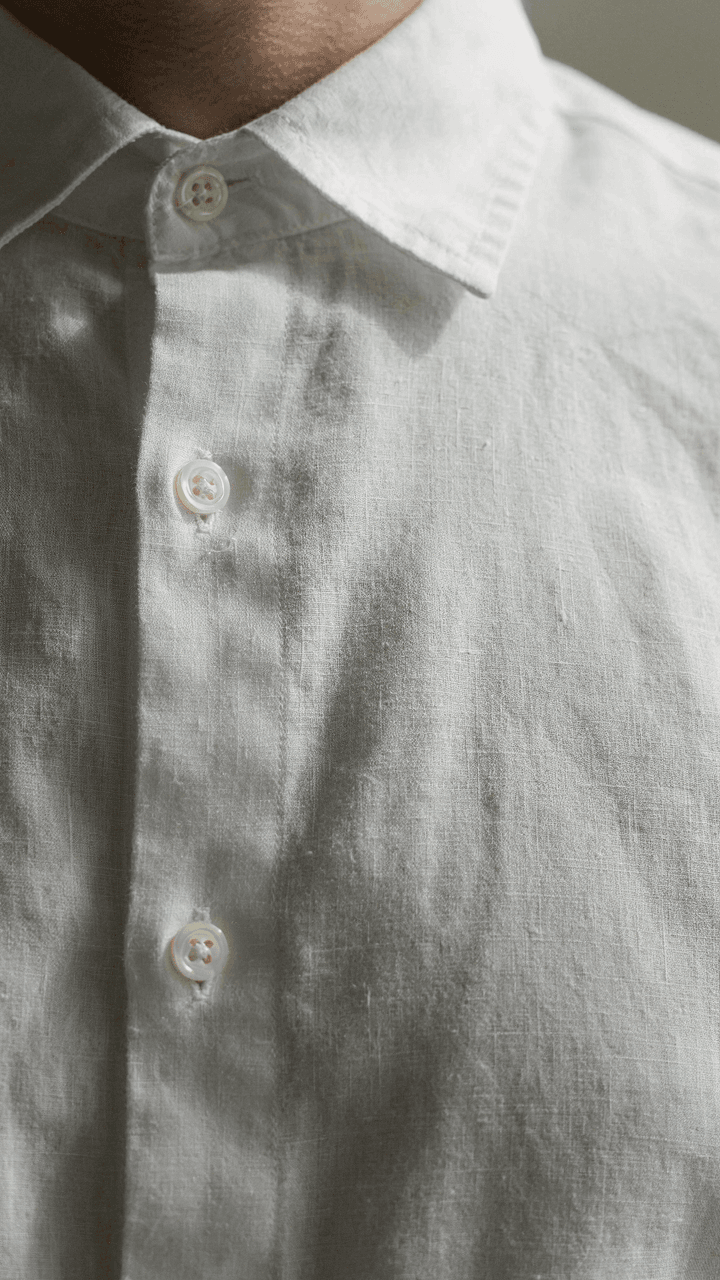
Breathable Fabrics For All Seasons
You want to look put-together without sweating through your clothes or feeling trapped. The mechanism is simple: fiber structure determines how fast moisture moves away from your skin, which directly controls whether you look fresh or disheveled after two hours.

Cotton and linen are the baseline. Cotton breathes through loose weave and absorbs moisture, which works until humidity spikes and the fabric clings to your body. Linen actually wicks moisture faster because its hollow fibers pull sweat away from skin and release it to the air. For warm months or heated barns, linen outperforms cotton. Blends matter too. A 60/40 cotton-linen blend or a poly-cotton blend combines breathability with wrinkle recovery, which keeps you looking intentional instead of rumpled by hour three.
Wrinkle Resistance: Your Secret Weapon
Everyone says “pick wrinkle-free fabrics” and then wears a linen shirt that looks like a raisin by cocktail hour. The real mechanism comes from chemistry: synthetic fibers and blends resist wrinkling because their molecular structure bounces back after compression, while pure natural fibers stay creased once fabric fibers physically bend.
A 65/35 polyester-cotton blend or a fabric labeled “performance” typically resists wrinkles for four to six hours without ironing. Wrinkles form fastest in 100 percent natural fibers, especially linen and cotton, because the fibers permanently deform under pressure. If you choose linen for its breathability, accept that you need to re-hang your jacket or refresh with a steamer between events. Otherwise, blend up: a poly-blend trouser or dress shirt survives the car ride, the ceremony seating, and the cocktail hour without a touch-up.
The “Rooted Elegance” Protocol: Grounding Your Barn Wedding Attire
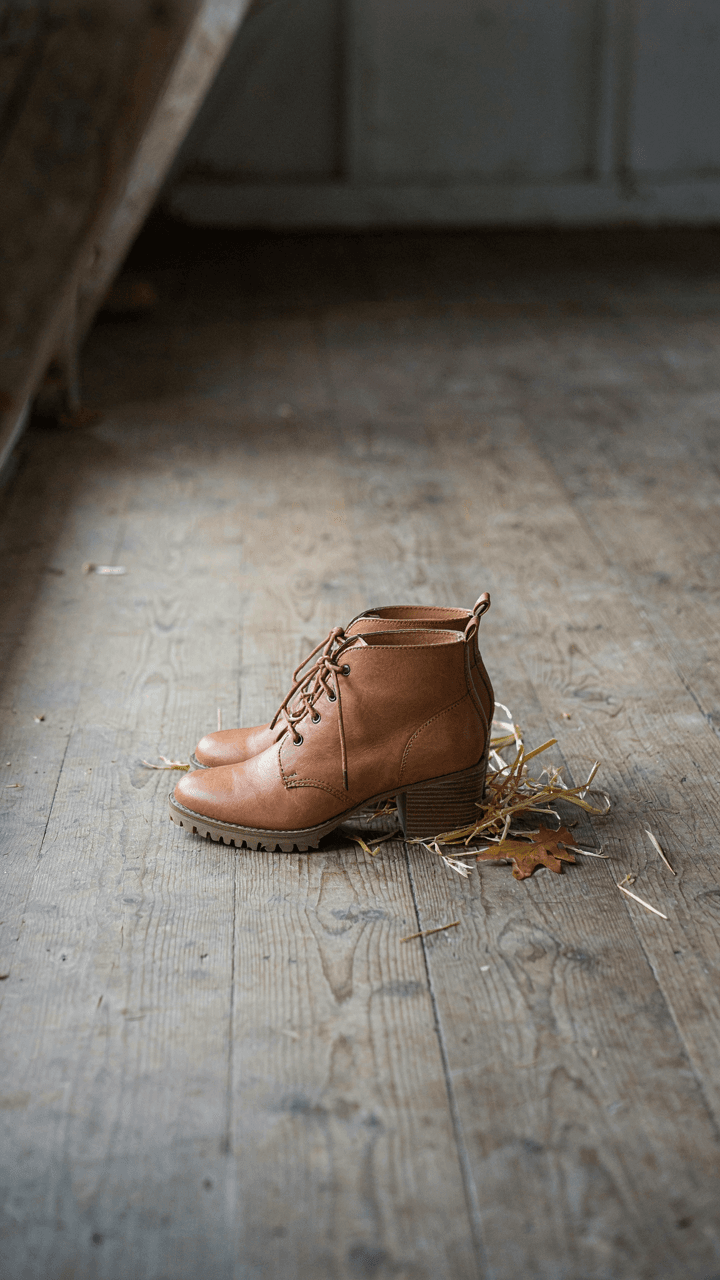
Footwear As Foundation, Not Afterthought
You’re worried your shoes will betray you. That’s the real thing. Most barn wedding advice treats footwear like decoration, but footwear is structural engineering. Your shoe choice determines whether you sink into soft ground, slip on barn wood, or move with confidence. The mechanism is simple: a barn surface changes friction and load distribution constantly. You need grip on unpredictable terrain and support on concrete or wood floors where you’ll stand for hours.
Flat shoes with genuine traction grip beats elevated heels every time. Leather-soled flats or structured loafers on stable outdoor ground. Chunky-soled boots or quality leather sneakers where barn floors are worn smooth. Skip anything with a narrow heel, even low ones. The ground won’t accommodate fashion—your feet will pay the cost instead. Bring a second pair in your vehicle if the venue spans multiple surfaces.
Strategic Layering For Temperature Shifts
Barn interiors don’t regulate temperature the way buildings do. You walk from direct sun into shade into interior space, and each zone feels different. Layering isn’t about looking prepared—it’s about maintaining function when your environment changes hour to hour without warning. Most people underdress or overdress instead of adapting. The solution is building removable layers that maintain silhouette without bulk.
Start with a fitted base in breathable fabric. Add a structured cardigan, blazer, or denim jacket you can tie around your waist or drape over a chair. These stay with you and compress small. Avoid heavy wraps or shawls that require active management. A thin scarf works for neck warmth without commitment. The protocol: dress for the coolest moment of the event, then remove layers as temperature rises. Test your outfit in your actual barn venue if possible—sunlight angle and airflow vary dramatically between locations.
Color Theory For The Country Chic Wedding Outfit Guest
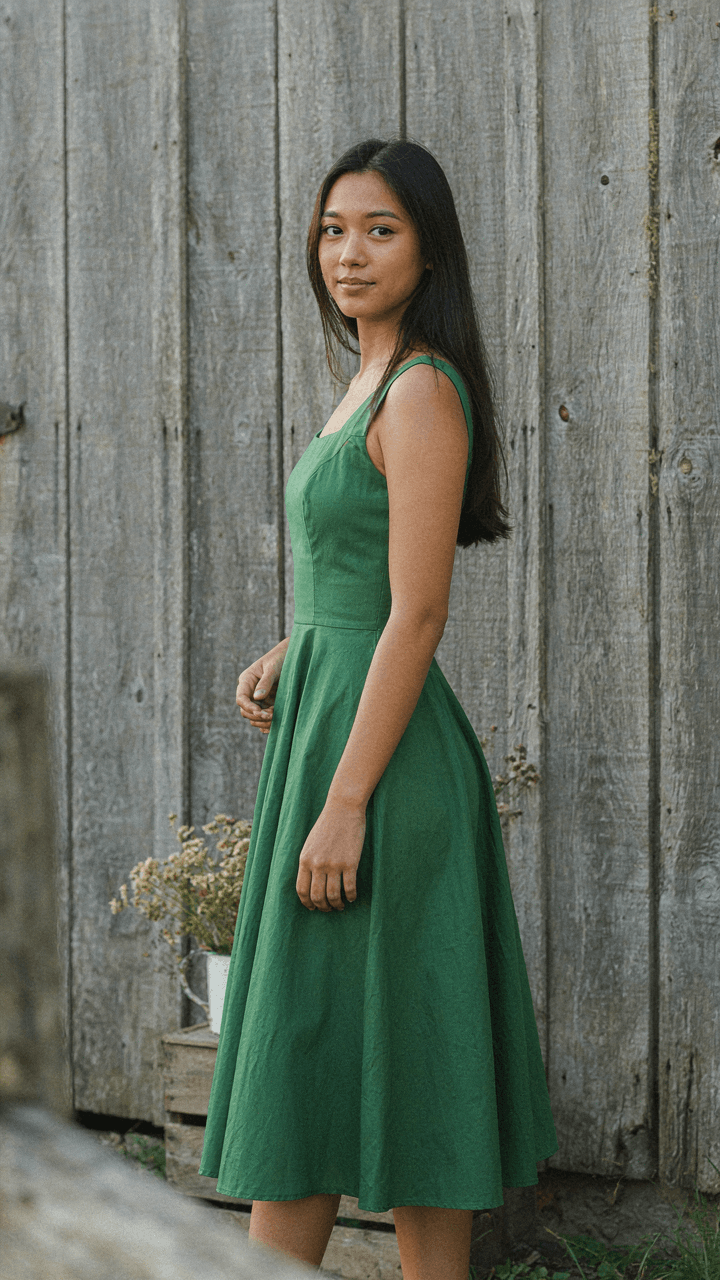
Stop Playing It Safe With Beige
You’re worried beige reads as safe, so you think adding more beige solves the problem. It doesn’t. The real mechanism here is contrast. Barn settings have visual chaos—wood grain, stone, hay, mixed metals. Your outfit needs to compete for attention or disappear. Navy, burgundy, forest green, and charcoal work because they read as intentional against natural textures, not because they’re “earthy.” The common advice about earth tones trains you to fade into the background.

Saturation matters more than hue. A muted sage that matches the barn siding makes you invisible. A crisp forest green with actual depth commands the space. Wear a color that has been processed through a dye or fabric treatment, not one that pretends to be nature. Fabric quality determines whether your color lands as polished or costume. If you choose a jewel tone, commit to it with confidence—the outfit either works because the color is decisive, or it fails because you second-guessed the choice.
The Real Rule About Patterns In Pastoral Settings
Patterns aren’t forbidden at barn weddings. The rule is compression: your pattern must work at a distance. Gingham, florals, and small checks read as visual noise when you’re standing outside in natural light thirty feet away. The eye needs patterns with enough white space or breathing room to land as texture rather than confusion. Small-scale geometric prints and subtle stripes function better because they compress into tone from far away, then reveal detail up close.
One pattern per outfit. Don’t pair a patterned top with patterned bottoms or shoes. The barn itself provides enough visual input. A patterned dress works. Patterned bottoms with a solid top works. Patterned accessories work. Mixing two patterns reads as indecision, not sophistication. Build your pattern outfit around solid-colored shoes and a solid-colored jacket or wrap. This forces discipline and prevents the outfit from becoming a catalog of competing textures.
The Evolutionary Adaptability Of Your Wedding Attire Guest Ensemble
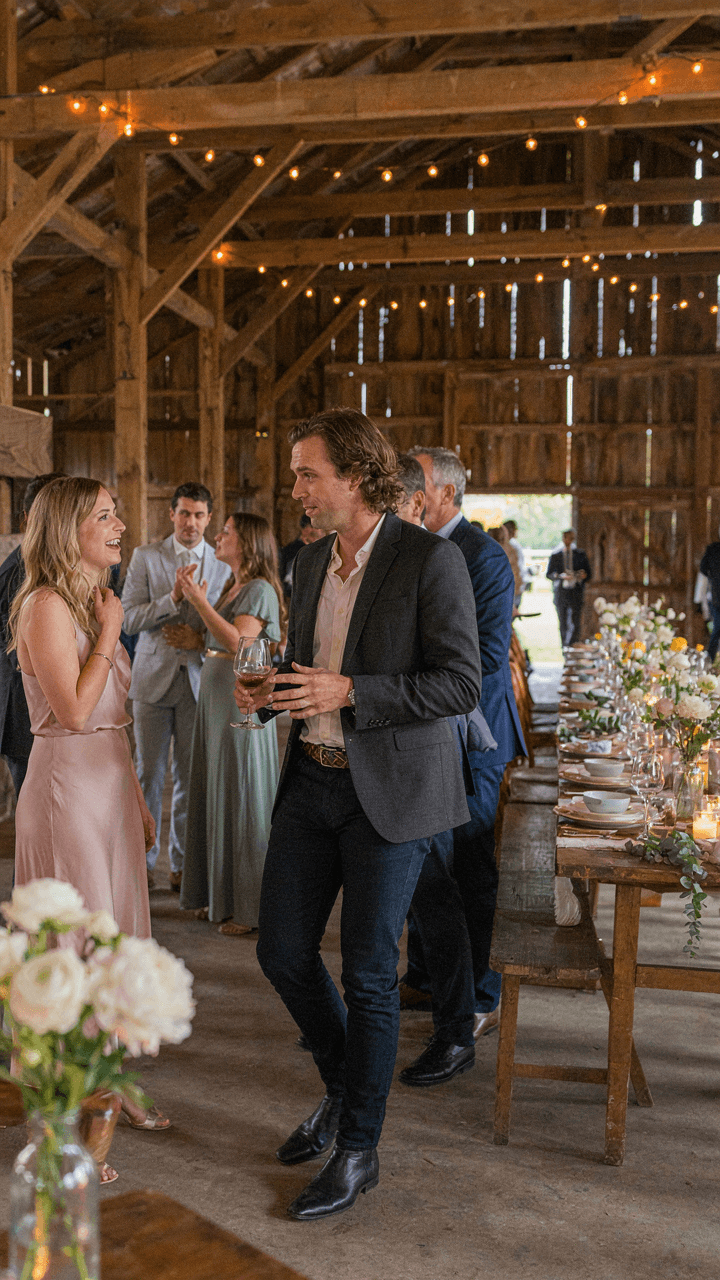
Blend In Without Disappearing
You’re worried people will judge your outfit. Here’s the mechanism: barn weddings operate on visual contrast rules that differ from urban venues, and most guests don’t know how to read them. Mimicry in biology means adopting the dominant visual pattern of your environment to survive unnoticed, but strategic mimicry isn’t invisibility—it’s fitting the aesthetic while owning a recognizable edge. In a barn setting, the dominant pattern is relaxed formality: denim-friendly but intentional. Your job is matching that pattern precisely, then introducing one element that signals you understood the assignment.
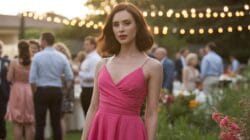
The real error most guests make is treating barn weddings like scaled-down black-tie events. They overdress in cocktail fabrics that scream “city formal” and land wrong. Instead, identify the venue’s visual anchor—usually natural wood, exposed beams, earth tones—and dress within that palette. Pair neutrals with one quality piece that’s authentically you: a patterned blazer, quality boots, an heirloom accessory. This approach keeps you present without competing for attention.
The Subtle Signal That Works
Sexual selection in biology describes how individuals attract notice through honest signals of fitness and intent. In barn wedding attire, honesty means wearing clothes that fit your body and the occasion simultaneously, not fighting either one. Most guests choose fabrics or silhouettes that contradict the setting, sending a signal that reads as trying too hard or missing the point entirely. One quality detail—worn leather, fitted tailoring, or an unexpected texture—communicates that you invested thought, not money, into your presence.
The mechanism is straightforward: barn weddings reward competence signaling over status signaling. Wear structured fabrics that hold their shape (cotton blends, linen, wool) instead of flowing or oversized pieces that read as formal-wear-to-a-casual-event. Choose footwear with actual grip and support; people notice when someone moves confidently across uneven ground. Introduce one intentional detail—a belt, jewelry, or color choice—that proves you know where you are. This combination tells the room you’re a guest who respects the space.
Accessories: The Unsung Heroes Of A Polished Guest Outfit
Function Over Flash
You want accessories to signal you belong at a nice event without trying too hard. The real mechanism is this: barn settings expose every piece of your outfit. Mud, dust, and natural light eliminate hiding spots. Accessories either anchor your outfit or distract from it. Choose pieces that solve a problem first, look intentional second.

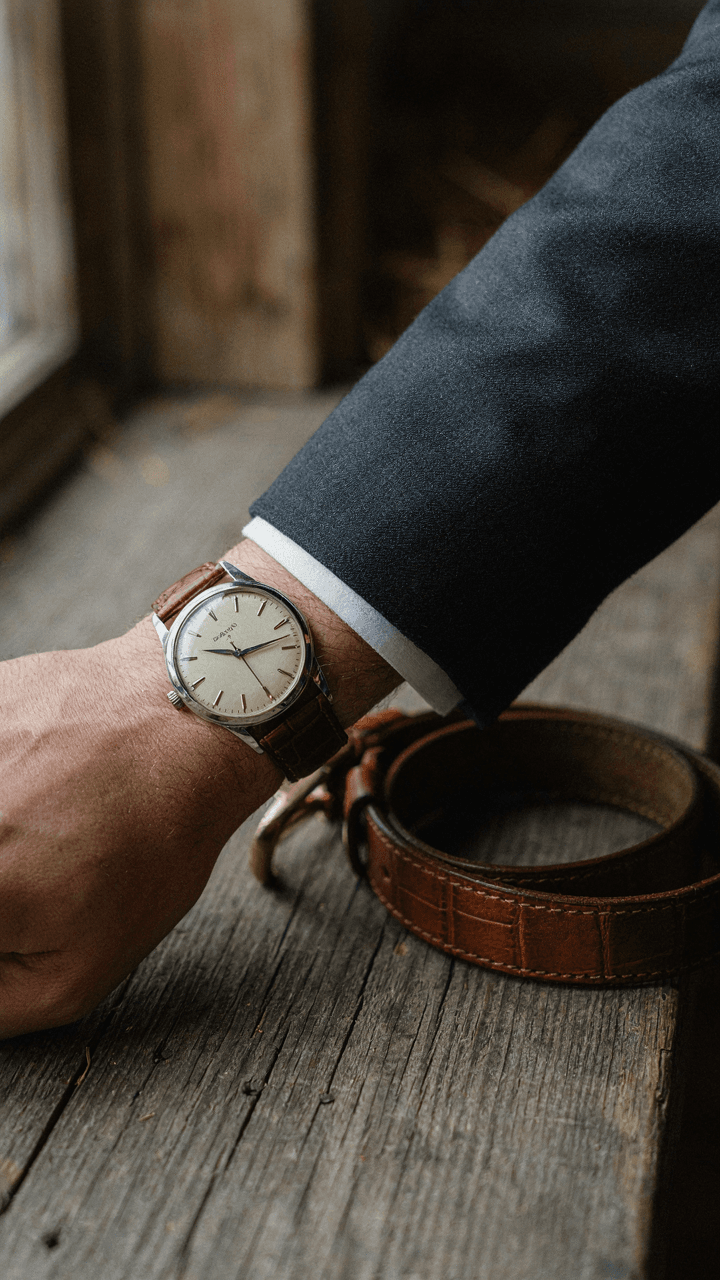
A structured bag, sturdy belt, or layered jewelry works because it handles the environment while staying readable from ten feet away. Barn venues demand accessories with weight and purpose. Delicate, decorative pieces disappear into the visual noise of wood beams and open air. Leather belts, canvas totes, and solid metal jewelry perform. They don’t compete with the setting. They integrate into it.
Personal Details Without Noise
Most people treat accessories like toppings on a pizza: more is safer. Wrong. A barn wedding punishes visual clutter. You notice everything against natural backdrops. One strong accessory choice beats five mediocre ones.
Select a single standout piece that reflects your taste without demanding attention. A vintage watch, quality scarf, or heirloom jewelry works because it’s specific to you, not trendy or generic. Keep supporting accessories neutral and functional. The goal is for someone to remember you looked put together, not to catalog every item you wore. Finish your outfit, then remove one accessory before leaving for the event.
What To Wear To A Barn Wedding: The Dress Code Decryption
Reading Between The Lines
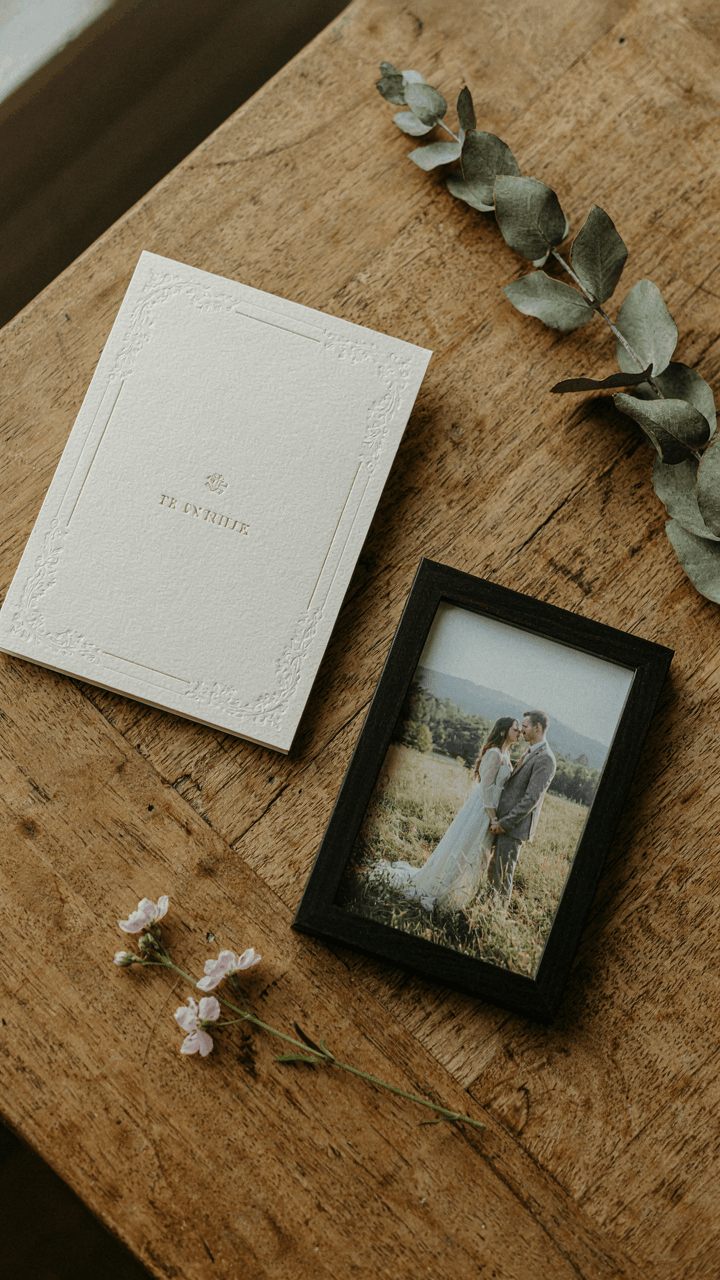
You’re anxious because the invitation doesn’t match your mental filing cabinet of formal events, and you’re terrified of showing up wrong. Here’s the mechanism: barn wedding invitations deliberately avoid specificity because the host is signaling “we’re not doing black tie theater,” but they still expect you to read the setting and respond with appropriate effort. Vague dress codes aren’t lazy. They’re a test of observation.
The real tell isn’t the words on the card. It’s everything else: the venue name, the season, the time of day, the photography style on their social media, the formality level of the couple’s daily aesthetic. A 6 PM barn wedding in October with a photographer who shoots moody film means something different than a noon ceremony in May with bright natural light and casual poses. One signals refined, the other signals approachable. Both are barn weddings. Both expect you to make that distinction without being told.
The Intentional Neutral
Most advice here is garbage because it treats barn weddings like a single category instead of a spectrum. You’ll hear “just be comfortable,” which is how people end up in yoga pants. You’ll hear “match the venue rustic aesthetic,” which is how people show up looking like they’re working the farm. Neither works.
The polished neutral is your protocol: choose pieces that read as intentional effort without announcing a specific dress code tier. Chinos or tailored trousers in neutral tones work across formal and semi-formal barn events. A structured button-up or fitted knit in white, cream, or soft earth tones communicates respect without costume. Footwear matters more than you think because barn floors are uneven. Leather flats, loafers, or boots with a heel under two inches keep you stable and polished. Skip heels over two inches unless the space is clearly indoors with level flooring.
- Tailored Trousers Or Chinos: Structured enough for formality, practical for uneven terrain. Neutrals pair with any top without signaling costume.
- Structured Button Up Or Fitted Knit: Clean lines read intentional. White, cream, or soft gray work across seasons and time of day.
- Leather Flats Or Low Heeled Boots: Barn floors demand stability. Closed toe offers protection and formality simultaneously.
- Layering Piece In Neutral Or Muted Tone: Barns have temperature swings. A blazer, cardigan, or linen jacket adds polish and solves thermal shifts.
- Minimal Metal Jewelry: Skip loud pieces. Simple gold, silver, or wood jewelry won’t catch on textiles or look overwrought in a rural space.
The mechanism is constraint. Limited the color palette to four or five neutrals and one muted accent shade. Limited your silhouettes to fitted and structured. Limited your accessories to one statement piece maximum. This removes decision fatigue and makes you look intentional because you actually were.
The Fall Country Wedding Guest Outfit That Defies Expectation

Layering Without Looking Bulky
You want to show up without being cold or overheated, but you’re terrified of looking like you don’t know where you are. The real mechanism is this: fall barn venues swing 30 degrees between sun and shade. Your outfit must compress into and expand out of a small space without creating visual noise. A structured blazer in merino wool or cotton blend serves as your climate control. It packs thin, sheds fast, and reads polished indoors or out. Skip cardigans and oversized sweaters that bunch under chairs and make you look wider.

The base layer matters more than the top layer. Wear a fitted long-sleeve shirt in a breathable cotton or cotton-blend fabric. This gives you the option to roll sleeves when you move around. Add a vest or sleeveless layer under your blazer for genuine insulation without the bulk of another sleeved garment. This approach lets you adjust temperature without removing your outer layer and creating a pile of clothing on a bench. The vest stays hidden until you need it.
Seasonal Textures For Visual Weight
Texture in fall works like ballast in naval architecture: it stabilizes the outfit without adding actual mass. The common advice says “wear chunky knits” but that’s exactly what makes barn guests look swollen and uncomfortable. What actually works is mixing weight. Pair a smooth wool suiting fabric with a linen shirt. Add suede or corduroy in a single accent piece like a blazer or trousers. Fall fabric variety signals intentionality.
The real play is using texture to age your outfit appropriately. A sleek silk blouse feels summer-specific in October. Corduroy or a matte wool suiting reads seasonally accurate without the costume effect of plaid flannel. Denim in a heavier weight works if it’s tailored. The mechanism: texture substitutes for color saturation. You can wear softer, more muted tones because the fabric itself carries visual interest. Layer a camel-colored merino blazer over cream linen. Add burgundy suede flats. The outfit costs less, travels better, and photographs cleaner than anything with five colors competing for attention.
Stop Asking What To Wear. Ask How To Move With Intent
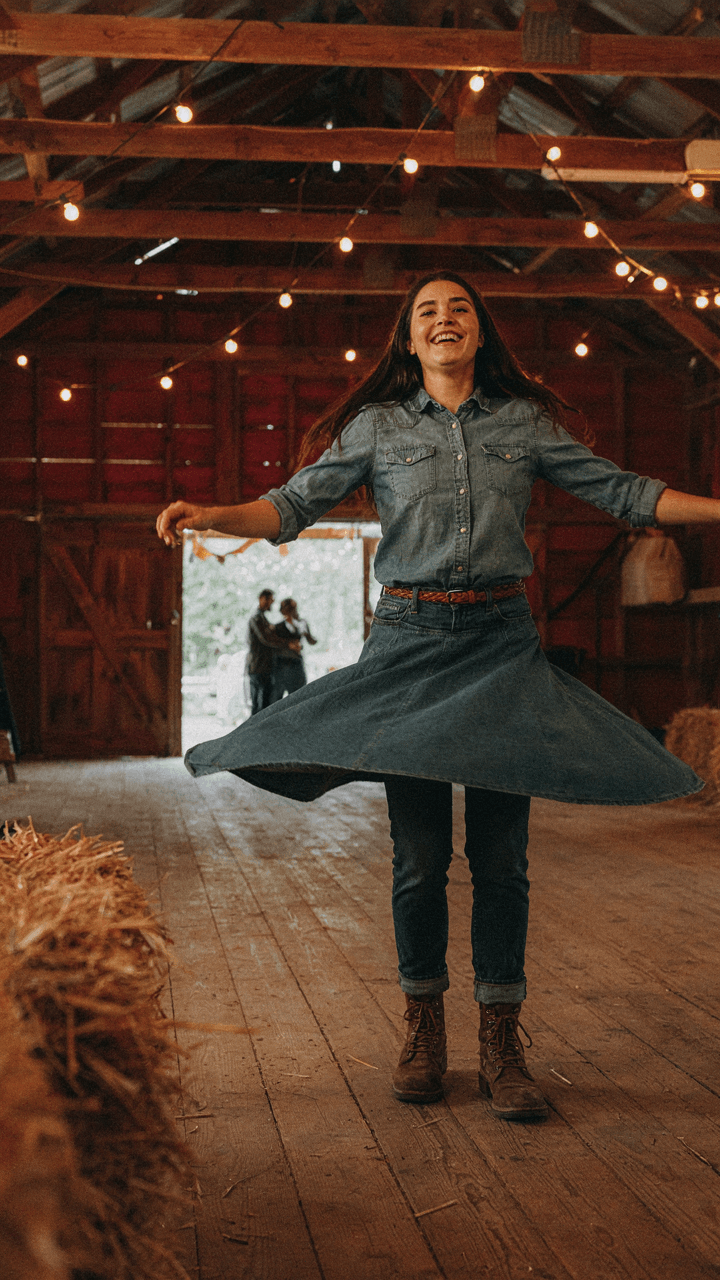
The real problem isn’t finding the right outfit for a barn wedding. It’s that you’re outsourcing your confidence to a checklist. Your barn wedding guest attire works when you choose pieces you’d wear anyway, then move through that day without thinking about your clothes. Stop researching and start trying things on. Wear what makes you forget you’re wearing anything at all.