
The Vineyard Microclimate: Why Your Outfit Strategy Always Fails
Temperature Flux And Humidity Factors
You’re worried about looking wrong. Here’s what actually happens: vineyards create their own weather system that standard outfit advice ignores completely. Think of a vineyard as a thermal mass—the rows of vines and soil absorb and release heat on a schedule that doesn’t match the rest of the landscape. Late afternoon means the ground is still radiating energy upward while the sun begins its descent, creating temperature swings of 15 to 25 degrees between direct sun and shaded vine rows.
Humidity amplifies this problem. Vineyards trap moisture between dense vine canopies and soil, creating microclimates that feel 10 to 20 percent more humid than surrounding open areas. Your fabric choices matter more than you think. Cotton and linen absorb sweat instead of wicking it; they’ll cling in high humidity and then feel cold when you move into shade. Synthetic blends and silk handle the flux better because they shed moisture and regulate temperature faster as you move between zones.
Sun Exposure Versus Shaded Areas Impact
Ignore the advice that you should “just dress for the temperature.” That’s incomplete because temperature alone doesn’t determine comfort in a vineyard. The real mechanism is radiant heat—direct sun exposure creates a thermal load that’s 20 to 30 degrees hotter than shade, even when the air temperature stays constant. You’ll spend your late afternoon moving between full sun during the ceremony and deep shade during dinner, and your outfit needs to handle both without looking like you planned for a completely different event.
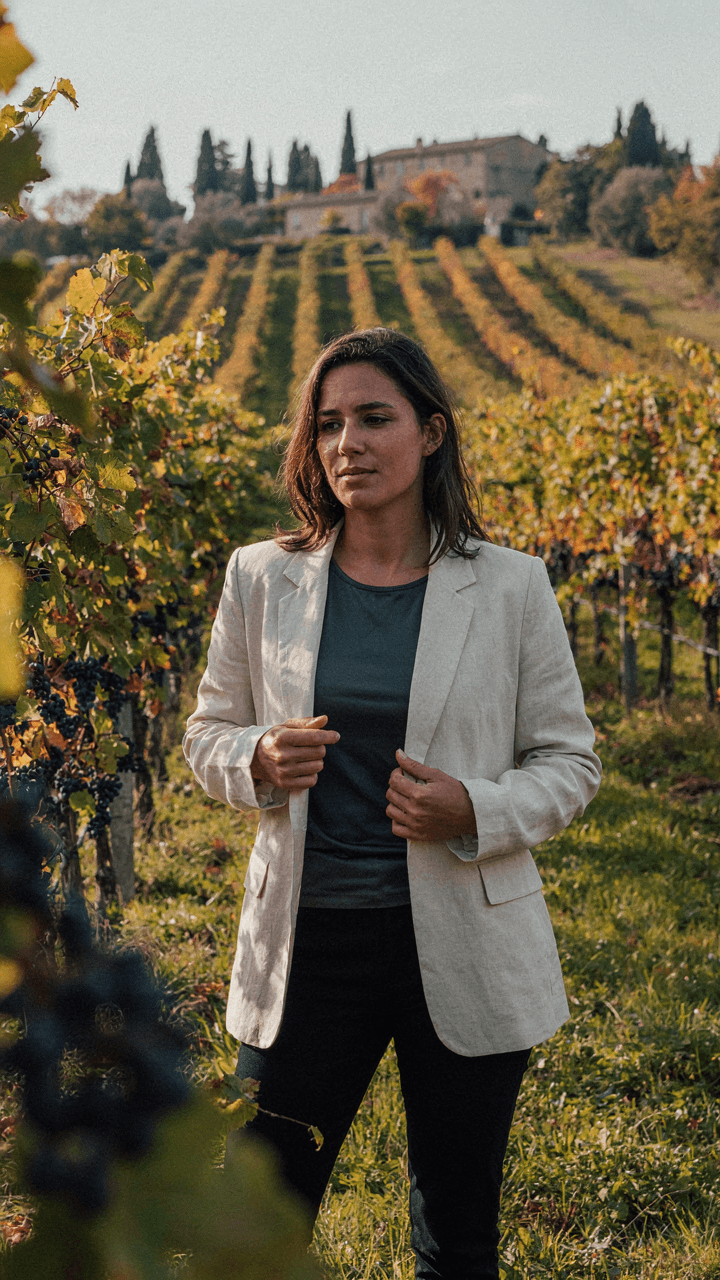
Dark colors absorb more radiant heat; light colors reflect it. A dark suit in full sun will feel substantially warmer than the same suit in shade. Lightweight, breathable layers work better than a single garment because you control coverage as you move. The protocol: wear a structured outer layer you can remove or unbutton (linen blazer, cotton overshirt) over fitted, moisture-wicking basics. This lets you adjust within 10 seconds instead of suffering through 45 minutes of the ceremony or sweating through dinner.
Beyond The Photo Op: Real Comfort For Late Afternoon Ceremonies
Shoes That Actually Work On Uneven Ground
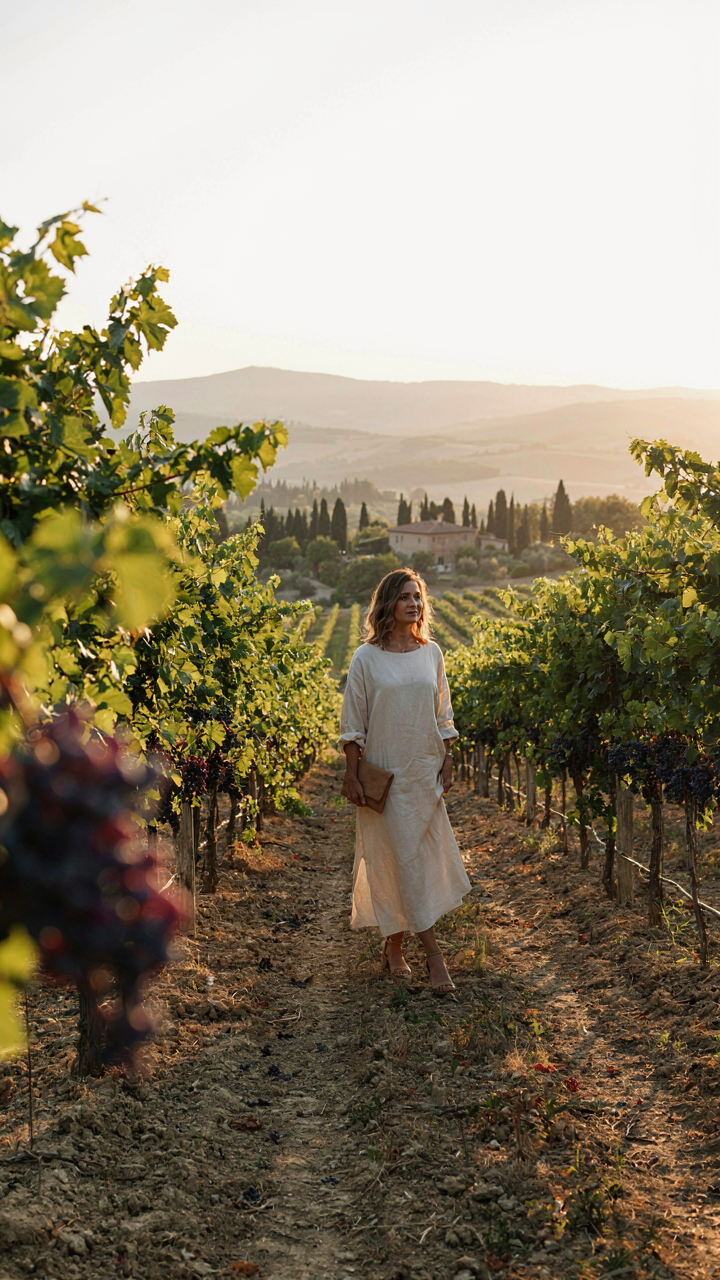
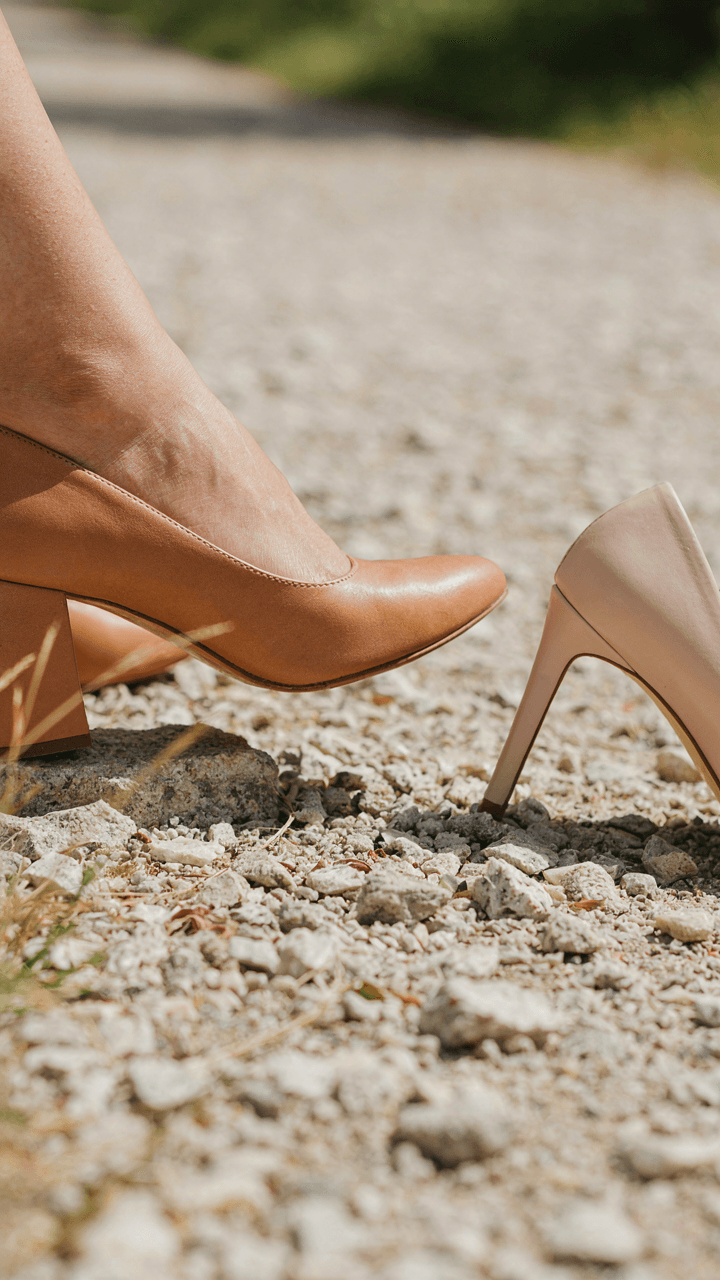
You care about this section because you’re afraid of looking graceless in photos. The real mechanism is biomechanics: your ankle stability determines whether you stand planted or constantly micro-adjusting. Vineyard terrain isn’t flat. Rows create subtle slopes, gravel shifts under weight, and grass hides divots. Most wedding guests wear shoes designed for concrete and then spend four hours fighting gravity.

Flat soles with genuine grip matter more than heel height. Leather-soled flats or heels slide on grass when wet from irrigation or evening dew. Rubber or textured soles grip without drawing attention. Avoid stilettos entirely if the ceremony sits on sloped land. Your foot needs a base, not a point.
The Real Layering Problem Isn’t What You Think
Temperature physics governs this: the sun angles lower in late afternoon, reducing radiant heat faster than air temperature drops. Most advice says “bring a shawl.” That’s incomplete. You need to understand the difference between active sun exposure during the ceremony and shade during the reception. Your outfit must perform across both states without creating visual chaos.
Commit to a base layer that breathes and works alone. A sleeveless dress or jumpsuit lets you add or remove a structured blazer, unlined overshirt, or cardigan. Avoid loose wraps that shift when you move or sit. The mechanism is simple: control your thermal output by adding or removing defined pieces, not by clutching fabric. Test the temperature tolerance of your core outfit before the day arrives.
The “Winery Wedding Outfit Guest” Dress Code Fallacy
What Dressy Casual Actually Means At A Vineyard
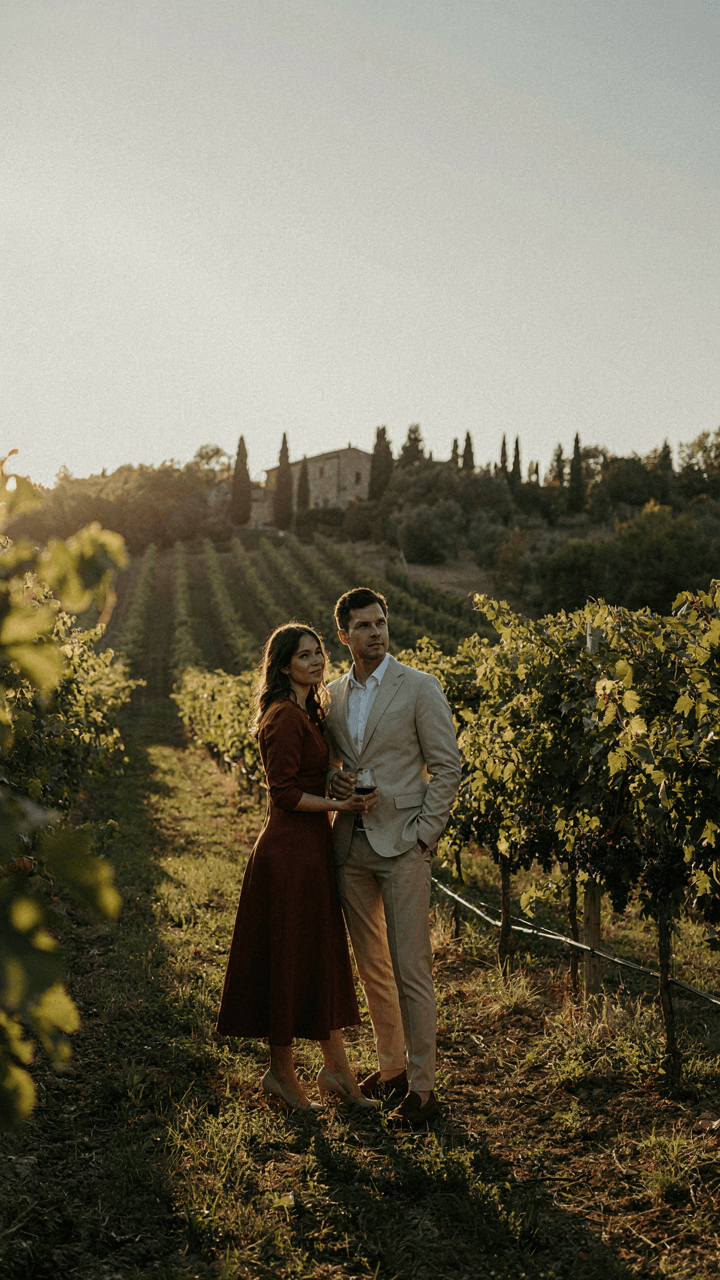
You’re worried the couple will judge you for being underdressed, so you’re scanning Pinterest for permission to wear something safer than you’d normally choose. That’s the real problem here. Dressy casual at a vineyard isn’t a style category—it’s a constraint that forces you to eliminate both extremes. It means you reject formal wear (no tuxedos, no gowns with structured underpinnings) and reject casual wear (no shorts, no t-shirts, no athletic sneakers). What remains is the narrow band where tailoring meets relaxation. Think structured fabrics that breathe, fitted silhouettes that move, and finishes that read intentional without announcing effort.

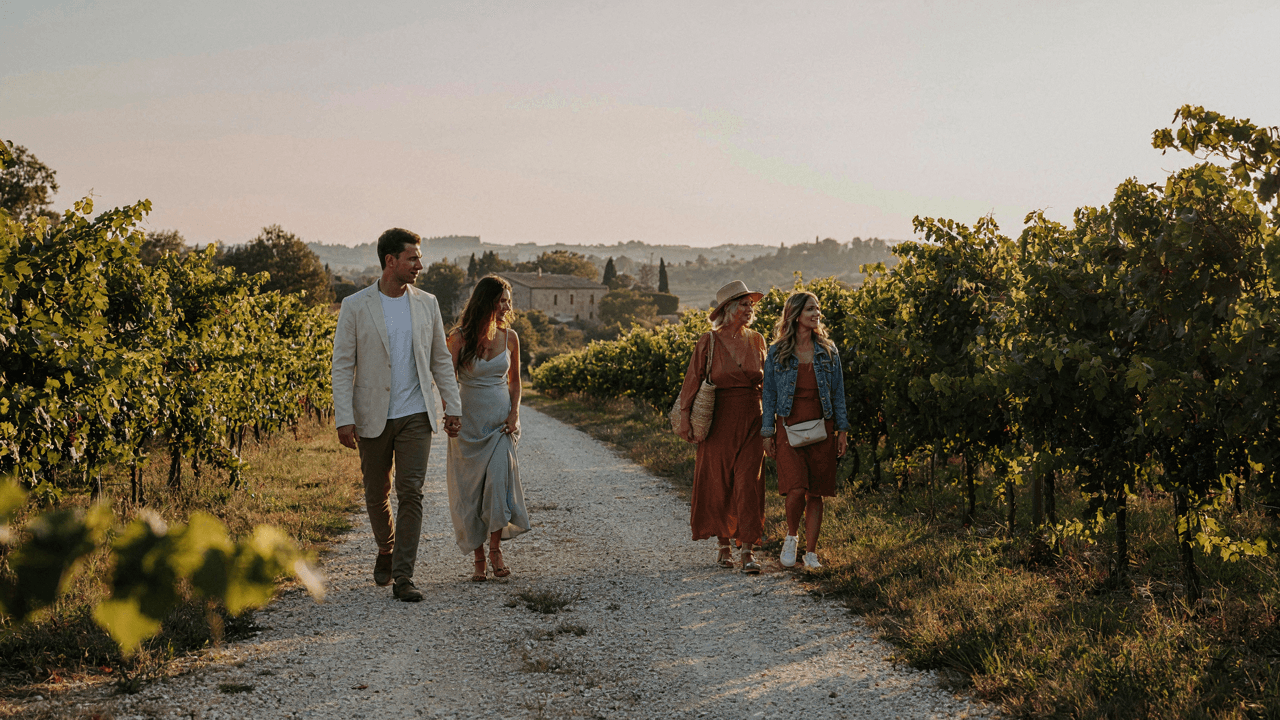
The mistake most guests make is treating dressy casual as permission to wear whatever works for your body type rather than what works for the setting. Vineyard soil, outdoor light at golden hour, and proximity to agricultural landscape create a specific visual context. Your outfit either harmonizes with that context or it doesn’t. A linen blazer with flat-front trousers works. Midi dresses with clean lines work. Structured jumpsuits work. What doesn’t work is assuming that because it’s outside, formality doesn’t matter. The dress code isn’t loose—it’s just informal about the method.
Overdressed Reads As Anxiety, Not Respect
Showing up in full formal wear to a late afternoon vineyard ceremony signals that you either didn’t read the invitation or you’re compensating for something. Neither reads well. Overdressing at a casual event creates visual friction—it makes other guests aware of the dress code without intending to. The couple notices because they see you standing apart from the room’s overall energy. Appropriate styling, by contrast, disappears into the background because it matches what everyone else understood to wear. That invisibility is the actual goal. You want your outfit to be a non-issue so people focus on the couple, the vines, and the ceremony.
The technical distinction: overdressed means you added formality the setting didn’t ask for. Appropriately styled means you added enough intentionality to show respect without breaking the informal contract of the venue. Late afternoon light at a vineyard is forgiving and warm—it doesn’t demand the visual sharpness that evening formal wear requires. Wear something that lets you move, sit comfortably on wooden chairs, and walk on gravel without your footwear becoming a distraction. Build your outfit backward from function first, then layer style on top.
Fabric Intelligence: Your Unfair Advantage In Vineyard Settings
Breathable Natural Fibers Beat Synthetic Traps
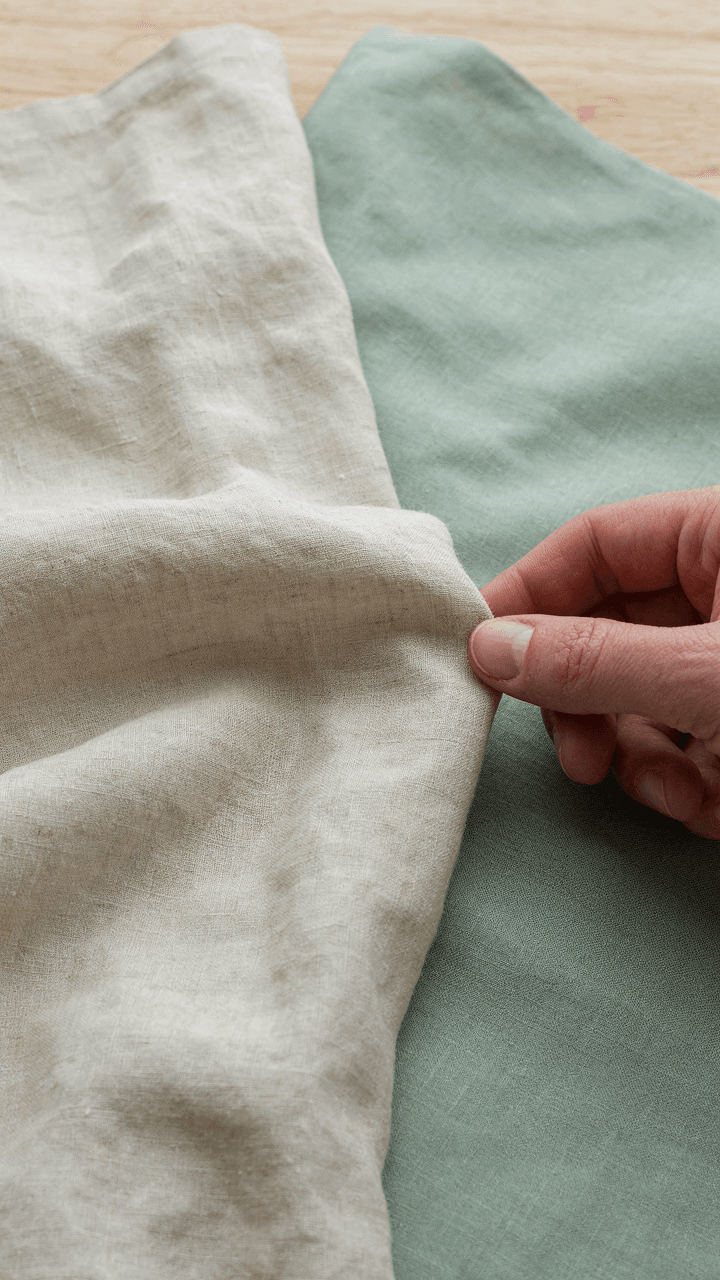
You care about this because sweating through your outfit signals you didn’t plan properly, and that reads as low status to everyone watching. Here’s the mechanism: fabrics regulate temperature through moisture vapor transmission, a concept borrowed from material science. Natural fibers like linen, cotton, and silk move sweat away from your skin and release it into air. Synthetics trap moisture against your body, creating a microclimate that peaks in late afternoon heat when vineyard sun exposure compounds the problem.

Linen performs best for late afternoon ceremonies. It has the highest moisture vapor transmission rate of common wedding fabrics, meaning sweat evaporates instead of pooling. Cotton blends work adequately but absorb rather than release. Avoid polyester blends entirely for vineyard events, especially anything marketed as “wrinkle-free” or “performance” fabric. That coating locks in heat and humidity. Silk works for structured pieces like blazers, but requires intentional layering strategy since it doesn’t breathe as aggressively as linen.
Weather Resistant Without The Sacrifice
The common advice here is wrong: you don’t need to choose between looking polished and staying dry during surprise rain. The actual mechanism is fiber density and weave construction. A tightly woven linen or cotton-blend repels initial water contact through surface tension before absorption begins. This buys you fifteen to thirty minutes of protection during vineyard showers, which is typically enough time to move indoors or seek shelter.
Structured fabrics with tight weaves outperform stretchy or loose-knit materials. A tailored linen blazer or structured cotton midi dress resists moisture far longer than a flowing chiffon piece. Layer a water-resistant outer layer you can remove once indoors instead of choosing between comfort and practicality. This approach keeps you functional without the synthetic overheating trap. Before dressing, check the specific weave density rating of your fabric choice and prioritize garments rated for moisture resistance over those simply labeled “natural.”
The “Adaptive Radiation” Principle Of Accessorizing
How Evolution Shapes What You Actually Wear
You want permission to buy more accessories without looking like you’re trying too hard. Here’s the mechanism: in biology, adaptive radiation describes how one ancestral species evolves into many species, each fitted to a specific environmental niche. Your vineyard wedding accessories work the same way. A single base outfit branches into multiple viable versions depending on light, temperature, ground conditions, and social positioning. The constraint isn’t your closet—it’s the specific pressures of late afternoon vineyard light and uneven terrain.

Late afternoon light at a vineyard is not forgiving. The sun hits lower, casting longer shadows and warming skin tones unpredictably. A necklace that reads as elegant at noon becomes garish in golden hour. A clutch that works on manicured lawn snags on gravel. Accessories aren’t decoration—they’re tactical responses to environmental data. You’re not accessorizing for beauty. You’re accessorizing for fit.
Constraint Driven Selection
The common advice here is wrong: “Choose accessories that complement your outfit.” That’s output-focused nonsense. Real accessorizing starts with identifying which items solve specific problems. A shawl isn’t for looks—it buffers temperature swings between sun and shade. A crossbody bag isn’t trendy—it frees your hands on sloped terrain. Jewelry placement changes based on whether you’re standing on grass or gravel; dangling earrings catch on branches differently than studs do.
A late afternoon vineyard wedding creates hard constraints that cheap accessories can’t handle. Metallic finishes reflect harsh light; matte and brushed metals absorb it. Strappy shoes sink into soil; block heels distribute weight across uneven ground. Lightweight fabrics billow in valley wind; structured materials hold their shape. Select accessories by asking what each one must survive, not what it should look like. The item that survives the environment wins the slot in your outfit.
Color Palettes That Don’t Compete With The Landscape
Blend Into The Vineyard Setting
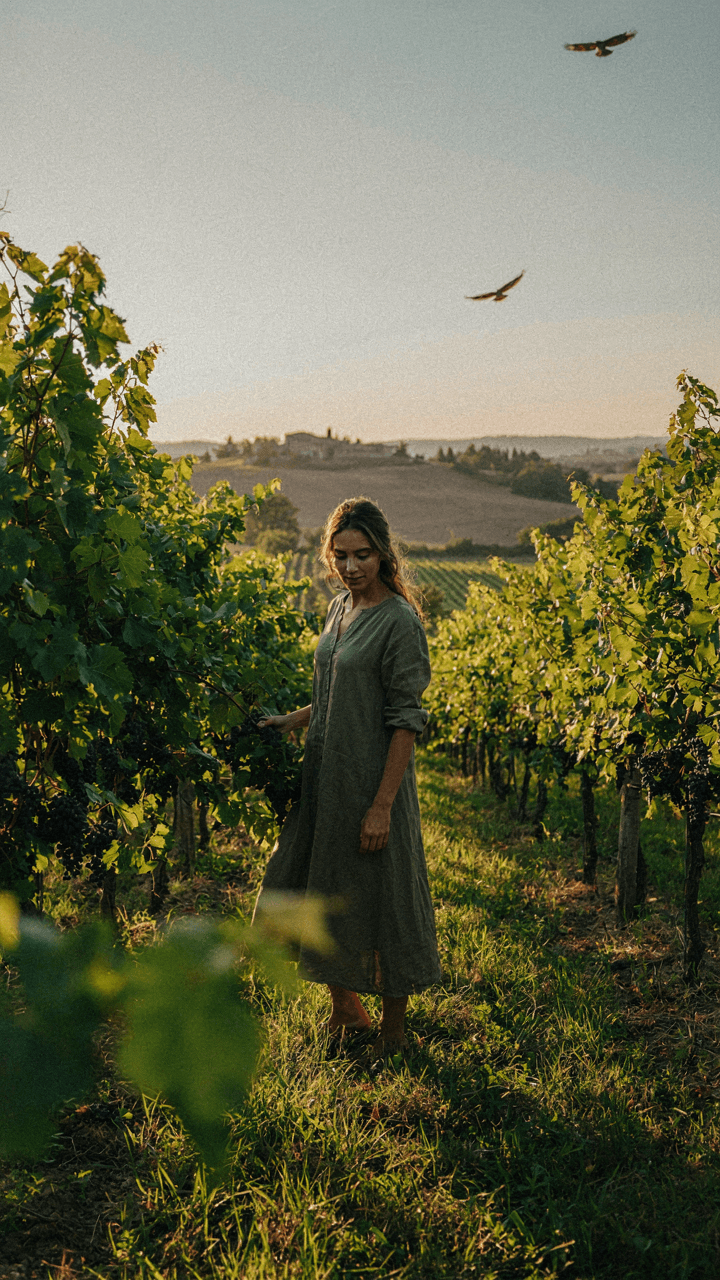
You’re worried about standing out for the wrong reason. The real mechanism here comes from visual hierarchy: your outfit either competes with the environment for attention or recedes into it. Vineyards have dominant colors already locked in—deep greens from canopy, browns from soil and wood posts, stone grays from architecture. You need to recognize those existing elements as the visual anchor, not fight them.

Earthy tones work because they share the same wavelength as the landscape itself. Warm beiges, muted taupes, soft olives, and burnished golds don’t create contrast. They create coherence. Late afternoon light intensifies earth tones anyway—the sun hits warm, and your outfit becomes part of the palette rather than a foreign object. Choose colors that appear in the vineyard already. Your clothes become background music, not the speaker.
Ditch The Assumption That Bright Reads As Better
Everyone assumes they need to pop. That’s wrong. Bright colors read as tension in a natural setting. Neon pinks, electric blues, and saturated purples aren’t sophisticated—they’re noise. The common advice to add a pop of color assumes you’re dressing for an urban venue where visual pop signals status. Vineyards operate on different rules.
The mechanism is visual fatigue. Bright hues demand the eye’s processing power. In late afternoon sun, when light already creates contrast between shadows and illuminated areas, a bright outfit doesn’t enhance the scene—it creates eye strain for anyone looking at photos or at you directly. Muted jewel tones like dusty rose, slate blue, or deep terracotta work because they have saturation without aggression. Test your color choice by standing next to the actual vineyard if possible, or compare it to vineyard photos in similar light.
The “Vineyard Wedding Guest Outfit” Deception: Why Trends Fail Here
Fashion Cycles Versus Ground Reality
You’re worried you’ll look dated in six months. That’s the real reason you’re scanning trend articles instead of thinking clearly about what works at a vineyard in late afternoon sun. The mechanism here borrows from biology: organisms adapt to their environment or die. Your outfit either solves for the actual conditions of a vineyard ceremony or it doesn’t. Trend cycles move fast. Vineyard physics don’t.

Late afternoon ceremonies mean direct sun at a sharp angle, temperature swings between shade and exposed rows, and uneven ground that punishes certain shoe choices. A trending color or silhouette from this season won’t protect you from these variables next year. The outfit that works is the one that accounts for heat, light, and terrain, not the one that photographs well against this month’s Instagram aesthetic.
Durability Over Disposability
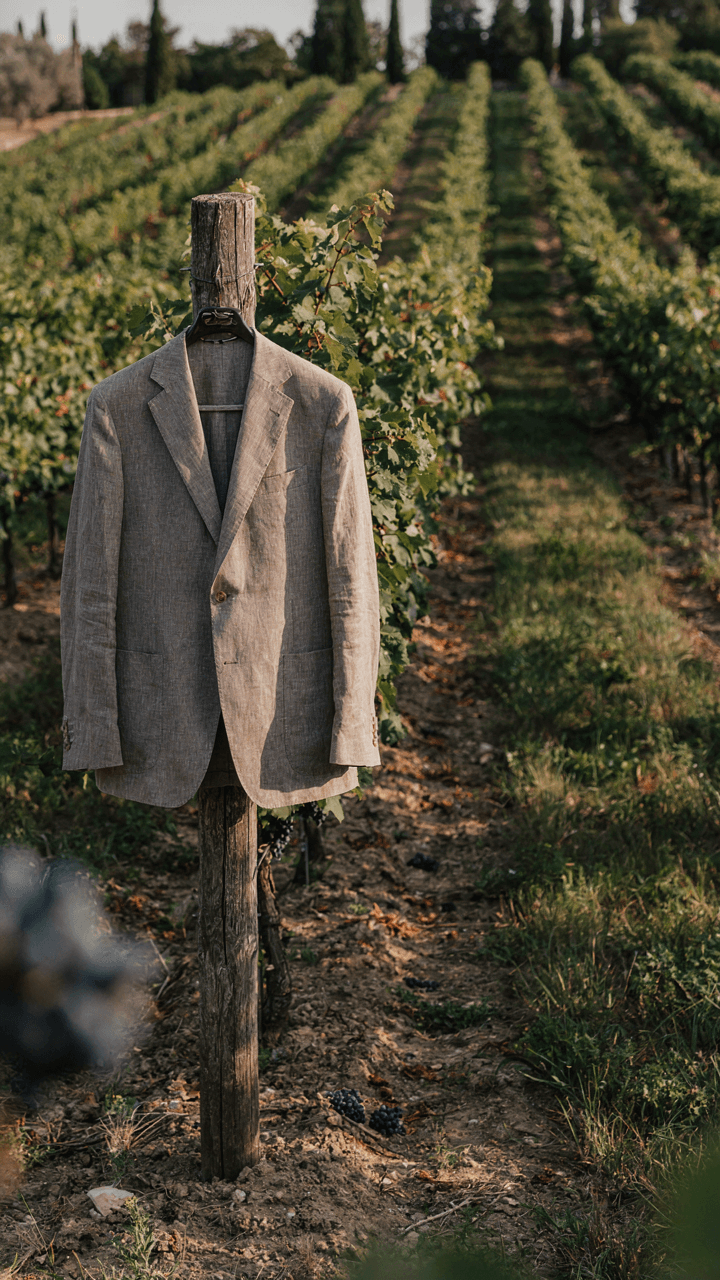
Common advice tells you to buy statement pieces for weddings. Wrong. A vineyard wedding guest outfit needs to earn its place in your closet through actual use, not event exclusivity. This is pure economics: cost per wear. A well-made neutral blazer in a natural fiber works at vineyard weddings, business settings, casual dinners, and travel. A trendy cropped jacket in synthetic material works at one wedding and then occupies drawer space.
The pieces that survive multiple seasons are cut from natural fibers: cotton, linen, wool blends, silk. Synthetic materials pill, fade, and lose shape after a handful of wears. Invest in construction you can inspect: real seams, reinforced stress points, quality hardware. When you’re standing in a vineyard in three years, you’ll wear the same outfit you own today because it was built to last, not to trend.
Solving For The Fall Wedding Guest Equation
Temperature Volatility Demands Actual Strategy
You’re worried you’ll look wrong because you can’t predict what you’ll feel like at 6 PM on a vineyard in October. That’s the real problem nobody names. Think of layering as a system from thermodynamics: you’re not trying to stay warm, you’re trying to maintain thermal equilibrium across unpredictable conditions. A late afternoon ceremony means sun exposure when you arrive, shade and cooling air by the reception. The common advice—”just wear a light jacket”—misses the mechanism entirely.

The actual play is building outfit flexibility into the foundation, not bolting it on last. Start with a breathable base: a dress in cotton, linen blend, or lightweight wool that you can wear bare-armed without shivering. This isn’t about fashion preference. It’s about creating a stable core temperature reference point. Then add a second layer—a cardigan, blazer, or structured overshirt—that you can remove during the ceremony when the sun angle works in your favor, then put back on during cocktail hour when the vineyard breeze kicks in. The outfit changes without you changing clothes.
Wraps That Function, Not Ornament
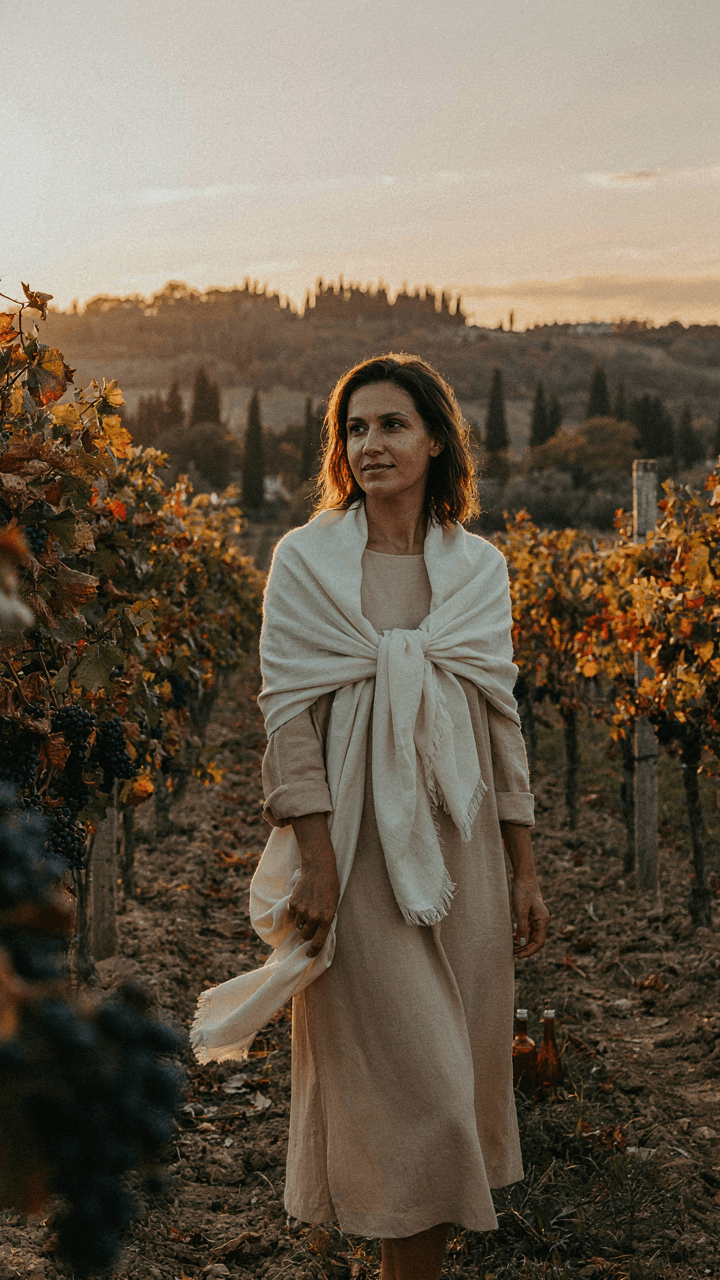
Most wedding guests throw a pashmina over their arm and call it solved. That’s decoration masquerading as strategy. You need outerwear that works across two different thermal environments and doesn’t wreck your silhouette when you’re not wearing it. A structured shawl in a heavier fabric—merino wool, a linen-silk blend, or a tailored wrap dress—stays in place without constant adjustment and folds small enough to drape over a chair at dinner.
Skip the typical “shrug” or oversized scarf. They slide, bunch, and photograph poorly. Instead, choose a piece with actual weight and defined edges: a structured pashmina, a tailored blazer in a neutral that matches your dress, or a lightweight wool wrap in a single color. At a late afternoon vineyard event in fall, you’re solving for a piece that handles temperature swings without looking like you grabbed it as an afterthought. Test the piece before the wedding—wear it for thirty minutes to confirm it stays put and doesn’t shift when you move your arms.
The “Winery Wedding Guest Dresses” Myth: Beyond The Gown
Jumpsuits, Separates, And Suits Work Better
You’re afraid a non-dress choice signals you didn’t take the event seriously. The real mechanism is simpler: late afternoon light at a vineyard exposes fit problems immediately, and a jumpsuit or tailored suit hides nothing while projecting intentionality. Dresses dominate wedding guest advice because they’re the default, not because they’re the best option for this specific environment.

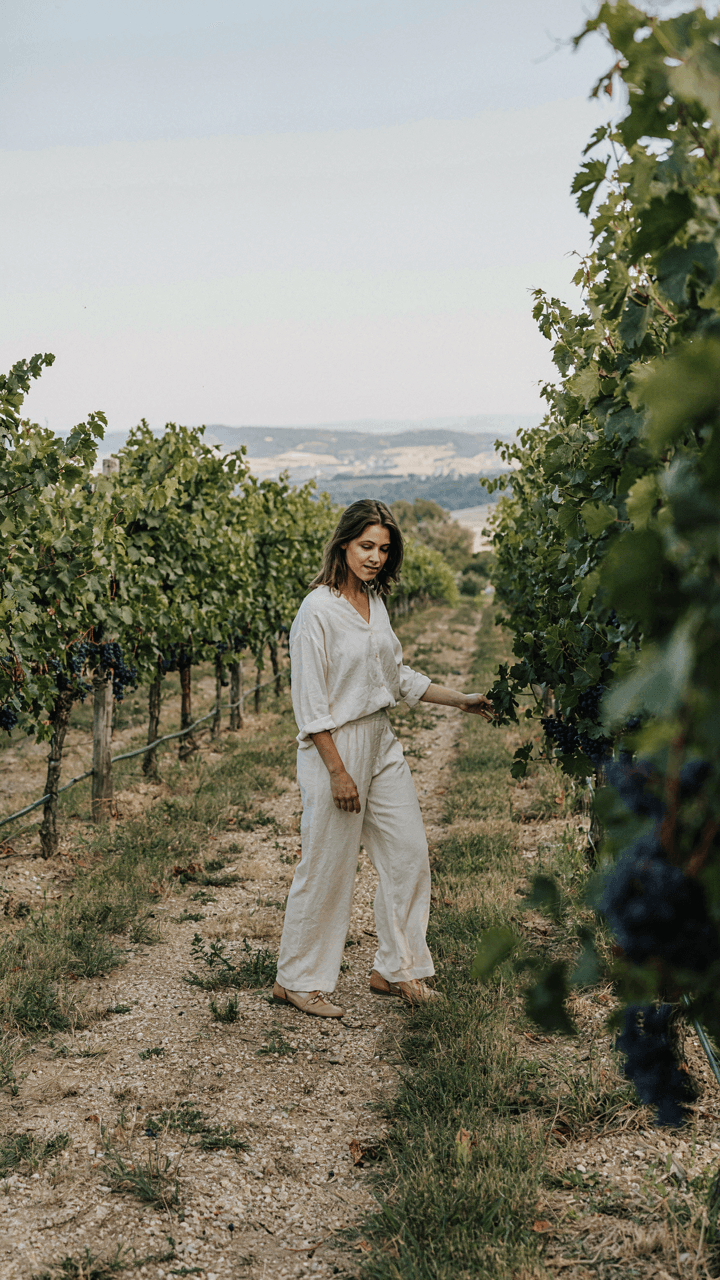
Jumpsuits and separates solve the problem dresses create in vineyard settings. You move without fabric catching on uneven ground. Tailored trousers paired with a silk blouse or structured blazer won’t shift during photos on sloped terrain. A well-fitted suit on any gender reads formal without the movement liability of a gown. These options perform better under late afternoon scrutiny because the structure doesn’t rely on careful positioning or constant adjustment.
Comfort Drives The Real Signal
The fashion industry separates comfort from formality, but they’re not opposites in vineyard contexts. A guest in an uncomfortable dress signals compromise. A guest in tailored separates or a suit signals preparation. This distinction matters because vineyard venues demand practical movement, and the eye catches strain immediately in natural light.
Late afternoon ceremonies at vineyards expose the gap between what looks good and what functions well. Your personal style becomes visible only after you stop managing the outfit. Choose pieces you’ve already worn and tested. This list tracks what actually works:
- Wide-leg trousers with structured tops: Move freely on gravel and grass without the fabric catching or riding up during sitting and standing cycles.
- Blazer and slip combo: Provides formality and coverage while staying cool as temperature drops between ceremony and reception.
- Tailored jumpsuit in breathable fabric: Functions like a suit but reads as intentional choice rather than default dress option.
- Linen or cotton separates: Wrinkle slightly but regulate temperature better than silk alone and match vineyard casualness without sacrificing polish.
- Structured suit jacket over simple dress: Layers allow you to adjust formality and temperature without changing outfits entirely.
The outfit that lets you stop thinking about it is the one that works. Test your choice on uneven ground before the wedding. Wear it for at least three hours during daylight similar to late afternoon timing. If you adjust it more than twice, choose something else.
Packing For The Practical: The Minimalist’s Approach
Bring Only What Works Twice
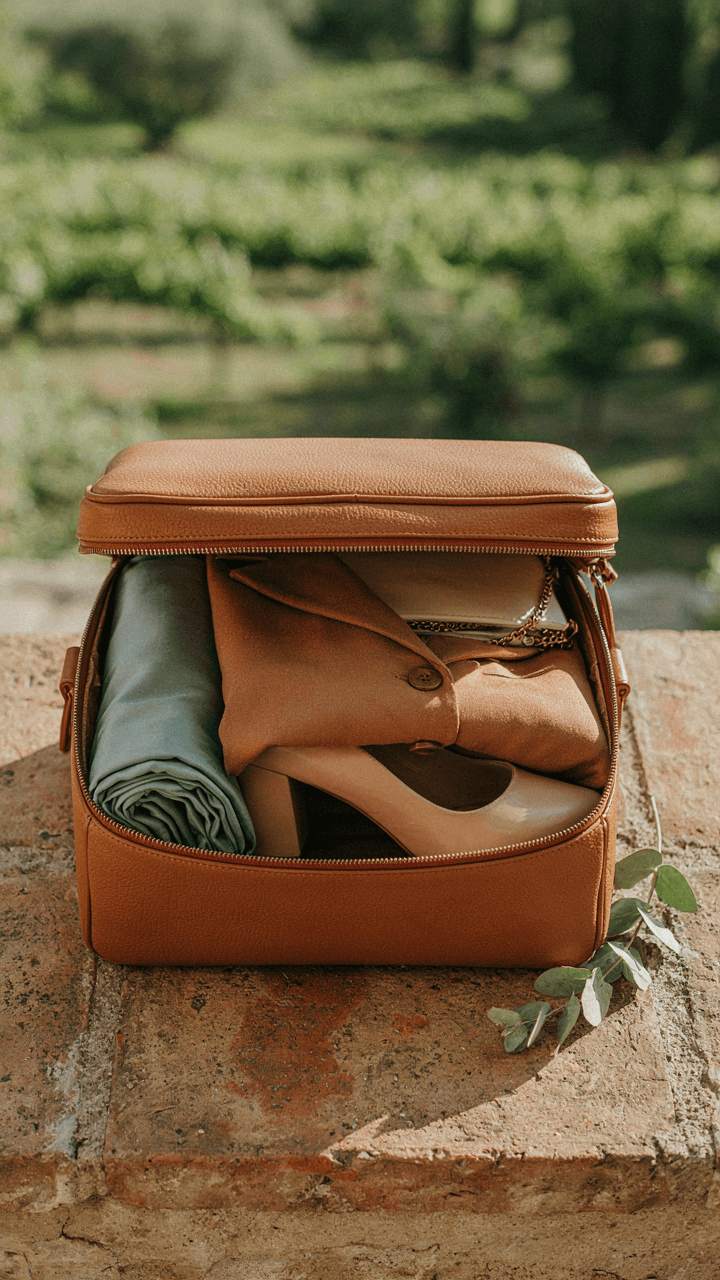
You’re anxious about looking underdressed or overprepared, so you pack backup options that sit unused in your car. The real mechanism is constraint forcing clarity. In economics, this is called the scarcity principle: limited resources force better decisions. Treat your packing like a captain treating cargo weight. One outfit wins. One pair of shoes. One bag. The late afternoon vineyard ceremony doesn’t shift dramatically in temperature or formality between 4 PM and 7 PM, so layering flexibility matters more than variety.
Redundancy kills minimalism faster than anything. Bring pieces that function across the day’s phases without requiring outfit switches. A structured blazer works for ceremony arrival and late-light dancing. A neutral dress works under the blazer and alone. Shoes must handle ceremony standing, grass navigation, and dance floor contact. One watch, one bag, one accessory per category. This forces you to pick items with genuine utility instead of emotional backup plans that never deploy.
Strategic Layering Eliminates Outfit Multiples
Most advice tells you to pack a light layer and a warm layer separately, treating them as backup options. Wrong. Treat layering as a single integrated system, not a fallback. One piece of outerwear should serve two temperature states without looking awkward in either. A linen blazer handles cool ceremony hours and adds texture during warmer late afternoon phases. A structured shawl works similarly. The goal isn’t having options. The goal is one strategic addition that solves both conditions and looks intentional.
Late afternoon means uncertain temperature trajectories. Vineyards create microclimates: cool near the vines at 5 PM, warm in open ceremony spaces at 6 PM. Your single layering piece must transition between both states without broadcasting discomfort. Choose materials that don’t wrinkle when removed, don’t require constant adjustment, and read as intentional styling rather than temperature management. Pack only what you’ll actually layer into your outfit before you leave your hotel.
Your Fear Of Being Underdressed Is Just A Fear Of Understanding The Environment
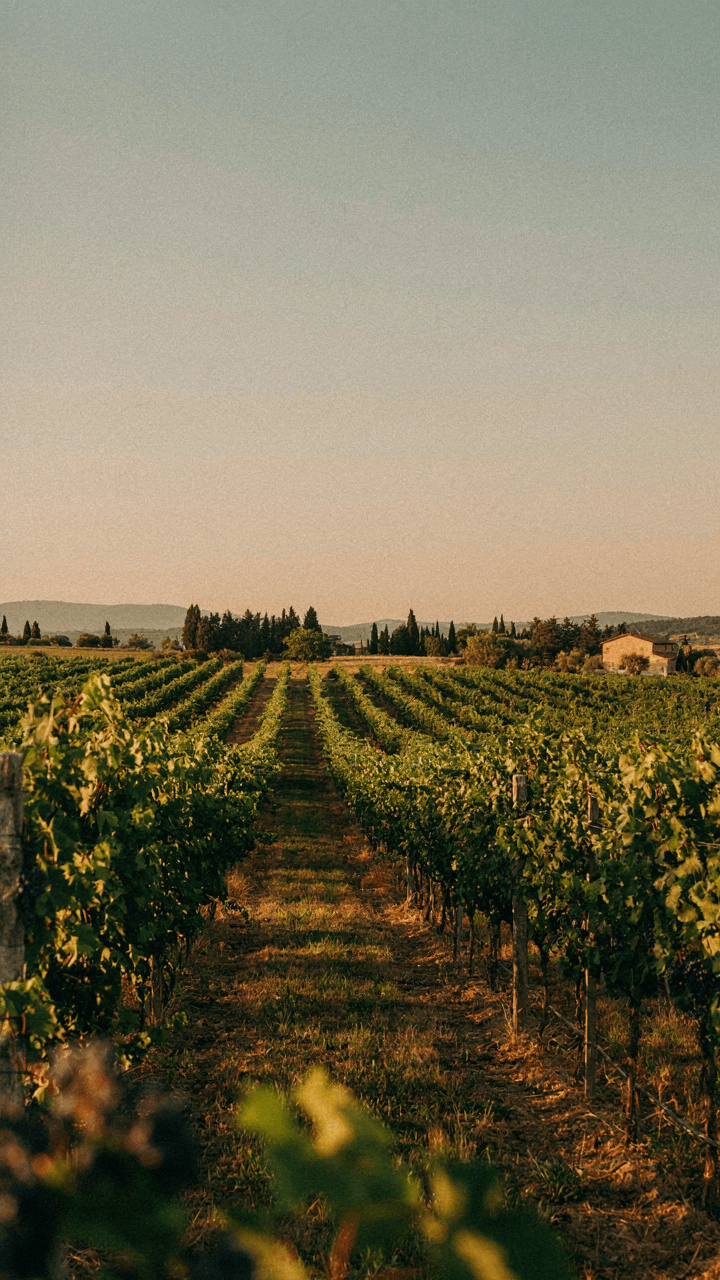
Most people panic about vineyard weddings because they never actually look at where they’re going. You’re not scared of being underdressed. You’re scared of the unknown. So stop it. Visit the venue’s Instagram. Check the lighting at that hour. Notice what the ground looks like. Text the couple one question. Do this today. Suddenly you’ll realize that a vineyard at 4 PM isn’t complicated. It’s just dirt, grapes, and light. Dress for that and you’re done.