
The Unspoken Contract: Decoding The Host’s Subtext
What The Invitation Actually Says
You’re anxious about getting it wrong because showing up overdressed or underdressed signals you don’t belong in that room. The mechanism here mirrors signal theory in economics: the invitation wording is a price tag that filters who understands the code. “Black tie optional” doesn’t mean you have a choice. It means the host is giving permission to the insecure while signaling to everyone else what the actual baseline is.
The formality level exists on the invitation for a reason. “Cocktail attire” on a spring wedding means structured clothing that reads as intentional. “Smart casual” means you’ve thought about proportions and fit, not that you threw on clean jeans. The specific wording eliminates ambiguity only if you stop treating it as decoration and read it as operational instruction.
The Gap Between What They Say And What They Mean
Most advice tells you to match the dress code and call it a day. That’s incomplete. The real expectation lives in the gap between the stated code and the venue’s social weight. A spring wedding at a country club signals different stakes than the same dress code at a backyard ceremony. The host’s social position, the guest list composition, and whether this is their first or fifth wedding all matter more than the printed line.
The only reliable decoder is this: look at what the couple is actually doing. If they’re getting married at noon in May, they’re not expecting evening formality regardless of what the card says. If they’re hosting two hundred people at a established venue, they expect higher polish than fifty close friends in a garden. Cross-reference the stated code against these environmental facts, then calibrate your outfit to that intersection.
Beyond Blooms: Strategic Color Theory For Spring Wedding Guest Dress
When Pastels Stop Working
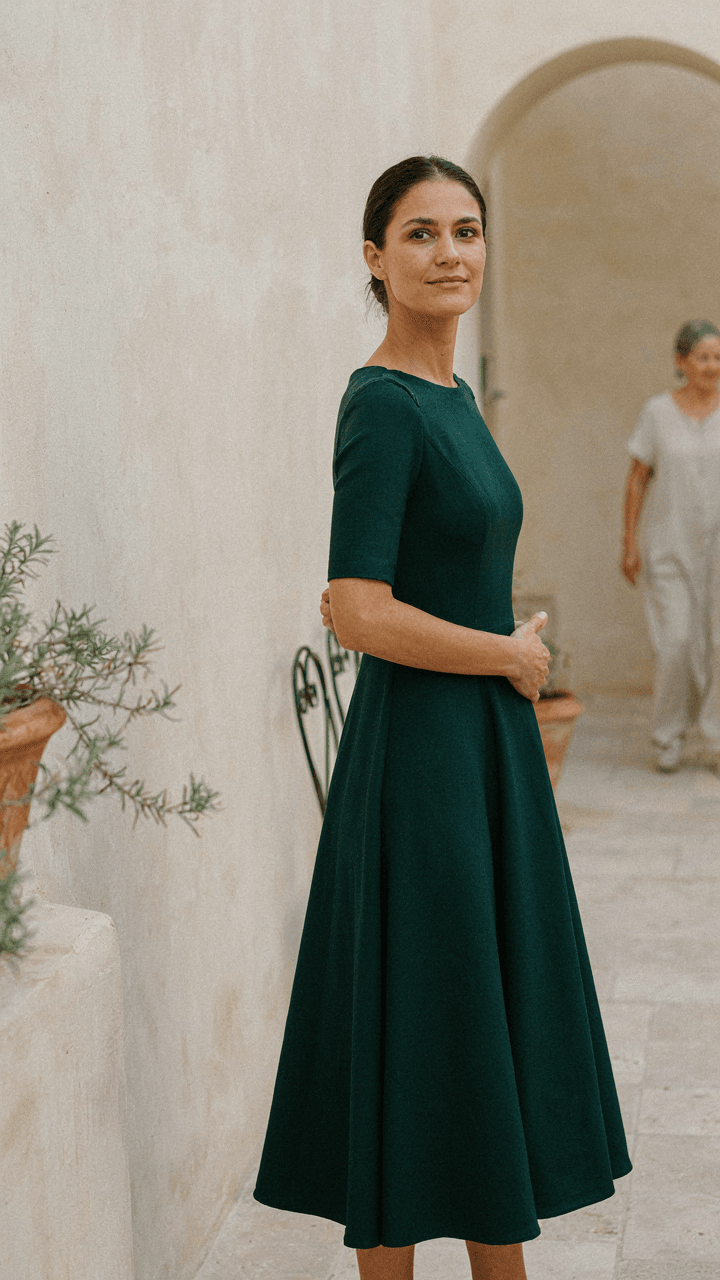
You want pastels because everyone says spring means soft colors, and soft colors mean you won’t stand out or clash. That’s the real fear underneath. But pastels have a structural problem: they flatten most skin tones and read as faded against outdoor light. Spring color theory isn’t about gentleness. It’s about contrast and saturation relative to your environment. A muted sage or dusty rose disappears in daylight. A true jewel tone or saturated neutral commands the same space without screaming.

The consensus advice is backwards. Pastels work only if you have specific undertones and only indoors. Saturated colors in spring read as intentional and sophisticated because they require confidence. They also photograph better, which matters because someone’s documenting this event. Choose color density over color temperature. Pick one saturated shade and build the outfit around it rather than chasing the “spring palette” everyone else is wearing.
Fabric Weight Changes Everything About Color
Fabric texture functions like a light filter in physics. The way fibers scatter and absorb light directly controls how intense your chosen color appears on your body. Silk charmeuse reflects light uniformly, amplifying color. Linen scatters light, muting the same shade. Cotton voile diffuses it further. Most spring wedding guest advice ignores this entirely and treats color as a flat swatch decision.
Pick your color first, then test it in three fabric weights before buying. A deep burgundy in heavy crepe reads formal and grounded. The same burgundy in gauze reads washed out. Matte fabrics demand deeper saturation to land the color you intended. Shiny fabrics need less saturation or they become costume-like. Match fabric weight to your color intensity: light fabrics pair with saturated colors, heavy fabrics pair with deeper tones.
The Effortless Edge Protocol For Wedding Guest Outfit Spring
Three Pieces That Signal Intention
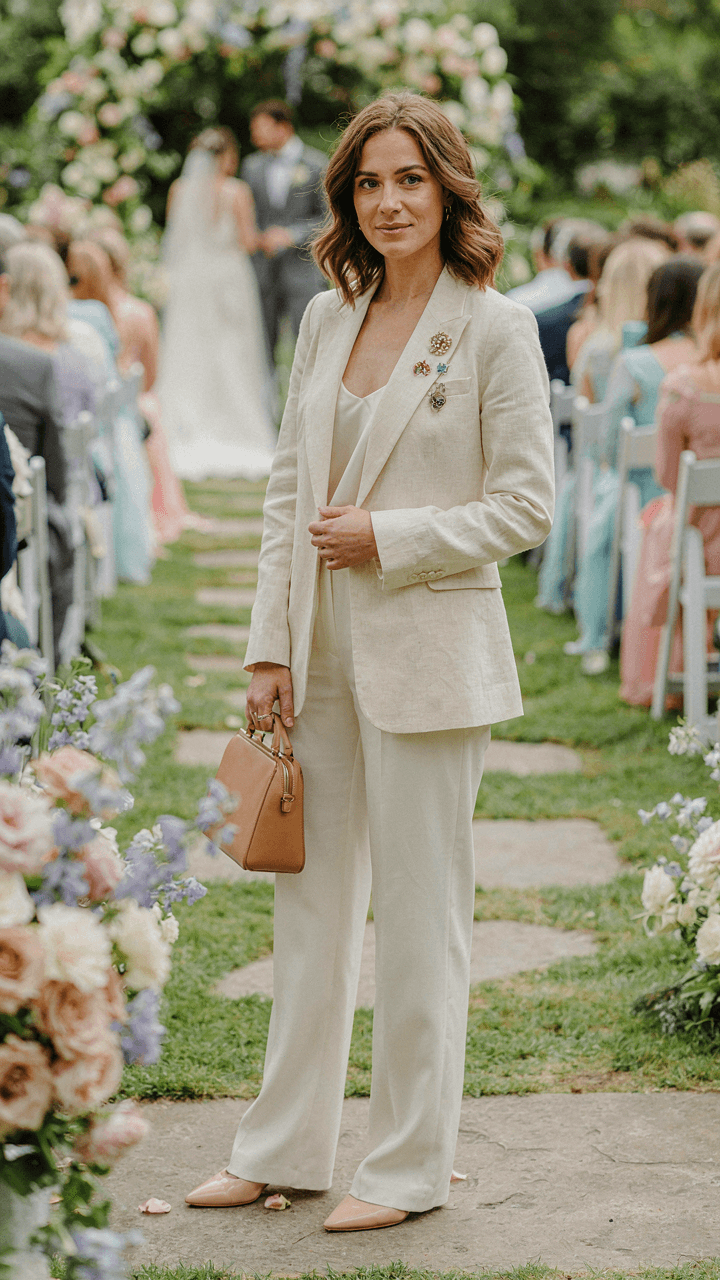
You’re worried people will remember your outfit for the wrong reason. That fear drives most wedding guest decisions into safe mediocrity. The real mechanism is constraint-based design: three intentional pieces beat ten forgettable ones. One garment forms the base. One accessory anchors it. One unexpected detail proves you thought about it. This isn’t about complexity. It’s about signal clarity. A linen blazer, a structured bag, and vintage brooches worn visibly on the lapel. A midi dress, delicate sandals, and an unexpected leather belt cinching at the waist instead of where it naturally sits. The third piece does the work that prevents you from vanishing into the wedding background noise.

The constraint forces decisions. You stop browsing endlessly because you know what role each piece plays. Garment establishes silhouette and color. Accessory provides function and rhythm. Unexpected detail gives the outfit a reason to exist beyond “appropriate.” This is why people who dress well seem effortless—they’ve already eliminated choice through structure. Pick your base first. Anchor with something that requires the eye to follow it. Then break one micro-rule: wrong placement, unexpected material, or scale that shouldn’t work but does. The unexpected detail is what makes someone ask where you got it instead of just nodding politely.
The Art Of Strategic Underdress
Most advice says “dress for the formality level.” That’s incomplete. The real play is dressing one level below the stated code while executing it with higher precision. Black-tie optional doesn’t mean black-tie required. It means you can arrive in a refined midi dress and silk flat shoes while others wear gowns, and you’ll appear more composed because you chose restraint. This is borrowed from military strategy: concede ground to control perception. You’re not underdressed when every element fits perfectly and nothing shouts.
Spring weddings create specific room for this. Lightweight fabrics, exposed skin, and natural light expose costume immediately. A woman in a precise linen dress with minimal jewelry reads as intentional. A woman in a heavy satin gown reads as uncertain about the season. Look underdressed by removing one traditional layer—skip the formal shawl, skip the heels for flats, skip the matching bag. Then overdeliver on fit and finish. Seams aligned. Hem precise. Shoes clean. This inversion—less clothing, more rigor—is what actually commands attention at spring weddings. The person who shows up in appropriate dress always disappears. The person who shows up in appropriate dress executed flawlessly stands alone.
Deconstructing “Garden Formal Dress”: A Systems Approach
Environment Controls Your Fabric Choices
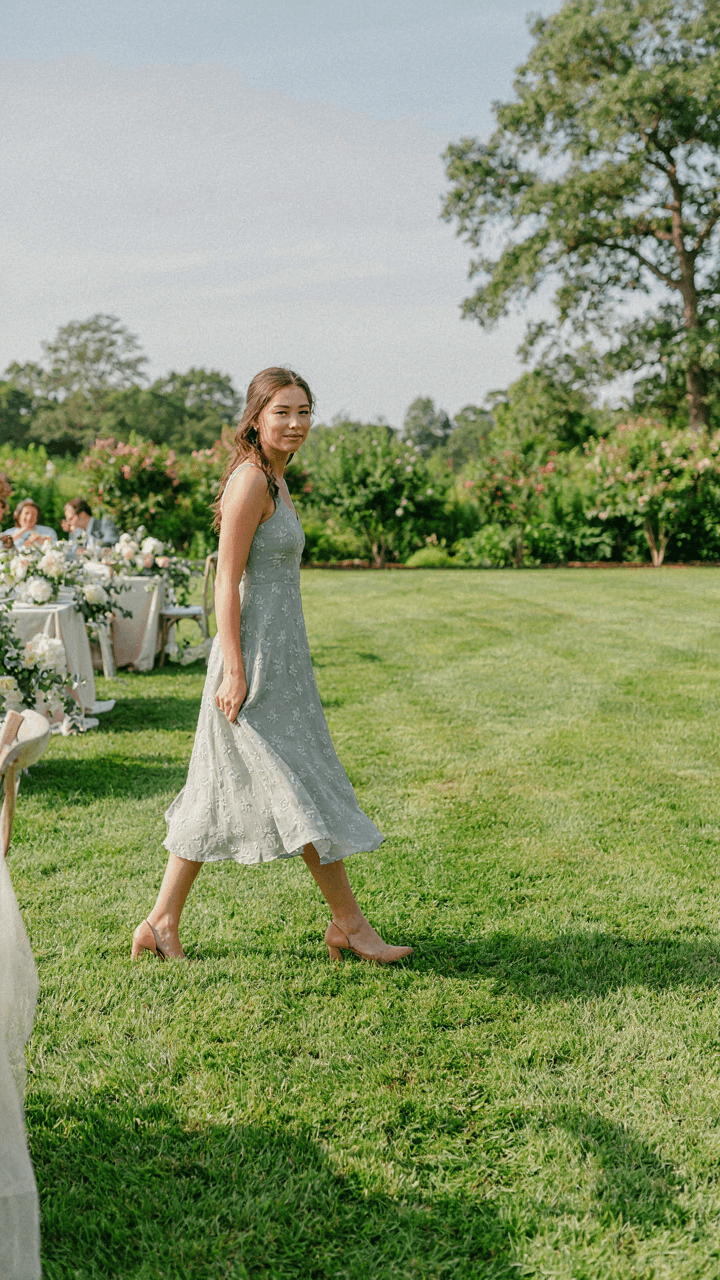
You want permission to wear something that feels less rigid than black tie but still signals you respect the occasion. That’s the real question. “Garden formal” isn’t a dress code—it’s a constraint that outdoor venues impose on fabric behavior. In cybernetics, feedback loops describe how systems correct themselves when conditions change. Your outfit operates the same way: the garden environment feeds back immediately through temperature swings, humidity, wind, and sun exposure, forcing your fabric to either stabilize or fail visibly.

Natural fibers like linen, cotton blends, and lightweight wools respond to these variables predictably. Synthetic materials trap heat and show sweat faster. This isn’t preference—it’s physics. Your choice of fabric directly determines whether you maintain composure at 3 PM when the sun peaks, or whether you’re managing wrinkles and dampness by the ceremony’s end. Choose materials that breathe and recover from moisture, then test them in similar conditions before the event.
Where Comfort And Structure Actually Intersect
The standard advice says “dress for the season and occasion equally.” That’s incomplete. Dynamic equilibrium in spring wedding contexts means your outfit must trade off rigidity for adaptability without losing intentionality. You’re seeking the exact midpoint where you don’t overheat or underdress—but that point shifts hourly outdoors, and you can’t adjust your core outfit five times.
Layer strategically using removable pieces that don’t compromise silhouette. A structured dress paired with a lightweight cover-up you can shed gives you two stable states instead of one compromised state. Shoe choice determines whether you sink into grass or maintain posture on uneven ground—practical footwear isn’t a compromise on formality; it’s the mechanism that keeps your overall presentation coherent when the surface beneath you changes. Commit to shoes with small heels or flats that grip earth, not concrete.
The Power Play Of The Wedding Cocktail Dress Guest

Commanding Attention Without Stealing The Room
You want to matter at this event without looking like you’re competing for the spotlight. That’s the real calculation here. The mechanism is contrast and positioning: a cocktail dress works because it sits between casual and formal, letting you occupy visual real estate without triggering the unspoken rule that guests defer to the bride. Spring weddings demand this specifically because outdoor light exposes fabric quality and fit instantly. A well-cut cocktail dress in a solid jewel tone or subtle pattern reads as intentional and composed. The bride remains the focal point because she wears white or a statement color; you command attention through polish, not volume.
Fabric choice determines whether you land this balance or fail it. Linen and cotton blends wrinkle visibly and read as underdressed in spring daylight. Structured materials like ponte, crepe, or cotton sateen hold their shape through ceremony and reception, signaling competence. Avoid anything with sheen or metallic threading that competes with bridal jewelry. Fit matters more than decoration. A dress that skims without clinging, with clean lines and defined armholes, registers as sophisticated. The dress does the work; you don’t need embellishment to prove you tried.
Asymmetry And Structure As Tactical Moves
Architectural design in fashion operates on the same principle as design in buildings: strategic asymmetry creates visual interest while maintaining structural integrity. Asymmetrical hemlines, one-shoulder cuts, or diagonal seaming give a cocktail dress dimension without looking costume-like. This matters in spring settings where you’re competing with natural light and outdoor backdrops. The dress must hold its own without relying on movement or drama. One-shoulder designs work well because they break up the torso symmetrically, drawing the eye upward toward your face and away from lower body. Uneven hemlines that hit at different lengths create motion even when you’re standing still, solving the problem of looking static in photographs.
Asymmetry also solves a practical spring wedding problem: temperature regulation and movement. A diagonal neckline or draped side doesn’t restrict arm movement during toasts or dancing. Architectural cuts with defined waistlines create a flattering silhouette under variable lighting without requiring accessories to complete the look. Test movement before buying. Raise your arms fully, sit down, and walk in the dress. If the structure holds and the fit doesn’t shift, you’ve found the mechanism that works. This isn’t about trend; it’s about engineering a dress that performs under real conditions, not studio lighting.
The Spring Wedding Guest’s Unconventional Fabric Playbook
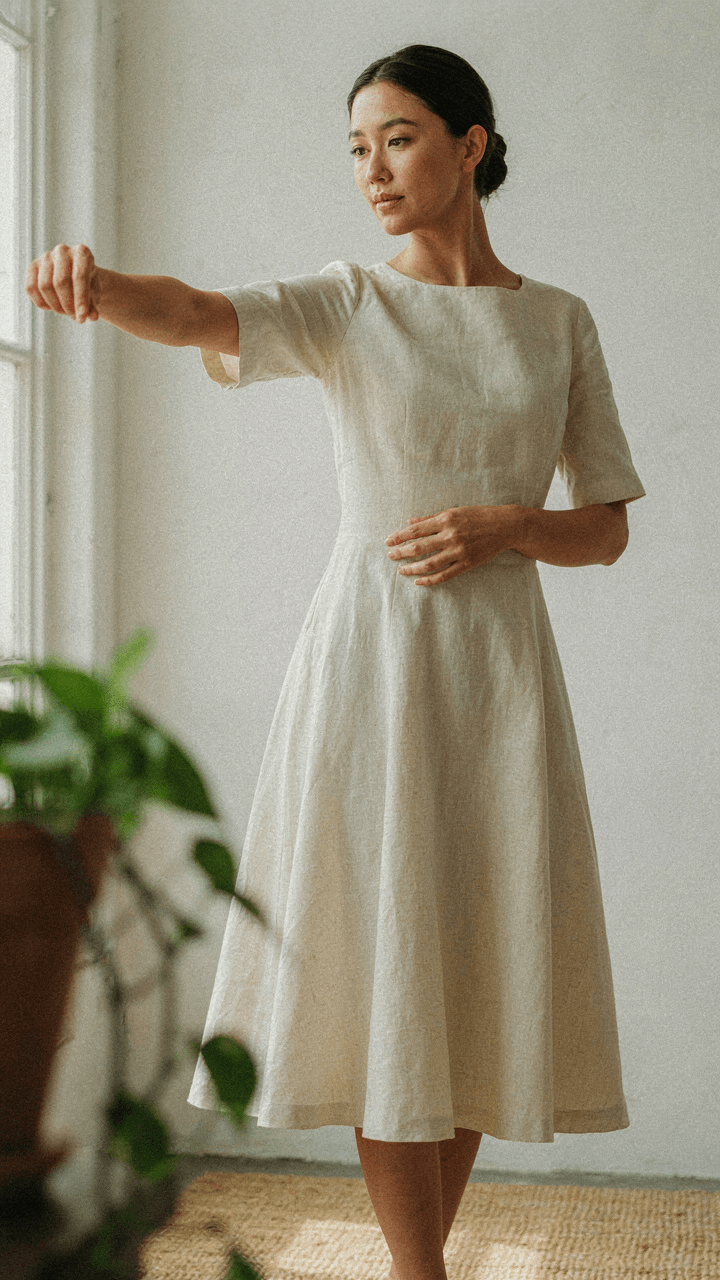
Natural Fibers That Actually Perform
You care about this section because wearing the wrong fabric makes you look like you didn’t think ahead, and that registers as low status regardless of the price tag. Here’s the mechanism: natural fibers manage moisture and temperature through capillary action, which means they pull sweat away from skin and release it into air instead of trapping it. Linen and cotton do this. Synthetic blends don’t, which is why you overheat in spring and then look damp.

Linen is the obvious choice, but most spring wedding guests pick the wrong weight. Heavy linen reads formal and creases aggressively, which defeats the point of wearing natural fiber. Mid-weight linen in a structured weave holds its shape through the ceremony and into dinner without looking crumpled by hour three. Silk has higher drape and works if you avoid the sheer grades that require visible undergarments. Ramie, a plant fiber stronger than linen, takes dye brilliantly and resists wrinkling better than linen does, though it’s harder to source in ready-to-wear.
Layering Mechanics For Temperature Variance
Spring temperatures don’t stay constant from morning ceremony to evening reception. Use physics: air acts as insulation, so thin layers trap more heat than one thick layer. A lightweight linen shell over a moisture-wicking base lets you strip without disrupting your outfit’s visual balance. The real play is choosing fabrics that don’t bulk when stacked.
A silk camisole under a cotton voile shirt, then a fine-knit linen cardigan, gives you three temperature points without looking padded or heavy. Remove the cardigan indoors and you’ve transformed the outfit. Skip layering pieces with elastic hems or tight armholes because they restrict movement and bunch under dresses. Your base layer shouldn’t be visible even when you move your arms, which means testing the lift before you commit to wearing it to the wedding.
April Wedding Guest Outfit: Navigating Temperature Volatility
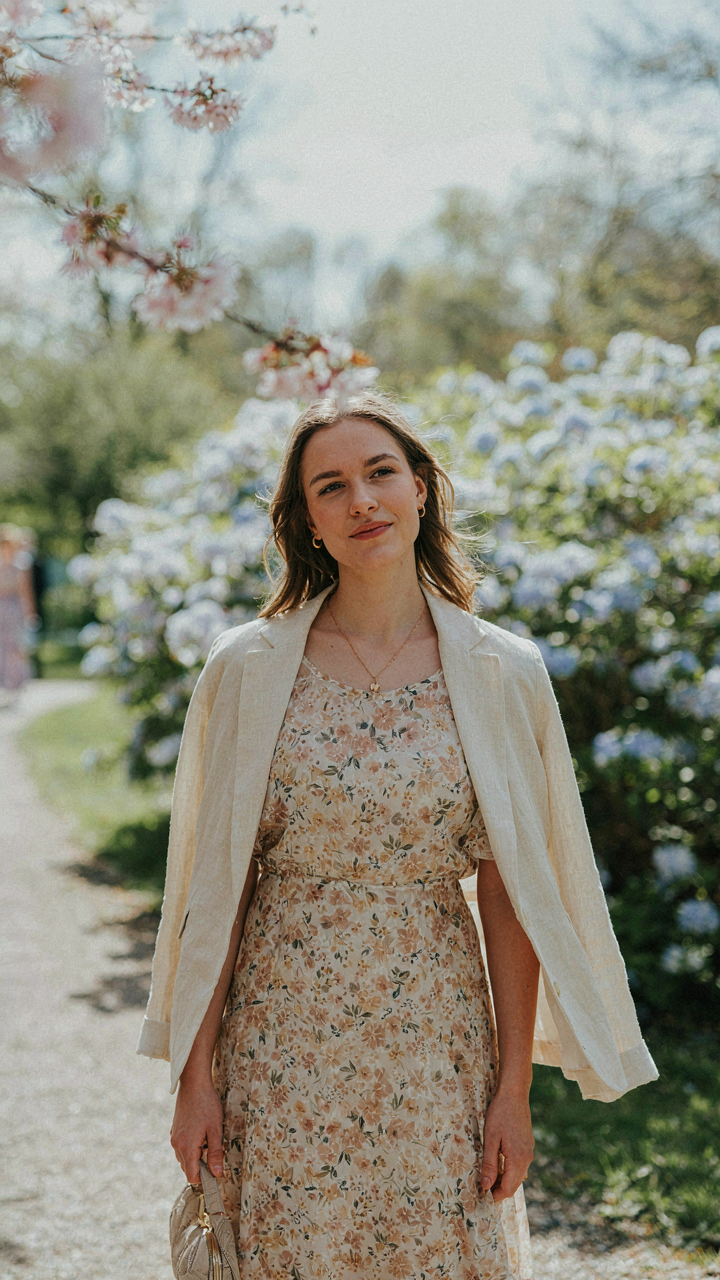
Layering Without The Bulk
You’re worried you’ll look either underdressed or stuffed into a coat like you’re heading to a ski trip instead of a wedding. The real mechanism is thermal regulation through surface area, not volume. One thin layer under your dress traps warm air without creating visual noise. The difference between looking polished and looking padded comes down to fabric density and fiber choice, not how many pieces you own.
A silk slip or merino wool base layer sits invisible under most spring dresses while holding temperature better than cotton. Linen and cotton absorb body heat inefficiently and require bulkier coverage to compensate. Choose one fitted layer that moves with your body rather than three loose ones that create shape distortion. The wedding guest who stays comfortable all day wore one strategic piece, not a stack of clothing.
Outerwear That Reads As Intentional
Outerwear functions as your second outfit in fashion economics. A blazer, structured cardigan, or tailored topper doesn’t just solve temperature problems. It becomes the visual anchor that transforms your entire look from casual to composed. Most wedding guests treat the jacket as a problem to solve rather than a design statement to execute.
- Linen blazer: Breathes in warm afternoon sun, maintains structure without weight, reads formal in pastels or neutrals, drapes cleanly over most dress silhouettes without adding bulk at shoulders.
- Cropped cardigan: Sits above the waist on fitted dresses, exposes leg length to keep proportions balanced, works in textures like silk or cotton blend to avoid the “cozy” aesthetic.
- Tailored shacket: Bridges jacket and shirt weight, sits between overly formal and too casual, functions across multiple temperature ranges without requiring removal and storage issues.
- Kimono or structured wrap: Creates visual movement without arm constraints, layers over any dress code, doubles as a design feature rather than hiding under the chair.
- Denim or canvas jacket: Works for casual outdoor weddings, adds texture contrast to dresses, functions as legitimate third outfit piece rather than emergency coverage.
Pair your outerwear choice to the wedding venue and time. An indoor evening reception in April needs different coverage than an outdoor afternoon garden ceremony. Choose pieces in complementary or matching neutrals to your dress so removal mid-event doesn’t create visual fragmentation. The strategic move is selecting one piece you’ll actually wear the entire time instead of removing it after ten minutes because it conflicts with your outfit’s intended line.
Beyond The “Garden Party Wedding Guest Dress” Template
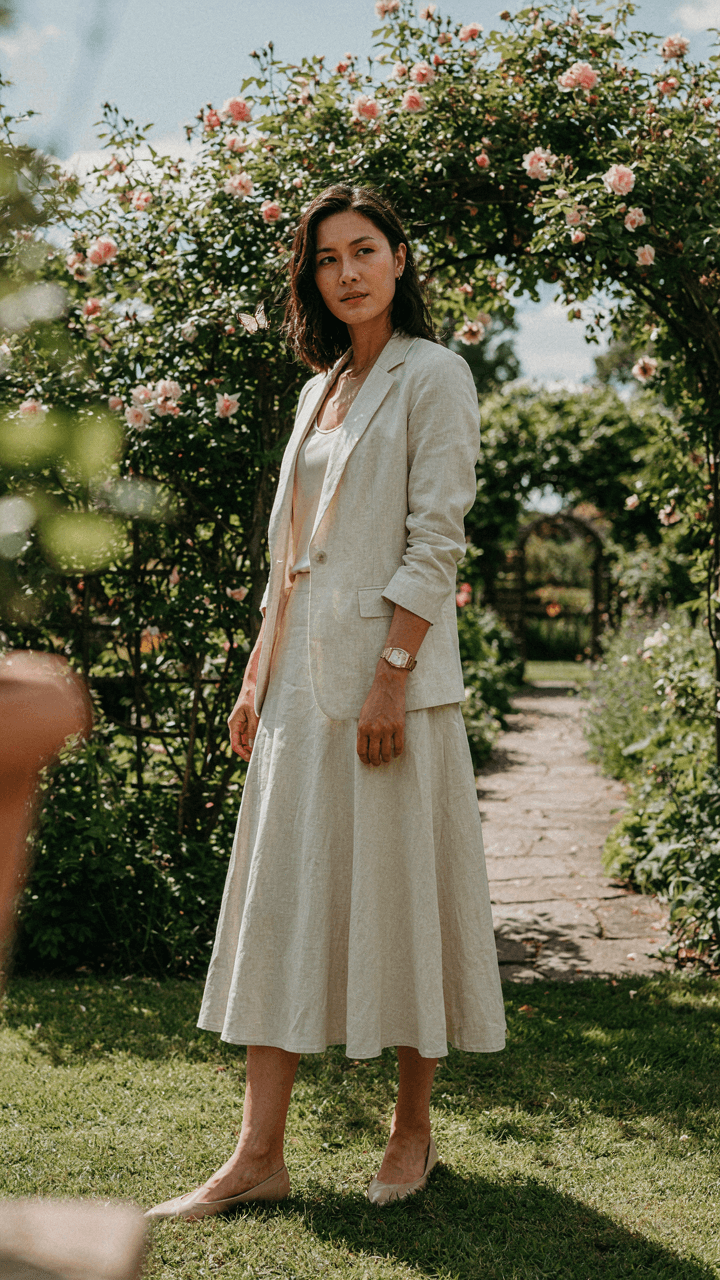
Crafting A Memorable Look Without Floral Prints
You’re avoiding florals because you think it’s safer, when the real reason is you’re terrified of blending into the background with every other guest wearing the same pastel botanical pattern. The mechanism is simple: constraints force specificity. Remove florals and you’re forced to build an outfit around actual design choices instead of defaulting to a pattern that masquerades as personality.

Solid colors with intentional texture beat prints every time in spring. A linen blend in cream, sage, or warm taupe reads sophisticated because it demands coordination work. Pair a structured blazer with tailored trousers or a clean A-line skirt. The detail lives in the weave, the cut, the fit—not in what’s printed on top. This approach scales across body types and photography better than expected.
Accessories That Elevate Rather Than Simply Adorn
Accessories operate on the same principle as load-bearing walls in architecture: some carry weight and change the structure, others hang on the wall and do nothing. Most wedding guests treat accessories as decoration. The real play is choosing pieces that fundamentally alter how the outfit reads. A structured leather clutch in cognac or deep green shifts the entire mood. A silk scarf tied as a neck piece or woven through a belt loop becomes architecture, not afterthought.
Skip the matching jewelry sets. One statement piece—a quality watch, a pair of structured earrings, or a layered necklace in gold or silver—sets the tone and forces everything else to align around it. The mechanism is constraint through hierarchy. When one accessory commands attention, the rest support it rather than compete. This eliminates visual noise and guarantees you look intentional instead of decorated.
Your Greatest Sartorial Constraint Isn’t The Dress Code; It’s Your Own Lack Of Conviction
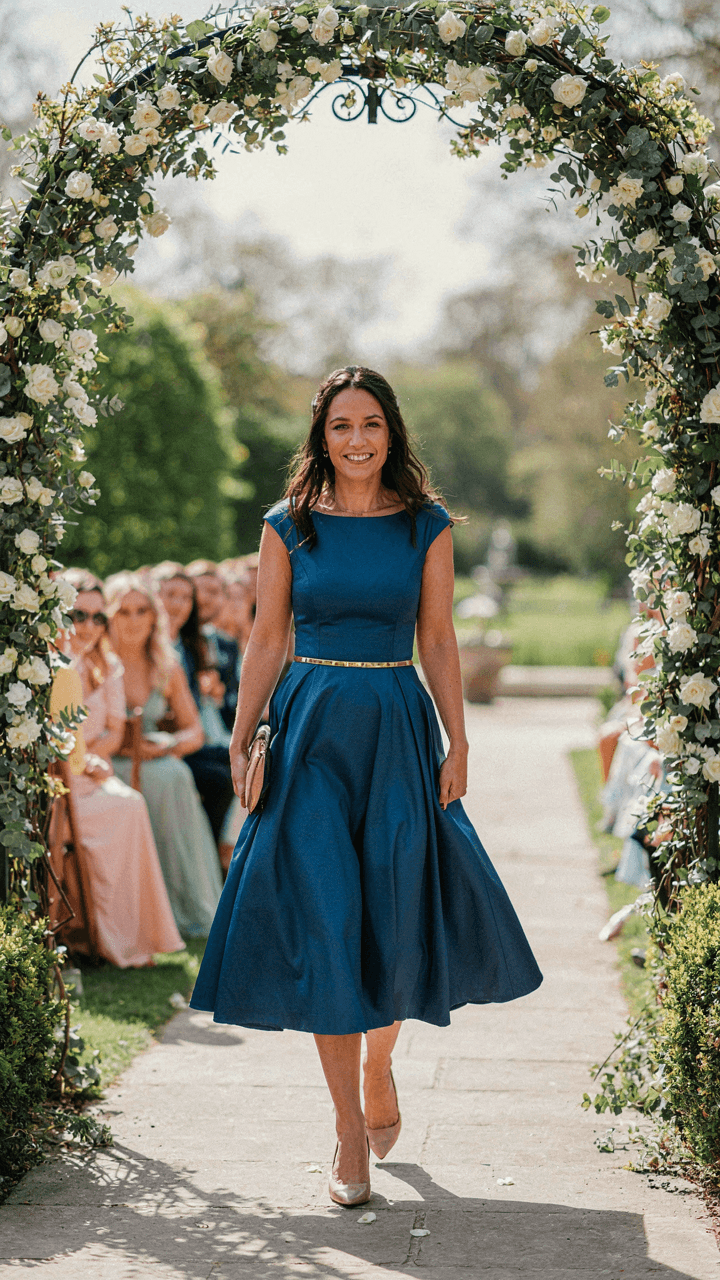
Most people pick a spring wedding guest outfit and immediately doubt it. They panic. They change. They default to beige. The dress code didn’t fail you. Your confidence did. Stop asking “Is this okay?” and start asking “Do I own this?” Pick one outfit today. Commit to it completely. Wear it like you designed it yourself. The difference between looking acceptable and looking intentional isn’t the clothes. It’s the person inside them.