

Building a Savings Strategy With Smart Money Saving Methods
Managing your money wisely starts with a solid savings strategy. Creating a plan that uses smart money saving methods will help you stick to a budget and watch your savings grow. This article will discuss how to build such a strategy, guiding you through practical steps for saving more effectively while managing your monthly budget.
You will learn how to set achievable savings goals, find the best savings accounts, create a budget that works, and avoid common pitfalls. These simple, clear strategies are designed to help you gain control over your finances and reach your savings goals with confidence.
Crafting Your Savings Plan

Having a clear savings plan is more than just a good idea; it really shapes the way you approach your finances. Without one, it’s easy to feel like your money is drifting aimlessly, making decisions based on short-term wants instead of your bigger picture. Savings aren’t just leftover money after expenses—they are a deliberate part of how you structure your entire budget.
Think about saving as a steady part of your money flow, not something separate or occasional. When you plan for saving alongside your bills and essentials, you see your financial landscape more clearly. This helps you decide when to spend and when to hold back. Sure, sometimes it feels restrictive, but that discipline often leads to more freedom later on.
Setting Clear Savings Goals
Goals give your savings plan a direction. But vague goals like “save more” won’t help much. Instead, set goals that are:
- Specific – What exactly are you saving for?
- Measurable – How much money do you want to save?
- Achievable – Can you realistically save that amount?
- Relevant – Does this goal truly matter to your current situation?
- Time-bound – When do you want to reach this goal?

For example, a short-term goal might be saving $500 for a new laptop within six months. A long-term goal could be building a $10,000 emergency fund over two years. Breaking it down helps you stay focused and track progress without getting overwhelmed.
Choosing The Right Savings Account
Not all savings accounts are the same. Choosing wisely can make a notable difference.
- Regular Savings Account: Often offers easy access but lower interest rates. Good for those who want simplicity.
- High-Yield Savings Account: These accounts provide better interest rates, sometimes ten times more than regular accounts. They’re ideal for short-term savings goals, but access may be a bit more limited.
- Money Market Account: Typically comes with slightly higher interest and some checking features. They often require a higher minimum balance.
When picking an account, consider not only interest rates but also any fees and how quickly and easily you can access your money. Sometimes a higher rate isn’t worth it if fees eat into your returns or if withdrawal limits restrict you when you need the money.
It’s a balancing act. You might want to keep emergency funds in an accessible but modest interest account, while stashing longer-term goals in a high-yield account where you won’t touch the money as often. What feels right varies, so try to match the account’s features to your comfort level and timeline.
Building A Monthly Budget


Creating a monthly budget starts by taking a clear inventory of your income and expenses. I mean, it’s surprisingly easy to overlook smaller sources of income or those occasional expenses that sneak up. So, write down every source of money coming in, from your paycheck to side gigs or even occasional bonuses.
Next, divide your monthly expenses into two broad categories: fixed and variable costs. Fixed costs are the ones that stay the same, rent or mortgage, for instance, and utilities you pay regularly, while variable costs can shift—like groceries, entertainment, or dining out. Jotting this down helps you see where your money flows and where there might be room to pull back if needed.
Once you have this laid out, the tricky part: allocating funds for savings. The idea is to treat your savings like a “must-pay” bill, something that comes off the top rather than what’s left at the end of the month. That’s easier said than done, though. You might try the 50/30/20 rule—it suggests 50% for essentials, 30% for wants, and 20% for savings. It sounds simple, but sometimes life’s demands make exact percentages tough.
Think of savings as non-negotiable but flexible in amount. If 20% feels too high right now, start smaller. What matters most is consistency, not hitting a perfect figure every month. Building this habit lets you slowly but surely grow a financial cushion without starving your daily needs.
Tracking Your Spending Regularly


Keeping a close eye on your spending—daily or weekly—can feel like a chore, but it really shapes how well your budget holds up over time. When you jot down or check what you’ve spent recently, you catch small leaks before they become floods. It’s like figuring out your spending rhythm and staying in tune with it. Some days might be higher or lower, and that’s okay; the key is noticing these patterns consistently.
People often underestimate how frequently little expenses add up. Or they forget to track some, which sneaks past the budget unnoticed. So picking the right rhythm for you—whether daily updates or weekly reviews—can keep things fresh in your mind. You’ll feel more connected with your money, and strangely enough, it helps you cut back without feeling deprived.
Using Apps and Tools
Apps take some of the hassle out of tracking. There are free ones like Mint and Wallet, popular for syncing with your bank accounts and categorizing expenses automatically. Then, there are paid options such as YNAB and EveryDollar that offer deeper insights and budgeting guidance. These apps alert you if you’re close to overspending, which can be handy if you sometimes lose track of time—or money.
Most of these tools let you set goals, see trends, and even receive notifications about unusual activity. I remember once catching a recurring subscription I forgot to cancel thanks to an app alert. That saved me a decent amount over a few months. You might find a favorite that fits your style, but don’t pick something complex if you risk abandoning it after a week.
Reviewing Spending Patterns
Once you have tracked your expenses, it’s time to step back and analyze. Where is your money actually going? Look beyond the big categories—groceries, rent, utilities—and check those smaller, recurring buys that often hide in plain sight. Maybe your coffee shop visits are more frequent than you thought. Or your online shopping has quietly crept up.

Breaking down your spending over a few months reveals trends. Do you spend more on weekends? Do certain occasions cause spikes? Use this knowledge to target specific areas for cuts. For example:
- Identify regular costs that could be downgraded or paused.
- Spot habits that aren’t adding much value—like those extra TV streaming subscriptions.
- Set small limits for discretionary expenses to try out discipline without feeling boxed in.
Changing your spending habits requires understanding them first. It’s a bit like a personal finance detective story, where the clues lie in your transaction history.
Comparing Savings Methods Daily Weekly and Monthly Approaches

You might wonder how saving money little by little stacks up against saving less frequently but in larger amounts. The impact on your budget can differ surprisingly between daily, weekly, or monthly savings.
Saving daily can help you keep the habit alive and address small expenses, but it might feel tedious and harder to notice progress. Weekly saving offers a decent balance, allowing you to accumulate a more meaningful sum without constant attention. Monthly saving often suits regular pay cycles but can be risky if unexpected expenses turn up before setting money aside.

Each method nudges your budget differently—daily savings can limit impulse buys, while monthly savings require better upfront planning. Which rhythm fits your lifestyle and spending patterns best? It might take some trial and error to find out.
Automatic Transfers Versus Manual Saving
Automatic transfers to savings accounts are a reliable way to ensure money actually goes where you want it. Set it once, and funds move steadily without requiring your daily attention. This reduces the temptation to spend the money or simply forget to save.
But, on the flip side, automatic transfers might feel a bit rigid. You could find yourself short on cash if your budget fluctuates unpredictably. Manual saving, meanwhile, gives you control and flexibility to adjust savings based on current needs. It takes discipline, though, and some miss the opportunity completely if they procrastinate or get distracted.
Cash Versus Digital Savings
Physically saving cash can be surprisingly effective in making the idea of saving real. There’s a tangible connection when you put money aside in a jar or envelope. It’s easy to track and immediately accessible without any tech involved.
However, carrying or storing cash has its risks. It’s vulnerable to loss or theft and doesn’t earn interest. Digital savings, by contrast, combine safety and convenience. Funds in bank accounts or apps can earn interest and often come with tools to help monitor progress. Yet, digital savings might feel abstract, and people sometimes overlook how much they’re saving, or conversely, find it too easy to spend.

Choosing between cash and digital savings often depends on your comfort with technology and how hands-on you want to be in managing your money.
Cutting Costs Without Sacrifices

Finding ways to trim expenses doesn’t mean you have to give up the things that make life enjoyable. It’s more about making smart choices that keep your quality of life intact. For instance, cutting down on eating out by preparing meals at home could feel like a chore but often leads to tastier, healthier food—and you can still indulge occasionally without guilt.
Small changes add up quicker than you might expect. Try swapping out high-cost habits for simpler ones; streaming music instead of buying individual tracks, or borrowing books instead of buying new ones. It’s not about deprivation, but rather prioritizing what really matters to you.
Smart Grocery Shopping Tips
Groceries are a big part of the budget, and planning here can make a noticeable difference. Meal planning helps avoid last-minute purchases and food waste—both shock your wallet and your fridge’s lifespan. Buying in bulk works well, but only if you can actually use those extras before they spoil. Those coupons you glance over can seem like a hassle, but they often save more than a quick discount here and there.

Another tip: try to shop seasonal produce. It tends to be cheaper and fresher. And hey, experimenting with store brands could surprise you—they’re often just as good as the pricey alternatives, if not better in some cases.
Lowering Utility Bills
Bills for energy, water, and other utilities can sneak up on you. Simple steps like turning off lights when you leave a room or fixing leaky faucets can slice your bill somewhat. You might hesitate to install more energy-efficient devices at first because of upfront costs, but these often pay back over time. Even adjusting your thermostat a few degrees during less active hours could ease your expenses.
There’s a bit of a balance to strike between comfort and savings. Maybe keep the heating lower when you’re out or asleep, but don’t make yourself too chilly just to save a buck—finding your limits is part of the process.
Avoiding Common Savings Pitfalls

Impulse Buying Traps
Impulse purchases often sneak into your budget as sudden urges to buy something unplanned. These can seriously disrupt your savings goals by eating away money you intended to save. I’ve noticed how walking into a store with a clear list only to leave with extra items happens more often than I’d like to admit. The temptation is real, driven by catchy ads or striking product displays. To resist these traps, consider simple strategies:
- Stick to a shopping list and avoid browsing aisles aimlessly.
- Give yourself a waiting period—maybe 24 hours—before buying non-essential items.
- Limit exposure to marketing by unsubscribing from promotional emails or social media ads.

By slowing down your purchases and thinking twice, you might save yourself from buyer’s remorse and loosen up your budget.
Ignoring Emergency Funds
Skipping an emergency fund can seem tempting if you want to prioritize quick wins, but the risks can catch up to you. Life isn’t always predictable; an unexpected car repair or medical bill might force you to rely on high-interest credit if no emergency savings exist. That can snowball into deeper financial trouble, which ironically hurts your long-term savings more. Even a small cushion—perhaps three to six months of expenses—can provide crucial peace of mind. Building this fund may feel slow, but it could be your best defense against crises that derail your budget entirely. Have you ever faced an unexpected expense without a backup? Those experiences stay with you, don’t they?
Measuring Savings Progress

Keeping an eye on your savings progress can sometimes feel like a chore. Yet, it’s probably one of the most important parts of sticking to your plan. You need to know not just that you’re putting money aside but if you’re actually moving towards your goals. Otherwise, you might keep saving blindly without realizing if your target needs adjusting. Or worse, you might feel discouraged if progress seems slow.
One straightforward way to track progress is using spreadsheets. You don’t have to be a tech wizard—just something simple to enter your savings regularly. Over time, this shows how your stash grows, maybe even revealing patterns like months when it’s easier or tougher to save. You could also try budgeting apps, which often come with built-in trackers and alerts. Sometimes getting notifications nudges you more than staring at numbers on a page.
Setting small milestones along the way can add real momentum. Imagine treating yourself to something small but meaningful every time you hit 25% or 50% of your savings goal. It’s a handy way to keep motivation up without blowing your budget. Of course, not everyone likes rewards or finds them necessary, but it’s worth considering. What kind of incentives would actually make you feel encouraged to keep going? That alone can drive consistent saving more than you’d expect.
Tracking progress and timely rewards aren’t just about numbers. They help you stay connected with your goals and adjust the plan if needed. If you notice you’re struggling to hit milestones, maybe it’s time to realistic tweak your amounts or timelines. The key? Stay flexible, and don’t be too hard on yourself when things don’t go perfectly. After all, saving is a journey, not a one-off event.
Savings Strategy Example Case

Initial Budget Setup
Meet Sarah and Mike, a young couple with a combined monthly income of $5,500. They’ve set out to save $500 each month as their initial target. Their expenses? Rent at $1,200, groceries around $600, utilities near $250, and car payments plus insurance totaling $400. They also factored in some discretionary spending of $400, hoping to keep their budget realistic.
They started with a simple spreadsheet—listing income, each major expense, and the savings goal right at the top. It wasn’t fancy, but it worked well for their needs. The key was visibility: seeing where the money was going helped them stick to the plan, or at least try to.
Adjustments And Results
After a few months, Sarah noticed they could trim their grocery bill by about $100 by shopping smartly and meal planning. Mike found an extra $75 by cutting down on streaming services. They bumped up their savings target from $500 to $675 monthly.
They also set a quarterly review night. This kept them honest, making small but consistent adjustments. Sometimes, unexpected expenses popped up—like a broken washing machine—but instead of panicking, they used a small emergency fund they’d started alongside their savings plan.
By the one-year mark, their savings account grew steadily, giving them confidence and a sense of control over their finances. Seeing tangible progress, even if slow, kept them motivated—maybe more than rigid rules ever could.
Checklist For Effective Saving
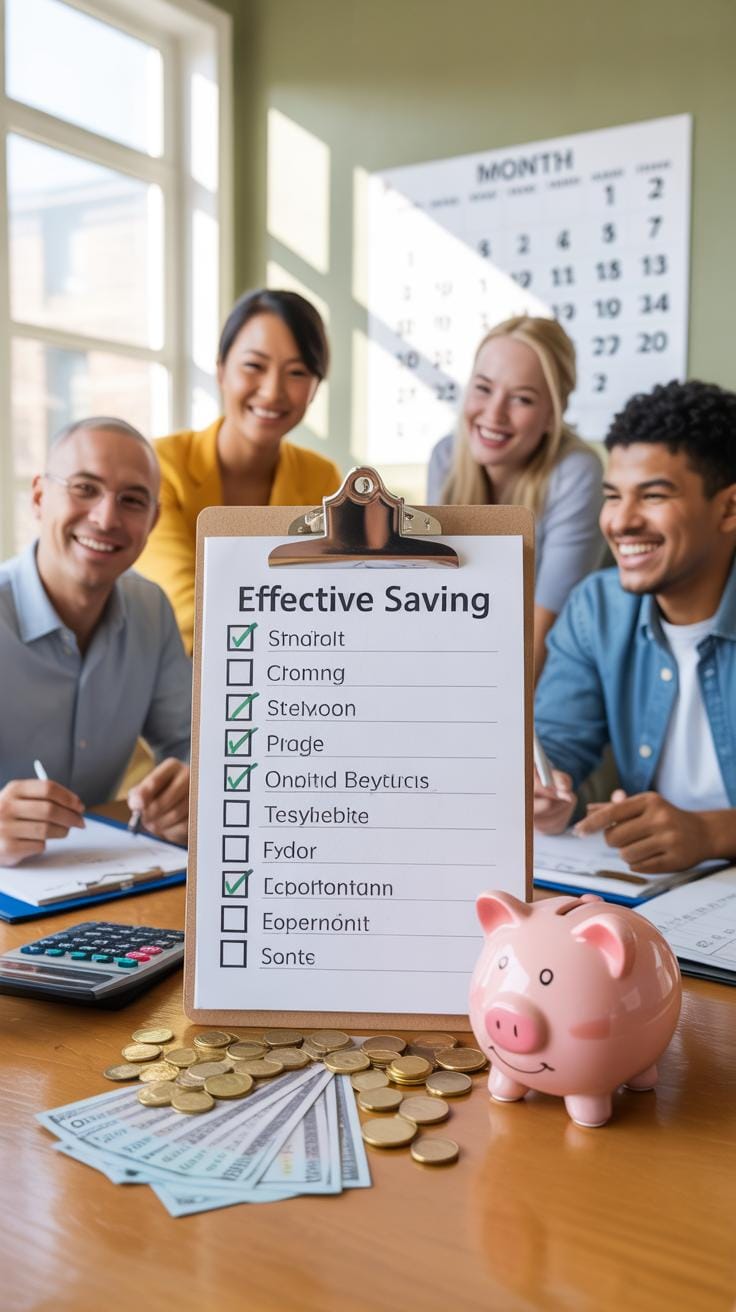
Keeping your savings on track can feel tricky sometimes. But a simple checklist each month can make a world of difference. You might find it helpful to pause and ask yourself a few questions regularly. For instance:
- Have I reviewed all my expenses and identified areas I can cut back?
- Did I stick to the budget I set, or did unexpected spending creep in?
- Is the amount I saved this month close to or better than last month?
- Are there any upcoming costs that could alter my savings plan?
Sometimes, it helps just to check off these points as you go. This isn’t about perfection—more about being aware and making small course corrections. You might realize, for example, that your grocery bill was higher and decide to shop smarter next month. Or maybe you found extra cash by skipping an impulse buy. This kind of simple tracking keeps your savings strategy grounded in reality, not just hopeful intentions.
Monthly Review Steps
At the end of each month, take a moment to review where your money went compared to your budget. Look closely at your spending categories. Did your transportation costs rise unexpectedly? Or maybe your utility bills dropped. Spotting these changes can help you adjust your savings target. It’s okay if the numbers don’t match perfectly—budgets aren’t rigid rules but flexible guides.
Then, review your savings contributions. Was the amount you set aside reasonable given your income and expenses? If you saved less than planned, figure out what caused the shortfall. Sometimes, life throws curveballs—medical bills, car repairs, or even a sudden plan to visit family. Recognizing these factors helps you decide whether to adjust your saving amount next month or perhaps tighten your spending.
Setting Next Month’s Goals
When you set goals for the coming month, consider both what you’ve achieved and what lies ahead. If you managed to save a bit more than usual, maybe you can increase your target slightly or keep it steady to build a buffer. On the other hand, if you struggled, don’t rush to push harder immediately. Instead, analyze whether your previous goals were realistic.
Look at upcoming needs: Are there any planned expenses next month, like birthdays or maintenance? Factoring these in ensures your savings plan won’t be derailed. You could set a smaller saving goal to accommodate these or find creative ways to counterbalance the extra costs, like temporary spending cuts elsewhere. Sometimes, adjusting your goals isn’t about giving up but about being practical and kind to yourself.
So, this checklist, paired with steady monthly reviews and thoughtful goal-setting, might just be the anchor you need. It keeps your savings plan alive, adaptable, and connected to your real-life journey.
Conclusions
Savings strategies are essential tools for building financial security. By defining your goals and using proven money saving methods, you can create a budget that supports your progress. Regularly monitoring your plan and adjusting as needed keeps you on track toward your targets.
Applying these practical steps helps you avoid common mistakes and make the most of your money. With discipline and clear processes, anyone can improve their savings and develop a strong financial foundation for the future.